
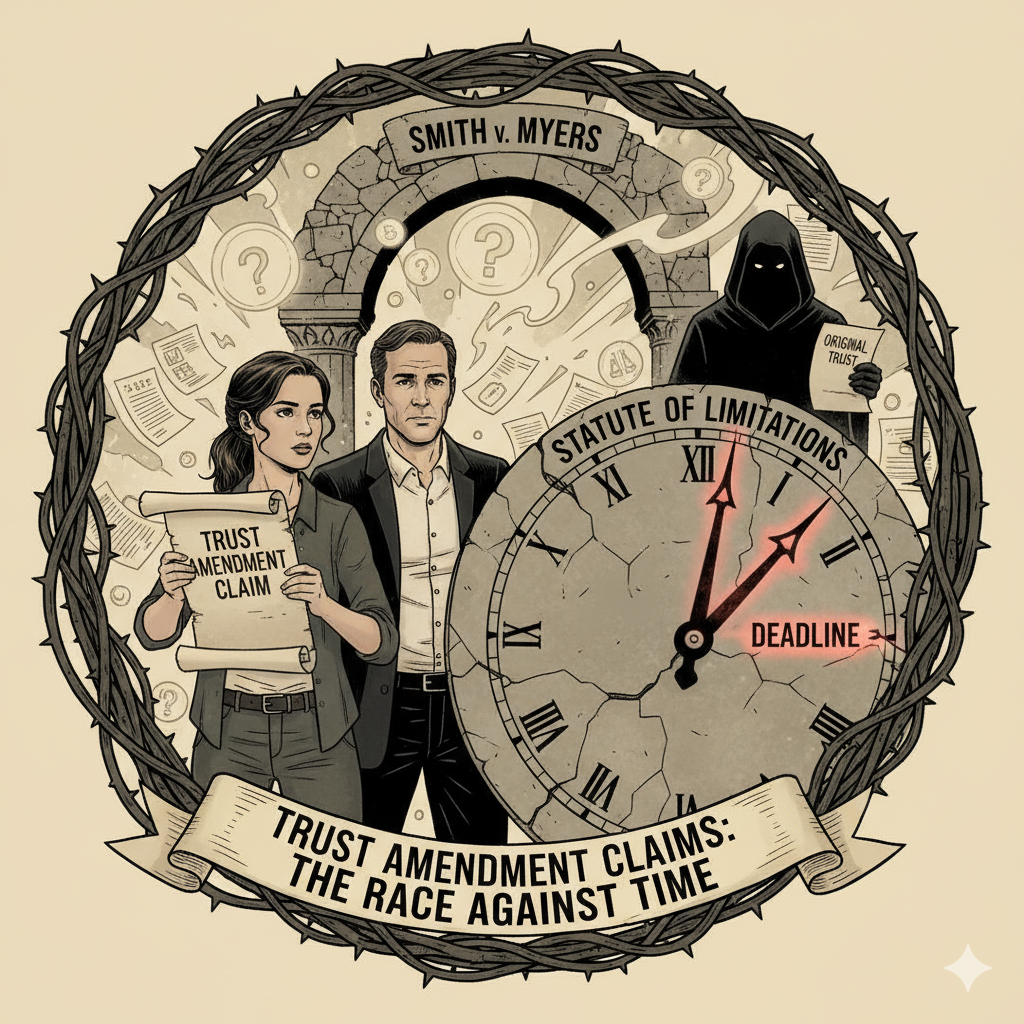
The one year statute of limitations on claims arising from a decedent’s promise to make a distribution does not apply to claims for distribution under a valid trust amendment.
Source: California Lawyers Association – Smith v. Myers
Smith v. Myers: Understanding the Statute of Limitations on Trust Amendment Claims in California
Who This Is For: California residents managing trusts, beneficiaries seeking distributions under trust amendments, and families navigating estate administration who need clarity on their legal rights and deadlines.
What You’ll Learn: How California law treats claims for distributions under valid trust amendments differently from general promises—and what this means for protecting your family’s inheritance rights.
The Key Ruling: Trust Amendments Are Not Subject to the One-Year Statute of Limitations
In Smith v. Myers, California courts clarified a critical distinction for trust beneficiaries: the one-year statute of limitations that applies to claims based on a decedent’s promise to make a distribution does not apply to claims for distribution under a valid trust amendment.
This ruling provides important protection for beneficiaries who may not discover their rights immediately after a loved one’s death.
Source: California Lawyers Association – Smith v. Myers
What Does This Mean for California Families?
If you’re a beneficiary named in a trust amendment, you have more time to assert your rights than you would for an informal promise. Here’s why this matters:
Common Questions About Trust Amendment Claims
How long do I actually have to make a claim under a trust amendment?
While the one-year limitation doesn’t apply, other statutes of limitations may. California law provides different timeframes depending on the specific type of claim and when you discovered (or should have discovered) your right to distribution.
What’s the difference between a “promise to distribute” and a “trust amendment”?
A promise might be verbal or documented in informal correspondence. A trust amendment is a legally executed document that formally changes the terms of an existing trust according to California trust law requirements.
What should I do if I think I’m entitled to a distribution under a trust amendment?
Why Trust Amendment Language Matters
The Smith v. Myers case underscores how precise trust language protects your family’s intentions. When trust amendments are properly drafted and executed, they create enforceable legal rights that survive challenges based on timing technicalities.
For California families creating or updating estate plans, this means:
How California Probate and Trust Helps Families Navigate Trust Disputes
At California Probate and Trust, PC, we’ve helped thousands of California residents protect their families through comprehensive estate planning and trust administration. Whether you’re creating a trust amendment, questioning your rights as a beneficiary, or managing a complex estate, our team provides the clarity and guidance you need.
Our approach combines legal expertise with genuine compassion—because we understand that behind every trust document is a family navigating difficult decisions about their legacy.
Protect Your Family’s Rights: Schedule a Free Consultation
If you have questions about trust amendments, beneficiary rights, or California estate law, our experienced attorneys are here to help. We offer free consultations where we’ll:
Contact California Probate and Trust today at (866) 674-1130 or schedule your free consultation online. Don’t let confusion about deadlines or legal procedures prevent you from claiming what’s rightfully yours.
Serving California families from our offices in Fair Oaks, Sacramento, and San Francisco.

About the Author: Dustin MacFarlane, Esq.
California Licensed Attorney | Estate Planning Specialist
Dustin MacFarlane is the founder of California Probate and Trust, PC, with over 15 years of experience in estate planning, probate administration, and trust law. Licensed by the California State Bar, Dustin has helped thousands of California families protect their assets and plan for the future.
CA Bar License: Active | Practice Areas: Estate Planning, Probate, Trust Administration | Location: Granite Bay, CA