
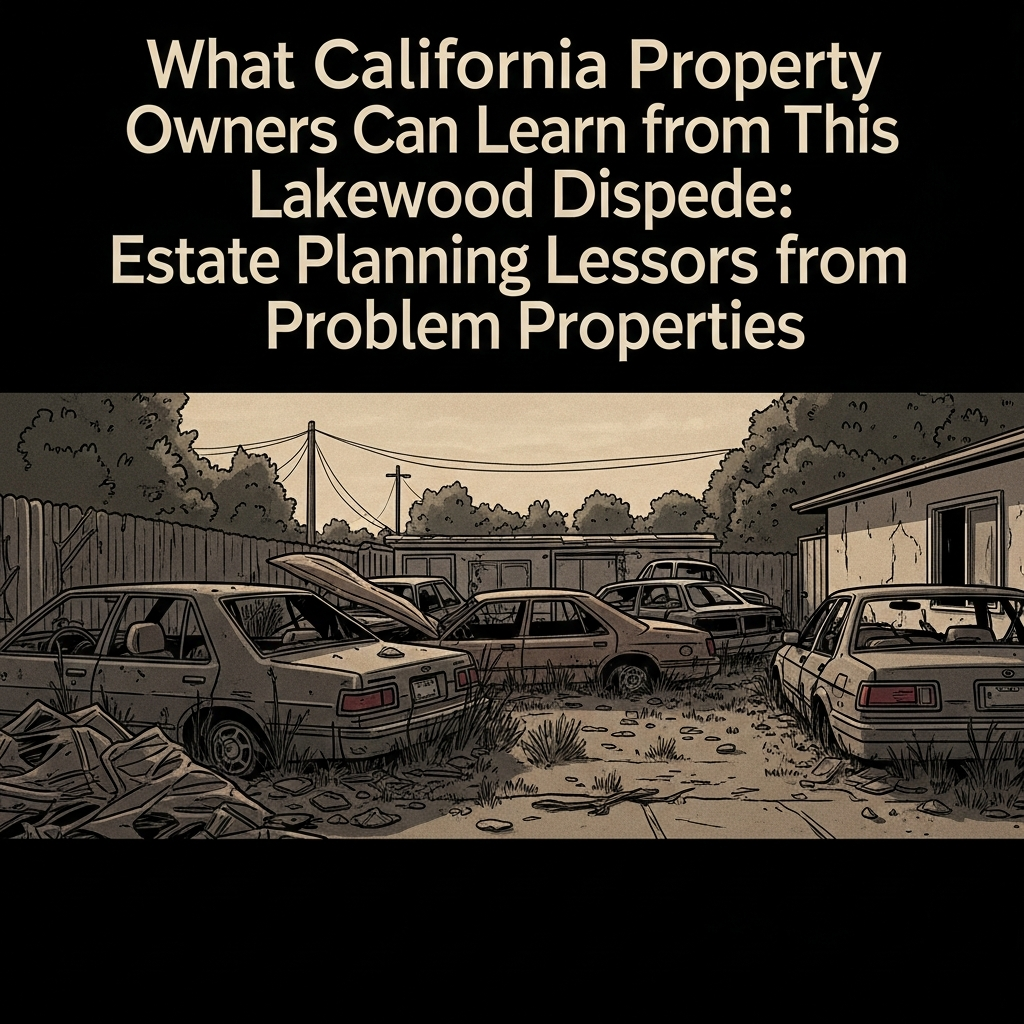
Source: KDVR – Lakewood Dilapidated Property Dispute
Who This Article Is For
If you own California property or will inherit property through an estate, this Lakewood case illustrates critical estate planning lessons about property maintenance, code enforcement, and protecting your legacy. This guide helps California property owners avoid becoming the problem property in their neighborhood and protects heirs from inheriting legal nightmares.
The Lakewood Problem: A Decade of Neglect
What happened in Colorado offers lessons for California:
A severely dilapidated property near West 13th Avenue and Urban Street in Lakewood, Colorado has plagued neighbors for nearly a decade:
The problems:
Enforcement failures:
Why this matters:
This is likely an estate planning failure. Properties that deteriorate for a decade often have:
How Problem Properties Start: Estate Planning Failures
Most neglected properties share common origins:
1. No Power of Attorney When Owner Becomes Incapacitated
Scenario:
Elderly property owner suffers stroke, dementia, or other incapacity:
California example:
Roseville homeowner, age 78, develops advanced dementia:
With power of attorney:
2. Probate Delays Leave Property Unmanaged
The probate problem:
Owner dies, property enters probate:
California probate timeline for problem property:
Months 1-3:
Months 4-8:
Months 9-18:
With living trust:
3. Heir Disputes Prevent Property Management
Multiple heirs, no agreement:
Three siblings inherit family home:
Estate planning solution:
Trust provisions that:

About the Author: Dustin MacFarlane, Esq.
California Licensed Attorney | Estate Planning Specialist
Dustin MacFarlane is the founder of California Probate and Trust, PC, with over 15 years of experience in estate planning, probate administration, and trust law. Licensed by the California State Bar, Dustin has helped thousands of California families protect their assets and plan for the future.
CA Bar License: Active | Practice Areas: Estate Planning, Probate, Trust Administration | Location: Granite Bay, CA
Why Estate Planning Matters in California
California has unique estate planning laws that differ significantly from other states. Without proper planning, your assets may not pass according to your wishes, and your family could face unnecessary probate court proceedings.
A comprehensive California estate plan typically includes:
- A revocable living trust to avoid probate
- Pour-over will as a safety net
- Advance health care directive
- Durable power of attorney for finances
- Beneficiary designations on retirement accounts and life insurance
How Trusts Work in California
California’s trust law (Probate Code Division 9) governs how trusts are created, administered, and terminated. Understanding these rules is essential for effective estate planning.
Key benefits of California trusts:
- Avoid probate: Assets in a properly funded trust bypass California’s lengthy probate process
- Privacy: Unlike wills (which become public in probate), trusts remain private
- Control: You maintain control during your lifetime and direct distribution after death
- Incapacity planning: Your successor trustee manages assets if you become incapacitated
- Tax planning: Trusts can help minimize estate and income taxes
Need Expert Estate Planning Guidance?
California estate planning law is complex and constantly evolving. Don’t navigate it alone.
California Probate and Trust, PC has helped thousands of California families protect their assets and plan for the future.
📞 Call us today:
- Main Office: 866-400-0058
- Direct: 916-963-9968