California Trust Attorney for Living Trust Planning
Personalized trust creation, funding, amendments, and restatements for Sacramento, Placer County, and families throughout California.
Protect your family. Preserve privacy. Stay in control.
Most people don't wake up wanting a living trust.
They want to avoid burdening their spouse.
They want their children to stay out of court.
They want to make sure a lifetime of hard work benefits their family rather than being consumed by delays, court proceedings, and unnecessary expenses.
A properly designed and funded living trust can often help accomplish those goals.
At California Probate & Trust, we help California families create estate plans designed to avoid probate, reduce the risk of conservatorship, preserve family harmony, and protect the people they love.
For more than 17 years, Dustin MacFarlane has helped thousands of California families create practical, understandable estate plans focused on real-world problems and real-world solutions.
Why Families Want To Avoid Probate
Most people have never been through probate.
Those who have rarely want their family to experience it again.
Probate is a court-supervised process used to transfer assets after death. In California, probate can involve substantial paperwork, court filings, waiting periods, legal procedures, and ongoing court oversight.
In addition to potential delays and expenses, probate is generally a public process.
That means information regarding assets, beneficiaries, and distributions may become part of the public record.
Many families prefer a different approach.
A properly funded living trust often allows assets to pass according to your instructions without requiring probate court involvement.
What Is A Living Trust?
A revocable living trust is a legal arrangement that allows you to hold and manage assets during your lifetime while providing instructions for what happens if you become incapacitated or pass away.
Most people serving as trustees of their own trust during life notice very little day-to-day difference.
The benefits often become apparent during incapacity or after death.
A properly designed trust can help:
- Avoid probate
- Maintain privacy
- Simplify administration
- Plan for incapacity
- Protect beneficiaries
- Preserve family harmony
- Coordinate the transfer of assets
For many California homeowners, a living trust becomes the foundation of a comprehensive estate plan.
A Living Trust Can Do Much More Than Avoid Probate
Depending on your goals, your estate plan may be designed to:
- ✓ Protect assets from future creditors, lawsuits, and financial setbacks
- ✓ Protect an inheritance from a child's future divorce
- ✓ Preserve a family cabin, ranch, vacation home, or business for future generations
- ✓ Keep inherited property taxes as low as possible
- ✓ Provide for a child or loved one with special needs without jeopardizing government benefits
- ✓ Help reduce taxes and administrative expenses paid by your family
- ✓ Protect inherited retirement accounts from unnecessary taxation and poor planning decisions
- ✓ Provide structure for an adult child who struggles with money management
- ✓ Support a "failure-to-launch" son or daughter without creating dependency
- ✓ Protect an elderly parent from financial exploitation and abuse
- ✓ Prevent a caregiver, neighbor, or new romantic partner from taking advantage of a vulnerable loved one
- ✓ Create safeguards if you become incapacitated and can no longer manage your affairs
- ✓ Help preserve assets if long-term care or nursing home expenses become necessary
- ✓ Balance the needs of a surviving spouse with the desire to protect an inheritance for children
- ✓ Protect children from a second marriage and protect a second spouse from being unintentionally disinherited
- ✓ Keep family wealth in the family—not with ex-spouses, creditors, predators, or the government
Do You Need A Living Trust In California?
Not everyone needs a living trust.
However, many California families benefit from trust planning, especially if they:
- Own real estate
- Have children
- Are married
- Have a blended family
- Want to avoid probate
- Are concerned about incapacity
- Want to protect inheritances
- Own significant assets
- Want greater privacy
The larger the estate and the more complex the family dynamics, the more valuable proper planning often becomes.
What Are You Really Trying To Accomplish?
Most clients are not looking for documents. They are looking for solutions.
Protect Your Spouse From Unnecessary Stress
Many people want to make sure their spouse can access accounts, manage property, and continue daily life without court involvement.
Protect Your Children From Future Problems
Many parents worry about future divorces, lawsuits, creditors, bankruptcies, and financial mismanagement.
Keep Family Matters Private
Unlike probate, trust administration is generally private.
Stay In Control During Incapacity
A properly coordinated trust and incapacity plan may help reduce the likelihood of conservatorship proceedings.
Keep The Family Cabin In The Family
Many clients want family property, vacation homes, ranches, and businesses preserved for future generations.
Protect A Blended Family
Proper planning can help balance the needs of a spouse while preserving an inheritance for children and grandchildren.
Living Trusts Are About More Than Death
One of the biggest misconceptions about estate planning is that it only matters after someone dies.
In reality, many of the most valuable benefits occur during life.
What happens if you develop Alzheimer's disease?
What happens if you suffer a stroke?
What happens if you become seriously injured?
Without proper planning, loved ones may need to seek a conservatorship before they can assist with finances or asset management.
Most people would rather choose who makes decisions than leave that decision to a judge.
A comprehensive living trust plan can help prepare for these possibilities.
Not All Living Trusts Accomplish The Same Goals
Many trusts are designed solely to avoid probate. Others are designed to solve much more sophisticated problems.
Depending upon your goals, planning may include:
- Inheritance protection planning
- Blended family planning
- Special needs planning
- Property tax planning
- Proposition 19 planning
- Long-term care planning
- Medi-Cal planning
- Asset protection opportunities
- Family business succession planning
- Multi-generational wealth planning
The trust itself is simply a tool.
The real question is what you want the trust to accomplish.
Living Trust vs. Will: What's the Difference?
| What Most Families Care About | Living Trust Plan | Will Only Plan |
|---|---|---|
| Keeps Your Family Out of Probate Court | ✓ Usually | ✗ No |
| Keeps Family Matters Private | ✓ Trust administration is generally private | ✗ Probate filings become public record |
| If You Develop Dementia, Alzheimer's, or Become Incapacitated | ✓ Designed to avoid conservatorship in many situations | ✗ Conservatorship may be necessary |
| Who Makes Decisions For You? | ✓ People you choose | ✗ Potential court oversight |
| Makes Life Easier For Loved Ones During a Crisis | ✓ Yes | ✗ Often slower and more complicated |
| Protects Your Spouse From Future Creditors, Lawsuits, and Financial Problems | ✓ Available | ✗ Generally unavailable |
| Protects Your Children's Inheritance From Divorce | ✓ Available | ✗ Rarely |
| Protects Your Children's Inheritance From Creditors and Lawsuits | ✓ Available | ✗ Rarely |
| Protects a Beneficiary Who Struggles With Money | ✓ Available | ✗ Limited |
| Protects a Special Needs Child Without Losing Benefits | ✓ Available | ✗ Limited |
| Keeps a Family Cabin, Ranch, Vacation Home, or Business in the Family | ✓ Available | ✗ Difficult |
| Protects Children From Being Disinherited After Remarriage | ✓ Available | ✗ Limited |
| Can Help Preserve Assets From Long-Term Care Costs | ✓ Available | ✗ Limited |
| Reduces the Risk of Financial Exploitation During Incapacity | ✓ Available | ✗ Limited |
| Supports a "Failure to Launch" Child Without Enabling Them | ✓ Available | ✗ Difficult |
| Balances the Needs of a Surviving Spouse and Children | ✓ Available | ✗ Difficult |
| Creates Incentives for Education, Work, and Responsibility | ✓ Available | ✗ Rarely |
| Protects Family Wealth From Ex-Spouses, Creditors, Lawsuits, and Predators | ✓ Available | ✗ Rarely |
| Typical Cost to Family After Death | ✓ Usually far less | ✗ Often substantially higher |
| Peace of Mind | ✓ Family follows your plan | ✗ Family often relies on court procedures |
The Difference Between Having Documents and Having a Plan
A will answers one question:
"Who gets my assets?"
A properly designed trust answers much harder questions:
- How do I protect my spouse?
- How do I protect my children?
- How do I keep the government out of private family matters?
- How do I keep inherited wealth in the family?
- How do I prevent a lifetime of hard work from being lost to divorce, lawsuits, creditors, taxes, long-term care costs, poor decisions, or financial predators?
That's the difference between having documents and having a plan.
The Biggest Mistake California Families Make
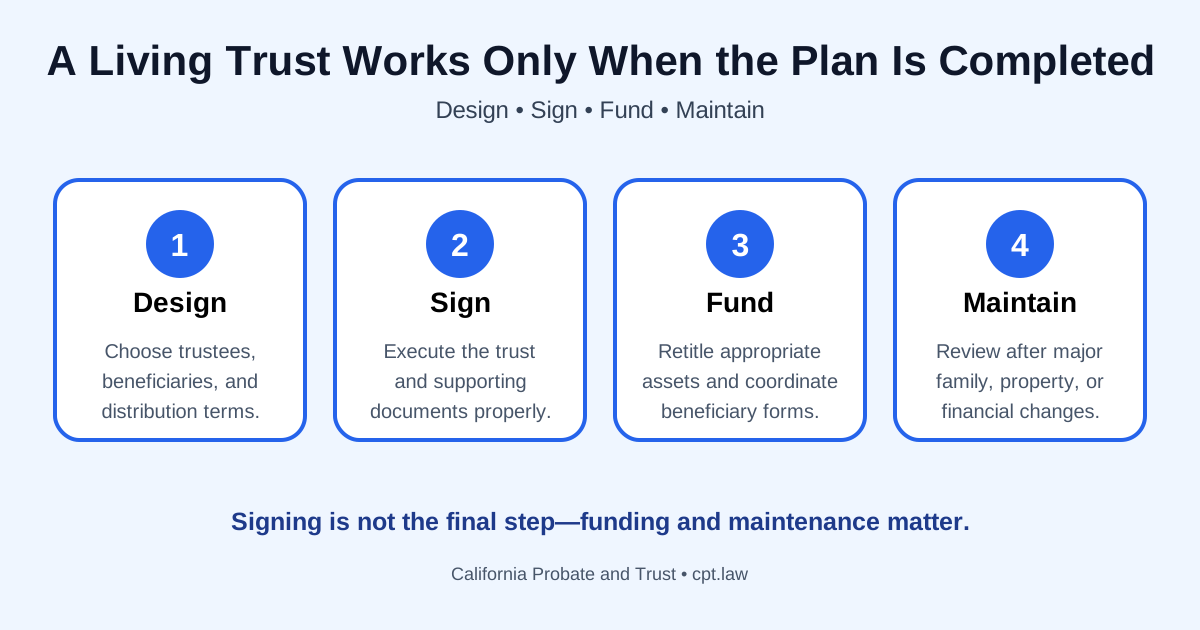
One of the most common mistakes is creating a trust but never funding it.
A trust that never receives assets may fail to accomplish its primary purpose.
Funding often involves coordinating:
- Real estate
- Bank accounts
- Brokerage accounts
- Business interests
- Valuable personal property
- Beneficiary designations
This is one reason why estate planning should involve more than signing documents.
The plan must be implemented correctly.
Why California Families Choose California Probate & Trust
Estate planning is not simply about preparing paperwork. It is about solving problems.
For more than 17 years, Dustin MacFarlane has helped thousands of California families navigate concerns involving probate avoidance, incapacity planning, inheritance protection, long-term care planning, blended families, property tax issues, and family wealth preservation.
Clients appreciate a straightforward approach that focuses on practical solutions rather than legal jargon.
Whether you live in Sacramento, Roseville, Granite Bay, Rocklin, Folsom, El Dorado Hills, Auburn, Lincoln, Loomis, Fair Oaks, Citrus Heights, Rancho Cordova, Elk Grove, or elsewhere in California, our firm can help you evaluate your options and determine whether a living trust is appropriate for your family.
The Questions That Keep You Awake At Night
And the planning strategies that may help you sleep better.
What Happens If I Develop Dementia or Can No Longer Manage My Affairs?
A properly designed estate plan can help ensure that people you trust—not a judge, court investigator, or government agency—are responsible for managing your finances and healthcare decisions. Without proper planning, your loved ones may need to seek a conservatorship through the court system before they can help you.
Will My Family Have To Go To Court When I Die?
Many people are surprised to learn that having a will alone often does not avoid probate. A properly funded living trust is designed to help your loved ones avoid probate court, reduce delays, maintain privacy, and gain access to assets more quickly.
How Can I Protect My Children's Inheritance From Divorce?
Many parents worry that assets they leave to their children could eventually end up in the hands of a future ex-spouse. With proper planning, an inheritance can often be structured to provide benefits to your child while offering significant protection from divorce proceedings and other outside claims.
What If One Of My Children Struggles With Money?
Not every child is ready to manage a large inheritance. Estate planning can include safeguards that provide support, encouragement, and flexibility without creating dependency or placing an inheritance at unnecessary risk.
Can I Protect My Family From Lawsuits, Creditors, And Financial Predators?
Depending on your goals and circumstances, trust planning can include strategies designed to help protect inherited assets from creditors, lawsuits, financial exploitation, and other risks that may arise after your death.
What Happens If I Remarry?
Blended families often face unique challenges. Many people want to provide for a surviving spouse while also ensuring that children from a prior relationship ultimately receive their inheritance. Proper planning can help balance both objectives and reduce the likelihood of future disputes.
Can I Keep The Family Cabin, Ranch, Or Vacation Home In The Family?
Often, yes. Many families want certain assets to remain in the family for generations. A trust can include provisions that establish ownership, management, maintenance responsibilities, and inheritance rules designed to preserve important family assets.
What If My Child Has Special Needs?
Special needs planning can help provide financial support for a loved one without jeopardizing valuable government benefits. Proper planning is often critical to preserving both quality of life and long-term financial security.
What Happens If I Need Long-Term Care?
Long-term care expenses can quickly consume a lifetime of savings. While no plan is right for everyone, there may be legal strategies available to help preserve assets, improve eligibility for certain benefits, and provide additional options should long-term care become necessary.
Can My Estate Plan Be Updated If My Life Changes?
Absolutely. Marriages, divorces, births, deaths, asset changes, relocations, and changes in the law can all affect your estate plan. A good estate plan should evolve as your life evolves.
How Can I Make Sure My Spouse Is Taken Care Of Without Disinheriting My Children?
This is one of the most common concerns in blended families. Proper planning can provide financial security for a surviving spouse while preserving an inheritance for children and grandchildren. Without planning, assets often end up somewhere the deceased spouse never intended.
What If My Children Don't Get Along?
Many parents assume their children will "work it out." Unfortunately, disagreements after a parent's death are common. Clear instructions, thoughtful trustee selection, and proper trust design can help reduce misunderstandings and preserve family harmony.
Can I Protect My Children's Inheritance From Creditors, Lawsuits, Or Bankruptcy?
Many parents spend decades building wealth only to worry that it could disappear because of a child's lawsuit, failed business venture, creditor issue, or bankruptcy. Proper trust planning can often provide significant protection while still allowing beneficiaries to enjoy the assets.
What If One Of My Children Is More Responsible Than The Others?
Not every inheritance must be distributed the same way or under the same conditions. Estate planning can be customized to address the unique strengths, needs, and circumstances of each beneficiary.
Can I Leave Money To My Grandchildren Without Giving It Directly To Their Parents?
Yes. Many grandparents want to help fund education, home purchases, business opportunities, or other life goals without placing assets directly under a parent's control. Proper planning can provide flexibility while protecting the gift.
How Do I Make Sure My Caregiver Doesn't Gain Control Of My Assets?
Most caregivers are honest and hardworking. However, financial exploitation of seniors is increasingly common. Proper powers of attorney, trustee selection, and asset management structures can create safeguards against abuse and undue influence.
Can I Keep My Estate Plan Private?
In most cases, yes. Probate proceedings are public. A properly funded trust can help keep your assets, beneficiaries, distributions, and family matters private.
What Happens If My Chosen Trustee Dies, Becomes Disabled, Or Refuses To Serve?
A good estate plan includes backup trustees and clear succession provisions. Planning ahead helps ensure that someone you trust is always available to step in when needed.
Can I Encourage Certain Values Without Controlling My Family From The Grave?
Many clients want to encourage education, employment, entrepreneurship, charitable giving, or responsible financial behavior. Estate planning can provide guidance and incentives while still giving future generations flexibility and independence.
Can I Make Sure My Adult Child Doesn't Spend Everything At Once?
Yes. Many parents prefer to provide opportunities rather than unrestricted access. Trusts can distribute assets over time, at certain ages, for specific purposes, or under standards designed to encourage financial responsibility.
Can I Protect Assets From A Nursing Home Or Long-Term Care Costs?
Depending on your age, health, and goals, there may be legal strategies available to help preserve assets while preparing for potential long-term care needs. Planning early generally provides more options and greater flexibility.
Can I Protect Family Wealth For Future Generations?
Many people want their hard work to benefit not only their children, but also future generations. Proper trust planning can help preserve family assets, encourage responsible stewardship, and keep wealth within the family for decades to come.
Can I Protect My Children From Being Disinherited If I Remarry?
This concern is far more common than most people realize. Without proper planning, assets intended for children can unintentionally pass to a surviving spouse, a new spouse, or an entirely different family. Thoughtful planning can help ensure your wishes are honored.
Can I Protect My Family From Financial Scams And Elder Abuse?
Financial exploitation of seniors is one of the fastest-growing forms of abuse in America. Proper planning can create checks and balances that reduce opportunities for fraud, undue influence, and financial manipulation.
Is Estate Planning Really About What Happens After I Die?
Not entirely.
Many of the most important benefits of estate planning occur while you are still alive. A properly designed plan can help protect you during illness, injury, dementia, incapacity, long-term care needs, financial exploitation, and family emergencies.
For many people, the greatest value of estate planning is not what happens after death—it's the protection, control, and peace of mind it provides during life.
California Living Trust Learning Center
Use these guides to understand the decisions that make a trust effective after it is signed.
How to Fund a Living Trust
Coordinate deeds, accounts, beneficiary designations, and future purchases.
Amend or Restate a Trust
Know when a focused amendment, complete restatement, or new plan is appropriate.
Revocable vs. Irrevocable Trusts
Compare control, taxes, creditor issues, probate avoidance, and planning uses.
Putting a California Home in Trust
Understand deeds, recording, insurance, lending, and property-tax coordination.
California Trust FAQ
Get direct answers to common trust-planning questions.
Trusts and Medi-Cal Planning
Learn why living-trust planning and long-term-care eligibility require separate analysis.
Schedule A Consultation
A good estate plan is not measured by the number of pages in a binder.
It is measured by whether it accomplishes your goals.
If your objective is to keep loved ones out of court, preserve privacy, protect family wealth, reduce government involvement, and make life easier for the people you love, a living trust may be worth exploring.
Because estate planning is not really about documents. It's about people.
(916) 674-2066