
California Legal Implications: The Limits of Probate Code 850 Petitions
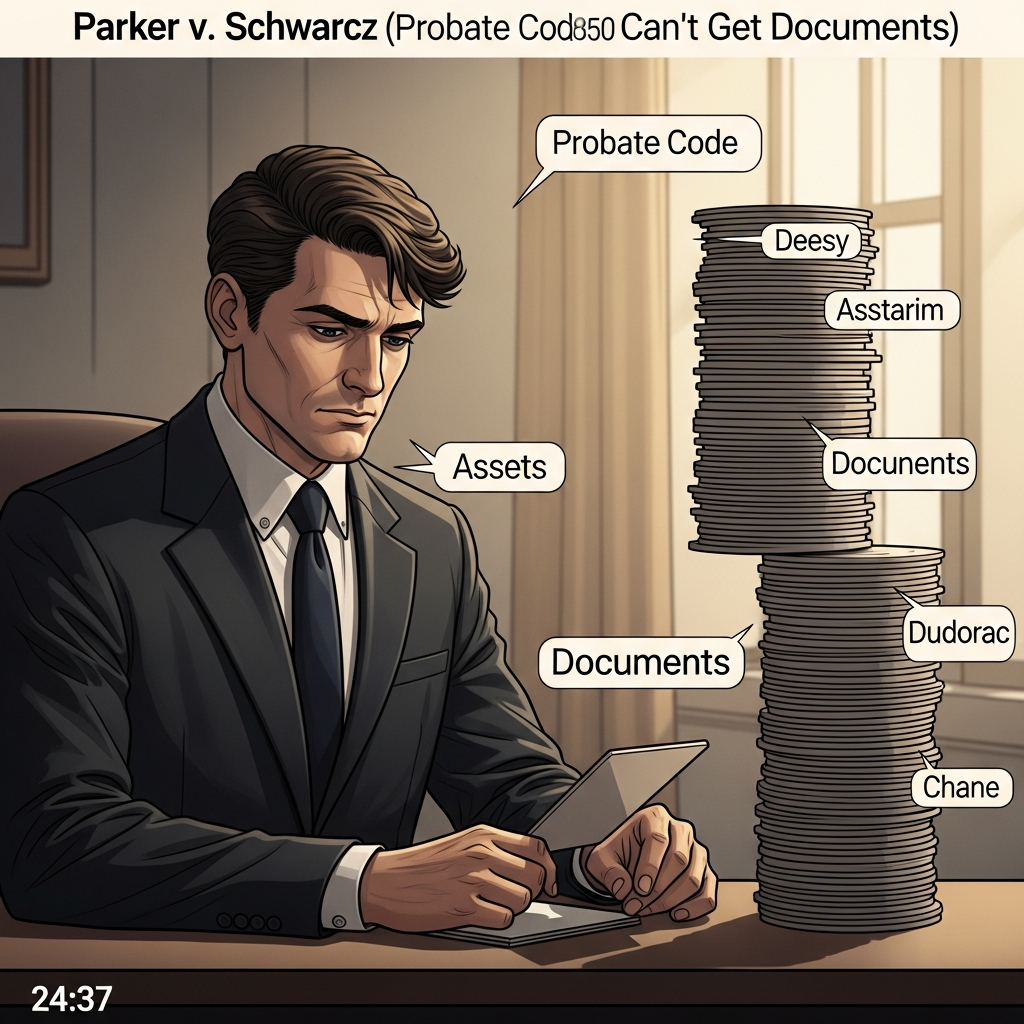
A recent California appellate court decision has clarified the limitations of a commonly used legal tool in estate and conservatorship litigation. In the case of *Parker v. Schwarcz*, the court ruled that Probate Code Section 850—which authorizes the return of real or personal property—cannot be used specifically to obtain documents and communications. You can read the full opinion here..
For California families, trustees, and conservators, this ruling highlights the critical importance of understanding the correct procedural mechanisms when managing an estate dispute. Using the wrong statute to request information can result in the dismissal of a petition, costing valuable time and legal fees.
Understanding Probate Code Section 850
Probate Code Section 850 is a powerful statute in California law often used to resolve ownership disputes involving a trust, estate, or conservatorship. It allows a claimant (such as a trustee, beneficiary, or conservator) to file a petition requesting the court to order the transfer of property. is a powerful statute in California law often used to resolve ownership disputes involving a trust, estate, or conservatorship. It allows a claimant (such as a trustee, beneficiary, or conservator) to file a petition requesting the court to order the transfer of property.
Common scenarios for Section 850 petitions include:
– Returning assets to a trust that were wrongfully removed.
– Claiming property that should have been titled in the name of the trust or conservatorship.
– Recovering real estate or financial accounts taken by a third party.
However, the *Parker v. Schwarcz* decision establishes that this power has specific limits regarding what constitutes “property.”
Assets vs. Information
The court in *Parker* affirmed that the legislative intent of Section 850 is to allow for the recovery of assets—items that have inherent value and can fund an estate or pay down debts. This includes:
– Real Property: Land and homes.
– Personal Property: Bank accounts, vehicles, jewelry, and investments.: Bank accounts, vehicles, jewelry, and investments.
The court distinguished these assets from “documents and communications.” While files, emails, and administrative records are vital for transparency and understanding how an estate was managed, they are not “assets” in the traditional sense because one does not hold title to them, and they do not have inherent financial value to the estate.
Choosing the Right Legal Tool
This distinction is vital for anyone involved in estate litigation. If a beneficiary or former conservatee suspects mismanagement, they often need access to documents to prove their case. However, this ruling clarifies that a Section 850 petition is the wrong vehicle for that request.
Instead, obtaining documents generally falls under the umbrella of civil discovery. If you are seeking information rather than the return of a specific asset, your attorney must utilize discovery tools such as:
– Requests for Production of Documents
– Interrogatories
– Subpoenas. If you are seeking information rather than the return of a specific asset, your attorney must utilize discovery tools such as:
– Requests for Production of Documents
– Interrogatories
– Subpoenas
Filing a Section 850 petition when you are actually seeking discovery can lead to the court denying your request, as happened in the *Parker* case.
The Importance of Professional Guidance
Navigating the California Probate Code requires a deep understanding of civil procedure. A misstep in filing the wrong type of petition can delay justice. Whether you are a trustee defending your administration or a beneficiary seeking answers, consulting with an experienced estate planning attorney ensures that the correct procedural steps are taken to protect your rights and the estate’s assets.
About This Case
Source: Parker v. Schwarcz (Probate Code 850 Can’t Get Documents)
California Probate and Trust, PC Can Help
– Free consultations: (866)-674-1130
– Experienced California estate planning
– Schedule consultation
– Learn more: cpt.law
Legal Disclaimer
This article is for informational purposes only. Consult with a qualified California estate planning attorney for advice specific to your situation.

About the Author: Dustin MacFarlane, Esq.
California Licensed Attorney | Estate Planning Specialist
Dustin MacFarlane is the founder of California Probate and Trust, PC, with over 15 years of experience in estate planning, probate administration, and trust law. Licensed by the California State Bar, Dustin has helped thousands of California families protect their assets and plan for the future.
CA Bar License: Active | Practice Areas: Estate Planning, Probate, Trust Administration | Location: Granite Bay, CA
Why Estate Planning Matters in California
California has unique estate planning laws that differ significantly from other states. Without proper planning, your assets may not pass according to your wishes, and your family could face unnecessary probate court proceedings.
A comprehensive California estate plan typically includes:
- A revocable living trust to avoid probate
- Pour-over will as a safety net
- Advance health care directive
- Durable power of attorney for finances
- Beneficiary designations on retirement accounts and life insurance
How Trusts Work in California
California’s trust law (Probate Code Division 9) governs how trusts are created, administered, and terminated. Understanding these rules is essential for effective estate planning.
Key benefits of California trusts:
- Avoid probate: Assets in a properly funded trust bypass California’s lengthy probate process
- Privacy: Unlike wills (which become public in probate), trusts remain private
- Control: You maintain control during your lifetime and direct distribution after death
- Incapacity planning: Your successor trustee manages assets if you become incapacitated
- Tax planning: Trusts can help minimize estate and income taxes
Need Expert Estate Planning Guidance?
California estate planning law is complex and constantly evolving. Don’t navigate it alone.
California Probate and Trust, PC has helped thousands of California families protect their assets and plan for the future.
📞 Call us today:
- Main Office: 866-400-0058
- Direct: 916-963-9968