
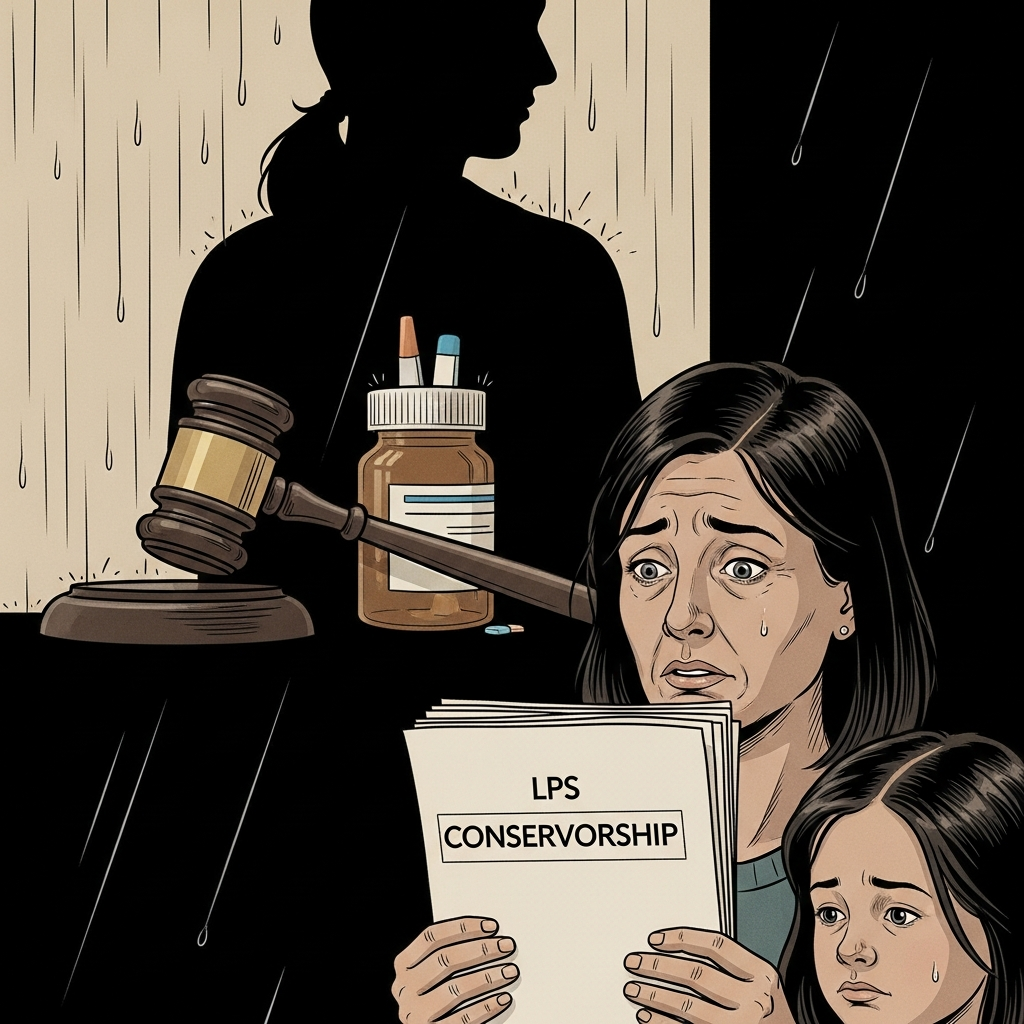
California Legal Implications: Mental Health Conservatorships and Involuntary Treatment
Families struggling to care for a loved one with severe mental illness often face complex legal hurdles, particularly when that loved one refuses necessary medication. A 2020 California Court of Appeal decision, Conservatorship of the Person of S.A., clarified the evidentiary standards required for LPS Conservatorships and the authority to administer involuntary medication. The court affirmed that a judge does not need to make an “express finding” of a conservatee’s incapacity if substantial evidence already supports the need for medication, and that psychologists are qualified to opine on a patient’s capacity to understand their treatment needs. and the authority to administer involuntary medication. The court affirmed that a judge does not need to make an “express finding” of a conservatee’s incapacity if substantial evidence already supports the need for medication, and that psychologists are qualified to opine on a patient’s capacity to understand their treatment needs.
For California families, this ruling reinforces the importance of documenting behavioral evidence and expert testimony when seeking legal protection for a relative who is gravely disabled..
Understanding LPS Conservatorships in California
The Lanterman-Petris-Short (LPS) Act governs the involuntary detention and treatment of individuals with mental health disorders in California. Unlike a standard probate conservatorship, which focuses on dementia or physical decline in aging adults, an LPS conservatorship is designed for individuals deemed “gravely disabled” due to a mental disorder. governs the involuntary detention and treatment of individuals with mental health disorders in California. Unlike a standard probate conservatorship, which focuses on dementia or physical decline in aging adults, an LPS conservatorship is designed for individuals deemed “gravely disabled” due to a mental disorder.
Under California law, a person is considered gravely disabled if they are unable to provide for their basic personal needs, such as:
– Food
– Clothing
– Shelter if they are unable to provide for their basic personal needs, such as:
– Food
– Clothing
– Shelter
These conservatorships are temporary and typically last for one year, requiring annual renewal (reappointment) if the individual remains unable to care for themselves.
Involuntary Medication and Capacity
One of the most difficult aspects of mental health conservatorships is the administration of psychotropic medication against the conservatee’s will. The court in *Conservatorship of S.A.* highlighted that the central legal question is whether the individual lacks the mental capacity to give informed consent.
To determine if a conservatee is incompetent to make medical decisions, the court evaluates whether they understand:
1. The nature of their medical condition.
2. The proposed treatment.
3. The risks and benefits associated with the treatment.
In this case, the conservatee suffered from delusions—believing her parents were famous movie stars and denying her own ethnicity—and lacked insight into her illness. The court ruled that even without a specific, spoken “express finding” of incapacity in the record, the conservatorship and medication order were valid because substantial evidence demonstrated she could not survive safely without them.
The Role of Expert Testimony
A critical takeaway from this case for California estate planning and conservatorship matters is the admissibility of expert opinion. The conservatee argued that a psychologist (who cannot prescribe medication) was not qualified to testify about the need for medication.
The court rejected this argument. It established that a licensed psychologist is qualified to render an opinion on a person’s *capacity* to understand their mental illness and the necessity of treatment. This is vital for families, as it broadens the scope of professionals who can provide necessary testimony to the court to ensure a loved one receives help.
Planning for Mental Health Care
While LPS conservatorships are initiated by the county, families play a crucial role in the process. However, for those capable of planning ahead, executing an Advance Health Care Directive while they still have capacity can allow individuals to outline their mental health treatment preferences and designate a trusted agent to make decisions should they become incapacitated in the future. while they still have capacity can allow individuals to outline their mental health treatment preferences and designate a trusted agent to make decisions should they become incapacitated in the future.
About This Case
Source: Conservatorship of the Person of S.A. (2020): Involuntary Medication and LPS Conservatorships
California Probate and Trust, PC Can Help
The attorneys at California Probate and Trust, PC understand the sensitive nature of conservatorships and estate planning for families managing mental health issues. We can help you navigate the legal system to protect your loved ones. understand the sensitive nature of conservatorships and estate planning for families managing mental health issues. We can help you navigate the legal system to protect your loved ones.
– Free consultations: (866)-674-1130
– Experienced California estate planning
– Schedule consultation
– Learn more: cpt.law
Legal Disclaimer
This article is for informational purposes only. Consult with a qualified California estate planning attorney for advice specific to your situation.

About the Author: Dustin MacFarlane, Esq.
California Licensed Attorney | Estate Planning Specialist
Dustin MacFarlane is the founder of California Probate and Trust, PC, with over 15 years of experience in estate planning, probate administration, and trust law. Licensed by the California State Bar, Dustin has helped thousands of California families protect their assets and plan for the future.
CA Bar License: Active | Practice Areas: Estate Planning, Probate, Trust Administration | Location: Granite Bay, CA