
Here is a blog post drafted based on the content and core messages provided.
# Estate of Berger: When California Courts Can Treat an Informal Document as a Will
When we think of a Last Will and Testament, we typically imagine a formal, typed document, signed by a testator and witnessed by two people. However, real life is rarely that tidy. Sometimes, final wishes are scribbled on notepads, typed in emails, or written in informal letters.
In California, does an informal document count as a valid will?
According to the recent California Court of Appeal decision in *Estate of Berger* (2023), the answer is: It might. This case serves as a crucial reminder that the courts are willing to look beyond the “four corners” of a document to determine what a deceased person actually intended. This case serves as a crucial reminder that the courts are willing to look beyond the “four corners” of a document to determine what a deceased person actually intended.
# The Case: A Letter, A Surgery, and A Long Silence
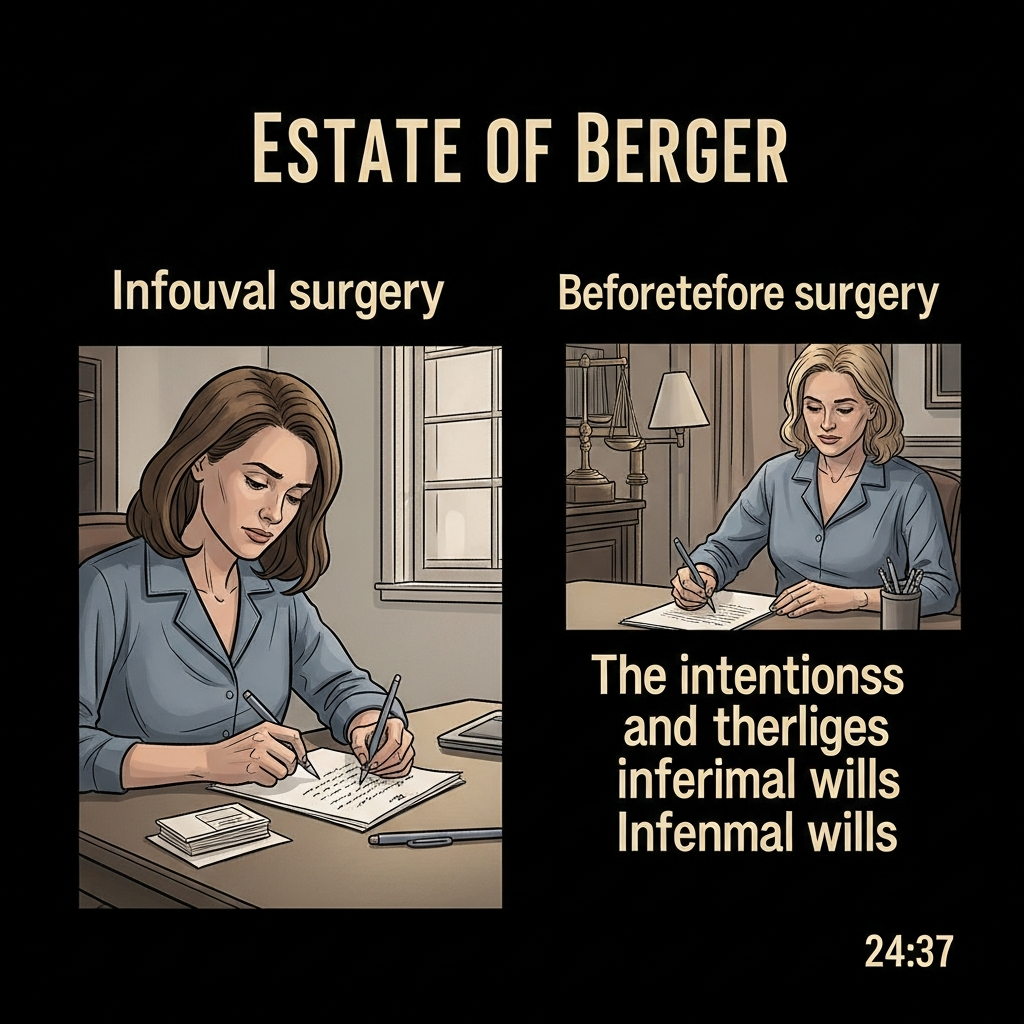
The facts of *Estate of Berger* play out like a legal drama. In 2002, Melanie Berger was engaged to Maria Coronado. Before undergoing major surgery, Berger wrote a letter addressed “to whom it may concern,” outlining who should receive her assets (Coronado) and appointed an executor. She signed and dated the letter, but no one witnessed her signature.
Berger emailed Coronado to tell her she was leaving the letter on her desk chair. Berger survived the surgery, but the couple broke up six months later. They ceased all contact. Berger lived for another 17 years, becoming reclusive and religious, but she never formally revoked the letter or wrote a new will.
When Berger died in 2020, her pastor found the 2002 letter. Coronado petitioned to have it recognized as a will. Berger’s sister contested it, arguing that the couple had been broken up for decades and that the informal letter shouldn’t count.
# The Legal Ruling: Intent is Everything
The trial court initially denied Coronado’s petition, suggesting that because of the breakup and the passage of time, it wasn’t clear that Berger wanted that old letter to serve as her will.
The Appellate Court reversed that decision.
The Court held that the letter was a valid will. Why? Because under California law, if a document does not strictly comply with formal requirements (like having witnesses), a court can consider extrinsic evidence (evidence outside the document itself) to determine the writer’s intent. (evidence outside the document itself) to determine the writer’s intent.
The Court determined that:
1. Context Matters: Even if the words in a document are unambiguous, courts can look at the circumstances surrounding its creation to see if it was *intended* to be a will.
2. Timing is Key: The court looked at Berger’s intent *at the time she wrote the letter* (just before surgery). The evidence showed that, in 2002, she fully intended that letter to dispose of her assets.
3. Revocation Requires Action: Even though the couple broke up and ignored the letter for 17 years, Berger never physically destroyed it or wrote a new will. Therefore, the original intent stood. Even though the couple broke up and ignored the letter for 17 years, Berger never physically destroyed it or wrote a new will. Therefore, the original intent stood.
# What This Means for Families
This ruling has significant implications for anyone involved in California probate:
* Informal Writings Can Be Powerful: If you find a letter, a note, or a handwritten document after a loved one passes, do not discard it. Even if it isn’t notarized or witnessed, the court may recognize it as a valid will if there is clear evidence of testamentary intent.
* The Court Will Look “Outside the Page”: This case confirms that courts can admit evidence regarding the circumstances of the document’s creation (like emails, conversations, or impending medical procedures) to prove it was meant to be a will.
* Update Your Plan: The *Berger* case is a cautionary tale. If you break up with a partner or change your mind about your heirs, you must formally update your estate plan. Relying on the assumption that an old document “doesn’t count” because it was informal can lead to unintended results. formally update your estate plan. Relying on the assumption that an old document “doesn’t count” because it was informal can lead to unintended results.
# Conclusion
For assistance with California probate issues or to ensure your estate plan is legally sound, visit [cpt.law](https://cpt.law).

About the Author: Dustin MacFarlane, Esq.
California Licensed Attorney | Estate Planning Specialist
Dustin MacFarlane is the founder of California Probate and Trust, PC, with over 15 years of experience in estate planning, probate administration, and trust law. Licensed by the California State Bar, Dustin has helped thousands of California families protect their assets and plan for the future.
CA Bar License: Active | Practice Areas: Estate Planning, Probate, Trust Administration | Location: Granite Bay, CA