
For Executors and Personal Representatives: Understanding Your Legal Remedies When Trust Property Is Stolen or Concealed
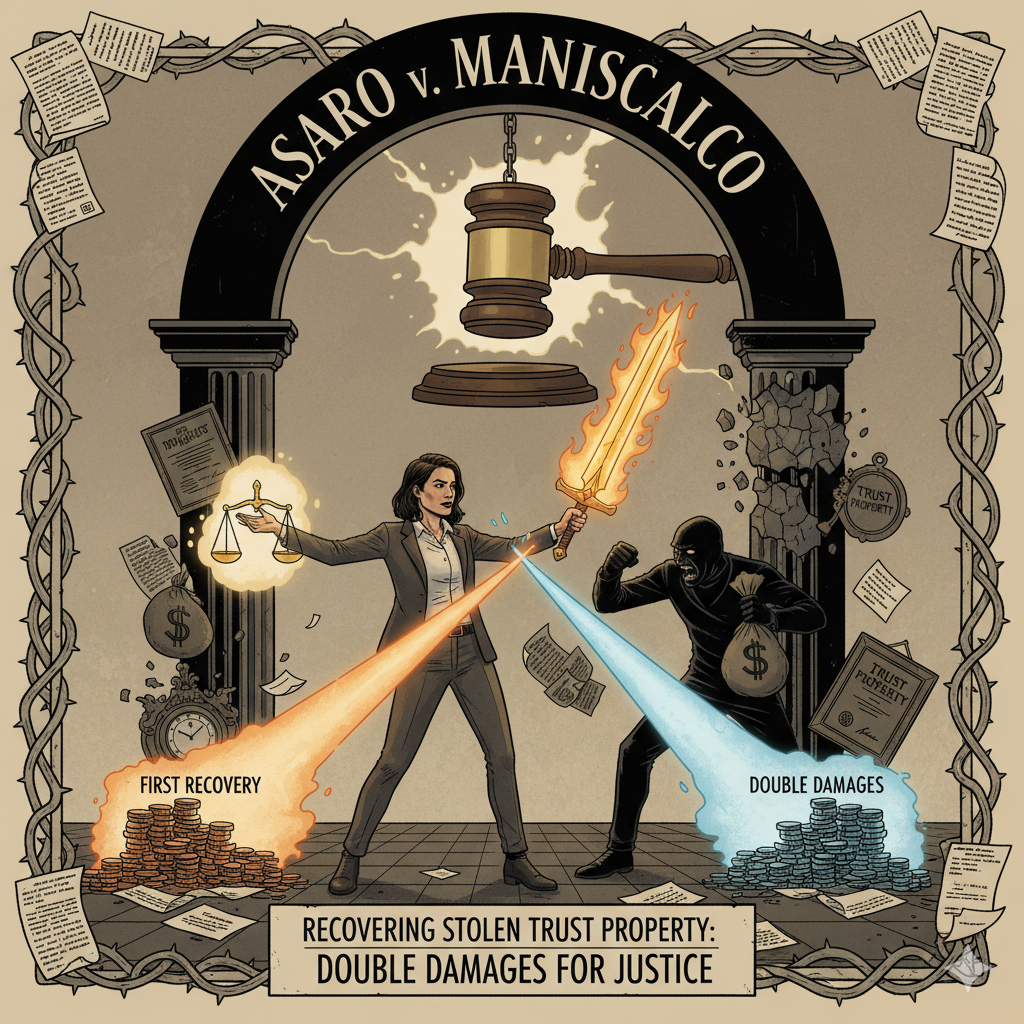
If you’re serving as an executor or personal representative, you may face situations where trust property has been wrongfully taken, concealed, or transferred by a trustee or beneficiary. The California Court of Appeal’s decision in Asaro v. Maniscalco clarifies powerful legal remedies available to you—including the ability to recover both the stolen property and double damages as a penalty.
This landmark ruling answers a critical question for executors dealing with trust property theft: Can you pursue multiple remedies simultaneously, or must you choose between getting the property back or seeking penalty damages?
What Executors Need to Know: The Two Key Remedies
Probate Code Section 856: Getting Trust Property Back
California Probate Code Section 856 provides a direct mechanism for recovering trust property that has been wrongfully taken, concealed, or disposed of by a trustee or other person.This statute allows executors to file a petition to compel the return of the property to the trust.
Probate Code Section 859: Double Damages Penalty
Probate Code Section 859 goes further by establishing a penalty of double damages against anyone who wrongfully takes, conceals, or disposes of trust property with intent to defraud.This punitive measure serves as both compensation and deterrent.
The Court’s Critical Ruling: You Can Pursue Both Remedies
The Court of Appeal resolved a significant ambiguity by holding that these two remedies work together, not against each other:
- Recovery of Property PLUS Penalty Damages: The double damages penalty under Section 859 is in addition to the remedy under Section 856 for return of trust property. Executors don’t have to choose—they can seek both.
- Individual Recovery Rights: The court clarified that penalty damages under Section 859 may be awarded directly to the individual who brought the action, rather than flowing back into the trust itself.
Real-World Application: When Can Executors Use These Remedies?
As an executor, you can pursue these combined remedies when:
- A trustee has transferred trust assets to themselves or family members without proper authority
- Beneficiaries have concealed property that should have been disclosed during estate administration
- Someone has disposed of trust property with fraudulent intent to prevent proper distribution
- Trust assets have been hidden to avoid creditor claims or proper accounting
How to Prove Intent to Defraud: What Executors Must Document
To recover the double damages penalty under Section 859, executors must prove that the wrongdoer acted with intent to defraud.This requires careful evidence gathering:
- Document all property transfers: Maintain detailed records of when and how trust property moved
- Preserve communications: Save emails, text messages, and letters showing the accused party’s knowledge and intentions
- Track concealment patterns: Document any attempts to hide assets, destroy records, or provide false information
- Establish timeline discrepancies: Show when the person knew they were required to disclose or return property
Why This Decision Matters for Executors Facing Personal Liability
This ruling strengthens the position of executors who are working to fulfill their fiduciary duties while facing wrongful conduct by others:
- Stronger deterrent effect: The possibility of double damages discourages fraudulent behavior involving trust property
- Cumulative remedies: Executors are no longer forced to choose between property recovery and penalty damages
- Direct compensation: Individual plaintiffs who successfully pursue claims may directly benefit from penalty awards
- Protection from liability: By aggressively pursuing wrongdoers, executors demonstrate they’re meeting their fiduciary obligations
California’s Strong Policy Protecting Trust Beneficiaries
The Asaro v. Maniscalco decision reinforces California’s commitment to protecting trust beneficiaries and deterring fraudulent conduct involving trust assets.For executors concerned about personal liability, this ruling provides clear legal pathways to address misconduct while fulfilling your duties.
Strategic Considerations for Executors
When you discover that trust property has been wrongfully taken or concealed, pursuing both remedies simultaneously may be appropriate.However, the evidentiary requirements for proving intent to defraud under Section 859 are substantial and require strategic planning.
Key strategic steps include:
- Consulting with experienced probate litigation counsel early in the process
- Conducting thorough asset searches and forensic accounting when necessary
- Preserving all evidence of wrongful conduct before filing any claims
- Understanding the statute of limitations for both remedies
Get Expert Guidance on Trust Administration and Probate Litigation
If you’re an executor or personal representative facing wrongfully taken trust property, understanding your legal remedies is critical to avoiding personal liability and fulfilling your fiduciary duties.
At California Probate & Trust, our experienced probate and trust administration attorneys help executors navigate complex situations involving trust property disputes. We provide clear guidance on pursuing remedies under Probate Code Sections 856 and 859, and we’ve helped countless executors protect themselves while recovering assets for beneficiaries.
Schedule your free consultation today to discuss your situation and learn how we can help you fulfill your duties as executor while protecting yourself from liability.
Source: California Lawyers Association – Asaro v. Maniscalco

About the Author: Dustin MacFarlane, Esq.
California Licensed Attorney | Estate Planning Specialist
Dustin MacFarlane is the founder of California Probate and Trust, PC, with over 15 years of experience in estate planning, probate administration, and trust law. Licensed by the California State Bar, Dustin has helped thousands of California families protect their assets and plan for the future.
CA Bar License: Active | Practice Areas: Estate Planning, Probate, Trust Administration | Location: Granite Bay, CA