
Here is a blog post drafted based on the content provided, structured for clarity and legal insight.
******
# Buskirk v. Buskirk (2020): Can California Courts Control Out-of-State Trustees?
In our increasingly mobile society, it is common for family members to scatter across different states. But what happens when a California trust is managed by a trustee who moves to Idaho, Texas, or New York? If a dispute arises, must you sue them in their new home state, or can California courts intervene?
The 2020 ruling in *Buskirk v. Buskirk* provides a definitive answer, reinforcing the reach of California jurisdiction over out-of-state trustees and beneficiaries.
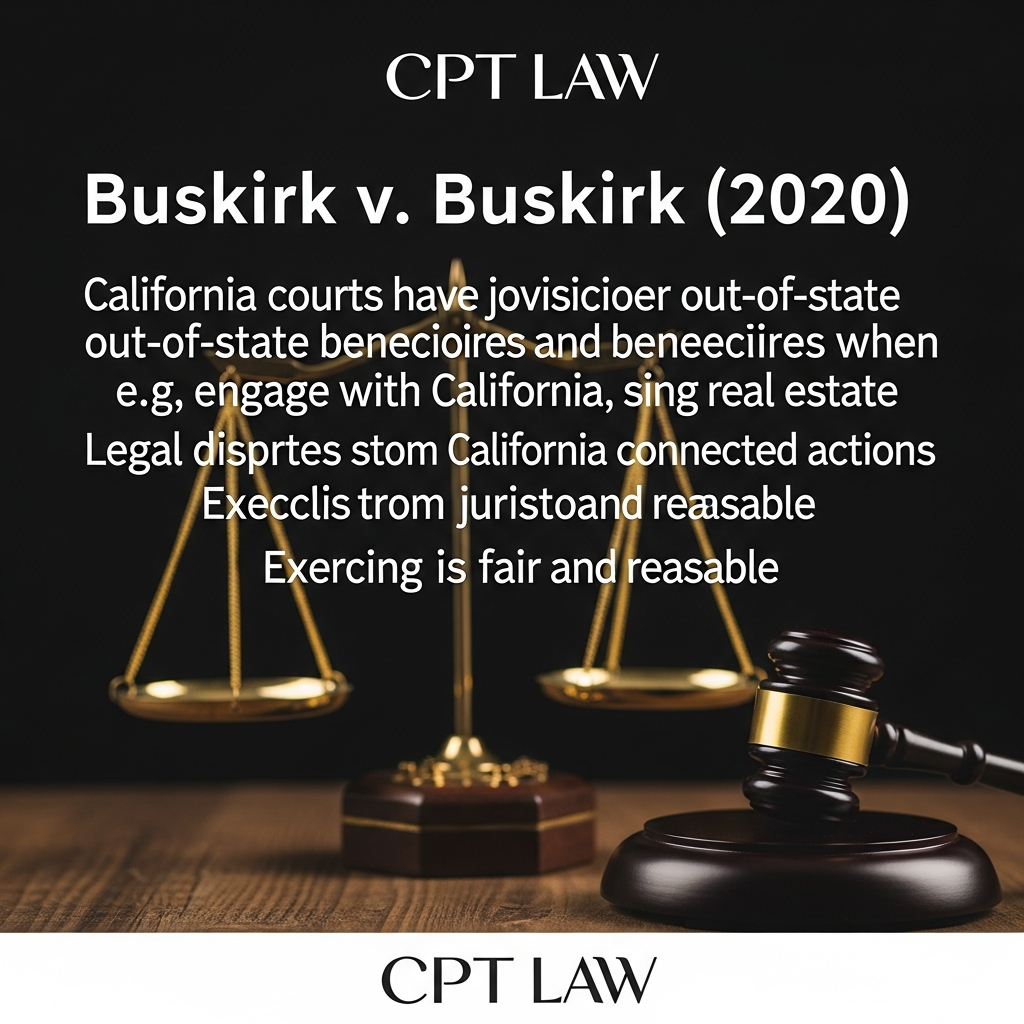
### The Core Message
California courts can assert jurisdiction over out-of-state trustees and beneficiaries when:
* They purposefully engage with California benefits (such as managing California real estate).
* The legal dispute arises directly from their California-connected actions.
* Exercising jurisdiction is deemed “fair and reasonable” by the court.
* They purposefully engage with California benefits (such as managing California real estate).
* The legal dispute arises directly from their California-connected actions.
* Exercising jurisdiction is deemed “fair and reasonable” by the court.
### Case Background: A Family Divided
Ellen and her husband created a trust in California in 2005, governed by California law. After her husband’s passing, Ellen served as the sole trustee. Years later, in 2016, Ellen moved to Idaho to live near her daughters.
The dispute began when Ellen’s son, Walter, alleged that his mother had been moved to Idaho against her will and was being isolated and subjected to undue influence by his sisters. When he discovered that California real estate belonging to the trust was being sold under objectionable terms, Walter filed a petition in California seeking an accounting and the appointment of a professional fiduciary.
Ellen and her daughters attempted to quash the petition, arguing that because they lived in Idaho, California courts had no power over them. The trial court initially agreed. However, the Court of Appeal reversed this decision.
### Why California Retained Jurisdiction
The Court of Appeal applied a three-prong test to determine that California indeed had “case-linked personal jurisdiction” over the Idaho residents:
1. Purposeful Availment: The court found that the respondents had “purposefully availed” themselves of California’s benefits. The trust was created in California, governed by California law, and held California real estate. By managing these assets, the out-of-state family members were actively participating in California’s legal and economic system.
2. Connection to the Controversy: Walter’s claims were not random; they were directly related to the respondents’ contacts with California. The lawsuit was about the administration of a California trust and the sale of California land.
3. Fair Play and Substantial Justice: The court ruled it was fair to require the sisters to defend themselves in California. Since the allegations involved moving the mother from California and managing California assets, it was reasonable for the legal battle to take place in the Golden State. The court ruled it was fair to require the sisters to defend themselves in California. Since the allegations involved moving the mother from California and managing California assets, it was reasonable for the legal battle to take place in the Golden State.
### Key Takeaways for Beneficiaries and Trustees
* Geography is Not a Shield: Out-of-state trustees cannot escape accountability for mismanagement simply by crossing state lines.
* Real Estate Matters: If a trust holds California property, the trustee is likely subject to California court authority regarding that property.
* Action is Required: In cases involving potential elder abuse, isolation, or the suspicious movement of a trust creator across state lines, legal action in the original home state (California) is a viable and powerful option. In cases involving potential elder abuse, isolation, or the suspicious movement of a trust creator across state lines, legal action in the original home state (California) is a viable and powerful option.
### Need Expert Guidance?
Trust disputes involving multi-state jurisdictions are complex. If you are concerned about the administration of a trust or the protection of a beneficiary, you need legal counsel that understands the nuances of jurisdiction and fiduciary duty.
For expert legal guidance, visit [cpt.law](https://cpt.law).

About the Author: Dustin MacFarlane, Esq.
California Licensed Attorney | Estate Planning Specialist
Dustin MacFarlane is the founder of California Probate and Trust, PC, with over 15 years of experience in estate planning, probate administration, and trust law. Licensed by the California State Bar, Dustin has helped thousands of California families protect their assets and plan for the future.
CA Bar License: Active | Practice Areas: Estate Planning, Probate, Trust Administration | Location: Granite Bay, CA