
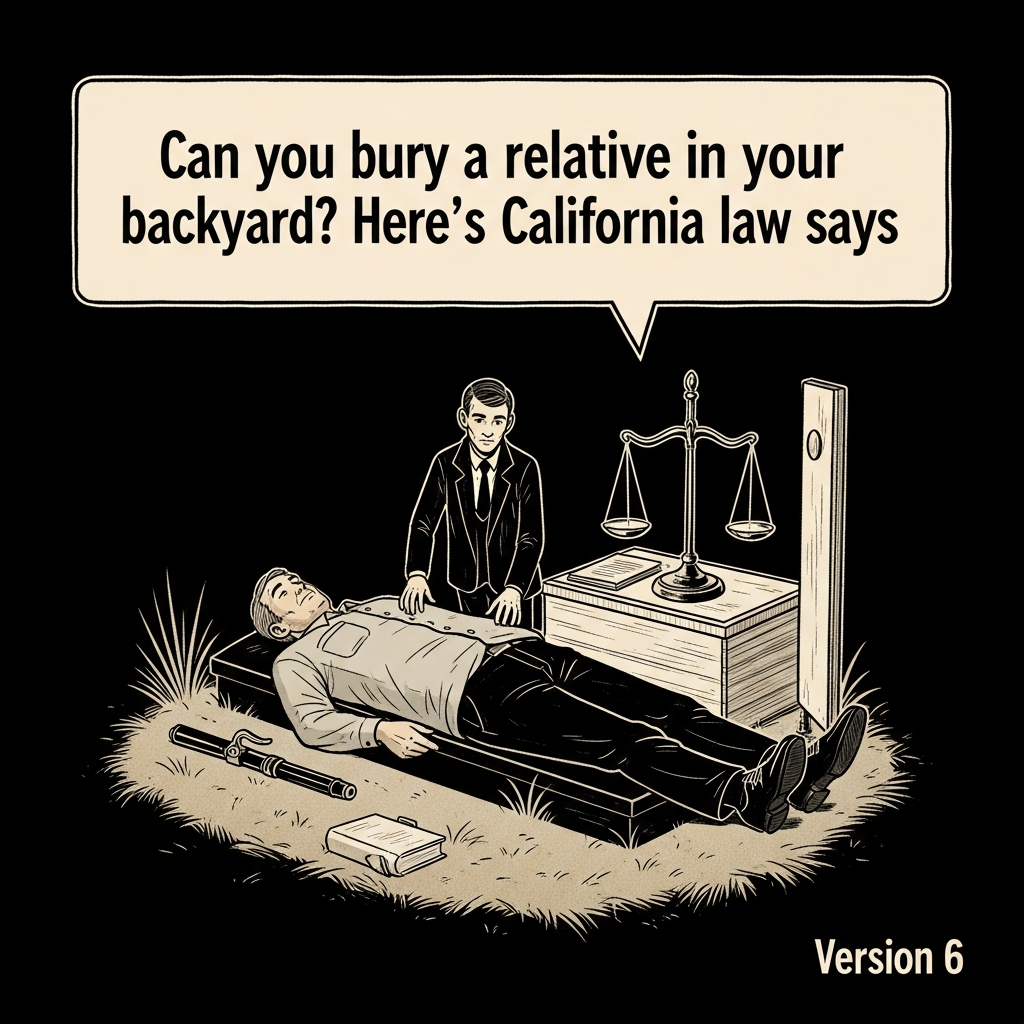
Want to keep a loved one close even after they have passed? Well, have you considered burying them in your own backyard?
A woman on Tiktok recently went viral for burying her mother in her backyard.
A woman is going viral for burying her recently deceased mother in her backyard. pic.twitter.com/6l4Wajybsu
Before you consider memorializing your recently deceased loved one with a home burial, here’s what you need to know regarding California’s regulations:
California law
The California Health and Safety Code 8115 states that the governing body of any city or county has the authority to establish and regulate burial grounds as it sees fit.
In its power, the governing body determines the standards for: Burial, inurnment, entombment, maintenance for cemeteries, including mausoleums and columbariums.
The city or county creates its local standards to protect the public’s health and the treatment of human remains. These standards also aim to prevent disrespectful acts from happening on burial grounds and structures, according to the code.
Does California allow home burials?
Matt Woodcheke, a spokesperson for the California Department of Consumer Affairs, said burials can only take place in established cemeteries.
“Obtaining licensure from the Bureau is a required step in establishing a cemetery,” Woodcheke said.
He said that any privately owned cemetery is subject to the laws under the Cemetery and Funeral Act. This includes family cemeteries that are not open to the public.
If you’re looking into a home burial for a loved one, or yourself, check with your local government to find out whether you can establish a family cemetery. It might be possible for those in rural areas, according to an article published by Nolo, a legal encyclopedia.
Who has the right to make funeral arrangements?
California Health and Safety Code 7100 determines who has the right to make decisions about a person’s body and funeral services.
This right and responsibility goes to the following people, in order:
▪ You, if you write down instructions before you die
▪ Your health care agent, if you name one in advance
▪ Your spouse or domestic partner
▪ Your adult child, or a majority of your children if you have more than one
▪ Your parents
▪ Your siblings
▪ Your next of kin, or a conservator who has been appointed for your estate
California Health and Safety Code states you can give the responsibility to a person who is not on the list, but you must do so in writing.

About the Author: Dustin MacFarlane, Esq.
California Licensed Attorney | Estate Planning Specialist
Dustin MacFarlane is the founder of California Probate and Trust, PC, with over 15 years of experience in estate planning, probate administration, and trust law. Licensed by the California State Bar, Dustin has helped thousands of California families protect their assets and plan for the future.
CA Bar License: Active | Practice Areas: Estate Planning, Probate, Trust Administration | Location: Granite Bay, CA
Why Estate Planning Matters in California
California has unique estate planning laws that differ significantly from other states. Without proper planning, your assets may not pass according to your wishes, and your family could face unnecessary probate court proceedings.
A comprehensive California estate plan typically includes:
- A revocable living trust to avoid probate
- Pour-over will as a safety net
- Advance health care directive
- Durable power of attorney for finances
- Beneficiary designations on retirement accounts and life insurance
How Trusts Work in California
California’s trust law (Probate Code Division 9) governs how trusts are created, administered, and terminated. Understanding these rules is essential for effective estate planning.
Key benefits of California trusts:
- Avoid probate: Assets in a properly funded trust bypass California’s lengthy probate process
- Privacy: Unlike wills (which become public in probate), trusts remain private
- Control: You maintain control during your lifetime and direct distribution after death
- Incapacity planning: Your successor trustee manages assets if you become incapacitated
- Tax planning: Trusts can help minimize estate and income taxes
Need Expert Estate Planning Guidance?
California estate planning law is complex and constantly evolving. Don’t navigate it alone.
California Probate and Trust, PC has helped thousands of California families protect their assets and plan for the future.
📞 Call us today:
- Main Office: 866-400-0058
- Direct: 916-963-9968