
Estate and Inheritance Taxes in California: What You Need to Know to Protect Your Family’s Legacy in 2025
If you’re a California resident managing family assets or planning for the future, understanding how estate and inheritance taxes work—both federally and across state lines—is critical to protecting what you’ve built and ensuring your loved ones aren’t blindsided by unexpected tax burdens.
While California itself does not impose a state-level estate or inheritance tax, many families with out-of-state property, multi-state assets, or beneficiaries living in other states may still face significant tax exposure. Here’s what California families need to know about estate and inheritance taxes in 2025.
How Do Estate and Inheritance Taxes Work?
Estate and inheritance taxes are two different mechanisms that states use to tax wealth transfers at death:
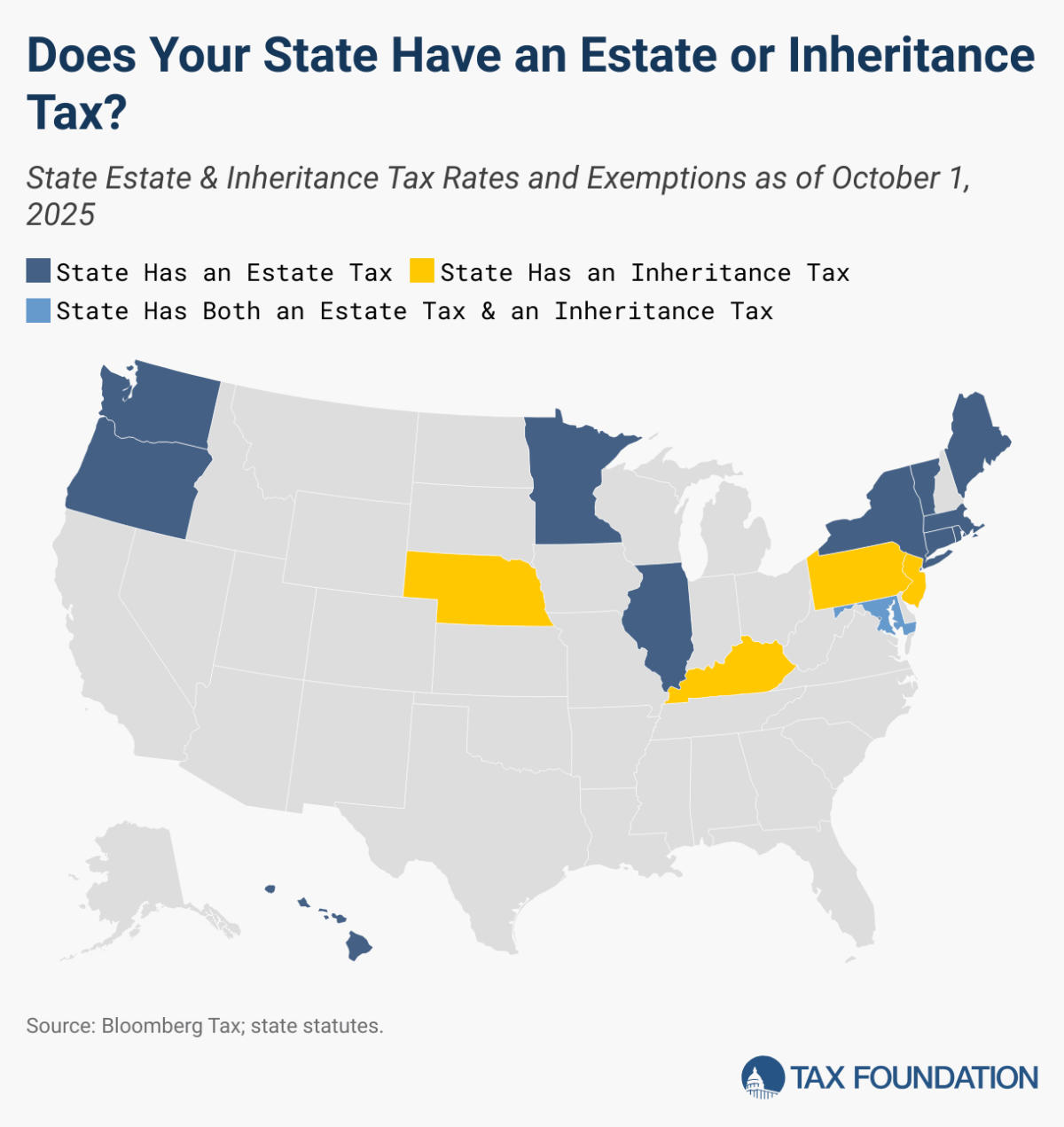
Which States Have Estate or Inheritance Taxes in 2025?
As of 2025, 12 states and the District of Columbia impose estate taxes, while 5 states levy inheritance taxes. Maryland is the only state that imposes both.
Here’s what California families managing assets in these states should know:
All five states with inheritance taxes—Kentucky, Maryland, Nebraska, New Jersey, and Pennsylvania—structure their rates based on the relationship between the beneficiary and the decedent. Close relatives typically face lower rates and higher exemptions, while distant relatives or non-family members are taxed more heavily.
State Estate & Inheritance Tax Rates and Exemptions (as of October 1, 2025)
Notes:
Source: Bloomberg Tax; state statutes. Data compiled by Katherine Loughead, Tax Foundation.
What About the Federal Estate Tax?
In addition to state-level taxes, the federal estate tax imposes a top marginal rate of 40% on estates that exceed the federal exemption threshold.For California families with significant wealth, this can represent a substantial tax liability—even if California itself doesn’t impose an estate tax.
Real-World Scenarios: When Do California Families Face Estate or Inheritance Taxes?
You might face estate or inheritance tax exposure if:
How Can You Protect Your Family from Unexpected Tax Burdens?
The key to avoiding estate and inheritance tax surprises is proactive planning. Here’s how California families can take control:
Why California Families Trust California Probate and Trust, PC
At California Probate and Trust, PC, we understand that estate planning isn’t just about paperwork—it’s about protecting the people you love and the legacy you’ve worked so hard to build. Our team has helped thousands of California families navigate complex estate and probate matters with transparency, compassion, and personalized guidance.
Whether you’re concerned about multi-state tax exposure, need to update an outdated estate plan, or want to ensure your family is protected no matter what the future holds, we’re here to help.
Schedule Your Free Consultation Today
Don’t leave your family’s future to chance. Contact California Probate and Trust, PC today to schedule a free, no-obligation consultation. We’ll walk you through your options, answer your questions, and help you create a plan that gives you peace of mind.
Visit cpt.law or call (866) 674-1130 to get started.
Source: Tax Foundation – Estate and Inheritance Taxes by State, 2025
Legal Disclaimer: This article is provided for informational purposes only and does not constitute legal advice. Estate planning laws vary by state and are subject to change. For personalized guidance tailored to your specific situation, please consult with a qualified estate planning attorney.

About the Author: Dustin MacFarlane, Esq.
California Licensed Attorney | Estate Planning Specialist
Dustin MacFarlane is the founder of California Probate and Trust, PC, with over 15 years of experience in estate planning, probate administration, and trust law. Licensed by the California State Bar, Dustin has helped thousands of California families protect their assets and plan for the future.
CA Bar License: Active | Practice Areas: Estate Planning, Probate, Trust Administration | Location: Granite Bay, CA