
How the New Medi-Cal Asset Transfer Rules Impact Your Long-Term Care Planning in 2026
If you or a loved one may need nursing home care or assisted living in California, understanding the new Medi-Cal asset transfer rules is critical to protecting your family’s financial security. The California Department of Health Care Services (DHCS) recently issued crucial guidance that changes how asset transfers are evaluated when applying for Medi-Cal coverage for long-term care.
Who This Impacts
This guidance is essential for:
What Changed: The Return of Asset Limits
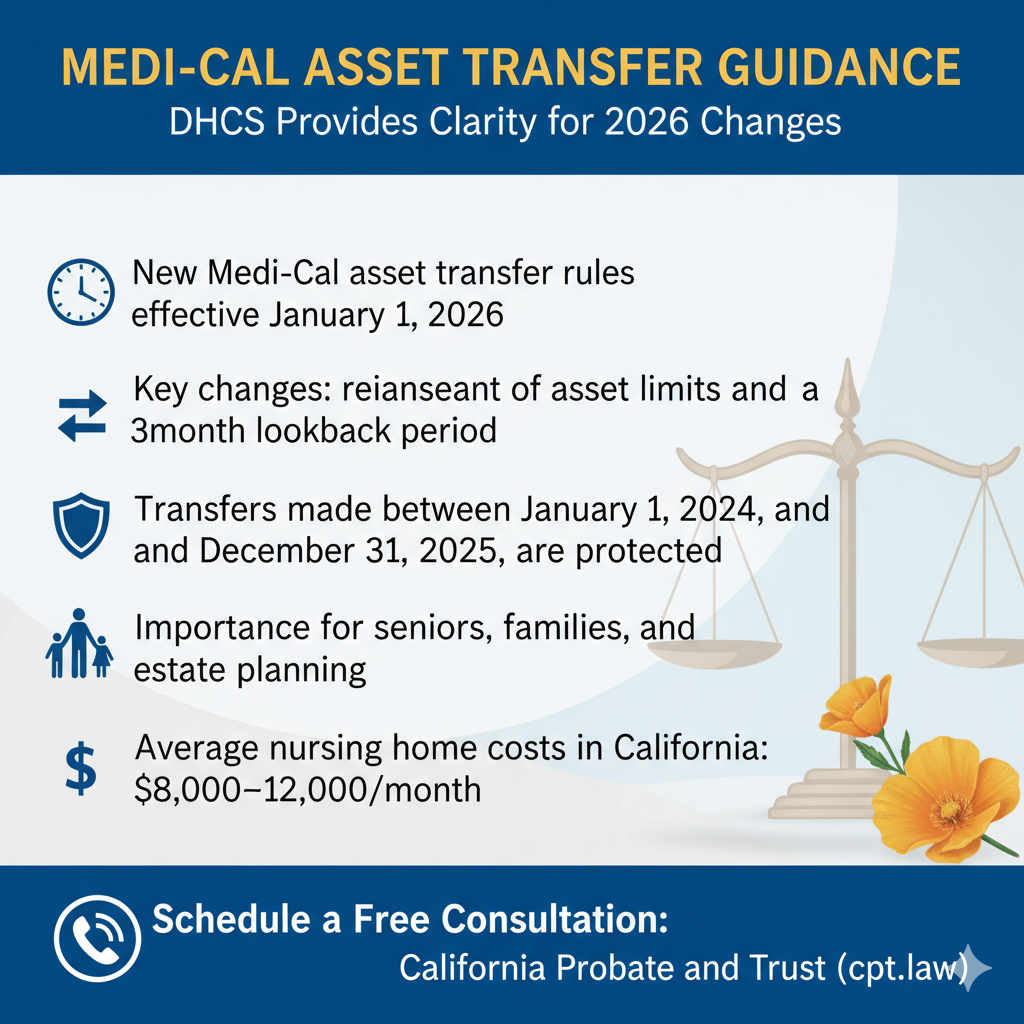
On January 1, 2026, Medi-Cal reinstated asset limits for long-term care eligibility after a two-year pause. According to All-County Welfare Directors Letter 25-18(published October 9, 2025), DHCS will now review asset transfers using a 30-month lookback period from your application date.
The Key Rule You Need to Know
Here’s what makes this guidance unique: transfers made between January 1, 2024 and December 31, 2025 are NOT disqualifying, even though they fall within the lookback period. This creates a significant planning opportunity that many families don’t realize exists.
How Asset Transfer Penalties Work Now
The rules vary depending on when you apply for Medi-Cal:
Applications from January 2025 through January 2026
Applications from February 2026 through June 2026
Applications from July 2026 onward
Real-World Planning Questions This Answers
“My mother gave money to her grandchildren in 2024. Will this affect her Medi-Cal eligibility?”
No. Gifts made during 2024-2025 are protected under this guidance.
“I’m helping my father apply for Medi-Cal in March 2026. What transfers will be reviewed?”
DHCS will review transfers from September-December 2023 and January-February 2026.
“Can I still do estate planning if I might need nursing home care soon?”
Yes, but timing matters. The 30-month lookback periodmeans strategic planning should happen well before you anticipate needing care.
Why This Matters for Your Family’s Legacy
Without proper planning, long-term care costs can quickly deplete life savings meant for your spouse or children. California nursing homes average $8,000-$12,000 per month, and most families exhaust their resources within two years. Understanding these transfer rules helps you:
The Reference Chart You Need
DHCS included a detailed reference chart in All County Welfare Director’s Letter 25-18that shows exactly which months will be reviewed based on your application date. This chart is an essential tool for anyone planning long-term care strategies.
Expert Guidance Makes the Difference
The intersection of Medi-Cal eligibility, asset protection, and estate planning requires specialized knowledge. At California Probate and Trust, our certified estate planning specialists have helped thousands of California families navigate these complex rules while protecting what they’ve spent a lifetime building.
We understand that planning for long-term care means confronting difficult realities about aging and health. Our compassionate approach provides clarity during uncertain times, helping you make informed decisions that protect both your care needs and your family’s financial future.
Take Action Now
The new Medi-Cal asset transfer rules create both opportunities and risks. Whether you’re planning ahead or facing an immediate need for long-term care, professional guidance can mean the difference between preserving your legacy and losing it to care costs.
California Probate and Trust offers a free one-hour consultation to review your situation and develop a personalized strategy. Our team will help you understand:
Schedule Your Free Consultation
Don’t let confusion about Medi-Cal rules put your family’s financial security at risk. Contact California Probate and Trust today at (866) 674-1130 or visit cpt.law/contact-us to schedule your free consultation with an experienced estate planning attorney.
Source: California Department of Health Care Services, All-County Welfare Directors Letter 25-18, October 9, 2025

About the Author: Dustin MacFarlane, Esq.
California Licensed Attorney | Estate Planning Specialist
Dustin MacFarlane is the founder of California Probate and Trust, PC, with over 15 years of experience in estate planning, probate administration, and trust law. Licensed by the California State Bar, Dustin has helped thousands of California families protect their assets and plan for the future.
CA Bar License: Active | Practice Areas: Estate Planning, Probate, Trust Administration | Location: Granite Bay, CA