
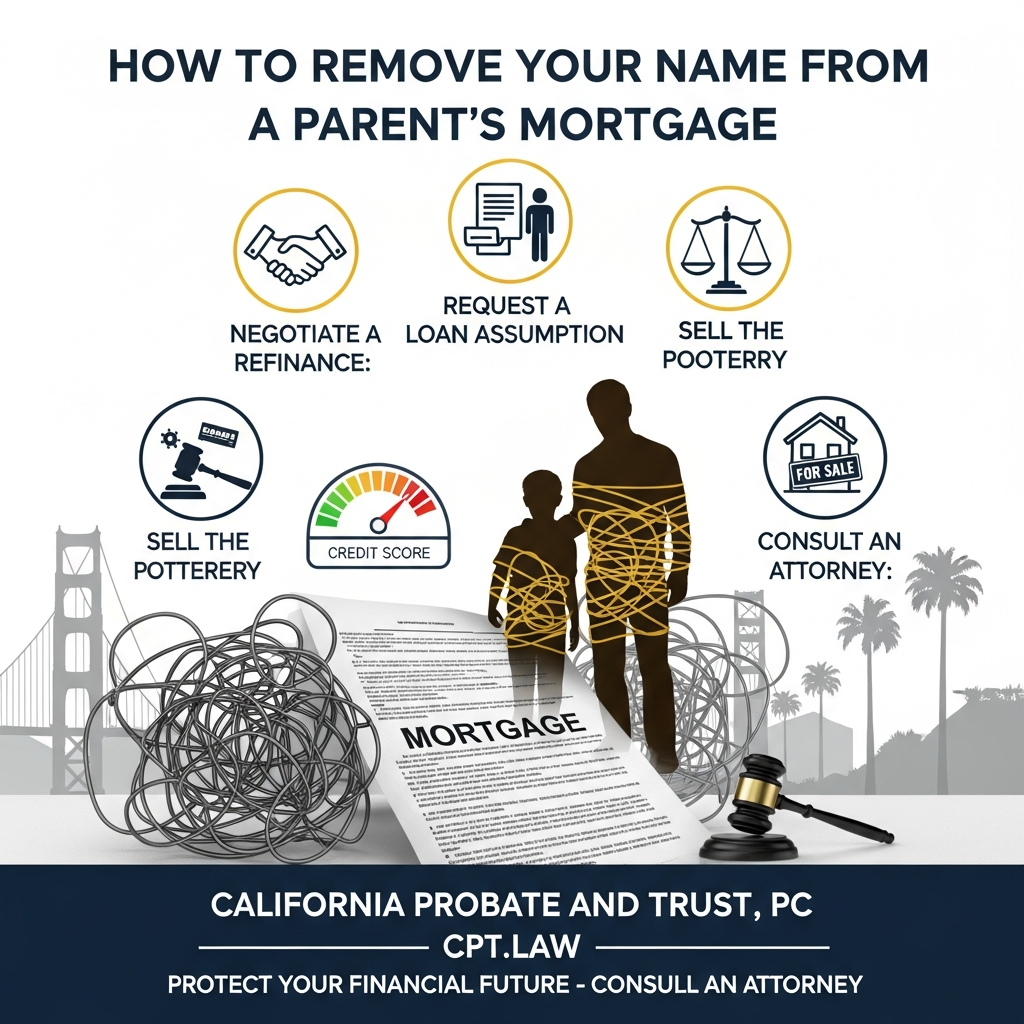
If you’re a California resident who co-signed on a parent’s mortgage and now want your name removed, you’re facing a common but complex family and financial dilemma. This situation can affect your credit score, your ability to qualify for future loans, and even your long-term financial planning. Understanding your legal options and the steps required to protect your financial future is critical.
Source: Dear Abby: I’ve asked my mother to take my name off her mortgage, but she refuses
Who This Guide Is For
This article is designed for California residents who:
Why Your Name on a Parent’s Mortgage Matters
Being listed on someone else’s mortgage isn’t just a formality—it has real financial consequences:
Can You Remove Your Name from a Mortgage Without the Other Party’s Consent?
In most cases, no—you cannot unilaterally remove your name from a mortgage. Here’s why:
If your mother refuses to refinance or take steps to remove your name, you have limited options—but you’re not without recourse.
Legal Options When a Parent Refuses to Remove Your Name
1. Negotiate a Refinance Agreement
The most common solution is refinancing the mortgage in your parent’s name only. This requires:
2. Request a Loan Assumption
Some lenders allow a loan assumption, where one borrower takes over the mortgage without a full refinance. This option:
3. Sell the Property
If refinancing isn’t feasible and your parent refuses to cooperate, selling the property may be the only way to remove your liability. This is an extreme step, but it may be necessary if:
4. Consult with a California Estate Planning and Real Property Attorney
An experienced attorney can help you:
What Happens If Your Parent Passes Away and You’re Still on the Mortgage?
If your mother passes away and your name remains on the mortgage, you could face:
This is why addressing the issue now—while everyone is still living and able to negotiate—is so important.
How California Probate and Trust, PC Can Help
At California Probate and Trust, PC, we work with California residents who are navigating complex family, financial, and estate planning matters. Our attorneys understand how co-signed mortgages intersect with estate planning, probate, and real property law.
We can help you:
Our firm has guided thousands of California families through sensitive legal matters involving property, debt, and estate planning. We prioritize transparency, compassion, and practical solutions tailored to your unique situation.
Take Control of Your Financial Future
If you’re struggling to remove your name from a parent’s mortgage, waiting won’t make the problem go away. The longer you remain on the loan, the more it can impact your credit, your ability to buy your own home, and your long-term financial security.
Contact California Probate and Trust, PC today to discuss your situation with an experienced California estate planning and real property attorney. We’ll review your options, explain your rights, and help you create a plan that protects both your financial future and your family relationships.
Call us at (866) 674-1130 or visit cpt.law to schedule a consultation.
Legal Disclaimer
This article is provided for informational purposes only and does not constitute legal advice. The information contained herein is general in nature and may not apply to your specific situation. Laws and regulations vary by jurisdiction and are subject to change. For advice regarding your individual circumstances, please consult with a licensed attorney. California Probate and Trust, PC does not guarantee any particular outcome, and past results do not guarantee future success. No attorney-client relationship is formed by reading this article or contacting our firm until a formal engagement agreement is signed.