
Key Estate Planning and Legal Updates for California Residents: What Changed in 2026
If you’re a California resident managing an estate, planning for your family’s future, or navigating probate, understanding recent federal and state legal developments is essential. This comprehensive guide breaks down the most important changes affecting estate planning, asset protection, retirement accounts, and healthcare decisions—helping you make informed choices to protect your loved ones.
Who Should Read This Article?
This article is designed for:
2026 Estate and Gift Tax Exemptions: What You Need to Know
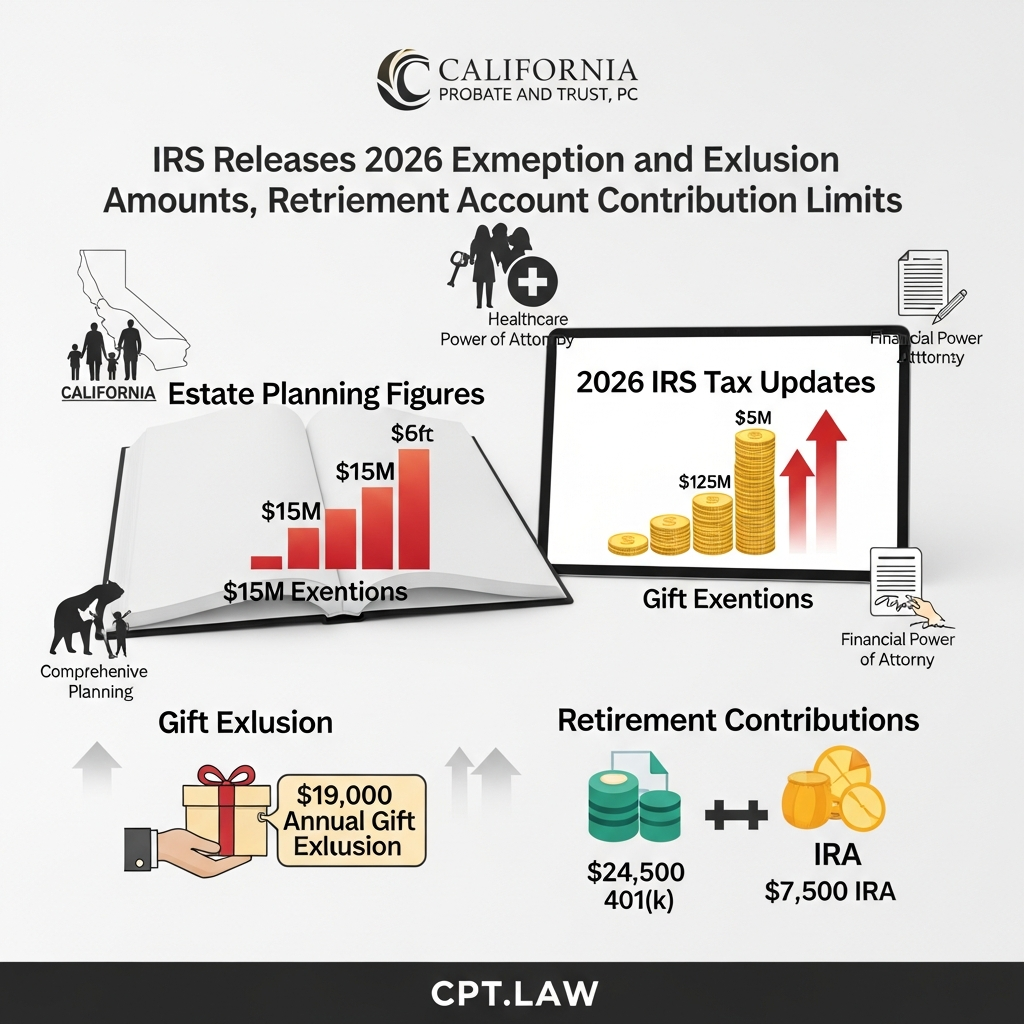
The IRS released significant updates affecting how much you can transfer tax-free in 2026:
What This Means for Your Family
This $1,010,000 increase in the exemption amount creates significant planning opportunities. California residents with substantial assets should consider:
Estate planning attorneys recommend acting sooner rather than later, as Congress could repeal these favorable provisions in future tax legislation.
How to Protect Your Assets from Creditors: The DAPT Strategy
A recent Delaware court case demonstrates how domestic asset protection trusts (DAPTs) can shield your wealth from future creditor claims.
The Case: Real Property Protected from $14 Million Judgment
In In re CES 2007 Trust, a Delaware court ruled that a creditor could not reach real estate held by LLCs owned by a properly structured DAPT—even with a $14 million judgment against the trust’s creator. The key factors that protected the assets included:
How California Residents Can Use This Strategy
While California does not have its own DAPT statute, California residents can establish DAPTs in states like Delaware, Nevada, or South Dakota. This strategy allows you to:
However, DAPTs must be properly structured and funded well before any creditor claims arise. Working with experienced estate planning counsel is essential to ensure compliance and maximum protection.
Healthcare Decisions: Understanding What Powers of Attorney Can and Cannot Do
A Kentucky Supreme Court case clarified an important limitation on healthcare decision-making authority that affects families nationwide.
When Healthcare Authority Doesn’t Include Contract Decisions
In Lexington Alzheimer’s Invs., LLC v. Norris, the court ruled that Kentucky’s Living Will Directive Act—which allows spouses to make healthcare decisions for incapacitated partners—did not authorize signing arbitration agreements for nursing home admission.
The court determined that arbitration agreements are not medical procedures, treatments, or interventions, and therefore fall outside the scope of healthcare decision-making authority.
What This Means for California Families
California has similar statutes allowing family members to make healthcare decisions for incapacitated individuals. However, this case highlights critical planning considerations:
To avoid disputes when admitting family members to care facilities, California residents should ensure their estate planning documents include:
2026 Retirement Account Contribution Limits
The IRS also announced increased contribution limits for retirement accounts in 2026:
These increases allow California residents to shelter more income from current taxation while building retirement security. Maximizing contributions should be part of any comprehensive financial and estate plan.
New Tax Deduction for Tipped Workers
The One Big Beautiful Bill Act created a new deduction of up to $25,000 for qualified tips received by workers in service industries. This deduction:
California business owners should review their tipping and compensation structures to help employees maximize this benefit while ensuring proper tax reporting.
Medicaid Termination Notices and Due Process
The Eighth Circuit ruled in Filyaw v. Corsi that recipients who received allegedly deficient Medicaid termination notices could not sue state officials for ongoing violations of due process.
The court found that receiving a deficient notice was a discrete past act, not an ongoing violation. This decision affects how Medicaid recipients can challenge benefit terminations and underscores the importance of understanding appeal rights and deadlines.
California families dealing with Medicaid (known as Medi-Cal in California) should:
FTC Abandons Non-Compete Ban
The Federal Trade Commission withdrew its appeals of court decisions that vacated its rule banning most employment non-compete agreements. While the blanket ban will not take effect, the FTC announced it will pursue enforcement actions against individual unreasonable non-compete agreements.
California already has some of the nation’s strongest protections against non-compete agreements under Business and Professions Code Section 16600, making this development less impactful for California residents than those in other states.
How California Probate and Trust, PC Can Help Protect Your Family
These legal developments demonstrate the complexity of estate planning, asset protection, and family wealth management. California Probate and Trust, PC provides comprehensive estate planning services tailored to California residents who value transparency and family protection.
Our experienced attorneys help clients:
Whether you’re establishing your first estate plan or updating documents to take advantage of increased exemptions, our team provides the guidance California families need to protect their legacies.
Schedule Your Estate Planning Consultation
Don’t wait until it’s too late to protect your family and assets. Contact California Probate and Trust, PC to schedule a consultation with our experienced estate planning attorneys.
Legal Disclaimer: This article is provided for informational purposes only and does not constitute legal advice. Estate planning laws vary by jurisdiction and individual circumstances. The information presented here is based on legal developments as of February 2026 and may change. Readers should consult with a qualified estate planning attorney licensed in their state before making any decisions regarding estate planning, asset protection, or related legal matters. California Probate and Trust, PC does not represent or warrant that the information in this article is accurate, complete, or current. No attorney-client relationship is created by reading this article or contacting the firm for general information.
Source: WealthCounsel Quarterly Notable Developments (January 15, 2026)

About the Author: Dustin MacFarlane, Esq.
California Licensed Attorney | Estate Planning Specialist
Dustin MacFarlane is the founder of California Probate and Trust, PC, with over 15 years of experience in estate planning, probate administration, and trust law. Licensed by the California State Bar, Dustin has helped thousands of California families protect their assets and plan for the future.
CA Bar License: Active | Practice Areas: Estate Planning, Probate, Trust Administration | Location: Granite Bay, CA