
Last updated: February 9, 2026 | Source: Yahoo Finance – AMD Q4 Earnings Report
If you’re a California resident holding AMD stock, restricted stock units (RSUs), or other concentrated tech holdings, the recent earnings volatility serves as a critical reminder: even strong-performing companies can experience dramatic price swings that threaten your family’s financial security. This guide explains how California families can protect concentrated wealth through strategic estate planning—whether you’re navigating probate now or planning for the future.
What Happened with AMD’s Q4 2025 Earnings?
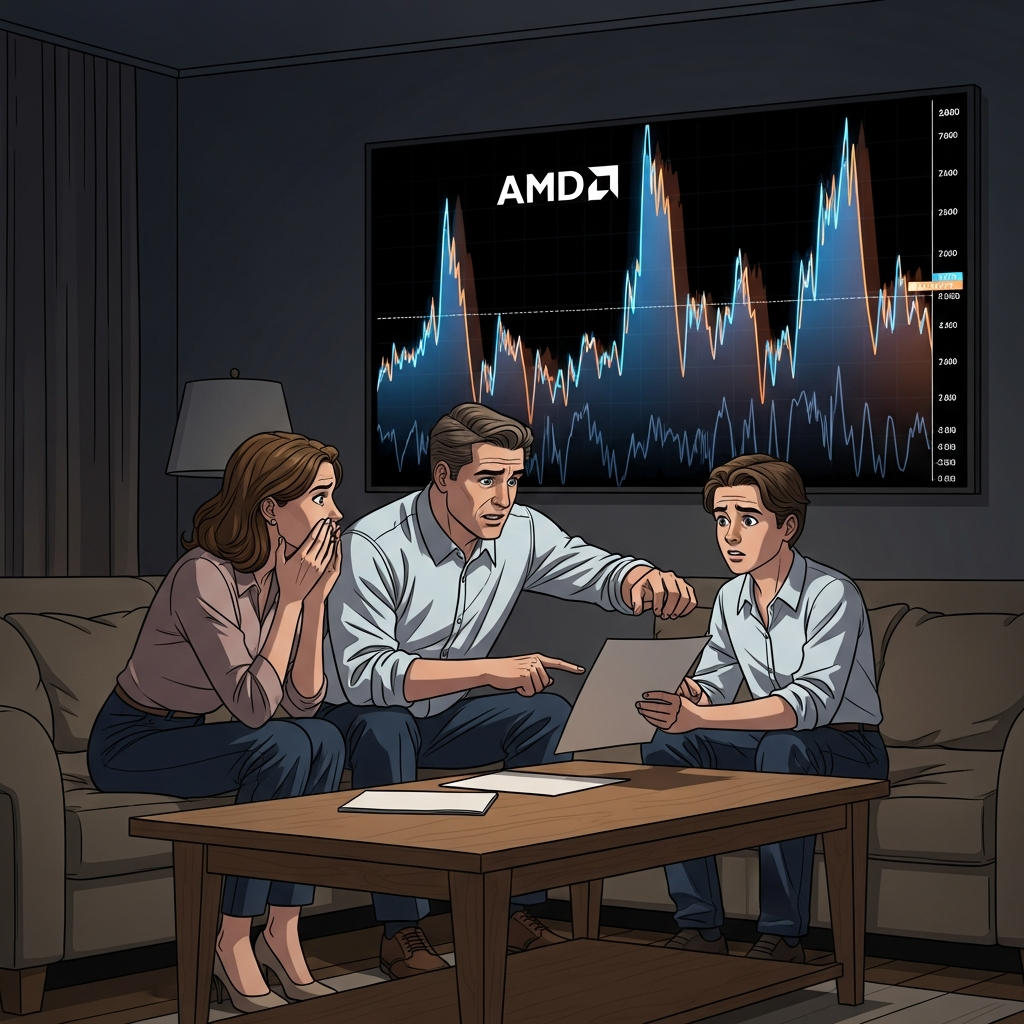
Advanced Micro Devices (AMD) reported Q4 2025 earnings that beat analyst expectations on both revenue ($10.3 billion) and earnings per share ($1.53). Despite this strong performance, AMD’s stock plummeted over 17% in a single trading session. Why?
For California families holding significant AMD positions—particularly employees with RSUs or long-term shareholders with concentrated holdings—this volatility raises urgent questions about asset protection and estate planning.
Why California Residents with Tech Stock Need Specialized Estate Planning
California is home to thousands of tech employees and investors who hold concentrated positions in companies like AMD, Intel, Nvidia, Apple, and others. These holdings create unique estate planning challenges:
1. Volatility Risk and Family Protection
When a significant portion of your estate is tied to a single stock or a handful of tech holdings, price volatility directly threatens your family’s inheritance. A 17% drop in AMD—like what occurred in February 2025—could represent hundreds of thousands or even millions of dollars in lost value for concentrated holders.
Common question: “How can I protect my family from stock volatility if something happens to me?”
2. RSU Vesting and Estate Tax Implications
Restricted stock units (RSUs) are a common form of compensation at tech companies. When RSUs vest, they’re taxed as ordinary income. If you pass away with unvested RSUs, your estate may face:
Real-world scenario: An AMD engineer with $2 million in unvested RSUs passes away unexpectedly. The RSUs accelerate and vest immediately, creating a $2 million ordinary income event. Combined with California’s top tax bracket and federal taxes, the family could face a tax bill exceeding $700,000—due within months.
Without proper planning, your family may be forced to sell shares immediately (potentially during market volatility like AMD’s recent drop) just to pay the tax bill.
3. Concentrated Wealth and Probate Exposure
In California, probate is required for estates exceeding $184,500 (as of 2025) in assets that don’t have a designated beneficiary or trust structure. Tech employees with concentrated stock holdings almost always exceed this threshold.
Common question: “What happens to my AMD stock if I die without a trust?”
Without a properly structured estate plan, your AMD shares will likely go through California probate, which means:
Imagine your AMD holdings are worth $1.5 million when you pass away. Probate fees alone could exceed $60,000, and if the stock drops 17% during the probate process (like it did in February 2025), your family loses another $255,000 in value—all while waiting for court approval to act.
How California Families Can Protect Concentrated Tech Holdings
The good news: with proper planning, you can protect your AMD stock, RSUs, and other concentrated wealth from volatility, taxes, and probate delays. Here’s how California residents are safeguarding their tech holdings:
Strategy 1: Establish a Revocable Living Trust
A revocable living trust is the foundation of any estate plan for California residents with significant assets. When you transfer your AMD stock and other holdings into a trust:
Best for: Anyone with more than $184,500 in California assets, especially those with concentrated stock positions.
Strategy 2: Coordinate Beneficiary Designations with Your Trust
Many tech employees make a critical mistake: they set up a trust but forget to coordinate beneficiary designations on brokerage accounts, 401(k)s, and RSU agreements. This creates several problems:
Solution: Name your revocable living trust as the primary beneficiary on accounts holding AMD stock and RSUs. This ensures all assets are managed according to your comprehensive estate plan.
Strategy 3: Build in Diversification Instructions
Your estate plan should include specific guidance on managing concentrated positions. Consider instructions such as:
These instructions give your trustee clear authority to act during volatile periods (like AMD’s recent 17% drop) without requiring court approval or family consensus.
Strategy 4: Plan for RSU Acceleration and Tax Liquidity
If you have unvested RSUs, work with an estate planning attorney who understands tech compensation to:
Case example: A California-based AMD employee with $3 million in unvested RSUs and a $1.2 million home (with $400k equity) establishes a $1 million life insurance policy. Upon her unexpected death, the RSUs vest and create a $1+ million tax bill. The life insurance proceeds (paid directly to her trust, tax-free) provide immediate liquidity to pay taxes, allowing her family to hold the AMD shares long-term rather than selling at the worst possible time.
Strategy 5: Use Trusts for Asset Protection and Control
Beyond avoiding probate, trusts offer powerful protections for concentrated wealth:
Common question: “Can I prevent my children from selling their AMD inheritance immediately?”
Yes. Your trust can include provisions that restrict immediate access, require trustee approval for large distributions, or gradually release shares over time (e.g., 1/3 at age 25, 1/3 at age 30, 1/3 at age 35). This prevents impulsive decisions during market volatility.
What AMD’s Earnings Volatility Teaches Us About Estate Planning
The February 2025 AMD earnings report—and the subsequent 17% stock drop despite strong fundamentals—illustrates several critical estate planning lessons for California families:
Lesson 1: Market Timing Is Unpredictable
AMD beat earnings expectations and announced positive forward guidance, yet the stock still fell dramatically. This unpredictability makes it essential that your estate plan includes:
Lesson 2: Concentrated Positions Require Active Management
If your estate plan doesn’t address your concentrated AMD holdings specifically, you’re leaving critical decisions to chance—or worse, to probate court. Your family may not have the expertise, authority, or time to make optimal decisions.
Lesson 3: Tax Planning Can’t Wait
The difference between proactive tax planning and reactive tax payment can be hundreds of thousands of dollars. With federal estate tax exemptions potentially dropping in 2026 (from $13.99M to approximately $7M per person), and California’s high income tax rates, the window for optimal planning is closing.
Who Should Consider Specialized Estate Planning for Tech Holdings?
You should consult with an estate planning attorney who specializes in concentrated wealth if you:
Real Client Results: How Proper Planning Protected a California Tech Family
California Probate and Trust, PC recently worked with a Sacramento-based AMD senior engineer (identity protected for client confidentiality) who held:
Without planning, this $5.95 million estate would have faced:

About the Author: Dustin MacFarlane, Esq.
California Licensed Attorney | Estate Planning Specialist
Dustin MacFarlane is the founder of California Probate and Trust, PC, with over 15 years of experience in estate planning, probate administration, and trust law. Licensed by the California State Bar, Dustin has helped thousands of California families protect their assets and plan for the future.
CA Bar License: Active | Practice Areas: Estate Planning, Probate, Trust Administration | Location: Granite Bay, CA