
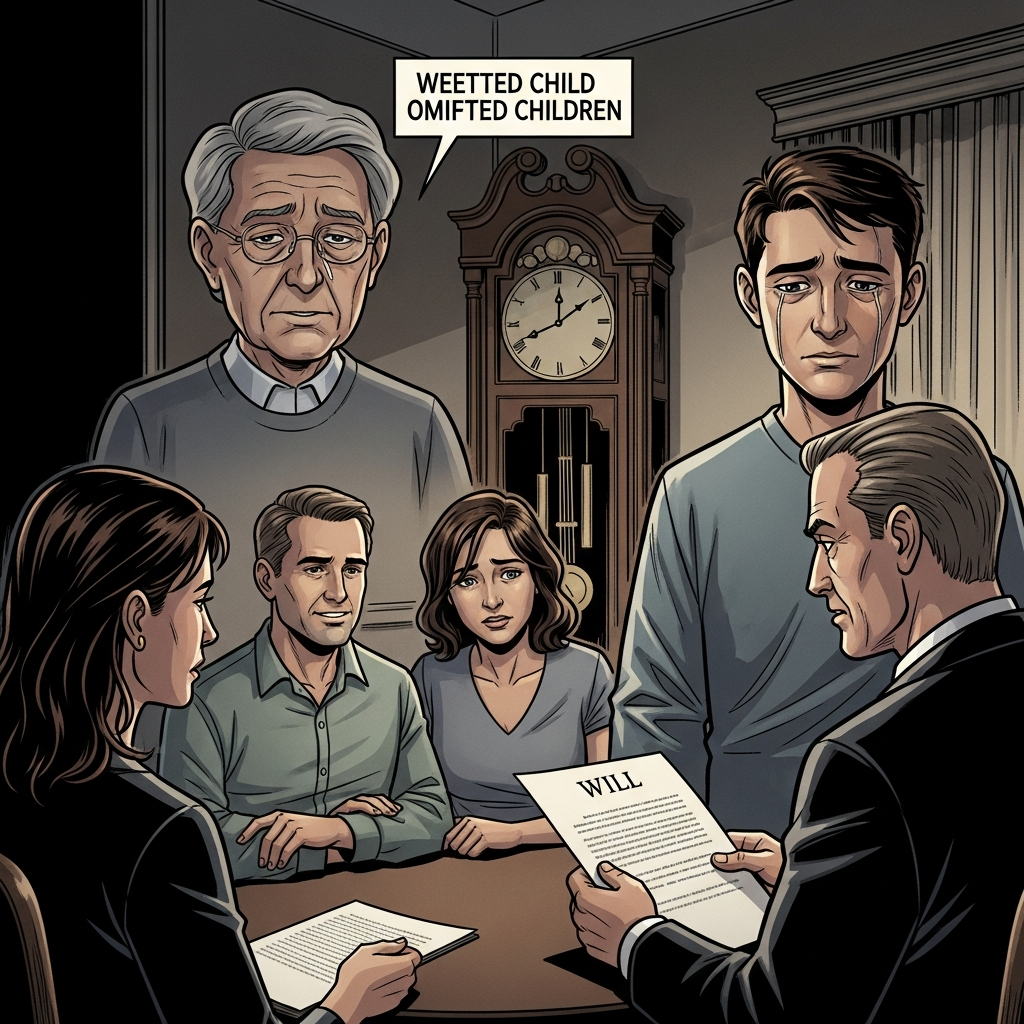
California Legal Implications: Omitted Children and the Danger of Outdated Estate Plans
A recent article in Lake County News highlights a common but critical oversight in estate planning: the “omitted child.” As families grow and change through birth, adoption, or blended family marriages, failing to update legal documents can lead to costly probate disputes. In California, if a child is not mentioned in a will or trust simply because they were born or adopted after the document was signed, the law may intervene to provide them with an inheritance, potentially disrupting the parents’ intended distribution of assets. simply because they were born or adopted after the document was signed, the law may intervene to provide them with an inheritance, potentially disrupting the parents’ intended distribution of assets.
Understanding the “Omitted Child” Under California Law
In California, an omitted child (often referred to legally as a pretermitted heir) is a child born or adopted after the execution of the decedent’s testamentary instruments. California Probate Code generally presumes that the omission was unintentional unless specific language proves otherwise.) is a child born or adopted after the execution of the decedent’s testamentary instruments. California Probate Code generally presumes that the omission was unintentional unless specific language proves otherwise.
If a court determines a child was omitted unintentionally, that child is often entitled to a statutory share of the estate. This share is equivalent to what the child would have received if the parent had died intestate (without a will). This statutory share is taken from the other beneficiaries, which can drastically alter the financial landscape for a surviving spouse or other children. (without a will). This statutory share is taken from the other beneficiaries, which can drastically alter the financial landscape for a surviving spouse or other children.
Intentional Disinheritance vs. Accidental Omission
To prevent valid claims from an omitted child, intent must be clear. California law requires specific evidence to defeat an omitted child claim, such as:
* Explicit Disinheritance: The will or trust specifically states the intention to exclude future children or a specific child.
* Transfers Outside the Estate: The parent provided for the child outside of the will, such as through life insurance policies, named beneficiary designations, or significant lifetime gifts, demonstrating that the omission from the will was intentional.
* Substantially All to the Other Parent: In some cases, if the decedent left substantially all the estate to the other parent of the omitted child, the child may not receive a separate share. In some cases, if the decedent left substantially all the estate to the other parent of the omitted child, the child may not receive a separate share.
The Risks for Blended Families
Blended families face unique risks regarding omitted children. If a parent remarries and has new children but relies on an estate plan created during a previous marriage, the new children may be considered omitted. Conversely, without careful drafting, step-children generally do not have automatic inheritance rights in California unless they were legally adopted or meet specific “equitable adoption” criteria. face unique risks regarding omitted children. If a parent remarries and has new children but relies on an estate plan created during a previous marriage, the new children may be considered omitted. Conversely, without careful drafting, step-children generally do not have automatic inheritance rights in California unless they were legally adopted or meet specific “equitable adoption” criteria.
Essential Documents to Update
To avoid probate litigation and family conflict, California residents must ensure their estate plan evolves with their family. Critical updates should occur after:
* The birth or adoption of a child.
* Marriage, divorce, or remarriage.
* The death of a named beneficiary or executor..
A comprehensive review should include not only the Revocable Living Trust and Pour-Over Will but also beneficiary designations on retirement accounts and insurance policies, as these are often the source of “transfers outside the estate” used to prove provision for a child. but also beneficiary designations on retirement accounts and insurance policies, as these are often the source of “transfers outside the estate” used to prove provision for a child.
About This Case
Source: Estate planning: Estate planning and the omitted child
California Probate and Trust, PC Can Help
– Free consultations: (866)-674-1130
– Experienced California estate planning
– Schedule consultation
– Learn more: cpt.law
Legal Disclaimer
This article is for informational purposes only. Consult with a qualified California estate planning attorney for advice specific to your situation.

About the Author: Dustin MacFarlane, Esq.
California Licensed Attorney | Estate Planning Specialist
Dustin MacFarlane is the founder of California Probate and Trust, PC, with over 15 years of experience in estate planning, probate administration, and trust law. Licensed by the California State Bar, Dustin has helped thousands of California families protect their assets and plan for the future.
CA Bar License: Active | Practice Areas: Estate Planning, Probate, Trust Administration | Location: Granite Bay, CA