
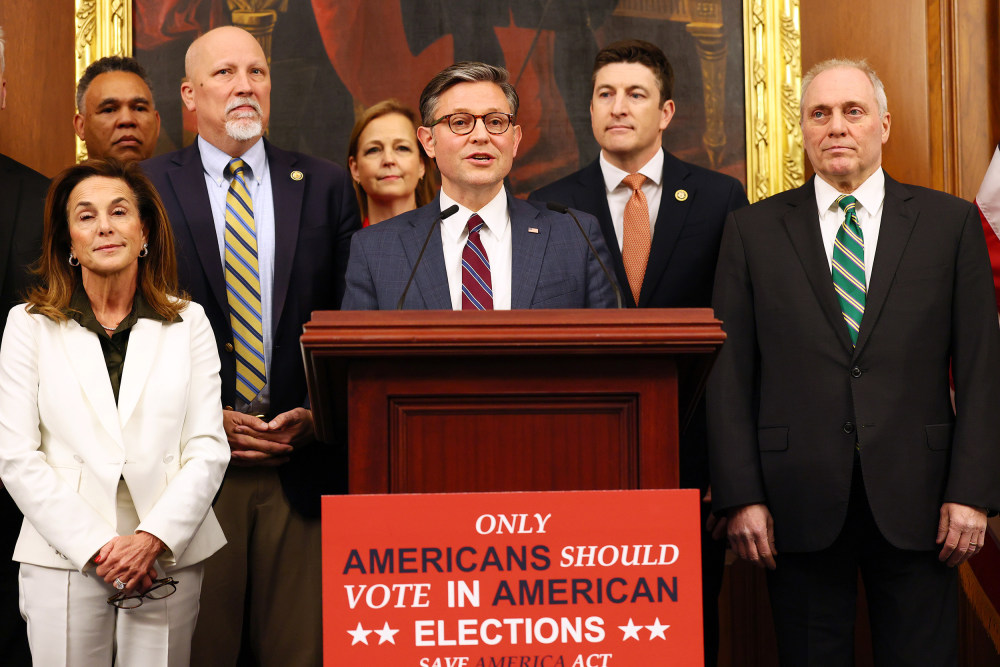
If you’re a California resident concerned about how federal legislation affects your constitutional rights, family protection, and the legal framework governing elections, understanding the SAVE America Act is essential. This comprehensive guide explains what happened, why it matters, and how California families can protect their interests in an evolving legal landscape.
What is the SAVE America Act and Why Does It Matter?
On Wednesday, the Republican-controlled House of Representatives passed the SAVE America Act by a narrow 218-213 vote, marking a significant shift in how federal elections could be administered nationwide. Every Republican voted in favor, with only one Democrat—Rep. Henry Cuellar of Texas—crossing party lines.
This 32-page legislation, backed by President Donald Trump and sponsored by Rep. Chip Roy (R-Texas) and Sen. Mike Lee (R-Utah), would fundamentally change voter registration and ballot-casting requirements across all 50 states.
Key Requirements: What Would the SAVE America Act Do?
The bill introduces three major requirements that would affect every American voter:
The Constitutional Question: Federal vs. State Authority
For California families who value transparency and constitutional protections, a critical issue emerges: the question of federal versus state authority over elections.
House Minority Leader Hakeem Jeffries raised concerns that align with longstanding constitutional principles, noting that President Trump has stated he wants to “nationalize” elections and “take over the voting in at least — many, 15 places”. This approach conflicts with the U.S. Constitution, which explicitly gives states authority over the “Times, Places and Manner of holding Elections” for federal office.
Even Republican Senator Lisa Murkowski of Alaska opposed the bill, reminding her colleagues that Republicans unanimously opposed similar Democratic legislation in 2021 specifically because “it would have federalized elections, something we have long opposed”.
What the Data Shows: Public Opinion on Voter ID Requirements
While the bill faces constitutional concerns, polling data reveals broad public support for voter identification requirements:
Speaker Mike Johnson framed the issue as common sense: “Americans need an ID to drive, to open a bank account, to buy cold medicine, to file government assistance. So why would voting be any different than that?”
The Opposition: Why Democrats Call It Voter Suppression
Democratic leaders argue the legislation addresses a problem that doesn’t exist. Current federal law already makes voting by noncitizens illegal and requires voters to attest to their citizenship under oath, with criminal penalties for violators.
House Minority Leader Jeffries stated: “This is a desperate effort by Republicans to distract. The so-called SAVE Act is not about voter identification, it is about voter suppression”.
Senate Minority Leader Chuck Schumer called the proposal “Jim Crow type laws” and declared it “dead on arrival in the Senate”.
What Happens Next: The Senate Roadblock
The bill now faces significant obstacles in the Senate, where Republicans hold 53 seats but need 60 votes to overcome a Democratic filibuster. Key Republican senators have already expressed skepticism or outright opposition:
Senate Majority Leader John Thune acknowledged that Republicans are having a “robust” discussion about the measure, but made clear that “there aren’t anywhere close to the votes — not even close — to nuking the filibuster” despite President Trump’s demands.
How This Affects California Families and Your Rights
For California residents managing assets, planning estates, or concerned about protecting family interests, understanding these legislative developments matters for several reasons:
Protect Your Family’s Legal Interests with Experienced California Counsel
At a time when federal and state laws are evolving rapidly, California families need experienced legal guidance to navigate complex regulations and protect what matters most. Whether you’re concerned about estate planning, probate administration, or ensuring your family’s assets are protected under changing legal frameworks, having knowledgeable counsel makes all the difference.
California Probate and Trust, PC provides comprehensive estate planning and probate services for California residents who value transparency, family protection, and experienced guidance through complex legal matters. Our certified estate planning specialists offer free consultations to help you understand your options and create a customized plan that protects your family for generations to come.
Schedule Your Free Consultation Today
Don’t wait until legislative changes affect your family’s rights. Contact California Probate and Trust, PC for a complimentary one-hour consultation to discuss your estate planning needs, probate concerns, or trust administration questions. Call (866)-674-1130 or visit cpt.law to learn more.
Source
This article is based on reporting from NBC News: “House passes SAVE America Act, sending Trump-backed election bill to the Senate” by Sahil Kapur and Kyle Stewart.
Legal Disclaimer
This article is provided for informational purposes only and does not constitute legal advice. The information presented here is based on publicly available news reporting and should not be relied upon as a substitute for consultation with a qualified attorney. Laws and regulations are subject to change, and individual circumstances vary. For specific legal guidance regarding your situation, please consult with a licensed attorney in your jurisdiction. California Probate and Trust, PC provides estate planning and probate services in California and does not provide advice regarding federal election law or voting rights matters.

About the Author: Dustin MacFarlane, Esq.
California Licensed Attorney | Estate Planning Specialist
Dustin MacFarlane is the founder of California Probate and Trust, PC, with over 15 years of experience in estate planning, probate administration, and trust law. Licensed by the California State Bar, Dustin has helped thousands of California families protect their assets and plan for the future.
CA Bar License: Active | Practice Areas: Estate Planning, Probate, Trust Administration | Location: Granite Bay, CA