
California Legal Implications: Checks on Authority and Economic Uncertainty
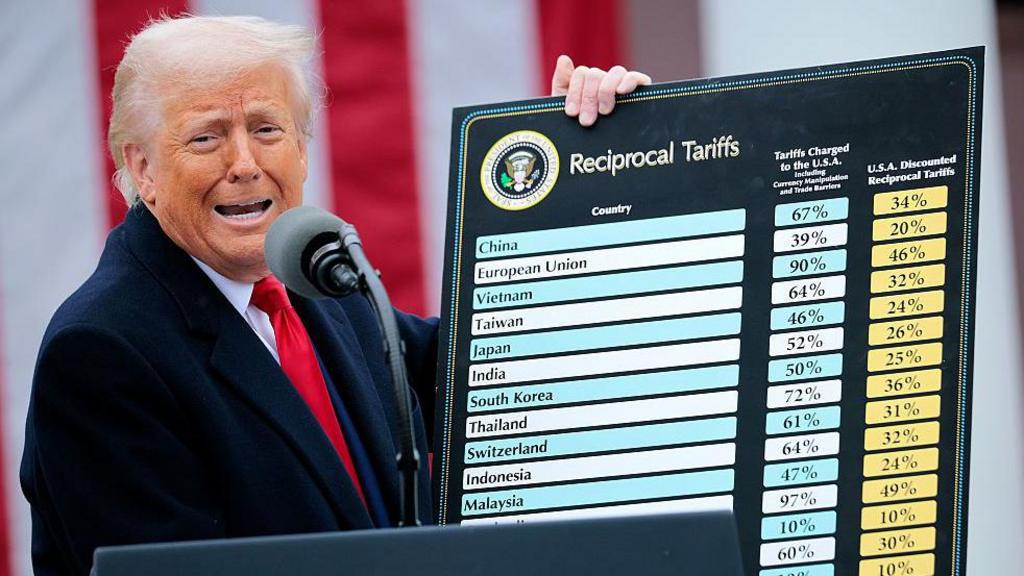
The United States Supreme Court recently issued a landmark 6-3 decision striking down sweeping global tariffs proposed by the executive branch. As detailed in the BBC news report, the Court ruled that the President exceeded his authority when utilizing national emergency laws to impose these taxes without congressional approval. Following this ruling, the administration invoked Section 122 of the 1974 Trade Act to implement temporary 15% tariffs, a move that critics argue creates significant economic uncertainty and legal ambiguity., the Court ruled that the President exceeded his authority when utilizing national emergency laws to impose these taxes without congressional approval. Following this ruling, the administration invoked Section 122 of the 1974 Trade Act to implement temporary 15% tariffs, a move that critics argue creates significant economic uncertainty and legal ambiguity.
While federal trade policy and California probate law operate in different arenas, the underlying legal principles in this case—specifically regarding the limits of authority, fiduciary duty, and asset management during volatility—are directly applicable to California estate planning. during volatility—are directly applicable to California estate planning.
Defining the Scope of Authority
The Supreme Court’s ruling highlights a critical legal concept: the limitation of power. The Court determined that the executive branch attempted to exercise power beyond what was granted by the legislative branch. In the context of California estate planning, this mirrors the authority granted to a Trustee or an Agent under a Power of Attorney..
When you create a Living Trust, you grant specific powers to your Trustee. However, just as the President is limited by the Constitution and statutes, a Trustee is limited by the California Probate Code and the specific terms of the trust document. If a Trustee exceeds their authority—for example, by making speculative investments or distributing assets contrary to the trust’s instructions—they can be held personally liable for Breach of Fiduciary Duty..
Economic Volatility and the Prudent Investor Rule
The news report notes that tariffs often lead to market uncertainty and increased costs for consumers. For Trustees managing trust assets in California, economic instability triggers specific legal obligations under the Uniform Prudent Investor Act..
Under this California law, a Trustee has a duty to invest and manage trust assets as a “prudent investor” would. This involves:
* Considering general economic conditions (such as the impact of new tariffs).
* Evaluating the possible effect of inflation or deflation.
* Diversifying investments to minimize the risk of large losses.
When global economic policies shift rapidly, a Trustee must remain vigilant. Failing to adjust an investment strategy in response to market changes could expose the trust to unnecessary risk and the Trustee to litigation.
Temporary Powers vs. Permanent Solutions
The administration’s shift to using Section 122 of the 1974 Trade Act allows for temporary tariffs (up to 150 days) before requiring congressional intervention. In estate planning, we often use similar mechanisms for temporary authority.
For instance, a Limited Power of Attorney grants an agent authority to act for a specific time period or a specific transaction (like selling real estate). Conversely, a Durable Power of Attorney remains effective even if the principal becomes incapacitated. Understanding the duration and scope of the legal instruments you create is essential to ensuring your estate is managed according to your wishes, without overstepping legal boundaries. remains effective even if the principal becomes incapacitated. Understanding the duration and scope of the legal instruments you create is essential to ensuring your estate is managed according to your wishes, without overstepping legal boundaries.
About This Case
Source: Trump to speak after Supreme Court struck down global tariffs
California Probate and Trust, PC Can Help
– Free consultations: (866)-674-1130
– Experienced California estate planning
– Schedule consultation
– Learn more: cpt.law
Legal Disclaimer
This article is for informational purposes only. Consult with a qualified California estate planning attorney for advice specific to your situation.
Why Estate Planning Matters in California
California has unique estate planning laws that differ significantly from other states. Without proper planning, your assets may not pass according to your wishes, and your family could face unnecessary probate court proceedings.
A comprehensive California estate plan typically includes:
- A revocable living trust to avoid probate
- Pour-over will as a safety net
- Advance health care directive
- Durable power of attorney for finances
- Beneficiary designations on retirement accounts and life insurance
How Trusts Work in California
California’s trust law (Probate Code Division 9) governs how trusts are created, administered, and terminated. Understanding these rules is essential for effective estate planning.
Key benefits of California trusts:
- Avoid probate: Assets in a properly funded trust bypass California’s lengthy probate process
- Privacy: Unlike wills (which become public in probate), trusts remain private
- Control: You maintain control during your lifetime and direct distribution after death
- Incapacity planning: Your successor trustee manages assets if you become incapacitated
- Tax planning: Trusts can help minimize estate and income taxes
Need Expert Estate Planning Guidance?
California estate planning law is complex and constantly evolving. Don’t navigate it alone.
California Probate and Trust, PC has helped thousands of California families protect their assets and plan for the future.
📞 Call us today:
- Main Office: 866-400-0058
- Direct: 916-963-9968

About the Author: Dustin MacFarlane, Esq.
California Licensed Attorney | Estate Planning Specialist
Dustin MacFarlane is the founder of California Probate and Trust, PC, with over 15 years of experience in estate planning, probate administration, and trust law. Licensed by the California State Bar, Dustin has helped thousands of California families protect their assets and plan for the future.
CA Bar License: Active | Practice Areas: Estate Planning, Probate, Trust Administration | Location: Granite Bay, CA