Categories
California Probate Estate Planning Trusts

Anthony Davis Trade Signals Major Shift for Dallas Mavericks: What California Families Managing Sports Contracts and High-Value Assets Need to Know

For California residents managing complex estates, high-value contracts, or family assets tied to professional sports franchises, the recent Anthony Davis trade offers important lessons about asset protection, contract disputes, and succession planning in volatile industries.

What Happened: The Anthony Davis Trade Explained

After just one year and 29 games with the Dallas Mavericks, Anthony Davis has been traded to the Washington Wizards in an eight-player deal. According to Axios Dallas, the trade includes:

  • Players sent to Washington: Anthony Davis, Jaden Hardy, D’Angelo Russell, and Dante Exum
  • Players received by Dallas: Khris Middleton, AJ Johnson, Malaki Branham, and Marvin Bagley III
  • Draft picks: Two first-round picks and three second-round picks for Dallas
  • Davis played only 20 games this season before being sidelined with a hand injury in early January.His tenure with Dallas was marked by persistent injuries, including an adductor strain during his first game that kept him out for six weeks.

    Why This Matters for High-Net-Worth California Families

    The trade comes one year after the controversial decision to send Luka Dončić to Los Angeles—a move that sparked months of fan protests and ultimately led to the firing of general manager Nico Harrison in November 2025.This sequence of events highlights several critical issues that California families with complex assets should understand:

    1. How Can I Protect My Family When High-Value Contracts Fall Through?

    Professional athletes, entertainers, and business executives often face sudden career changes that impact family wealth. The Davis situation—where injuries limited him to just nine games after his initial trade—demonstrates the importance of:

  • Disability and income protection planning for high-earning family members
  • Asset diversification strategies that protect against career volatility
  • Trust structures that preserve wealth during unexpected transitions
  • 2. What Happens to Family Assets During Organizational Restructuring?

    The firing of Nico Harrison and the subsequent Davis trade show how quickly leadership changes can impact stakeholders.For California families with ownership interests in sports franchises, entertainment companies, or family businesses, this underscores the need for:

  • Succession planning documents that address sudden management changes
  • Buy-sell agreements that protect minority shareholders
  • Irrevocable trusts that shield assets from business disputes
  • 3. How Do I Plan for the Next Generation When Circumstances Change Rapidly?

    Despite the turmoil, the Mavericks have Cooper Flagg, the 2025 No. 1 draft pick, who’s averaging 20 points per game—the most on the team.This represents a potential generational shift that mirrors what many California families face when transitioning wealth and business interests to the next generation.

    Key Takeaways for California Families Managing Complex Assets

  • Document everything: Clear contractual language and estate planning documents prevent disputes during transitions
  • Plan for volatility: High-value careers in sports, entertainment, and business require flexible estate structures
  • Protect family interests: Trusts and proper asset titling shield your family from professional uncertainties
  • Update regularly: Just as the Mavericks had to adapt their strategy, your estate plan should evolve with changing circumstances
  • How California Probate and Trust, PC Can Help

    If you’re a California resident managing high-value contracts, sports-related assets, or complex family wealth structures, California Probate and Trust, PC offers comprehensive estate planning services designed to protect your family through life’s uncertainties. Our experienced attorneys understand the unique challenges facing families with volatile income streams and complex asset portfolios.

    Schedule Your Free Estate Planning Consultation

    We provide transparent, family-focused legal guidance for California residents who want to protect their legacy. Whether you’re planning for the future or managing current estate challenges, our team offers the expertise you need.

    Contact California Probate and Trust, PC today at (866)-674-1130 or visit cpt.law to schedule your no-obligation consultation.

    Legal Disclaimer

    This article is provided for informational purposes only and does not constitute legal advice. The information contained herein is not intended to create, and receipt of it does not constitute, an attorney-client relationship. Readers should not act upon this information without seeking professional counsel. California Probate and Trust, PC makes no representations or warranties regarding the accuracy or completeness of the information provided. For specific legal guidance related to your situation, please consult with a qualified estate planning attorney licensed in California.

    Source: Axios Dallas – Anthony Davis traded from Dallas Mavericks

    Categories
    California Probate Estate Planning Trusts

    Fifth Circuit Ruling Clarifies Limited Partner Self-Employment Tax Exclusion

    The U.S. Court of Appeals for the Fifth Circuit ruled that the meaning of “limited partner” under Section 1402(a)(13) of the Internal Revenue Code of 1986, as amended (the “Code”), is determined under state law. This ruling, Sirius Solutions LLP v. Commissioner, overturned a recent Tax Court decision, Soroban Capital Partners LP v. Commissioner.

    The Fifth Circuit held that a “limited partner” is defined by limited liability under state law, not by the partner’s level of activity in the partnership. This holding rejects the functional analysis used by the Tax Court in Soroban, which permitted only passive investors (regardless of their status under state law) to qualify for an exclusion from self-employment tax.

    Key Takeaways

  • Section 1402(a)(13). Generally, self-employment income includes a partner’s distributive share from a trade or business carried on by a partnership. Section 1402(a)(13) provides that, “there shall be excluded the distributive share of any item of income or loss of a limited partner, as such, other than guaranteed payments described in section 707(c) to that partner for services actually rendered to or on behalf of the partnership to the extent that those payments are established to be in the nature of remuneration for those services.”
  • Previous Decision Reversed. In Soroban, the Tax Court ruled that whether a limited partner met the exclusion under Section 1402(a)(13) depended on a functional analysis based on the partner’s level of participation rather than a classification under state law.
  • Holding From Sirius Solutions. The Fifth Circuit’s holding in Sirius Solutions is consistent with the view, based on a plain reading of the Code, that self-employment tax does not apply to a limited partner in a limited partnership as a matter of law, regardless of the extent of that limited partner’s participation in the activities of the partnership.
  • Historical Context. The Fifth Circuit emphasized that when Section 1402(a)(13) was enacted in 1977, the defining feature of a limited partner was limited liability. The majority relied on contemporaneous dictionary definitions and longstanding IRS and Social Security Administration guidance, which consistently treated limited liability as the key factor in the analysis.
  • Interpretation of “Limited Partner, as such.” The Fifth Circuit stated that the phrase “limited partner, as such” in Section 1402(a)(13) refers to the ordinary meaning of the term—a partner with limited liability. The Tax Court relied on this language to support its functional analysis position, reasoning that it narrowed the scope of the exception to a “limited partner who is functioning as a limited partner.”
  • Why It Matters

    The functional analysis from Soroban raised major concerns and uncertainty as to whether a state-law limited partner would be subject to self-employment tax. This decision from the Fifth Circuit reinstates a bright-line rule that should provide clarity for taxpayers.

    Partnerships and their advisors should review their structures and tax positions in light of this important development, particularly if they have paid self-employment tax while a limited partner under state law and may be eligible for a refund. There are other cases pending on the same issue in the First Circuit and Second Circuit, which raises the possibility of a circuit split on the issue.

    Fifth Circuit Ruling on Limited Partner Self-Employment Tax: What California Business Owners Need to Know

    If you’re a California resident who owns or invests in a partnership—whether you’re managing real estate holdings, investment funds, or a family business—a recent federal court decision could significantly impact your self-employment tax obligations and potentially entitle you to refunds.

    What Happened? Understanding the Fifth Circuit’s Decision

    The U.S. Court of Appeals for the Fifth Circuit recently issued a landmark ruling in Sirius Solutions LLP v. Commissioner that clarifies how “limited partner” status is determined for self-employment tax purposes. The court ruled that limited partner status is based on state law—specifically, whether you have limited liability under your state’s partnership laws—not on how actively you participate in the business.

    This decision directly overturned a Tax Court ruling in Soroban Capital Partners LP v. Commissioner, which had created uncertainty by suggesting that only passive investors could qualify for the self-employment tax exclusion, regardless of their legal status.

    Why Does This Matter for California Partnerships?

    Under Section 1402(a)(13) of the Internal Revenue Code, limited partners are generally excluded from paying self-employment tax on their distributive share of partnership income (with some exceptions for guaranteed payments).

    The Tax Court’s previous approach created confusion by requiring a “functional analysis” based on participation levels rather than legal classification.This meant that even if you were legally classified as a limited partner under California law, you might still face self-employment tax if you were actively involved in the business.

    The Fifth Circuit rejected this approach entirely, reinstating a clear, bright-line rule: if you’re a limited partner under state law with limited liability, you’re excluded from self-employment tax—period.

    Key Takeaways for California Business Owners and Investors

  • State law controls: Your limited partner status is determined by California partnership law, not by the IRS’s interpretation of your business activities
  • Limited liability is the key factor: When Section 1402(a)(13) was enacted in 1977, limited liability was the defining characteristic of a limited partner, and the Fifth Circuit emphasized this historical context
  • Activity level doesn’t matter: You can be actively involved in partnership decisions and still qualify for the self-employment tax exclusion as long as you maintain limited partner status under state law
  • Potential refund opportunities: If you’ve been paying self-employment tax as a state-law limited partner, you may be eligible for refunds
  • What Should You Do Next?

    The Fifth Circuit’s decision provides important clarity, but it also creates potential circuit splits as similar cases are pending in the First and Second Circuits.Here’s what California partnership owners and investors should consider:

  • Review your partnership structure and tax positions with qualified legal counsel
  • Determine whether you’ve been classified as a limited partner under California law
  • Assess whether you’ve paid self-employment tax that may now be refundable
  • Ensure your partnership agreements clearly establish limited partner status where appropriate
  • Stay informed about developments in other circuits that could affect your tax position
  • How California Probate and Trust Can Help

    At California Probate and Trust, PC, we understand that partnership structures often intersect with estate planning and asset protection strategies. Whether you’re structuring a family limited partnership, managing investment holdings, or planning for generational wealth transfer, our experienced attorneys can help you navigate complex tax and legal issues.

    We offer a comprehensive approach that addresses both the legal structure of your partnerships and the broader estate planning implications. Our team has represented thousands of California clients in developing strategies that protect their assets while minimizing tax burdens.

    Schedule Your Free Consultation

    If you’re a California partnership owner or investor concerned about self-employment tax obligations, or if you’re looking to structure your business interests for optimal tax efficiency and family protection, contact California Probate and Trust, PC today for a free consultation.

    Source: The National Law Review – Fifth Circuit Rejects Tax Court’s Definition of Limited Partner for Self-Employment Tax Purposes

    Legal Disclaimer

    This article is provided for informational purposes only and does not constitute legal or tax advice. The information contained herein is based on a Fifth Circuit decision that may not be binding in all jurisdictions, including California, which is within the Ninth Circuit. Tax law is complex and subject to change, and the application of these principles depends on individual circumstances. Readers should not act upon this information without seeking professional counsel from qualified attorneys and tax advisors familiar with their specific situations. California Probate and Trust, PC does not guarantee any particular outcome and makes no warranties regarding the accuracy or completeness of this information. Attorney advertising.

    Categories
    California Probate Estate Planning Trusts

    California Governor’s Race 2026: What the Debate Tells Us About Vote Splitting and Your Family’s Future

    For California residents concerned about political stability, economic policy, and how leadership affects estate planning and family protection

    Who This Article Is For

    If you’re a California resident managing assets, planning your estate, or concerned about how state leadership affects your family’s financial future, understanding the 2026 governor’s race is critical. The upcoming election could determine housing affordability, tax policy, and the legal framework that governs trusts, probate, and wealth transfer for the next four years.

    What Happened at the San Francisco Debate?

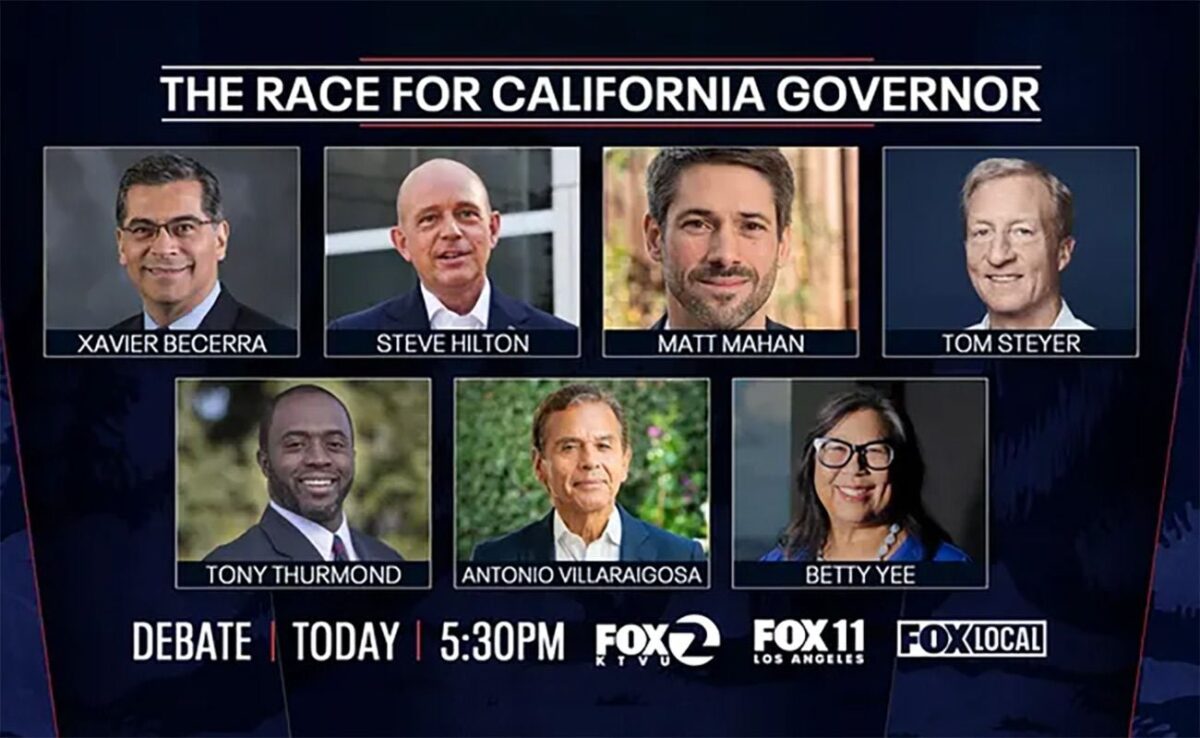
    On Tuesday evening, seven candidates for California governor participated in the first statewide debate of 2026 at the Ruth Williams Opera House in San Francisco’s Bayview. The debate was broadcast live on KTVU and KTTV Fox 11, co-hosted by anchors Andre Senior and Maria Tellez.

    Who Showed Up—and Who Didn’t

    The confirmed participants included:

  • Republican: Steve Hilton (Fox News contributor)
  • Democrats: San Jose Mayor Matt Mahan, former Los Angeles Mayor Antonio Villaraigosa, former state Controller Betty Yee, former U.S. Health and Human Services Secretary Xavier Becerra, billionaire businessman Tom Steyer, and State Superintendent Tony Thurmond
  • Notably absent were two prominent candidates:

  • Rep. Eric Swalwell (seven-term congressman from the East Bay)
  • Former Congresswoman Katie Porter
  • Both cited scheduling conflicts. Riverside County Sheriff Chad Bianco, another Republican candidate, was also absent.

    Why This Debate Matters: The Vote-Splitting Problem

    California uses a unique primary system where the top two vote-getters—regardless of party—advance to the general election. With so many Democrats in the race, there’s a real risk that Democratic votes could split enough to allow two Republicans to dominate the top spots.

    According to the latest Emerson College poll, four candidates are running neck-and-neck: Hilton, Bianco, Swalwell, and Porter—with all other candidates polling below 10% and 31% of voters still undecided.

    What Does This Mean for California Families?

    As KTTV anchor Maria Tellez noted during the debate coverage: “Whomever gets the keys to California is going to drive the economy and housing affordability for the next four years”.

    For families managing estates, trusts, and long-term financial planning, the outcome of this election could impact:

  • State tax policy affecting estate and inheritance planning
  • Housing affordability and real estate transfer regulations
  • Probate court funding and legal system accessibility
  • Healthcare policy affecting advance directives and end-of-life planning
  • How California Residents Can Prepare

    With the June primary only months away, now is the time to:

  • Research each candidate’s platform on tax policy, housing, and legal reform
  • Understand how vote-splitting could affect the final outcome
  • Review your estate plan to ensure it’s adaptable to changing state leadership
  • Consult with experienced California estate planning attorneys who understand the intersection of politics and family wealth protection
  • Protecting Your Family’s Future, Regardless of Political Outcomes

    Political uncertainty makes proactive estate planning more important than ever. Whether you’re concerned about tax changes, probate complications, or protecting your family’s assets across generations, having a solid legal foundation is essential.

    At California Probate and Trust, PC, we specialize in helping California residents create comprehensive estate plans that protect families through changing political and economic landscapes. Our experienced attorneys provide transparent, compassionate guidance on trusts, wills, probate, and asset protection strategies designed specifically for California law.

    Ready to Protect Your Family’s Future?

    Schedule a free consultation with our Sacramento-based estate planning team. We’ll help you understand your options and create a personalized plan that safeguards your legacy—no matter who wins the governor’s race.

    Call (866) 674-1130 or visit cpt.law to schedule your free estate planning consultation today.

    Source: SFist – San Francisco News, Restaurants, Events, & Sports

    Legal Disclaimer: This article is provided for informational purposes only and does not constitute legal advice. Estate planning laws are complex and vary based on individual circumstances. For specific legal guidance tailored to your situation, please consult with a qualified California estate planning attorney. California Probate and Trust, PC is available to discuss your unique needs during a free consultation.

    Categories
    California Probate Estate Planning Trusts

    90-Year-Old California Senior Loses $814,000 to Bank Fraud: What Families Need to Know About Elder Financial Exploitation and Legal Protection

    For California Families Managing Aging Parents’ Finances

    If you’re a California resident responsible for an elderly parent’s financial affairs—or worried about protecting a loved one from financial exploitation—this case offers critical lessons about bank fraud, power of attorney responsibilities, and when legal intervention becomes necessary.

    What Happened: The Irving Rosenberg Case

    Irving Rosenberg, a 90-year-old Southern California resident, lost $814,000 from his savings account through unauthorized withdrawals that began in April 2025. The withdrawals occurred over several weeks, with checks bearing forged signatures that bore no resemblance to Rosenberg’s actual signature.

    Despite the obvious fraud, Wells Fargo initially denied Rosenberg’s claim, citing a 60-day reporting window policy. The bank’s position failed to account for the realities facing elderly customers: Rosenberg was 90 years old, hard of hearing, had mobility issues, and was dealing with early dementia—all factors that made it difficult for him to notice the fraudulent activity promptly.

    How Can Banks Deny Fraud Claims for Elderly Customers?

    Many California families don’t realize that banks enforce strict reporting deadlines for fraud claims—often 60 days from when the statement is issued. For elderly customers who:

  • Have cognitive impairments or dementia
  • Don’t regularly review bank statements
  • Have hearing or vision difficulties
  • Rely on family members who may not have immediate access to accounts
  • These rigid timeframes can mean legitimate fraud claims are denied, leaving families devastated.

    What Changed the Outcome?

    After Rosenberg’s nephew, David Satin, who held power of attorney, contacted 7 On Your Side for help, the media intervention prompted Wells Fargo to reverse its decision and return the full $814,000.

    Wells Fargo’s statement emphasized: “After working with our customer and their designated Power of Attorney, and reviewing additional information, we are pleased to share that we are returning Mr. Rosenberg’s money back to his account”.

    Why Didn’t the Bank Catch This Fraud Earlier?

    A critical question raised by this case: Why weren’t multiple large withdrawals—totaling over $800,000 in just weeks—flagged by the bank’s fraud detection systems?

    California families managing elderly parents’ finances should ask their banks:

  • What fraud monitoring systems are in place for senior accounts?
  • Can alerts be sent to designated family members or attorneys-in-fact?
  • Are there special protections available for accounts held by customers over 65?
  • How California Families Can Protect Elderly Loved Ones From Financial Exploitation

    1. Establish a Durable Power of Attorney

    A properly drafted financial power of attorney allows a trusted family member to:

  • Monitor account activity regularly
  • Receive duplicate bank statements
  • Act quickly when suspicious activity occurs
  • Communicate with financial institutions on the senior’s behalf
  • 2. Set Up Account Alerts and Monitoring

  • Enable text or email alerts for withdrawals over a certain threshold
  • Request that the bank send statements to both the senior and the designated attorney-in-fact
  • Schedule regular account reviews—weekly or monthly depending on account activity
  • 3. Consider a Revocable Living Trust with Co-Trustees

    For California families concerned about protecting substantial assets, a revocable living trust with co-trustees provides:

  • Dual authorization requirements for large transactions
  • Continuity of financial management if the senior becomes incapacitated
  • Protection from both external fraud and internal family disputes
  • Avoidance of probate if the senior passes away
  • 4. Document Everything

    When fraud occurs, documentation is critical:

  • Keep copies of all bank statements
  • Document the senior’s cognitive state with medical records
  • Preserve all communications with the bank
  • Obtain handwriting analysis if signature fraud is suspected
  • What Should You Do If Your Elderly Parent Is a Victim of Bank Fraud?

    Immediate Steps:

  • Contact the bank immediately and request a fraud investigation
  • File a police report
  • Document all fraudulent transactions with dates, amounts, and check numbers
  • If you have power of attorney, provide this documentation to the bank
  • Request copies of all cashed checks to examine signatures
  • Follow up in writing with the bank’s fraud department
  • If the Bank Denies Your Claim:

  • Request a written explanation of the denial
  • Escalate to the bank’s executive customer service office
  • File a complaint with the California Department of Financial Protection and Innovation
  • Consider contacting consumer protection advocates or media outlets
  • Consult with an attorney experienced in elder financial abuse cases
  • California’s Legal Protections Against Elder Financial Abuse

    California law recognizes elder financial abuse as both a civil and criminal matter. Under California Welfare and Institutions Code § 15610.30, financial abuse of an elder includes:

  • Taking, secreting, or appropriating property of an elder for wrongful use
  • Assisting in taking property for wrongful use
  • Taking property by undue influence
  • California families have legal recourse through both criminal prosecution and civil litigation to recover stolen assets.

    Why Estate Planning Matters Before Crisis Strikes

    The Rosenberg case demonstrates why proactive estate planning is essential for California families. By the time fraud occurs, families are in crisis mode—dealing with banks, police, and emotional trauma.

    Proper planning includes:

  • Durable power of attorney with immediate or springing authority
  • Healthcare directives to ensure medical decision-making is clear
  • Revocable living trusts to manage and protect assets
  • Regular family meetings to review financial arrangements
  • For California residents managing aging parents’ affairs, these tools provide both legal authority and practical protection before a crisis occurs.

    Protect Your Family’s Financial Future

    If you’re a California resident concerned about protecting an elderly parent from financial exploitation—or if you want to ensure your own assets are protected as you age—California Probate and Trust, PC offers comprehensive estate planning solutions tailored to your family’s needs.

    Our experienced attorneys help California families:

  • Draft legally sound powers of attorney with bank-specific provisions
  • Create revocable living trusts with fraud protection mechanisms
  • Establish healthcare directives and HIPAA authorizations
  • Navigate probate and trust administration after a loved one passes
  • Address elder financial abuse situations with compassion and expertise
  • Schedule Your Free Estate Planning Consultation

    Don’t wait until a crisis occurs. Contact California Probate and Trust, PC today for a no-obligation consultation to discuss how we can protect your family’s financial security and peace of mind.

    Call (866) 674-1130 or visit cpt.law to schedule your free consultation.

    Source: ABC7 News – “90-year-old Irving Rosenberg of Southern California scammed out of more than $800,000 in savings. 7 On Your Side gets money back”

    Legal Disclaimer

    This article is provided for informational purposes only and does not constitute legal advice. The information presented is based on publicly reported news and should not be relied upon as a substitute for consultation with a qualified attorney. Every legal situation is unique, and outcomes depend on specific facts and circumstances. California Probate and Trust, PC makes no representations or warranties regarding the accuracy or completeness of this information. If you require legal assistance with estate planning, elder financial abuse, or related matters, please contact a licensed attorney in your jurisdiction. No attorney-client relationship is created by reading this article or contacting our firm for general information.

    Categories
    California Probate Estate Planning Trusts

    401(k) Millionaires Hit Record High—But What Does the Average California Family Need to Know About Retirement Savings and Estate Planning?

    If you’re a California resident planning for your family’s financial future, the latest retirement savings data reveals both encouraging progress and significant gaps that deserve your attention—especially when it comes to protecting what you’ve worked so hard to build.

    What’s Happening with 401(k) Accounts Right Now?

    According to Fidelity’s Q3 2025 retirement analysis, the number of 401(k) millionaires reached a record 654,000 accounts—a nearly 10% increase from the previous quarter. While headlines celebrate this milestone, the average 401(k) balance tells a different story: just $144,400.

    For California families navigating retirement planning, understanding this gap matters. Here’s why:

  • Most savers aren’t millionaires: While 654,000 accounts hold over $1 million, millions more are building wealth gradually through consistent contributions.
  • Long-term discipline pays off: Women who contributed consistently for 15 years now average $501,100—a 16.5% year-over-year increase and the first time this demographic has crossed the half-million threshold.
  • Younger generations are changing the game: Gen Z investors are directing 95% of their 401(k) contributions to Roth accounts, compared to 75% for Millennials and 66% for Gen X.
  • How Do Other Retirement Accounts Compare?

    If you’re managing multiple retirement vehicles or considering which accounts to prioritize, here are the current averages:

  • IRA accounts: $137,902
  • 403(b) plans (common for nonprofit and education workers): $131,200
  • What Does This Mean for California Families?

    Sharon Brovelli, President of Workplace Investing at Fidelity Investments, notes that Americans are “continuing to exhibit impactful savings behaviors such as staying the course and focusing on long-term goals”—critical habits as families navigate economic uncertainty.

    But growing your retirement savings is only half the equation. California residents face unique estate planning challenges:

  • How will your 401(k) or IRA transfer to your heirs? Without proper beneficiary designations and estate planning documents, even substantial retirement accounts can become tangled in probate court.
  • Are your retirement assets protected from creditors? Different account types have different protections under California law.
  • Have you coordinated your retirement accounts with your trust? Many families assume their revocable living trust automatically covers all assets—but retirement accounts require specific beneficiary coordination.
  • What about tax implications for your heirs? With 95% of Gen Z choosing Roth accounts, understanding the tax treatment of inherited retirement assets is increasingly important for multi-generational wealth transfer.
  • Why Estate Planning Matters More as Retirement Balances Grow

    Whether your 401(k) balance is $50,000 or $500,000, having a comprehensive estate plan ensures:

  • Your retirement assets go to the people you choose, not the default beneficiaries listed years ago
  • Your heirs avoid unnecessary probate costs and delays
  • Your family understands your wishes for healthcare and financial decisions if you become incapacitated
  • Your assets are shielded from potential creditors and lawsuits
  • For California residents managing retirement accounts alongside real estate, business interests, or other assets, coordinating all these pieces requires specialized knowledge of both California probate law and federal tax rules.

    Take Control of Your Financial Legacy Today

    At California Probate and Trust, PC, we help California families bridge the gap between building wealth and protecting it for future generations. Our estate planning attorneys understand that retirement savings are just one piece of your family’s financial picture—and we create comprehensive plans that address everything from 401(k) beneficiary designations to revocable living trusts, powers of attorney, and healthcare directives.

    We offer free consultations to California residents who want to:

  • Review their existing estate plan in light of growing retirement balances
  • Coordinate retirement account beneficiaries with their trust documents
  • Protect their family from unnecessary probate costs
  • Create a comprehensive plan that covers both asset protection and healthcare decisions
  • Schedule Your Free Estate Planning Consultation

    Don’t let your hard-earned retirement savings go unprotected. Contact California Probate and Trust, PC today for a free, no-obligation consultation with one of our experienced Sacramento estate planning attorneys. Call (866) 674-1130 or visit cpt.law to schedule your appointment.

    Source: Yahoo Finance – There’s Now a Record Number of 401(k) Millionaires

    Legal Disclaimer: This article is provided for informational purposes only and does not constitute legal or financial advice. The information presented is based on publicly available data and general principles of California estate planning law. Every family’s situation is unique, and estate planning strategies should be tailored to your specific circumstances. Retirement account rules, tax laws, and estate planning regulations are subject to change. For personalized guidance regarding your retirement accounts, estate plan, or specific legal questions, please consult with a qualified California estate planning attorney. California Probate and Trust, PC is available to discuss your individual needs during a free consultation.

    Categories
    California Probate Estate Planning Trusts

    How California Families Can Protect Their Legacy: Expert Estate Planning Guidance for 2026

    Source: Axios

    If you’re a California resident concerned about protecting your family’s future, navigating probate court, or ensuring your assets transfer smoothly to the next generation, you’re not alone. Thousands of California families face anxiety about estate planning complexities every year—whether dealing with probate now or planning ahead to avoid it entirely.

    This comprehensive guide answers the most common questions California residents ask about estate planning, probate, and trust administration, providing actionable insights to help you make informed decisions for your family’s financial security.

    Who Needs Estate Planning in California?

    Estate planning isn’t just for the wealthy. It’s essential for:

  • California homeowners who want to avoid the costly probate process (which can take 12-18 months and cost 4-7% of your estate value)
  • Parents of minor children who need to designate guardians and protect inheritance until children reach adulthood
  • Blended families navigating complex inheritance situations from previous marriages
  • Business owners seeking to preserve family businesses across generations
  • Anyone with California real estate valued over $184,500 (the 2026 probate threshold)
  • Families managing aging parents’ affairs who need healthcare directives and financial powers of attorney
  • What Problems Does Proper Estate Planning Solve?

    California residents turn to estate planning attorneys to address specific, urgent concerns:

    1. Avoiding Probate Court Delays and Costs

    California’s probate process is one of the most expensive in the nation. Without a properly funded revocable living trust, your heirs may face:

  • 12-24 months of court proceedings before accessing inheritance
  • Statutory fees of 4% on the first $100,000, plus additional percentages on higher values
  • Public records exposing your family’s private financial information
  • Potential family disputes played out in open court
  • Real-world example: A Sacramento family with a $750,000 home and $250,000 in additional assets faced over $26,000 in probate fees and an 18-month wait because their parents used only a simple will instead of establishing a living trust.

    2. Protecting Blended Family Dynamics

    California’s community property laws create unique challenges for second marriages. Without proper planning:

  • Your current spouse may inadvertently disinherit children from your first marriage
  • Adult children may contest your will if they feel excluded
  • Business interests could be divided in ways that destroy family enterprises
  • 3. Healthcare Decision-Making During Incapacity

    What happens if you can’t make medical decisions for yourself? California requires specific legal documents:

  • Advance Healthcare Directive: Specifies your end-of-life care preferences
  • Healthcare Power of Attorney: Names someone to make medical decisions when you cannot
  • HIPAA Authorization: Allows designated individuals to access your medical information
  • Without these documents, your family may need to petition the court for conservatorship—a costly, public, and emotionally draining process.

    4. Managing California Property Tax Implications

    California’s Proposition 19 (effective February 2021) significantly changed parent-to-child property transfer rules. Now:

  • Primary residences can only transfer with limited property tax protection if the child uses it as their primary residence
  • Rental properties and vacation homes lose Proposition 13 protection entirely
  • Proper trust planning can still maximize available exemptions
  • How Can I Choose the Right Estate Planning Solution?

    California residents have several estate planning options, each serving different needs:

    Basic Power of Attorney Package

    Best for: Young adults, college students, or those just starting their financial journey

    Includes:

  • Financial Power of Attorney
  • Healthcare Power of Attorney
  • Advance Healthcare Directive
  • Cost range: $500-$1,200

    Simple Will-Based Estate Plan

    Best for: Individuals with estates under $184,500 and simple family structures

    Includes:

  • Last Will and Testament
  • Power of Attorney documents
  • Healthcare directives
  • Limitation: Still requires probate; does not avoid court proceedings

    Cost range: $1,500-$3,000

    Revocable Living Trust (Most Popular for California Homeowners)

    Best for: Anyone owning California real estate or with assets exceeding $184,500

    Includes:

  • Revocable Living Trust document
  • Pour-over Will (backup protection)
  • Financial and Healthcare Powers of Attorney
  • Advance Healthcare Directive
  • Trust funding guidance (transferring assets into the trust)
  • Key advantage: Avoids probate entirely when properly funded

    Cost range: $2,500-$5,000 for individuals; $3,500-$6,500 for couples

    ROI consideration: A $4,000 trust investment can save your family $20,000-$40,000 in probate costs

    Complex Trust Planning

    Best for: High-net-worth families, business owners, or those with special needs beneficiaries

    May include:

  • Irrevocable Life Insurance Trusts (ILITs)
  • Charitable Remainder Trusts
  • Special Needs Trusts
  • Dynasty Trusts for multi-generational wealth transfer
  • Asset protection strategies
  • Cost range: $6,000-$15,000+ depending on complexity

    What’s the Estate Planning Process Like?

    Working with an experienced California estate planning attorney typically follows this proven process:

    Step 1: Free Initial Consultation (60-90 minutes)

    During your no-obligation consultation, you’ll:

  • Discuss your family dynamics and specific concerns
  • Review your current assets and estate size
  • Explore your goals for wealth transfer and family protection
  • Receive transparent pricing for recommended solutions
  • Ask questions about probate, trusts, and California-specific estate laws
  • What to bring: List of assets, existing estate documents, questions about your specific situation

    Step 2: Document Preparation (2-3 weeks)

    Your attorney will draft customized documents addressing your unique needs, including:

  • Specific trustee succession plans
  • Distribution schedules that protect young beneficiaries
  • Special provisions for blended families
  • California-compliant language that withstands legal challenges
  • Step 3: Review and Signing (1-2 hours)

    You’ll meet with your attorney to:

  • Review each document in detail
  • Understand your role as trustee or executor
  • Execute documents with proper witnesses and notarization
  • Receive guidance on next steps
  • Step 4: Trust Funding and Implementation

    The most critical step many people overlook: transferring assets into your trust. Your attorney should provide:

  • Deeds to transfer California real estate into your trust name
  • Letters to financial institutions for retitling accounts
  • Categories
    California Probate Estate Planning Long Term Care Planning

    7 Ways California Families Can Support Aging Parents Without Direct Financial Transfers: Expert Estate Planning Strategie

    Source: CNBC – I became a millionaire at age 27—here are 7 ways to help your parents ‘without literally giving them money’

    Who This Guide Is For: California residents managing aging parents’ financial needs while protecting their own estates, families concerned about multigenerational wealth preservation, and anyone seeking practical alternatives to direct financial assistance.

    Many California families face a challenging question: How can I help my aging parents financially without depleting my own retirement savings or creating complicated tax situations? This concern becomes especially pressing for middle-income families who want to support their parents while still building their own financial security.

    According to financial expert Vivian Tu, who became a millionaire at age 27, there are strategic “teach a man to fish” approaches that provide meaningful support without direct cash transfers. These methods are particularly relevant for California families navigating complex estate planning and probate laws.

    1. How Can I Help My Parents Create a Realistic Budget?

    Rather than reviewing every transaction, focus on high-impact changes:

  • Negotiate recurring bills (cable, internet, insurance premiums)
  • Identify subscription services they no longer use
  • Research senior discounts available in California
  • Review property tax exemptions for seniors
  • 2. What Are Catch-Up Contributions and How Do They Help?

    If your parents are 50 or older by the end of 2026, they qualify for additional retirement contributions beyond standard limits:

  • IRA catch-up: Additional contributions allowed annually
  • 401(k) catch-up: Higher limits for late-career savers
  • Roth IRA options: Tax-free growth potential
  • Even modest additional savings compound over time. California residents should consult with estate planning attorneys about how retirement account beneficiary designations fit into overall estate plans.

    3. Where Can California Seniors Find Financial Assistance Programs?

    Beyond Social Security and Medicare, numerous programs exist specifically for California residents:

  • California Department of Aging programs
  • County-specific senior services (Sacramento, Los Angeles, San Francisco areas)
  • Utility bill assistance programs
  • Fresh produce delivery for low-income seniors
  • Property tax postponement programs
  • Many families overlook these resources simply because the application process seems daunting. Helping your parents navigate paperwork can unlock significant savings.

    4. How Can I Protect My Parents From Financial Scams?

    Seniors lose billions annually to fraud. Common California-specific scams include:

  • Fake IRS or FTB calls demanding immediate payment
  • Romance scams targeting widows and widowers
  • Home repair fraud after natural disasters
  • Medicare/Medi-Cal impersonation schemes
  • Share specific examples without judgment. Consider setting up a family agreement where parents consult you before making large financial decisions or responding to urgent requests.

    5. Should My Parents Downsize Their California Home?

    California’s high property values make downsizing particularly impactful:

  • Unlock home equity for retirement needs
  • Reduce property taxes and maintenance costs
  • Simplify estate administration for heirs
  • Take advantage of Prop 19 benefits for seniors
  • Volunteer to help sort belongings, coordinate estate sales, or research retirement communities. This emotional support often matters more than the physical labor.

    6. What Is a Family Opportunity Mortgage and How Does It Work in California?

    A Family Opportunity Mortgage (FOM) allows you to purchase a home for elderly parents with favorable terms:

  • Lower down payments: As low as 5% of purchase price
  • Competitive interest rates: Better than investment property rates
  • Parents pay rent to you: Keep housing costs within the family
  • Build equity: Create multigenerational wealth
  • California Estate Planning Consideration: When structured properly through a trust, this arrangement can provide significant estate tax advantages and avoid probate complications. California Probate and Trust, PC has helped numerous families structure these arrangements to protect both generations while maintaining Medi-Cal eligibility for the senior parent.

    7. How Can I Pay My Parents for Their Time and Skills?

    Hiring parents provides income while preserving dignity:

  • Childcare services: Professional nanny rates in California range from $20-30/hour
  • Pet sitting: Avoid kennel fees while giving parents income
  • Professional expertise: Plumbing, teaching, bookkeeping, consulting
  • Home maintenance: Yard work, repairs, organization
  • This arrangement keeps parents mentally and physically active while supplementing their income.

    Critical Estate Planning Implications for California Families

    When implementing these strategies, California families must consider:

  • Gift tax implications: Even “non-cash” help may trigger reporting requirements
  • Medi-Cal eligibility: Look-back periods for asset transfers
  • Estate recovery: California’s Medi-Cal Estate Recovery Program claims
  • Probate avoidance: Structuring assets to minimize court involvement
  • Trust administration: How family financial arrangements affect existing trusts
  • Why California Families Need Specialized Estate Planning Guidance

    Supporting aging parents while protecting your own financial future requires careful legal structuring. What seems like simple family help can create unexpected complications:

  • Unintended gifts that reduce lifetime exemptions
  • Medi-Cal disqualification for parents
  • Property tax reassessments under Prop 19
  • Probate complications when informal arrangements lack documentation
  • Family disputes after a parent’s death
  • California Probate and Trust, PC specializes in helping families navigate these exact situations. With offices in Fair Oaks, Sacramento, and San Francisco, our certified estate planning specialists have guided thousands of California families through multigenerational planning challenges.

    Take the First Step: Free Estate Planning Consultation

    If you’re currently supporting aging parents or anticipating this responsibility, now is the time to create a comprehensive plan that protects everyone involved.

    Schedule your free consultation with California Probate and Trust, PC:

  • Call (866)-674-1130
  • Visit cpt.law
  • Discuss your family’s unique situation with experienced California estate planning attorneys
  • Learn about trust structures, probate avoidance strategies, and Medi-Cal planning
  • Leave with clarity, confidence, and a roadmap for protecting your family’s future
  • Our compassion-first approach means you’ll never feel judged for your family’s financial situation. We’ve helped California families at every income level create effective plans that honor both generations.

    Legal Disclaimer: This article provides general information about estate planning and family financial strategies under California law. It does not constitute legal advice and should not be relied upon as such. Every family’s situation is unique, and estate planning, tax, Medi-Cal eligibility, and property transfer laws are complex and subject to change. Before implementing any strategy discussed in this article, consult with qualified legal and financial professionals who can evaluate your specific circumstances. California Probate and Trust, PC provides this information for educational purposes only. Attorney-client relationships are established only through formal engagement agreements.

    Categories
    California Probate Estate Planning Trusts

    California Governor’s Race 2026: What Families Need to Know About Campaign Finance and Political Uncertainty

    If you’re a California resident watching the 2026 gubernatorial race unfold, you may be wondering what the current fundraising landscape means for your family’s future—especially when it comes to policies affecting estate planning, probate law, and asset protection.

    Who Is This Article For?

    This analysis is for California residents who value transparency in both politics and legal planning. Whether you’re managing California-based assets, concerned about regulatory changes that could affect your estate, or simply trying to understand the political landscape that will shape future legislation, this breakdown provides clarity on the current race.

    Source: CalMatters – California Governor’s Race Fundraising Report

    The Current State of the 2026 California Governor’s Race

    As of February 2026, the California gubernatorial race remains wide open with no clear frontrunners—a situation political strategists describe as unprecedented. Campaign finance reports reveal a tepid fundraising cycle that has many Democratic donors and strategists concerned about the party’s ability to consolidate support before the June primary.

    Key Fundraising Numbers: Who’s Raising What?

    Republican candidate Steve Hilton is currently leading the fundraising race among non-self-funded candidates, bringing in approximately $4.1 million in the second half of 2025—more than most Democratic competitors.However, he’s already spent more than half of that amount and started 2026 with about $2 million on hand.

    Here’s how other major candidates compare:

  • Tom Steyer (Democrat): Self-funded $28 million since November 2025, but polling shows only 8% voter support despite spending $26 million on advertising
  • Eric Swalwell (Democrat): Raised $3.1 million since entering the race in November, with support from Hollywood donors including Jon Hamm, Robert De Niro, and Sean Penn
  • Katie Porter (Democrat): Raised $3 million from nearly 12,000 mostly small-dollar donors between July and December 2025
  • Xavier Becerra (Democrat): Raised $2.6 million, partially by transferring funds from prior campaign accounts, and started 2026 with the most cash on hand at $3.8 million
  • Antonio Villaraigosa (Democrat): Raised about $2 million in the second half of 2025, with $3.4 million cash on hand
  • Chad Bianco (Republican): Raised $2 million from July to December 2025
  • Betty Yee (Democrat): Raised only $342,000 and spent more than she raised
  • Tony Thurmond (Democrat): Raised just $181,000—less than some state Assembly campaigns—and also spent more than he raised
  • Why Does This Matter for California Families?

    Political strategists are warning that most candidates aren’t raising money quickly enough to remain competitive with only four months until the primary.Democratic strategist Garry South noted bluntly: “No one but Steyer will be anywhere close.”

    The context matters: running a statewide campaign in California requires tens of millions of dollars due to the state’s expensive media markets. In the 2018 gubernatorial election, Governor Gavin Newsom’s campaign spent $30.7 million between January and Election Day—the equivalent of more than $40 million in 2026 dollars.

    The Republican Opportunity: What California’s Top-Two Primary System Means

    The crowded Democratic field is creating what many strategists see as a legitimate opportunity for Republican candidates. California’s top-two primary system allows the two highest vote-getters to advance to the November general election regardless of party affiliation.

    Recent polls show both Hilton and Bianco leading with approximately 15% support each—suggesting that a divided Democratic field could result in two Republicans advancing to the general election.

    Katie Porter has been particularly vocal about this risk, sending fundraising messages warning supporters: “If we don’t consolidate support behind Katie, a Republican has a serious chance of winning this race.”

    Donor Uncertainty and the “Quiet Race” Phenomenon

    Democratic strategist Andrew Acosta characterized the current situation as unprecedented: “I don’t think we’ve ever had a gubernatorial race like this. The race is in flux and there’s a lot of people who are struggling to see how this is all going to end.”

    The lukewarm fundraising reflects broader voter uncertainty. Many donors haven’t committed to a specific candidate yet, waiting to see who will remain competitive before providing financial support.

    This uncertainty has made the race particularly susceptible to influence from wealthy self-funders like Steyer or late entrants like San Jose Mayor Matt Mahan, a moderate who could command significant Silicon Valley donor support.

    What Happens Next? The February Pressure Point

    With the primary just four months away, political observers expect significant movement soon. As Acosta noted: “There’s going to be a bunch of hand-wringing from Democrats soon that someone’s gotta get out. It’s February. People have got to get moving.”

    How This Affects Your Estate Planning and Family Protection Strategy

    For California families focused on protecting assets and planning for the future, political uncertainty at the gubernatorial level can create anxiety about potential policy changes affecting:

  • California estate tax regulations
  • Probate law modifications
  • Trust administration requirements
  • Asset protection strategies
  • Healthcare directive policies
  • While we can’t predict which candidate will ultimately prevail, we can help you build an estate plan that protects your family regardless of changing political winds.

    Protect Your Family’s Future—No Matter Who Wins

    At California Probate and Trust, PC, we understand that political uncertainty makes comprehensive estate planning even more critical. Our experienced Sacramento-based attorneys specialize in creating transparent, family-focused estate plans that protect California residents and their assets through changing legal landscapes.

    Whether you’re concerned about probate complications, need to establish a living trust, or want to ensure your healthcare directives are properly documented, we offer free consultations to assess your unique situation and develop a customized protection strategy.

    Schedule Your Free Estate Planning Consultation

    Don’t let political uncertainty prevent you from protecting what matters most. Contact California Probate and Trust, PC today for a no-obligation consultation with our certified estate planning specialists.

    📞 Call (866)-674-1130

    🌐 Visit cpt.law

    Our compassionate team has helped thousands of California families navigate complex estate planning challenges. Let us help you gain confidence and control over your family’s future.

    Legal Disclaimer

    This article is provided for informational purposes only and does not constitute legal advice. The information contained herein is based on publicly available campaign finance reports and news sources and should not be relied upon as a substitute for professional legal counsel. Political analysis and predictions are speculative in nature. Estate planning and probate law are complex areas that require individualized assessment. For specific legal guidance regarding your estate planning needs, please consult with a qualified California estate planning attorney. California Probate and Trust, PC is a law firm licensed to practice in California. Past performance and client testimonials do not guarantee future results. Attorney advertising.

    Categories
    California Probate Estate Planning Long Term Care Planning

    Channing Tatum’s Shoulder Surgery: What California Families Should Know About Personal Injury, Disability Planning, and Estate Protection

    When Hollywood star Channing Tatum announced he was preparing for shoulder surgery following a serious injury, fans expressed concern about his recovery and future projects. But beyond the celebrity headlines, Tatum’s situation raises important questions that many California residents face: What happens if a sudden injury or medical event leaves you temporarily or permanently unable to manage your affairs?

    Who This Article Is For

    This article is designed for California residents who are concerned about protecting themselves and their families in the event of unexpected injury, disability, or incapacity. Whether you’re:

  • A working professional worried about what happens if you can’t work due to injury
  • A parent concerned about who would manage your finances if you’re hospitalized
  • A business owner who needs continuity planning in case of sudden incapacity
  • Someone managing California-based assets who values transparency and family protection
  • Understanding how to prepare legally for the unexpected is critical to protecting what you’ve built.

    What Happened to Channing Tatum?

    According to Cleveland.com’s report, the 45-year-old actor known for “Magic Mike” and other acclaimed films shared a black-and-white photo from his hospital bed on Wednesday morning, captioning it: “Just another day. Another challenge. This one is gonna be hard. But whatever. Let’s get it in.”

    Us Weekly reports that Tatum posted X-ray images showing a separated shoulder, including one with a surgical screw visible. While he didn’t specify how or when the injury occurred, speculation has centered on whether it relates to physical challenges on set, including reported injuries during filming of “Avengers: Doomsday.”

    No official timeline has been shared for his recovery or how the surgery might affect his upcoming projects.

    Why This Matters for California Families: The Legal Side of Sudden Injury

    When someone experiences a serious injury requiring surgery and extended recovery, several legal and financial questions immediately arise:

  • Who makes medical decisions if you’re incapacitated? Without an Advance Healthcare Directive, family members may struggle to get information or make critical decisions on your behalf.
  • Who manages your finances during recovery? Bills don’t stop during hospitalization. A Durable Power of Attorney ensures someone you trust can handle financial matters.
  • What happens to your business or income? If you’re self-employed or own a business, sudden incapacity can create chaos without proper planning.
  • How do you protect assets if disability becomes permanent? Long-term disability may require Medi-Cal planning or asset protection strategies.
  • Common Questions California Residents Ask After Learning About Injury Cases

    Q: What is an Advance Healthcare Directive and why do I need one?

    An Advance Healthcare Directive is a legal document that appoints someone to make medical decisions for you if you cannot communicate your wishes. It also outlines your preferences for end-of-life care. Without one, California law determines who makes decisions, which may not align with your wishes.

    Q: How is a Durable Power of Attorney different from a regular Power of Attorney?

    A Durable Power of Attorney remains in effect even if you become incapacitated, while a regular Power of Attorney terminates upon incapacity. For injury or medical situations, “durable” powers are essential.

    Q: Can I still create estate planning documents if I’m facing surgery?

    Yes, as long as you have mental capacity to understand the documents you’re signing. In fact, pre-surgery is often when people realize the importance of having these protections in place.

    Q: What if I don’t have family members I trust to make decisions?

    California law allows you to appoint a professional fiduciary or trusted friend. An experienced estate planning attorney can help you identify appropriate decision-makers and build in safeguards.

    Real-World Scenarios: When Planning Makes the Difference

    Scenario 1: The Self-Employed Contractor

    James, a 42-year-old contractor in Sacramento, suffered a workplace injury requiring multiple surgeries. Because he had a Durable Power of Attorney naming his sister, she was able to manage his business accounts, pay his crew, and communicate with clients during his two-month recovery. Without it, his business would have collapsed.

    Scenario 2: The Young Parent

    Maria, 35, was in a car accident that left her unconscious for several days. Her Advance Healthcare Directive specified her husband as her healthcare agent and included her wishes about life support. This gave her family clarity during a traumatic time and prevented potential conflicts between family members about her care.

    How California Probate and Trust, PC Helps Families Plan for the Unexpected

    At California Probate and Trust, PC, we understand that life doesn’t always go according to plan. Our Sacramento-based firm has helped thousands of California families create comprehensive estate plans that protect them during unexpected events like serious injuries, sudden illness, or disability.

    Our approach includes:

  • Free consultations to assess your specific situation and family dynamics
  • Clear, transparent estate planning packages with no hidden fees
  • Comprehensive protection documents including Advance Healthcare Directives, Durable Powers of Attorney, and Living Trusts
  • Compassionate guidance through difficult conversations about incapacity and end-of-life planning
  • Ongoing support as your life circumstances change
  • We serve clients from our offices in Fair Oaks, Sacramento, and San Francisco, focusing on both the legal structure and financial management aspects that California residents need.

    What Documents Should Every California Adult Have?

    At minimum, every California adult should have:

  • Advance Healthcare Directive – Appoints someone to make medical decisions and specifies your wishes
  • Durable Power of Attorney for Finances – Allows someone to manage your finances if you’re incapacitated
  • HIPAA Authorization – Permits doctors to share medical information with designated individuals
  • Last Will and Testament or Living Trust – Directs how your assets are distributed after death
  • For those with significant assets, minor children, or complex family situations, a Revocable Living Trust provides additional benefits including probate avoidance and privacy.

    Take Control of Your Future Today

    Don’t wait for a medical emergency to realize you need protection in place. Whether you’re a young professional just starting out, a parent concerned about your children’s future, or someone approaching retirement, now is the time to ensure you have the legal documents that protect you and your loved ones.

    Schedule Your Free Estate Planning Consultation

    California Probate and Trust, PC offers free one-hour consultations where we’ll:

  • Review your family dynamics and assets
  • Identify potential vulnerabilities in your current situation
  • Explain your options in clear, jargon-free language
  • Recommend a customized estate plan that fits your budget
  • Call us at (866)-674-1130 or visit cpt.law to schedule your free consultation today.

    Legal Disclaimer

    This article is provided for informational purposes only and does not constitute legal advice. The information contained herein is not intended to create, and receipt of it does not constitute, an attorney-client relationship. Readers should not act upon this information without seeking professional legal counsel. Estate planning laws vary by jurisdiction and individual circumstances. For specific legal guidance tailored to your situation, please consult with a qualified California estate planning attorney. California Probate and Trust, PC is a law firm licensed to practice in California.

    Source: Cleveland.com | Additional reporting from Us Weekly

    Categories
    California Probate Estate Planning Long Term Care Planning

    13-Year-Old Hero Saves Family After Swimming 2.5 Miles Through Treacherous Waters: What California Families Can Learn About Emergency Preparedness and Guardian Planning

    Why This Story Matters for California Families

    If you’re a California resident managing family assets or planning for your children’s future, this remarkable story of survival raises critical questions about emergency preparedness and legal protections when tragedy strikes. What happens when a parent becomes incapacitated during a crisis? Who makes medical decisions for your minor children? This article explores both the inspiring rescue story and the estate planning lessons every California family should understand.

    The Heroic Rescue: How a 13-Year-Old Saved His Family

    On Friday, February 2026, Austin Appelbee, a 13-year-old from Perth, Australia, became a hero when his family was swept out to sea off the Australian coast during what should have been a relaxing vacation. The incident occurred near Quindalup in Western Australia when rough ocean conditions and strong winds dragged the family—Austin, his mother Joanne (47), brother Beau (12), and sister Grace (8)—away from shore while using rental kayaks and paddleboards.

    What Happened During the Four-Hour Swim?

  • Initial efforts: Austin first attempted to reach shore using an inflatable kayak that was taking on water
  • Critical decision: After two hours of swimming with a life jacket, Austin made the brave choice to remove it because it was impeding his progress
  • Mental resilience: During the grueling swim through massive waves, Austin focused on positive thoughts, including “Thomas the Tank Engine,” to keep himself motivated
  • The finish: After approximately four hours of swimming through rough seas, Austin finally reached shore around 6 p.m. and immediately collapsed from exhaustion
  • Naturaliste Marine Rescue commander Paul Bresland described Austin’s 4-kilometer (2.5-mile) swim as “superhuman,” emphasizing the extraordinary physical and mental endurance required.

    How Were the Mother and Siblings Rescued?

    While Austin swam for help, his mother Joanne made the agonizing decision to send her oldest child for assistance while she stayed with the two younger children. For up to 10 hours, Joanne, Beau, and Grace clung to a paddleboard while treading water in increasingly rough conditions.

    The family maintained their spirits by singing and joking, treating the situation “as a bit of a game” until sunset, when conditions deteriorated significantly. By the time a search helicopter located them at 8:30 p.m., they had drifted 14 kilometers (9 miles) from their starting point. All three were shivering, and Beau had lost sensation in his legs due to the cold.

    Police Inspector James Bradley praised Austin’s actions: “The actions of the 13-year-old boy cannot be praised highly enough—his determination and courage ultimately saved the lives of his mother and siblings”. All four family members were medically assessed but none required hospital admission.

    What California Families Should Learn From This Story

    1. Who Makes Decisions When Parents Are Incapacitated?

    In this case, Joanne Appelbee was conscious but physically struggling in life-threatening conditions. She had to make critical decisions about sending her 13-year-old for help while staying with her younger children. But what happens in California when a parent is unconscious, injured, or unable to communicate?

  • Healthcare directives for parents: California residents should have Advance Healthcare Directives that designate who makes medical decisions if they’re incapacitated
  • Guardian designations for minors: Without proper legal documentation, courts may need to appoint temporary guardians for your children during a crisis
  • Financial access during emergencies: Durable Powers of Attorney ensure someone can access funds for emergency medical care or travel
  • 2. How Can Estate Planning Protect Families During Unexpected Crises?

    While this family’s story had a positive outcome, not all emergencies end well. California families managing assets or caring for minor children should consider:

  • Naming guardians in your will: If both parents die or become incapacitated, who raises your children?
  • Creating trusts for minors: How will your children’s inheritance be managed if something happens to you?
  • Establishing healthcare proxies: Who can authorize emergency medical treatment for your children when you’re unavailable?
  • Setting up financial safeguards: Can family members access accounts to cover immediate expenses during a crisis?
  • 3. What Documents Should Every California Parent Have?

    For California residents who value transparency and family protection, comprehensive estate planning should include:

  • Last Will and Testament with clear guardian designations for minor children
  • Revocable Living Trust to avoid probate and ensure seamless asset management
  • Advance Healthcare Directive specifying medical treatment preferences and decision-makers
  • Durable Power of Attorney for financial matters to handle emergencies
  • HIPAA Authorization allowing designated individuals to access medical information
  • Why California Families Choose California Probate and Trust, PC

    For over a decade, California Probate and Trust, PC has helped thousands of California families create comprehensive estate plans that protect what matters most. Our Sacramento-based attorneys understand that planning for the unexpected isn’t just about paperwork—it’s about ensuring your children are cared for and your family is protected when life takes an unexpected turn.

    Our approach includes:

  • Free consultations to assess your family’s unique needs and concerns
  • Transparent pricing with clear estate planning packages designed for California residents
  • Comprehensive planning that addresses both legal structure and financial management
  • Compassionate guidance through difficult conversations about protecting your loved ones
  • Take Action to Protect Your Family Today

    Stories like Austin Appelbee’s remind us that emergencies happen without warning. While we can’t predict every crisis, we can prepare for them. If you’re a California resident concerned about protecting your family during unexpected events, don’t wait until it’s too late.

    Schedule your FREE estate planning consultation with California Probate and Trust, PC today. Call (866)-674-1130 or visit cpt.law to speak with experienced Sacramento estate planning attorneys who prioritize your family’s protection.

    Source: This article references reporting from CBS News about the February 2026 rescue off the Australian coast.

    Legal Disclaimer

    This article is provided for informational purposes only and does not constitute legal advice. The information presented is based on general principles of California estate planning law and may not apply to your specific situation. Every family’s circumstances are unique, and estate planning strategies should be tailored to individual needs and goals. For personalized legal guidance regarding guardianship designations, healthcare directives, trusts, or other estate planning matters, please consult with a qualified California estate planning attorney. California Probate and Trust, PC offers free consultations to discuss your specific situation and determine the best approach for protecting your family and assets. No attorney-client relationship is created by reading this article or visiting our website.