Categories
California Probate Estate Planning Trusts

Amanda Bynes flaunts new tattoo in Hollywood after revealing 30-pound Ozempic weight loss

Amanda Bynes’ Journey: What California Families Can Learn About Personal Transformation, Mental Health, and Estate Planning

For California residents navigating personal challenges—whether managing family dynamics, planning for uncertain futures, or protecting loved ones—the story of Amanda Bynes offers unexpected lessons about transformation, transparency, and the importance of comprehensive legal planning.

What Happened: Amanda Bynes’ Public Transformation

Former Nickelodeon star Amanda Bynes recently made headlines after revealing her 30-pound weight loss using Ozempic and debuting a new “Trap Star” tattoo on her left hand. The actress, who previously weighed over 180 pounds, shared that she now weighs 152 pounds and credits the medication for her physical transformation.

During a visit to Atomic Tattoo & Body Piercing in Hollywood, Bynes showcased her new ink on Instagram Stories, marking another visible change in her ongoing personal journey.

Why This Matters for California Families: The Mental Health and Estate Planning Connection

Bynes has been remarkably transparent about her mental health struggles, particularly depression, which she identified as a contributing factor to her weight gain. Her openness raises critical questions that many California families face:

  • How can families protect loved ones experiencing mental health challenges? Mental health crises can affect decision-making capacity and financial management.
  • What happens when a family member cannot manage their own affairs? Without proper legal safeguards, courts may need to intervene through conservatorships or guardianships.
  • How do you plan for uncertain futures? Whether facing health challenges today or anticipating them tomorrow, California residents need comprehensive protection strategies.
  • Real-World Applications: How Estate Planning Protects California Families

    For California residents managing family assets or concerned about protecting vulnerable loved ones, several legal tools provide essential safeguards:

    1. Healthcare Directives and Powers of Attorney

  • Advance Healthcare Directives ensure medical wishes are honored during mental health crises
  • Durable Powers of Attorney allow trusted individuals to manage financial affairs when capacity is compromised
  • HIPAA authorizations enable family members to access critical medical information
  • 2. Revocable Living Trusts for Asset Protection

  • Protect family assets during periods of vulnerability or incapacity
  • Avoid costly and public probate proceedings
  • Provide seamless financial management transitions without court intervention
  • 3. Comprehensive Mental Health Planning

  • Designate trusted agents before crises occur
  • Establish clear instructions for financial and healthcare management
  • Create privacy protections for sensitive family situations
  • Why California Residents Choose Specialized Estate Planning Support

    Stories like Amanda Bynes’ transformation remind us that life is unpredictable. California families managing mental health challenges, chronic conditions, or simply planning for the unexpected need legal structures that provide both protection and flexibility.

    California Probate and Trust, PC serves as a trusted one-stop resource for California residents seeking transparent, compassionate estate planning services. With over 1,000 clients served from offices in Fair Oaks, Sacramento, and San Francisco, the firm specializes in creating customized plans that protect families during life’s most challenging moments.

    What You Can Do Today to Protect Your California Family

  • Schedule a free estate planning consultation to assess your family’s unique needs
  • Review existing healthcare directives and powers of attorney to ensure they reflect current wishes
  • Consider whether a revocable living trust could protect your assets and provide peace of mind
  • Discuss mental health contingency planning with experienced California estate attorneys
  • Take Action: Protect Your Family’s Future

    If you’re a California resident concerned about protecting your family during uncertain times, or if you’re currently facing probate or estate challenges, California Probate and Trust, PC offers free consultations to help you understand your options.

    Contact California Probate and Trust, PC today at (866) 674-1130 or visit cpt.law to schedule your complimentary estate planning consultation.

    Source

    Original story: New York Post – Amanda Bynes flaunts new tattoo in Hollywood after revealing 30-pound Ozempic weight loss

    Legal Disclaimer

    This article is provided for informational purposes only and does not constitute legal advice. Every family’s situation is unique, and estate planning decisions should be made in consultation with qualified legal professionals licensed in California. The information presented here is based on general principles and may not apply to your specific circumstances. California Probate and Trust, PC provides personalized consultations to assess individual needs and recommend appropriate legal strategies. Past results do not guarantee future outcomes. For specific legal guidance tailored to your situation, please schedule a consultation with a licensed California estate planning attorney.

    Categories
    California Probate Estate Planning Long Term Care Planning

    Former Police Officer Confronts GOP Lawmaker at January 6 Hearing

    : What California Families Should Know About Accountability and Democracy

    A dramatic moment at a Congressional hearing highlights ongoing concerns about political accountability—and why protecting your family’s legacy matters more than ever

    Who This Article Is For

    If you’re a California resident concerned about preserving your family’s assets and protecting your loved ones during uncertain times, this news story carries an important reminder: accountability, transparency, and proper legal planning matter—whether in our democracy or in your personal estate.

    What Happened at the January 6 Hearing?

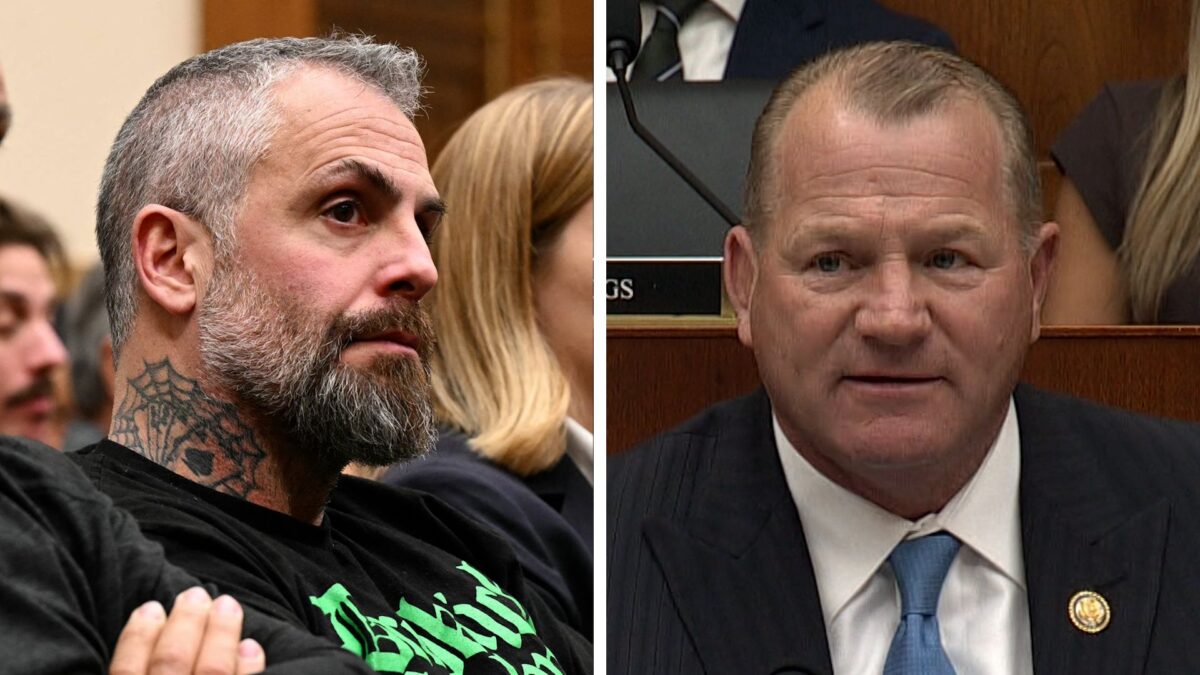
    During a Thursday hearing before the House Judiciary Committee, a tense exchange captured national attention. Former Washington, DC police officer Michael Fanone—who was severely beaten during the January 6, 2021 Capitol riot—interrupted Republican Rep. Troy Nehls of Texas with two blunt words: “F**k yourself”.

    The confrontation occurred as Nehls attempted to shift blame for the riot away from former President Donald Trump, instead pointing to “the US Capitol leadership team”. Fanone, who was dragged out and beaten in one of the most violent clashes that day, sat in the audience alongside three other officers who responded to the attack: Aquilino Gonell, Harry Dunn, and Daniel Hodges.

    Why Jack Smith’s Testimony Matters

    The hearing featured former Special Counsel Jack Smith, who led two prosecutions against Trump. In his first public appearance before lawmakers, Smith expressed shock at the Capitol attack and issued a stark warning about democracy.

    “If we don’t hold people to account when they commit crimes, it sends a message that those crimes are okay, that our society accepts that … it can endanger our election process, it can endanger election workers, and ultimately our democracy,” Smith testified.

    Smith warned of “potentially catastrophic ongoing threats” to US democracy stemming from the failure to hold Trump accountable for attempts to overturn the 2020 election.

    What Does This Mean for California Families?

    While this political drama may seem disconnected from your daily life, it underscores a critical principle that applies to estate planning: accountability and transparency protect what matters most.

    Just as our democracy requires clear rules and consequences, your family’s financial future requires:

  • Clear documentation of your wishes through wills, trusts, and healthcare directives
  • Transparent structures that prevent disputes and protect your heirs
  • Legal accountability through proper estate administration and probate processes
  • Proactive planning to prevent family conflicts when you’re no longer able to advocate for yourself
  • How Can California Families Protect Their Legacy?

    The uncertainty in our political landscape makes it more important than ever to secure what you can control. For California residents managing assets or planning for the future, proper estate planning ensures:

  • Your family avoids costly probate disputes
  • Your assets transfer smoothly to the next generation
  • Your healthcare wishes are honored if you become incapacitated
  • Your loved ones have clear guidance during difficult times
  • Take Action to Protect Your Family Today

    Don’t wait for a crisis to think about protecting your family’s future. At California Probate and Trust, PC, we provide compassionate, transparent estate planning services designed specifically for California residents who value family protection and legal clarity.

    Our experienced attorneys offer:

  • Free estate planning consultations to assess your needs
  • Clear, affordable trust and will packages
  • Comprehensive probate assistance when you need it most
  • Personalized guidance through every step of the process
  • Schedule Your Free Consultation

    Contact California Probate and Trust, PC today at (866)-674-1130 or visit cpt.law to schedule your no-obligation consultation. Let us help you create a plan that protects your legacy and gives your family peace of mind.

    Source

    Original article: “‘F**k yourself’: Michael Fanone, former MPD officer who was beaten during Jan. 6 riot, tells GOP lawmaker” – CNN Politics, January 22, 2026

    Legal Disclaimer

    This article is provided for informational purposes only and does not constitute legal advice. The information contained herein should not be relied upon as a substitute for legal counsel. Every estate planning situation is unique and requires individualized legal guidance. California Probate and Trust, PC makes no representations or warranties regarding the accuracy, completeness, or timeliness of the information presented. For specific legal advice regarding your estate planning needs, please schedule a consultation with a qualified California estate planning attorney. Past results do not guarantee future outcomes.

    Categories
    California Probate Estate Planning Trusts

    Rob Reiner and Michele Singer Reiner Deaths: What California Families Need to Know About Slayer Statutes and Estate Planning Protection

    For California Residents Managing Family Estates and Protecting Their Legacy

    If you’re a California resident concerned about protecting your family’s assets and ensuring your estate plan works as intended—even in the most tragic circumstances—understanding slayer statutes and simultaneous death provisions is essential. The recent deaths of Rob Reiner and his wife Michele Singer Reiner raise critical questions that many California families face when planning their estates.

    Source: Wealth Management – Rob Reiner, Slayer Statutes and Simultaneous Death

    ## What Happened: The Rob Reiner Case

    Hollywood director Rob Reiner and his wife Michele Singer Reiner were found deceased in their Brentwood home. Their son, Nick Reiner, was arrested as the primary suspect. This tragic situation brings two critical estate planning concepts into sharp focus for California families:

  • Slayer statutes – laws preventing murderers from inheriting from their victims
  • Simultaneous death provisions – rules governing estate distribution when spouses die at the same time
  • ## How Can California’s Slayer Statute Protect My Family’s Estate?

    California Probate Code §250, commonly known as the “slayer statute,” ensures that someone who intentionally and feloniously kills another person cannot benefit from that crime. This law became widely known during the Menendez brothers case in 1989.

    What the slayer statute prevents:

  • Inheriting property from the victim
  • Benefiting from wills and trusts
  • Serving as executor or trustee for the victim’s estate
  • Receiving life insurance proceeds, retirement accounts, or transfer-on-death assets
  • Exercising powers of appointment
  • The law treats the killer as if they died before the victim, effectively cutting them out of the inheritance.

    ## What Are the Exceptions to California’s Slayer Statute?

    Not every death triggers the slayer statute. Important exceptions include:

  • Justifiable homicide – self-defense situations
  • Accidental deaths – unintentional killings
  • Cases involving mental illness – though the law remains unclear in these situations
  • Assisted suicide – another legally murky area
  • ## Do I Need a Criminal Conviction for the Slayer Statute to Apply?

    Here’s what many California residents don’t realize: estate distribution happens in civil probate court, not criminal court. This means:

  • The burden of proof is lower (preponderance of evidence vs. beyond reasonable doubt)
  • The slayer statute can be invoked even without a criminal conviction
  • A criminal conviction serves as conclusive evidence, but isn’t required
  • This distinction is crucial for families navigating complex estate situations where criminal proceedings may be ongoing or inconclusive.

    ## What Happens When Spouses Die Simultaneously in California?

    California follows the Uniform Simultaneous Death Act (USDA), which addresses what happens when both spouses die at the same time or when the order of death cannot be determined.

    The 120-hour rule:

    If there’s no clear evidence that one spouse survived the other by at least 120 hours (five days), California law presumes each spouse predeceased the other. This means:

  • Each spouse’s half of community property is distributed according to their individual estate plan
  • If no estate plan exists, California intestate succession laws apply
  • Assets don’t automatically flow to the “surviving” spouse first
  • ## Why This Matters for California Community Property

    California is one of nine community property states. When married couples own assets together, proper estate planning becomes even more critical. The simultaneous death provisions ensure that:

  • Each spouse’s wishes are honored independently
  • Assets don’t pass through unintended beneficiaries
  • Family protections remain in place even in tragic circumstances
  • ## What Should California Families Do to Protect Their Estates?

    The Reiner case demonstrates why comprehensive estate planning is essential for every California family. Here’s what you should consider:

    1. Create or update your revocable trust

    Most California families benefit from revocable trusts rather than simple wills. Trusts provide:

  • Probate avoidance
  • Privacy protection
  • Clear succession planning
  • Contingency provisions for complex scenarios
  • 2. Address contingent beneficiaries

    Your estate plan should account for what happens if primary beneficiaries predecease you or are disqualified under slayer statutes.

    3. Review beneficiary designations

    Life insurance policies, retirement accounts, and transfer-on-death accounts need regular review to ensure they align with your overall estate plan.

    4. Consider family dynamics

    Estate planning isn’t just about documents—it’s about understanding your family’s unique challenges and protecting against worst-case scenarios.

    ## How California Probate and Trust, PC Can Help Protect Your Family

    At California Probate and Trust, PC, we understand that estate planning can feel overwhelming, especially when considering tragic scenarios like the Reiner case. Our certified estate planning specialists offer:

  • Free consultations to assess your unique situation
  • Transparent pricing with clear estate planning packages
  • Comprehensive services covering both legal structure and financial management
  • Compassionate guidance through difficult conversations about family protection
  • We’ve helped thousands of California families from our offices in Fair Oaks, Sacramento, and San Francisco create estate plans that protect their legacies across generations.

    ## Schedule Your Free Estate Planning Consultation

    Don’t wait for a crisis to address your estate planning needs. Whether you’re concerned about family dynamics, protecting your assets, or ensuring your wishes are honored, California Probate and Trust, PC provides the expertise and compassion you need.

    Contact us today:

  • Call: (866) 674-1130
  • Visit: cpt.law
  • Schedule your free one-hour consultation with our experienced estate planning attorneys
  • ## Legal Disclaimer

    This article is provided for informational purposes only and does not constitute legal advice. The information presented is based on California law as of January 2026 and may change. Every estate planning situation is unique, and the application of slayer statutes and simultaneous death provisions depends on specific facts and circumstances. The Reiner case details referenced are based on early reports and may be subject to change as investigations proceed. For personalized legal guidance regarding your estate planning needs, please consult with a qualified California estate planning attorney. California Probate and Trust, PC offers free consultations to discuss your specific situation. No attorney-client relationship is created by reading this article.

    Categories
    California Probate Estate Planning Trusts

    How California Families Can Protect Their Loved Ones from Medicaid Estate Recovery: A Complete Guide for 2026

    Source: Justice in Aging – Mitigating the Harmful Effects of Medicaid Estate Recovery

    Who This Guide Is For

    If you’re a California resident who has a loved one receiving Medicaid benefits—or you’re planning for your own future long-term care—you need to understand Medicaid estate recovery. This policy allows the state to recover costs from a deceased beneficiary’s estate, potentially forcing families to sell their homes or deplete inheritances meant for children and grandchildren.

    This guide is designed for:

  • Adult children whose aging parents are on Medi-Cal (California’s Medicaid program)
  • Seniors and disabled individuals who rely on Medicaid for healthcare or long-term care
  • Estate planning attorneys and advocates working to protect vulnerable California families
  • Anyone concerned about preserving their family home after receiving government healthcare assistance
  • What Is Medicaid Estate Recovery and Why Does It Matter?

    Medicaid estate recovery is a federal requirement that allows states to recoup money spent on certain Medicaid services after a beneficiary passes away. In California, this means the state can place liens on homes, bank accounts, and other assets to recover costs for:

  • Nursing home care
  • Home and community-based services
  • Hospital and prescription drug costs for individuals age 55 and older
  • The problem: Many families don’t learn about estate recovery until after a loved one dies—when it’s too late to plan. The family home, which may have been in the family for generations, can be seized or forced into sale to satisfy the state’s claim.

    Real-World Example: How Estate Recovery Affects California Families

    Consider Maria, a 78-year-old Sacramento resident who received Medi-Cal benefits for in-home care services over five years. When Maria passed away, the state filed a claim against her estate for $180,000. Her adult daughter, who had been living in and maintaining the family home, was forced to either buy out the state’s interest or sell the property—despite having no other place to live.

    Cases like Maria’s happen thousands of times each year in California. Without proper planning, families lose their financial security and generational wealth.

    5 Proven Strategies to Protect Your Family from Medicaid Estate Recovery

    1. Establish a Living Trust Before Receiving Medicaid

    Placing your home and other assets into a properly structured living trust before applying for Medicaid can shield those assets from estate recovery. However, timing is critical—transferring assets within five years of applying for Medicaid can trigger penalty periods.

    Key considerations:

  • Work with an experienced California estate planning attorney who understands Medi-Cal rules
  • Ensure the trust is irrevocable for maximum protection
  • Plan early—ideally 5+ years before needing long-term care
  • 2. Use Exemptions and Hardship Waivers

    California law provides several exemptions from estate recovery, including:

  • Surviving spouse exemption: No recovery if a spouse survives the Medicaid recipient
  • Disabled or blind child exemption: No recovery if the deceased has a disabled or blind child of any age
  • Child caregiver exemption: If an adult child lived in the home for at least two years and provided care that delayed nursing home placement
  • Undue hardship waiver: Available when recovery would cause significant financial distress to surviving family members
  • Important: These exemptions must be actively claimed—they don’t happen automatically. Families need to file proper documentation with the California Department of Health Care Services (DHCS).

    3. Consider Life Estate Deeds

    A life estate deed allows a Medicaid recipient to retain the right to live in their home for life while transferring ownership to their children or other beneficiaries. This can remove the home from the probate estate subject to recovery.

    Pros:

  • Property passes outside of probate
  • Can potentially avoid estate recovery if structured correctly
  • Preserves the home for family members
  • Cons:

  • Subject to the five-year Medicaid look-back period
  • May have capital gains tax implications for beneficiaries
  • Can complicate future property sales or refinancing
  • 4. Advocate for Policy Changes at the State Level

    California advocates have successfully pushed for reforms to limit estate recovery. Recent changes include:

  • Elimination of recovery for community-based services (as of January 2017)
  • Expanded hardship waiver criteria
  • Improved notice requirements to families
  • Continuing advocacy efforts focus on further limiting recovery to only nursing home care and improving transparency in the recovery process.

    5. Work with Specialized Legal Counsel

    The intersection of Medicaid planning, estate planning, and probate law is complex. Generic online documents or non-specialized attorneys may miss critical protections that could save your family hundreds of thousands of dollars.

    What to look for in an attorney:

  • Specific experience with California Medi-Cal estate recovery cases
  • Understanding of both estate planning and elder law
  • Transparent fee structures and clear communication
  • A track record of successfully protecting family assets
  • How Can I Prepare If My Loved One Is Already Receiving Medicaid?

    Even if a family member is currently receiving Medi-Cal benefits, there are still steps you can take:

  • Document caregiving: If an adult child is providing care, keep detailed records of care activities and living arrangements
  • Understand exemption eligibility: Review whether your situation qualifies for any of California’s exemptions
  • Request a hardship waiver: Begin gathering financial documentation to support a hardship claim
  • Consult with an attorney immediately: Even late-stage planning can sometimes reduce or eliminate estate recovery exposure
  • What Happens During the Estate Recovery Process in California?

    Understanding the timeline helps families prepare:

  • Notice period: DHCS must send notice of its intent to recover within a certain timeframe after death
  • Claim filing: The state files a claim against the estate during probate
  • Asset evaluation: The estate’s assets are assessed to determine what can be recovered
  • Exemption review: Families can submit exemption claims or hardship waiver requests
  • Settlement or payment: The estate must either pay the claim or negotiate a settlement
  • Critical timing note: Families typically have 30-90 days to respond to estate recovery notices. Missing deadlines can forfeit your rights to exemptions.

    Common Questions About Medicaid Estate Recovery

    Can the state take my house while I’m still alive?

    No. Medicaid estate recovery only occurs after the beneficiary’s death. Your home is protected while you’re living, and if your spouse still lives there.

    Does estate recovery apply to all Medicaid benefits?

    In California, recovery is limited to:

  • Nursing facility services
  • Home and community-based services for individuals age 55+
  • Related hospital and prescription drug services
  • Regular Medi-Cal benefits for doctors’ visits and basic healthcare are generally not subject to recovery.

    What if the estate has no assets?

    If there are no probate assets, there’s typically nothing for the state to recover. However, the state may still file liens against real property.

    Can I appeal an estate recovery claim?

    Yes. Families have the right to:

  • Challenge the amount of the claim
  • Assert exemptions
  • Request hardship waivers
  • Dispute the state’s valuation of assets
  • Why California Families Choose California Probate and Trust, PC for Estate Recovery Protection

    At California Probate and Trust, PC, we’ve helped hundreds of California families navigate the complex intersection of Medicaid planning, estate planning, and asset protection. Our approach combines:

  • Proactive planning: We help clients structure their estates before Medicaid becomes necessary, maximizing protection
  • Crisis intervention: Even when a loved one is already receiving benefits, we identify available protections and exemptions
  • Family-centered advocacy: We understand the emotional and financial stress of these situations and provide compassionate, clear guidance
  • Transparent pricing: Our estate planning packages are clearly structured with no hidden fees
  • With offices in Fair Oaks, Sacramento, and San Francisco, we’ve served thousands of California families facing these exact challenges.

    Take Action Now: Protect Your Family’s Legacy

    Medicaid estate recovery doesn’t have to mean losing your family home or depleting your children’s inheritance. With proper planning and knowledgeable legal guidance, you can protect what you’ve built while still accessing the healthcare benefits you need.

    Next steps:

  • Schedule a free consultation: Contact California Probate and Trust, PC at (866) 674-1130 for a no-obligation discussion of your situation
  • Gather your documents: Bring information about current assets, Medicaid benefits, and family circumstances
  • Explore your options: Learn about trusts, exemptions, and other strategies specific to your family’s needs
  • Categories
    California Probate Estate Planning Trusts

    Estate and Inheritance Taxes: What You Need to Know to Protect Your Family’s Legacy in 2025

    Estate and Inheritance Taxes in California: What You Need to Know to Protect Your Family’s Legacy in 2025

    If you’re a California resident managing family assets or planning for the future, understanding how estate and inheritance taxes work—both federally and across state lines—is critical to protecting what you’ve built and ensuring your loved ones aren’t blindsided by unexpected tax burdens.

    While California itself does not impose a state-level estate or inheritance tax, many families with out-of-state property, multi-state assets, or beneficiaries living in other states may still face significant tax exposure. Here’s what California families need to know about estate and inheritance taxes in 2025.

    How Do Estate and Inheritance Taxes Work?

    Estate and inheritance taxes are two different mechanisms that states use to tax wealth transfers at death:

  • Estate taxes are paid by the decedent’s estate before assets are distributed to heirs. They are imposed on the overall value of the estate and typically apply to residents who die while domiciled in the taxing state, as well as nonresidents who own taxable property there.
  • Inheritance taxes are paid by the person who receives the bequest. These taxes are based on the amount each beneficiary inherits and are owed to the state where the decedent was domiciled or owned taxable property—regardless of where the heir lives.
  • Which States Have Estate or Inheritance Taxes in 2025?

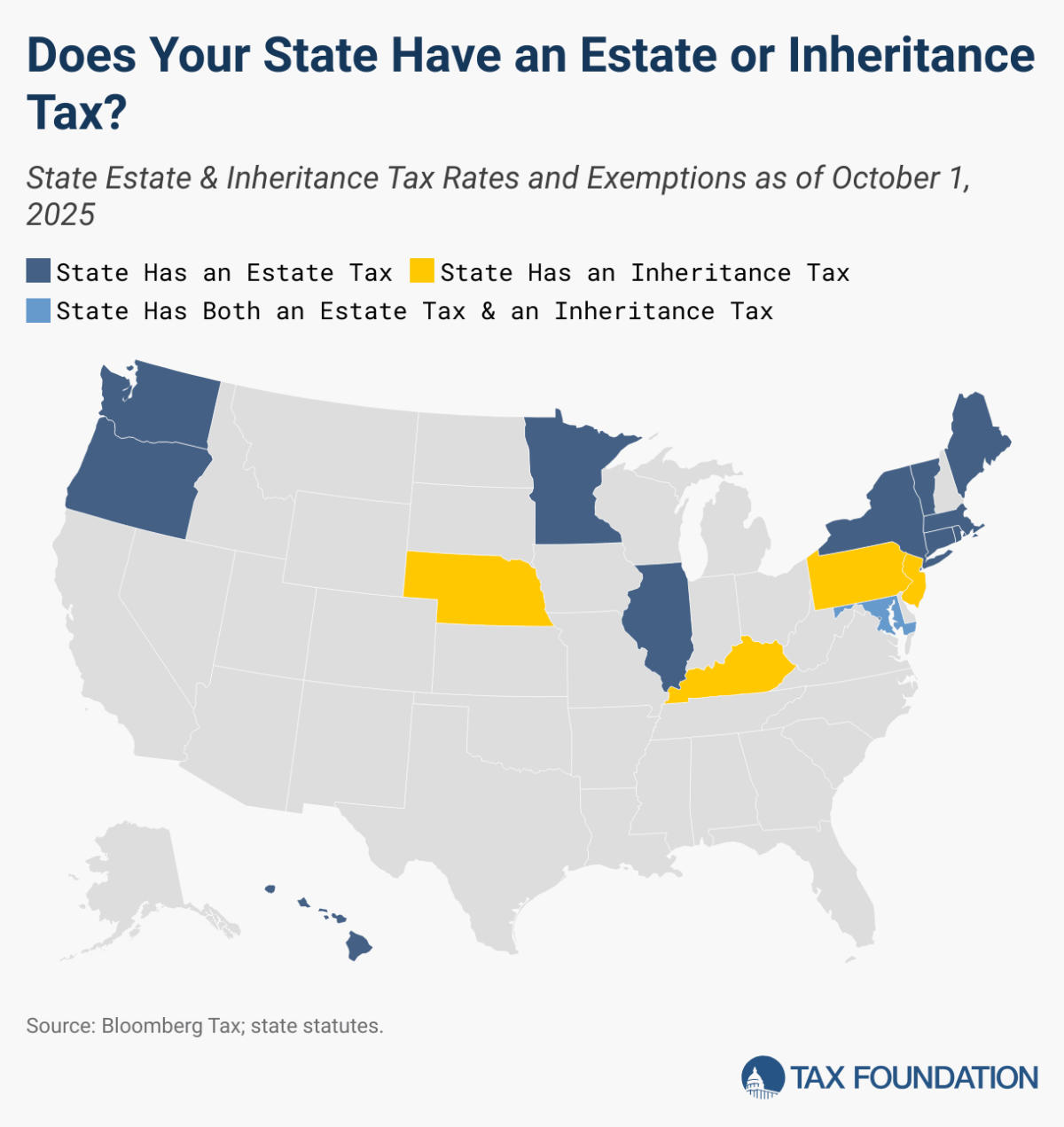
    As of 2025, 12 states and the District of Columbia impose estate taxes, while 5 states levy inheritance taxes. Maryland is the only state that imposes both.

    Here’s what California families managing assets in these states should know:

  • Washington has the highest estate tax rate at 35%, assessed on estates valued at $9 million or more.
  • Hawaii follows with a top rate of 20% on estates exceeding $10 million.
  • Connecticut levies a flat 12% estate tax, paired with a high exemption threshold of $13.99 million, making it less burdensome than many other states.
  • Kentucky and New Jersey have the highest inheritance tax rates at 16%, while Maryland has the lowest at a flat 10%.
  • All five states with inheritance taxes—Kentucky, Maryland, Nebraska, New Jersey, and Pennsylvania—structure their rates based on the relationship between the beneficiary and the decedent. Close relatives typically face lower rates and higher exemptions, while distant relatives or non-family members are taxed more heavily.

    State Estate & Inheritance Tax Rates and Exemptions (as of October 1, 2025)

    Notes:

  • Connecticut’s exclusion matches the federal threshold as of January 1, 2023. Estate tax currently capped at $15 million.
  • In Kentucky, Nebraska, and New Jersey, the inheritance tax exemption varies by class of beneficiary. Maximum exemption amount is shown.
  • In Maryland, no inheritance tax is imposed if the estate’s total value does not exceed $50,000.
  • Source: Bloomberg Tax; state statutes. Data compiled by Katherine Loughead, Tax Foundation.

    What About the Federal Estate Tax?

    In addition to state-level taxes, the federal estate tax imposes a top marginal rate of 40% on estates that exceed the federal exemption threshold.For California families with significant wealth, this can represent a substantial tax liability—even if California itself doesn’t impose an estate tax.

    Real-World Scenarios: When Do California Families Face Estate or Inheritance Taxes?

    You might face estate or inheritance tax exposure if:

  • You own a vacation home, rental property, or investment real estate in a state with estate or inheritance taxes
  • You’ve recently moved to California from a state with these taxes, or you’re planning to relocate
  • Your beneficiaries live in states with inheritance taxes
  • You have family members who own property in multiple states
  • You’re managing an estate for a loved one who passed away while owning property in a taxing state
  • How Can You Protect Your Family from Unexpected Tax Burdens?

    The key to avoiding estate and inheritance tax surprises is proactive planning. Here’s how California families can take control:

  • Understand where you own property. If you have assets in states with estate or inheritance taxes, your estate plan needs to account for this.
  • Use trusts strategically. Revocable and irrevocable trusts can help minimize tax exposure and ensure assets pass to your heirs according to your wishes.
  • Review beneficiary designations. Make sure your estate plan reflects current tax laws and family dynamics.
  • Work with experienced estate planning professionals. Navigating multi-state tax issues requires specialized knowledge and careful coordination.
  • Why California Families Trust California Probate and Trust, PC

    At California Probate and Trust, PC, we understand that estate planning isn’t just about paperwork—it’s about protecting the people you love and the legacy you’ve worked so hard to build. Our team has helped thousands of California families navigate complex estate and probate matters with transparency, compassion, and personalized guidance.

    Whether you’re concerned about multi-state tax exposure, need to update an outdated estate plan, or want to ensure your family is protected no matter what the future holds, we’re here to help.

    Schedule Your Free Consultation Today

    Don’t leave your family’s future to chance. Contact California Probate and Trust, PC today to schedule a free, no-obligation consultation. We’ll walk you through your options, answer your questions, and help you create a plan that gives you peace of mind.

    Visit cpt.law or call (866) 674-1130 to get started.

    Source: Tax Foundation – Estate and Inheritance Taxes by State, 2025

    Legal Disclaimer: This article is provided for informational purposes only and does not constitute legal advice. Estate planning laws vary by state and are subject to change. For personalized guidance tailored to your specific situation, please consult with a qualified estate planning attorney.

    Categories
    California Probate Estate Planning Trusts

    Why Unmarried Couples in California Can’t Afford to Skip Estate Planning: A Complete Legal Guide

    Why Unmarried Couples in California Can’t Afford to Skip Estate Planning: A Complete Legal Guide

    If you’re living with a partner in California but aren’t married, you face a harsh legal reality: the state considers you legal strangers. No matter how many years you’ve been together, shared a home, or built a life—without proper estate planning documents, your partner has no automatic right to inherit your assets, make medical decisions for you, or even access your bank accounts in an emergency.

    This guide is for California residents in committed unmarried relationships who want to protect their partner and secure their shared future. Whether you’re domestic partners, long-term companions, or life partners, understanding California’s intestacy laws and taking action now can prevent devastating financial and emotional consequences later.

    ## The Problem: California Doesn’t Recognize Common-Law Marriage

    What happens if my partner dies without a will in California?

    Many couples believe that after living together for a certain number of years, they automatically gain spousal rights. This is false. California does not recognize common-law marriage formed within the state. Your years together, shared expenses, and joint commitments mean nothing to California’s intestacy laws.

    When an unmarried partner dies without an estate plan, California’s default succession rules direct all individually-owned assets to blood relatives:

  • Children and grandchildren receive assets first
  • If no children exist, the deceased’s parents inherit
  • If no parents survive, siblings and other relatives inherit
  • Your surviving partner receives nothing—even if you lived together for decades and intended for them to inherit everything.

    ## Five Critical Risks Unmarried California Couples Face Without Estate Planning

    ### Risk #1: Your Partner Won’t Inherit Anything

    Without a will or trust, California law excludes unmarried partners from inheritance entirely. Consider this real-world scenario from Oceanside: Partner A dies after 20 years together, leaving a substantial investment account in their name alone. Partner B, the survivor, receives nothing. Partner A’s estranged sibling inherits the entire account, potentially leaving Partner B financially devastated.

    How do I ensure my unmarried partner inherits my assets in California?

    The solution requires two key documents:

  • Revocable Living Trust: Transfer assets (bank accounts, investments, real estate) into a trust naming your partner as primary beneficiary. The trust ensures private, immediate transfer of property upon death without court involvement.
  • Pour-Over Will: Acts as a backup to capture any assets accidentally left outside the trust, directing them into the trust for your partner’s benefit.
  • ### Risk #2: No Medical Decision-Making Authority During Incapacity

    Can my partner make medical decisions for me if I’m unconscious in California?

    No—not without legal documentation. If your partner is suddenly hospitalized and cannot communicate, you have no inherent legal right to:

  • Access their medical records or speak with doctors
  • Make critical medical decisions, including surgery consent or end-of-life choices
  • Access bank accounts to pay joint bills or mortgage payments
  • In these crises, healthcare providers and financial institutions will only communicate with legally appointed blood relatives. Your partner could be making life-or-death decisions while you’re excluded from the room. Without legal authority, you would need to petition a court for conservatorship—a lengthy, public, and expensive process.

    The solution:

  • Advance Health Care Directive (AHCD): Names your partner as your legal healthcare agent, granting authority to access medical information and make all medical decisions according to your stated wishes.
  • Durable Power of Attorney for Finances (DPOA): Grants immediate legal access to your bank accounts, investments, and property management, allowing your partner to handle financial affairs without court intervention.
  • ### Risk #3: Losing Your Shared Home

    What happens to our house if my unmarried partner dies in California?

    How your deed is titled determines everything. If you own property as “tenants in common” (TIC), each partner owns a distinct percentage. When one partner dies without a trust or will, that percentage doesn’t pass to the surviving partner—it goes to the deceased partner’s blood relatives via intestacy.

    This creates a nightmare scenario: you may suddenly co-own your home with your deceased partner’s estranged family members. These new co-owners can legally force the sale of the house to cash out their inherited share, potentially leaving you homeless.

    Even “joint tenancy with right of survivorship” has limitations. While it automatically transfers the home to the survivor and avoids probate, it doesn’t provide incapacity planning or allow you to plan for what happens after the surviving partner passes away.

    The most robust protection: Have an estate planning attorney review your deed and transfer the property into a revocable living trust. The trust explicitly directs the property’s disposition, ensuring the surviving partner retains full ownership and controls the home’s final disposition.

    ### Risk #4: Child Custody Battles and Guardianship Uncertainty

    Who gets custody of our children if we’re both unmarried parents and something happens?

    For unmarried couples with minor children, lack of planning triggers painful custody battles. If a non-biological co-parent has no legal standing (through second-parent adoption or similar), they have virtually no right to seek custody. Courts appoint guardians based on “best interest of the child,” often favoring blood relatives even when deceased parents clearly preferred a close friend or other relative.

    The solution: A last will and testament is the only legal tool allowing parents to nominate a guardian for minor children. While judges must approve guardians, they give significant deference to parents’ written nominations, preventing family feuds and ensuring your children’s care reflects your wishes.

    ### Risk #5: Expensive, Lengthy California Probate

    How much does probate cost for unmarried couples in California?

    Without proper planning, unmarried couples almost guarantee a costly trip through California probate court. California probate is notoriously slow, public, and expensive:

  • Time: The process typically takes 12 to 18 months, during which the surviving partner may have no access to the deceased partner’s assets.
  • Cost: California probate fees are based on gross estate value (not net). For a modest $1,000,000 home in Oceanside, statutory fees could exceed $46,000—draining assets intended for the surviving partner.
  • Publicity: All estate details—asset values, debts, beneficiaries—become public record.
  • The solution: A revocable living trust avoids probate entirely. Since the trust legally owns the assets (not the individual), there’s no “estate” to probate. The successor trustee (usually the surviving partner) follows private trust instructions, transferring assets immediately and efficiently, saving tens of thousands of dollars and months of delay.

    ## The Complete Estate Planning Toolkit for Unmarried California Couples

    A comprehensive estate plan for unmarried couples requires four integrated documents:

    1. Revocable Living Trust (RLT)

  • Holds title to assets and provides instructions for management during life and distribution upon death
  • Allows assets to pass immediately and privately to the surviving partner, avoiding probate
  • 2. Advance Health Care Directive (AHCD)

  • Appoints your partner as medical agent and states end-of-life wishes
  • Ensures your partner has legal standing to speak with doctors and make decisions during medical crises
  • 3. Durable Power of Attorney for Finances (DPOA)

  • Grants authority to manage financial and legal affairs if you become incapacitated
  • Prevents costly conservatorship proceedings, providing immediate access to needed funds
  • 4. Nomination of Guardian (for parents)

  • Designates who will raise minor children if both parents cannot
  • Provides clear guidance to courts, protecting children from family conflict
  • ## Take Action Now: Protect Your Partner and Your Future

    Waiting to create an estate plan means choosing California’s default plan—one that excludes your life partner and invites expensive court intervention. Estate planning isn’t reserved for the wealthy or elderly; it’s a fundamental responsibility for anyone sharing their life and assets with someone the government doesn’t automatically recognize.

    California Probate and Trust, PC specializes in protecting unmarried couples throughout California. Our certified estate planning specialists understand the unique legal challenges facing domestic partners and long-term companions. We offer comprehensive, transparent estate planning packages designed specifically for your situation—from basic advance directives to complex trust structures that protect multi-generational wealth.

    Don’t let California’s intestacy laws decide your family’s future. Schedule your free estate planning consultation today to discuss how we can legally honor and secure your partnership.

    ## Schedule Your Free Consultation with California Probate and Trust, PC

    Contact our Sacramento office today:

    Phone: (866) 674-1130

    Website: cpt.law

    Our compassionate estate planning attorneys serve California residents from our offices in Fair Oaks, Sacramento, and San Francisco. We’ve protected thousands of families with personalized estate plans that provide legal certainty, family protection, and peace of mind.

    ## Legal Disclaimer

    This article is provided for informational purposes only and does not constitute legal advice. Estate planning laws vary by jurisdiction and individual circumstances. The information presented is based on California law as of the publication date and may change. Readers should not act upon this information without seeking professional legal counsel from a licensed attorney in their jurisdiction. California Probate and Trust, PC does not guarantee specific legal outcomes. An attorney-client relationship is not established by reading this article or contacting our firm for general information. Formal engagement requires a signed representation agreement. For specific legal advice tailored to your situation, please schedule a consultation with one of our qualified estate planning attorneys.


    Categories
    California Probate Estate Planning Trusts

    What Happens to Your Estate Plan If You Die During a Divorce? Lessons from Shannen Doherty’s Case for California Families

    If you’re a California resident going through a divorce—or worried about what happens to your assets during this difficult transition—understanding how divorce timing affects your estate plan could be the difference between protecting your family’s inheritance and leaving it vulnerable to unintended consequences.

    The recent case of actress Shannen Doherty offers critical insights for anyone navigating divorce while also thinking about estate planning. Her story reveals what can go wrong when divorce isn’t finalized before death, and why California families need to act quickly to protect their wishes.

    Source: ElderLawAnswers – Shannen Doherty’s Estate Planning Amid Divorce

    The Critical Timing Issue: Why Divorce Finalization Matters

    Shannen Doherty’s divorce from photographer Kurt Iswarienko took over 15 months to finalize. She signed the divorce paperwork the day before her death on July 13, 2024, and her husband signed the same day. A judge approved the divorce just two days after she passed away.

    This timing was crucial. Because the divorce was finalized before her death, Doherty maintained complete control over her estate, which included:

  • A $6 million Malibu home
  • A Salvador Dali painting
  • Multiple vehicles
  • All her acting earnings
  • $251,000 in bank accounts
  • $1.88 million in stocks and bonds
  • $3 million in additional real estate
  • $134,000 in pension funds
  • What Could Have Gone Wrong: The Elective Share Problem

    If Doherty had died just days earlier—before the divorce was final—the outcome could have been dramatically different. Here’s what California residents need to understand:

    Your spouse may still have legal rights to your estate during divorce proceedings. Even when you’re legally separated and divorce papers are filed, until that divorce is finalized, your spouse remains your legal spouse with potential claims to your estate.

    If Iswarienko hadn’t been included in Doherty’s estate plan and the divorce wasn’t final, he could have filed a claim for an “elective share” of her estate—a legal right that surviving spouses have in many states to claim a portion of the deceased spouse’s assets, regardless of what the will says.

    This could have resulted in conflict between the surviving spouse and other heirs, potentially including Doherty’s mother Rosa and brother Sean, who survived her.

    Can You Change Your Estate Plan During Divorce in California?

    Here’s a question many divorcing California residents ask: “Can I update my will or trust to remove my soon-to-be ex-spouse before the divorce is final?”

    The answer is complicated. During divorce proceedings, you likely cannot change provisions in your estate plan that dictate who receives your money and property until the divorce becomes final. This means:

  • Any assets you would have left your spouse under a will, trust, or beneficiary designation would probably still go to them if you died before divorce finalization
  • Your hands may be tied legally, even though emotionally and practically you’ve separated
  • The person you’re divorcing could still inherit significant assets if you pass away unexpectedly
  • What Happens If You Die Without a Will During Divorce?

    In California, if you die without a will or trust (called dying “intestate”), state law determines who gets your assets. For someone going through divorce, this creates additional uncertainty because California’s intestacy laws would dictate what your not-yet-ex-spouse is entitled to receive.

    With over 670,000 divorces occurring in the United States in 2022 alone, this isn’t a rare scenario—it’s a common risk that many families face.

    How California Probate and Trust, PC Protects Your Family During Divorce

    At California Probate and Trust, PC, we understand that divorce is one of life’s most stressful transitions. When you’re already dealing with emotional turmoil and legal complexity, the last thing you want is uncertainty about whether your children, parents, or other loved ones will be protected.

    Our Sacramento-based estate planning attorneys specialize in helping California residents navigate the intersection of divorce and estate planning. We provide:

  • Clear guidance on timing: We help you understand exactly when you can make changes to your estate plan and what protective steps you can take immediately
  • Beneficiary designation updates: As soon as legally permissible, we assist in updating beneficiary designations on life insurance, retirement accounts, and other assets
  • Trust creation or modification: We can help create new trusts or modify existing ones to protect your assets and ensure they go to your intended heirs
  • Tax implication planning: We address potential tax consequences to ensure your estate plan is as efficient as possible
  • Transparent, fixed-fee packages: Unlike many firms, we offer clear pricing so you know exactly what to expect during an already uncertain time
  • Five Critical Steps to Take Right Now If You’re Divorcing

    If you’re a California resident currently going through or contemplating divorce, take these actions immediately:

  • Schedule a free consultation with an estate planning attorney. Don’t wait until the divorce is final—understand your options and limitations now.
  • Review all beneficiary designations. Identify which accounts and policies list your spouse as beneficiary so you’re ready to update them the moment you legally can.
  • Document your current wishes. Even if you can’t legally change everything immediately, having a clear record of your intentions helps guide future actions.
  • Consider what happens to jointly-owned property. Understand California’s community property laws and how they affect assets acquired during marriage.
  • Plan for incapacity, not just death. Update your advance healthcare directive and powers of attorney to ensure your soon-to-be ex-spouse isn’t making medical or financial decisions for you if you become incapacitated.
  • Why Trusts May Offer Better Privacy Than Wills During Divorce

    Doherty’s estate plan details remain unknown to the public, likely because she used a trust or beneficiary designations rather than relying solely on a will. This privacy advantage is particularly valuable during divorce, when you may not want details of your estate becoming public record.

    Trusts offer California families:

  • Privacy—they don’t go through public probate court
  • Faster distribution to heirs
  • Greater control over when and how assets are distributed
  • Protection from court challenges in many cases
  • Protect Your Legacy During Life’s Transitions

    Shannen Doherty’s case reminds us that life doesn’t pause during legal proceedings. She was simultaneously battling cancer and navigating a complex divorce—yet she took steps to ensure her wishes would be honored and her loved ones protected.

    You deserve that same peace of mind.

    At California Probate and Trust, PC, we’ve helped thousands of California families protect their assets and honor their wishes, even during complicated transitions like divorce. Our compassionate, experienced attorneys provide free consultations to help you understand your options without obligation.

    Schedule Your Free Estate Planning Consultation Today

    Don’t leave your family’s future to chance. Whether you’re currently divorcing, recently separated, or simply want to ensure your estate plan reflects your current wishes, California Probate and Trust, PC is here to help.

    Call us at (866) 674-1130 or visit cpt.law to schedule your free one-hour consultation.

    Our Fair Oaks, Sacramento, and San Francisco offices are ready to serve you with transparent pricing, personalized attention, and the expertise you need to protect what matters most.

    Legal Disclaimer

    This article is provided for informational purposes only and does not constitute legal advice. The information presented is based on general legal principles and the specific case of Shannen Doherty as reported in public sources. Estate planning and divorce laws vary by state and individual circumstances. Every family’s situation is unique, and laws change over time. For advice specific to your situation, please consult with a qualified estate planning attorney licensed in California. California Probate and Trust, PC offers free consultations to discuss your individual needs. Nothing in this article creates an attorney-client relationship.

    Categories
    California Probate Estate Planning Trusts

    # USA Rare Earth Federal Investment: What Managing Critical Mineral Assets Need to Know About Government Equity Stakes and Supply Chain Security

    For California Residents Managing Investment Portfolios, Business Assets, and Multi-Generational Wealth

    If you’re a California resident with investment portfolios that include mining stocks, strategic mineral assets, or business interests tied to defense contractors and electric vehicle manufacturers, the recent USA Rare Earth announcement raises important questions about how government intervention in critical industries affects your estate planning strategy.

    On January 26, 2026, USA Rare Earth shares surged over 20% following the Department of Commerce’s announcement of a landmark investment deal—a $1.3 billion loan, $277 million in federal funding, and an 8% to 16% government equity stake in the company. This marks a significant expansion of the Trump administration’s strategy to secure Western rare earth and critical mineral supply chains, reducing U.S. dependence on China.

    Source: CNBC – USA Rare Earth shares jump 20% as Commerce Department takes equity stake

    ## What Are Rare Earth Minerals and Why Do They Matter for Your Assets?

    Rare earth elements are critical minerals essential to strategic industries including defense systems, robotics, electric vehicles, and semiconductor manufacturing. For decades, the United States has been dependent on rare earth imports from China, which dominates the global supply chain.

    This dependency became a crisis point when Beijing attempted to cut off rare earth exports during trade disputes with the Trump administration. For California families with assets in:

  • Defense contractor stocks (Lockheed Martin, Raytheon, Northrop Grumman)
  • Electric vehicle manufacturers (Tesla, Rivian, Lucid Motors)
  • Technology and semiconductor companies (Intel, NVIDIA, Applied Materials)
  • Mining and critical mineral operations
  • Understanding how federal investment reshapes these supply chains is crucial for protecting long-term wealth and making informed estate planning decisions.

    ## How Does the USA Rare Earth Deal Work?

    The Department of Commerce issued a letter of intent providing USA Rare Earth with substantial federal backing:

  • $1.3 billion loan to finance operations
  • $277 million in direct federal funding
  • Government equity position: USA Rare Earth will issue 16.1 million shares of common stock and 17.6 million warrants to Commerce, giving the U.S. government an 8% to 16% stake depending on warrant exercise
  • $1.5 billion raised from private investors, demonstrating market confidence
  • This capital will support two major projects:

  • A magnet manufacturing plant in Stillwater, Oklahoma
  • A rare earth mine at the Round Top deposit in Texas
  • Secretary of Commerce Howard Lutnick stated: “USA Rare Earth’s heavy critical minerals project is essential to restoring U.S. critical mineral independence. This investment ensures our supply chains are resilient and no longer reliant on foreign nations.”

    ## What Does This Mean for California Investors and Business Owners?

    This is not an isolated transaction. The Trump administration has established a pattern of taking equity stakes in critical mineral companies:

  • MP Materials: Landmark deal including equity stake, price floor, and offtake agreement
  • Lithium Americas: Federal equity investment
  • Trilogy Metals: Government ownership position
  • For California families managing these types of assets, key considerations include:

    ### 1. Volatility and Valuation Changes

    USA Rare Earth shares jumped 20% in premarket trading following the announcement. If your portfolio includes mining stocks, defense contractors, or EV manufacturers, government intervention can trigger significant short-term volatility. Estate plans should account for rapid asset valuation changes.

    ### 2. Long-Term Strategic Shifts

    The U.S. government’s commitment to building a Western rare earth supply chain signals long-term support for domestic critical mineral production. If you own mineral rights in California or elsewhere, or have business interests in manufacturing that depends on rare earths, this could fundamentally alter the value and strategic importance of your assets.

    ### 3. Succession Planning for Business Owners

    If you operate a business that relies on rare earth elements—whether in electronics manufacturing, renewable energy, or defense contracting—supply chain security improvements could reduce operational risk but also change competitive dynamics. Your succession plan should reflect these evolving market conditions.

    ### 4. Multi-Generational Wealth Transfer

    For families transferring wealth across generations, the intersection of government investment, geopolitical risk, and critical mineral security creates both opportunities and uncertainties. Trusts managing diversified portfolios need flexibility to adapt to policy-driven market shifts.

    ## How Can California Probate and Trust Help?

    At California Probate and Trust, PC, we understand that managing complex assets—from investment portfolios to business interests to mineral rights—requires estate planning that goes beyond basic wills and trusts.

    Our team provides:

  • Asset protection strategies for volatile investment portfolios
  • Business succession planning for companies navigating supply chain disruption
  • Trust structures designed to protect multi-generational wealth during periods of market uncertainty
  • Tax-efficient wealth transfer planning that accounts for changing asset valuations
  • Clear, transparent guidance through every stage of the estate planning process
  • We serve California residents and those managing California-based assets who value transparency, family protection, and comprehensive legal and financial planning. Whether you’re concerned about protecting your investment portfolio, planning business succession, or ensuring your family’s long-term financial security, we offer a one-stop-shop approach that addresses both legal structure and wealth management.

    ## Take Control of Your Family’s Financial Future

    If you hold assets in critical minerals, defense contractors, electric vehicles, or other industries affected by federal supply chain investments, now is the time to review your estate plan.

    Schedule your free consultation with California Probate and Trust, PC today:

  • Phone: (866)-674-1130
  • Website: cpt.law
  • Offices: Fair Oaks, Sacramento, and San Francisco
  • Our experienced estate planning attorneys will help you understand how recent developments in critical mineral policy may impact your assets and what steps you can take to protect your family’s wealth for generations to come.

    Legal Disclaimer: This article is provided for informational purposes only and does not constitute legal, financial, or investment advice. The information contained herein is based on publicly available sources and should not be relied upon as a substitute for professional consultation. Estate planning, asset protection, and wealth management strategies vary based on individual circumstances. California Probate and Trust, PC does not provide investment advice or recommendations regarding specific securities. For personalized legal guidance tailored to your unique situation, please schedule a consultation with one of our experienced estate planning attorneys. Past performance of investments is not indicative of future results. All investment decisions carry risk and should be made in consultation with qualified financial and legal professionals.

    Categories
    Estate Planning California Probate Long Term Care Planning

    What California Families Need to Know About the Alex Pretti Shooting: Understanding Your Rights During Federal Immigration Enforcement

    The fatal shooting of Alex Pretti by federal immigration agents in Minneapolis on January 25, 2026, has raised critical questions about civil rights, lawful firearm possession, and how families should protect themselves during encounters with law enforcement. For California residents managing assets and protecting their families, this incident underscores the importance of understanding your legal rights and preparing for unexpected circumstances.

    What Happened to Alex Pretti?

    According to CNN’s investigation, Alex Pretti was fatally shot by federal immigration agents during an enforcement operation in Minneapolis’ Whittier neighborhood on Saturday, January 25, 2026. Video evidence and eyewitness testimony reveal a sequence of events that contradicts official government narratives.

    Key Facts from Video Evidence and Witness Testimony:

  • Pretti was recording the scene with his cellphone and helping direct traffic when confronted by officers
  • Video analysis shows no violent actions by Pretti or protesters prior to the shooting
  • An officer removed a handgun from Pretti’s waistband seconds before he was shot 10 times
  • Federal agents did not provide immediate medical assistance for over a minute after the shooting
  • A pediatrician who attempted to help reported that agents were “counting bullet wounds” rather than performing CPR
  • The Legal Questions This Incident Raises

    Was Pretti’s Firearm Possession Lawful?

    Rob Doar, president of Minnesota Gun Owners Law Center, stated clearly: “I see nothing that Mr. Pretti did that was unlawful.”This assessment is critical for understanding firearm rights during public incidents.

    Was the Use of Force Justified?

    Policing experts have questioned the legitimacy of the shooting. Brian Higgins, adjunct professor at John Jay College of Criminal Justice and retired police chief, noted: “This individual didn’t appear to me to even have his hand on the firearm at any time. So really, there’s no threat. He’s just carrying it.”

    What This Means for California Families

    1. Understanding Your Rights During Law Enforcement Encounters

    California residents need to know:

  • You have the right to record law enforcement in public spaces
  • Lawful firearm possession does not justify use of lethal force
  • You have the right to remain silent and request an attorney
  • Witnesses have the right to provide medical assistance in emergencies
  • 2. Estate Planning Implications of Unexpected Tragedy

    The Pretti shooting demonstrates how quickly a routine day can turn fatal. For California families, this underscores critical estate planning questions:

  • Do you have an Advance Healthcare Directive in place? This ensures your medical wishes are followed if you’re incapacitated
  • Have you designated a Power of Attorney? Someone needs legal authority to make decisions on your behalf
  • Is your estate plan current? Unexpected death without proper planning can leave your family in legal and financial chaos
  • Are your beneficiaries properly designated? Assets must transfer smoothly to protect your family
  • 3. Protecting Your Family’s Financial Future

    When tragedy strikes, families without proper estate planning face:

  • Lengthy probate proceedings that can take 12-18 months
  • Court costs and attorney fees consuming 3-7% of the estate value
  • Family disputes over asset distribution
  • Potential loss of family businesses or properties
  • Tax consequences that could have been avoided
  • How California Probate and Trust Can Help Protect Your Family

    At California Probate and Trust, PC, we understand that California residents face unique anxieties about protecting their families in an unpredictable world. Whether you’re concerned about sudden tragedy, complex family dynamics, or simply want to ensure your legacy is protected, our experienced estate planning attorneys provide the comprehensive guidance you need.

    Our Services Include:

  • Revocable Living Trusts: Avoid probate and maintain privacy while protecting your assets
  • Advance Healthcare Directives: Ensure your medical wishes are honored
  • Power of Attorney Documents: Designate trusted individuals to make financial and healthcare decisions
  • Comprehensive Estate Plans: Protect multi-generational wealth and family businesses
  • Probate Administration: Navigate the probate process efficiently when it’s unavoidable
  • Why California Families Choose Us:

  • Free 1-hour estate planning consultation with experienced attorneys
  • Transparent pricing with clear, straightforward packages
  • Personalized approach that considers your unique family dynamics
  • Offices serving Sacramento, Fair Oaks, and San Francisco
  • Over 1,000 families protected with comprehensive estate plans
  • Take Action to Protect Your Family Today

    The Alex Pretti incident is a stark reminder that life can change in an instant. Don’t leave your family’s future to chance. Contact California Probate and Trust, PC today for your free estate planning consultation.

    Schedule your consultation:

  • Call: (866) 674-1130
  • Visit: cpt.law
  • Email us to discuss your family’s unique needs
  • Our compassionate attorneys will help you understand your options, assess your needs, and develop a comprehensive plan that protects your family—no matter what the future holds.

    Legal Disclaimer

    This article is provided for informational purposes only and does not constitute legal advice. The information presented about the Alex Pretti shooting is based on publicly available news reports and does not represent a legal opinion on the incident. Every family’s estate planning needs are unique, and the information in this article should not be relied upon as a substitute for personalized legal counsel. California Probate and Trust, PC provides estate planning services to California residents and those managing California-based assets. For specific legal advice regarding your estate planning, probate, or trust administration needs, please schedule a consultation with one of our licensed attorneys. No attorney-client relationship is created by reading this article or visiting our website. Past results do not guarantee future outcomes.

    Source: Video, witnesses shed new light on moments before agents fatally shot Alex Pretti | CNN

    Categories
    California Probate Estate Planning News Trusts

    Brooklyn Beckham Prenup Reveals Critical Estate Planning Lessons for California Families: What the Beckham-Peltz Family Feud Teaches About Protecting Your Legacy

    3 69722c24c99b2 700

    If you’re a California resident concerned about protecting your family’s wealth and ensuring your children aren’t financially vulnerable in marriage, the recent revelation about Brooklyn Beckham’s prenuptial agreement offers important lessons. This high-profile case demonstrates why proper estate planning and prenuptial guidance matter—even for families who think they’ve covered all the bases.

    What Happened: The Beckham Family Prenup That “Handcuffs” Brooklyn to the Peltz Fortune

    According to reporting from The Sun, Brooklyn Beckham, 26-year-old son of David and Victoria Beckham, signed what insiders describe as an “ironclad” prenuptial agreement before his 2022 wedding to Nicola Peltz. The agreement reportedly:

  • Bars Brooklyn from accessing any of the Peltz family fortune (estimated at $1.6 billion) if the marriage ends
  • Restricts him to half of whatever he and Nicola build together as a brand
  • Leaves him potentially “completely ostracized and without much cash” in the event of divorce, according to sources close to his parents
  • This revelation surfaced amid Brooklyn’s explosive six-page statement accusing his parents of control and emotional harm, declaring “I do not want to reconcile with my family”.

    How Does This Compare to Other Wealthy Families?

    The financial disparity is significant:

  • Nelson Peltz (Nicola’s father): $1.6 billion net worth, with a Palm Beach estate alone valued over $70 million
  • David and Victoria Beckham: Combined $673 million net worth
  • Brooklyn Beckham: Approximately $10 million
  • Nicola Peltz: Approximately $50 million
  • What California Families Can Learn: 5 Critical Estate Planning Questions

    1. How can I protect my children in marriage without controlling them?

    The Beckham situation illustrates a common parental concern: how to ensure your children’s inheritance is protected without appearing controlling. California residents dealing with significant family wealth should consider:

  • Creating trusts that release assets at strategic life milestones
  • Implementing spendthrift provisions that protect inherited assets from creditors and divorce
  • Having frank family discussions about prenuptial agreements before marriages occur
  • Working with experienced estate planning attorneys who can structure protection mechanisms your children understand and accept
  • 2. When should my family consider a prenuptial agreement?

    Prenuptial agreements aren’t just for billionaires. California families should consider prenups when:

  • Either party brings significant assets, business interests, or real estate into the marriage
  • There’s inherited wealth or expected future inheritances
  • One party has substantially more earning potential than the other
  • Either person has children from previous relationships
  • Family businesses need protection from potential marital property claims
  • As several commenters noted in response to the Beckham news, “prenuptial agreements are standard among ultra-wealthy families”and “a prenup is fair on both”.

    3. What happens if my child signs a prenup that’s too restrictive?

    The Beckham case highlights potential concerns when prenuptial agreements are heavily one-sided. In California, prenuptial agreements must meet specific legal standards:

  • Both parties must have independent legal counsel (or knowingly waive this right in writing)
  • Full financial disclosure is required from both sides
  • The agreement cannot be “unconscionable” at the time of enforcement
  • Both parties must enter voluntarily without duress
  • If your adult child is considering marriage to someone from a significantly wealthier family, consulting with a California estate planning attorney beforehand can help ensure the prenup is fair and protects their interests.

    4. How can trusts protect family wealth better than relying on prenups alone?

    Rather than relying solely on a child’s spouse to honor a prenuptial agreement, California families can use trust structures that inherently protect assets:

  • Discretionary trusts: A trustee controls distributions, keeping assets separate from marital property
  • Spendthrift trusts: Creditors and divorcing spouses cannot reach trust assets
  • Lifetime trusts: Assets never become your child’s personal property, remaining protected
  • Incentive trusts: Distributions tied to specific achievements or life circumstances
  • These mechanisms would have potentially given the Beckham family more control over their son’s financial security regardless of his marital situation.

    5. What if family relationships break down during estate planning disputes?

    The Beckham family rift—with comparisons being drawn to Prince Harry and Meghan Markle’s situation—demonstrates how estate and financial matters can fracture families. California residents can minimize this risk by:

  • Having transparent family meetings about estate plans while everyone is healthy and relationships are strong
  • Clearly documenting intentions in writing to prevent misunderstandings
  • Using professional trustees for complex family wealth situations
  • Reviewing and updating estate plans regularly as family dynamics change
  • Working with estate planning attorneys who specialize in family communication and conflict prevention
  • Real-World Application: What Should California Families Do Now?

    If you’re a California resident with significant assets, business interests, or real estate, consider these actionable steps:

    For parents concerned about their children’s financial protection:

  • Schedule a confidential consultation with an estate planning attorney to discuss trust structures
  • Review existing wills and trusts to ensure they include appropriate protective provisions
  • Have open conversations with adult children about financial expectations and protection strategies
  • Consider whether prenuptial agreements should be a family expectation before marriages
  • For individuals entering marriage with significant assets:

  • Consult with your own independent attorney before signing any prenuptial agreement
  • Ensure full financial disclosure from both parties
  • Understand exactly what you’re agreeing to—don’t sign under pressure
  • Consider whether the agreement is balanced and protects both parties fairly
  • For families managing California real estate and business interests:

  • Implement trust structures that keep property separate from marital assets
  • Use business entities (LLCs, corporations) with appropriate ownership restrictions
  • Create clear succession plans that protect business continuity regardless of family changes
  • Document everything to prevent future disputes
  • Why California Probate and Trust, PC Can Help Protect Your Family’s Future

    The Beckham family situation demonstrates that even wealthy, sophisticated families can find themselves in difficult positions when estate planning and prenuptial strategies aren’t properly aligned. California Probate and Trust, PC specializes in helping California residents navigate these exact challenges.

    Our experienced estate planning attorneys understand that protecting your family’s wealth isn’t about control—it’s about ensuring security, clarity, and peace of mind for the people you love. We offer:

  • Comprehensive estate planning consultations that address your unique family dynamics
  • Trust structures designed to protect inherited wealth from divorce and creditors
  • Prenuptial agreement review and guidance for families and individuals
  • Conflict-prevention strategies that keep families together
  • Transparent pricing and clear communication throughout the process
  • With offices serving Sacramento, Fair Oaks, and San Francisco, we’ve helped thousands of California families create estate plans that protect their legacies while maintaining family harmony.

    Take Action: Protect Your Family’s Financial Future

    Don’t wait until a family crisis forces difficult conversations. Whether you’re concerned about protecting your children’s inheritance, need guidance on prenuptial agreements, or want to ensure your estate plan prevents future conflicts, California Probate and Trust, PC can help.

    Schedule your free consultation today:

  • Call (866) 674-1130
  • Visit cpt.law to learn more about our estate planning services
  • Meet with experienced California estate planning attorneys who put family protection first
  • Your family’s financial security and harmony are too important to leave to chance. Let us help you create an estate plan that protects what matters most.


    Legal Disclaimer: This article is provided for informational purposes only and does not constitute legal advice. The information presented is based on publicly reported news regarding the Beckham family and should not be relied upon as specific guidance for your situation. Estate planning, prenuptial agreements, and family wealth protection strategies are complex legal matters that vary significantly based on individual circumstances, California law, and federal regulations. No attorney-client relationship is created by reading this article. For personalized legal advice regarding your estate planning needs, prenuptial agreements, trusts, or family wealth protection, please consult with a qualified California estate planning attorney. California Probate and Trust, PC offers free consultations to discuss your specific situation and provide tailored legal guidance. Laws and regulations change frequently, and the application of law can vary widely based on specific facts and circumstances.

    Source: Information about the Beckham family prenuptial agreement derived from Bored Panda reporting, originally sourced from The Sun.