
California Legal Implications: Ensuring Your Charitable Bequests Are Honored
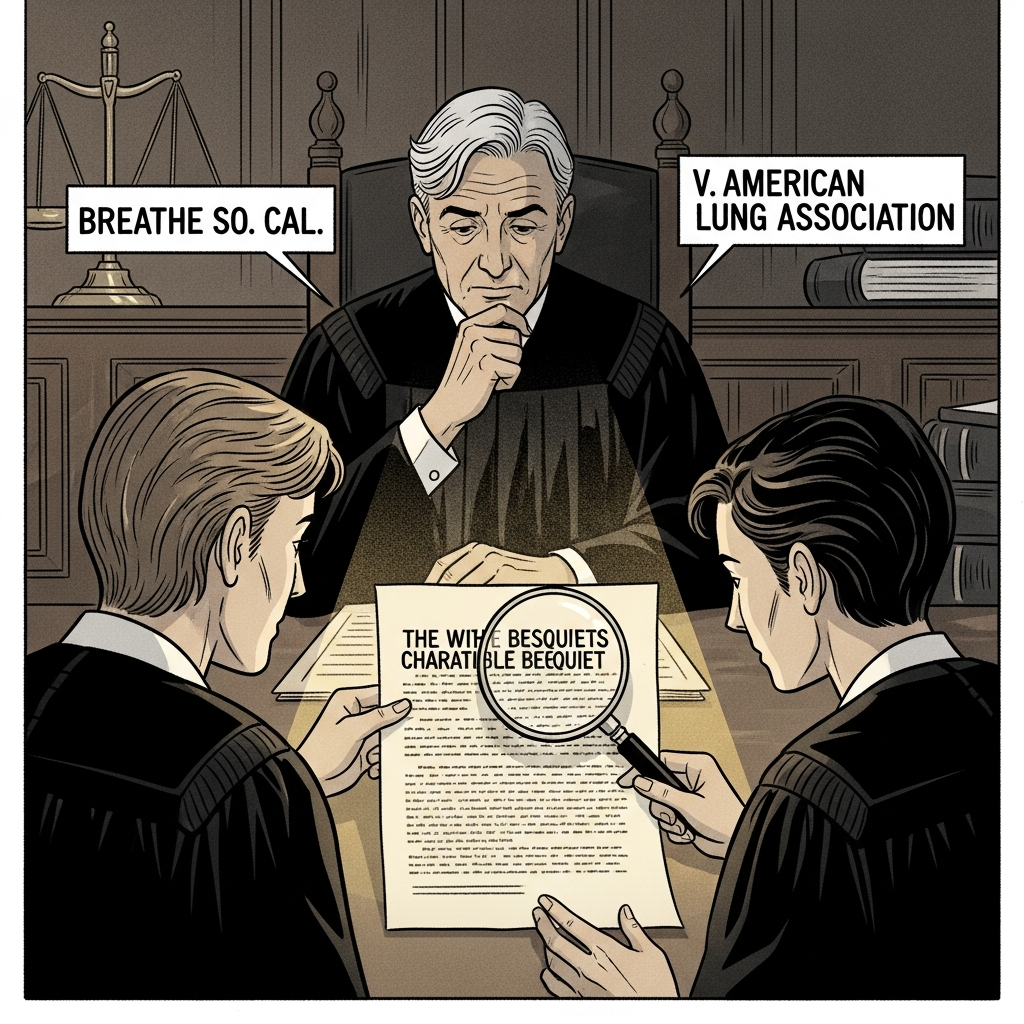
A recent decision by the California Court of Appeal highlights a critical lesson for anyone including charities in their estate plan: precision in drafting is essential to ensure your donations are used exactly as you intend. In the case of Breathe So. Cal. v. American Lung Association, the court was tasked with interpreting whether donations made to a local organization were required to be shared with a national affiliate. The court ruled that the plain language of the bequests indicated the donors intended the funds to remain with the specific local entity, effectively restricting the funds from being shared., the court was tasked with interpreting whether donations made to a local organization were required to be shared with a national affiliate. The court ruled that the plain language of the bequests indicated the donors intended the funds to remain with the specific local entity, effectively restricting the funds from being shared.
For California families, this case underscores the importance of clear, unambiguous language in a Will or Trust. When you leave a legacy to a charitable organization, or a specific branch of one, the wording of your estate documents will determine whether your gift supports the specific cause or community you envisioned, or if it becomes subject to corporate sharing agreements between non-profits.. When you leave a legacy to a charitable organization, or a specific branch of one, the wording of your estate documents will determine whether your gift supports the specific cause or community you envisioned, or if it becomes subject to corporate sharing agreements between non-profits.
The Importance of Testamentary Intent
In California probate law, the primary goal of the court is to ascertain and effectuate the testator’s intent (the intent of the person making the will). As demonstrated in the *Breathe So. Cal.* decision, when there is no extrinsic evidence—such as emails, letters, or witness testimony regarding the donor’s wishes outside of the legal document—the court must rely solely on the written words within the four corners of the instrument.—such as emails, letters, or witness testimony regarding the donor’s wishes outside of the legal document—the court must rely solely on the written words within the four corners of the instrument.
Because the court exercises its independent judgment in these scenarios, the specific words chosen by your estate planning attorney are vital. Ambiguity can lead to costly litigation between beneficiaries, depleting the very funds meant to do good.
Restricted Bequests and Specific Language
Donors often wish to restrict how their assets are used. This is known as a restricted bequest. In the case mentioned above, the dispute centered on whether the funds were “restricted in writing.” Although the donors did not explicitly write “do not share this with the American Lung Association,” the court found that language such as using the funds “entirely” at the local affiliate was sufficient to prove the donor’s intent to restrict the gift.. In the case mentioned above, the dispute centered on whether the funds were “restricted in writing.” Although the donors did not explicitly write “do not share this with the American Lung Association,” the court found that language such as using the funds “entirely” at the local affiliate was sufficient to prove the donor’s intent to restrict the gift.
To avoid leaving your legacy up to judicial interpretation, California residents should work with a qualified attorney to ensure:
* Specific Identification: Clearly identify the specific entity (including tax ID number and location) you wish to support.
* Purpose Restrictions: If you want the funds used for a specific program (e.g., “local asthma research” vs. “general operating costs”), this must be explicitly stated.
* Geographic Restrictions: If you intend for funds to stay in your local community rather than being sent to a national headquarters, your Trust or Will should explicitly state this preference. should explicitly state this preference.
Navigating Affiliate Agreements and Beneficiaries
Many charities operate as local chapters of larger national organizations. These entities often have internal contracts regarding revenue sharing. However, a donor’s intent generally supersedes these internal agreements if the bequest is properly drafted.
In this case, the appellate court reversed a trial court ruling, affirming that the purpose of recognizing restricted funds is to respect the donor’s wishes. By using precise language, you create a legal safeguard that protects your assets from being absorbed into general funds against your wishes.
About This Case
California Probate and Trust, PC Can Help
Ensuring your charitable goals are met requires careful planning and precise legal drafting. We assist California families in creating estate plans that clearly reflect their values and protect their legacies.
– Free consultations: (866)-674-1130
– Experienced California estate planning
– Schedule consultation
– Learn more: cpt.law
Legal Disclaimer
This article is for informational purposes only. Consult with a qualified California estate planning attorney for advice specific to your situation.

About the Author: Dustin MacFarlane, Esq.
California Licensed Attorney | Estate Planning Specialist
Dustin MacFarlane is the founder of California Probate and Trust, PC, with over 15 years of experience in estate planning, probate administration, and trust law. Licensed by the California State Bar, Dustin has helped thousands of California families protect their assets and plan for the future.
CA Bar License: Active | Practice Areas: Estate Planning, Probate, Trust Administration | Location: Granite Bay, CA