
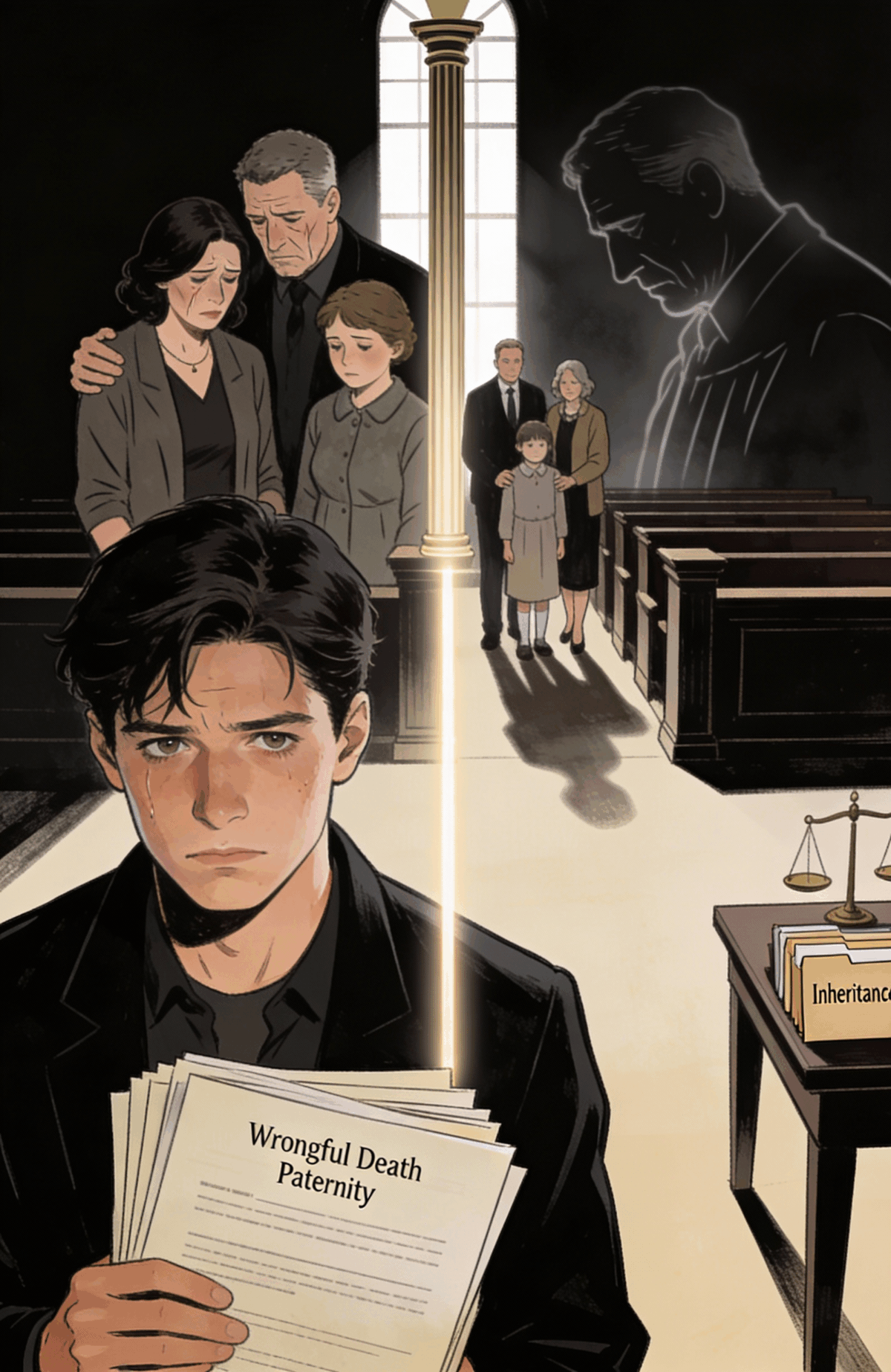
If you’re a California resident dealing with the sudden loss of a family member—especially when paternity was never legally established—you may be wondering: Can my child sue for wrongful death if their biological father never acknowledged them? The California Court of Appeal answered this question definitively in Stennett v. Miller, and the outcome has profound implications for families navigating probate and wrongful death claims.
## Who This Article Is For
This legal breakdown is written for:
## The Case: What Happened in Stennett v. Miller?
A.S., a ten-year-old girl, lost her biological father, Amine Britel, when he was killed by a texting drunk driver. Despite being Britel’s biological child, A.S. had never met him, had no relationship with him, and—critically—paternity had never been legally established during his lifetime. Britel had not openly acknowledged A.S. as his child, and her mother had never pursued a paternity action before his death.
After Britel died intestate (without a will) and with no surviving spouse, A.S. attempted to file a wrongful death lawsuit against the drunk driver. However, the case was stayed while A.S. pursued a separate probate action to be declared Britel’s lawful heir under California’s intestate succession laws.
The probate court ruled that A.S. did not qualify as Britel’s heir. Using that ruling, the defendants in the wrongful death case successfully moved to dismiss the complaint, arguing A.S. lacked standing to sue.
## The Court’s Ruling: No Heirship = No Standing
The California Court of Appeal affirmed the dismissal. Here’s what the court concluded:
## What Does This Mean for California Families?
This ruling underscores a harsh reality: biology alone is not enough to establish legal rights in California probate and wrongful death cases. If you are the biological child of someone who died intestate, you must meet one of the following conditions to be considered an heir:
Without meeting these thresholds, you will not have standing to pursue a wrongful death claim—even if DNA evidence confirms the biological relationship.
## How Can California Probate and Trust, PC Help?
At California Probate and Trust, PC, we’ve helped thousands of California families navigate complex probate and estate planning challenges. Whether you’re dealing with:
…we provide transparent, compassionate legal guidance tailored to your family’s unique situation. Our team understands that these cases are not just legal puzzles—they involve real people, real grief, and real financial consequences.
📞 Schedule a Free Consultation Today
If you’re facing a paternity dispute, wrongful death claim, or need to establish clear legal protections for your loved ones, contact California Probate and Trust, PC for a no-obligation consultation. We serve clients throughout California from our offices in Fair Oaks, Sacramento, and San Francisco.
👉 Visit cpt.law or call (866) 674-1130 to get started.
## Case Details
Source: California Lawyers Association – Stennett v. Miller
Full Opinion: Fourth District Opinion PDF
—
Legal Disclaimer: This article is provided for informational purposes only and does not constitute legal advice. Every case is unique, and outcomes depend on specific facts and circumstances. If you need legal assistance with a probate matter, wrongful death claim, or estate planning issue, please consult with a qualified California attorney. California Probate and Trust, PC offers free consultations to discuss your situation.

About the Author: Dustin MacFarlane, Esq.
California Licensed Attorney | Estate Planning Specialist
Dustin MacFarlane is the founder of California Probate and Trust, PC, with over 15 years of experience in estate planning, probate administration, and trust law. Licensed by the California State Bar, Dustin has helped thousands of California families protect their assets and plan for the future.
CA Bar License: Active | Practice Areas: Estate Planning, Probate, Trust Administration | Location: Granite Bay, CA