
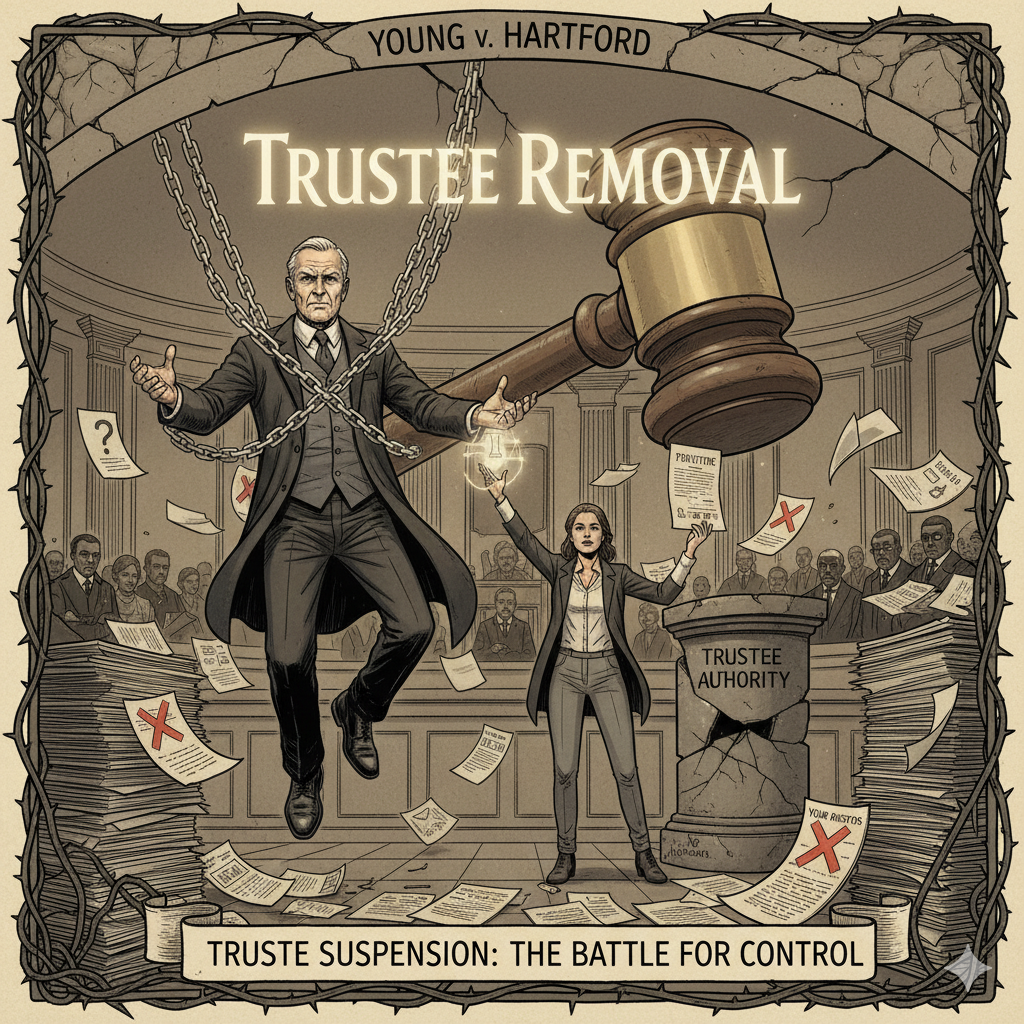
If you’ve been named as an executor or personal representative in California, you’re likely facing complex legal responsibilities that can feel overwhelming. One question that frequently arises during trust administration is: “What happens if a trustee needs to be suspended?” The recent case Young v. Hartford provides critical guidance for executors, trustees, and beneficiaries navigating these challenging situations.
What Executors and Personal Representatives Need to Know
As an executor or personal representative, you’re tasked with:
- Inventorying and managing estate assets
- Paying outstanding debts and resolving creditor claims
- Handling tax disputes and filing estate tax returns
- Distributing assets to beneficiaries according to the will or trust
- Avoiding personal liability for mistakes in administration
When conflicts arise or a trustee’s actions come into question, understanding your legal options—and limitations—becomes essential to protecting yourself and the estate.
The Young v. Hartford Decision: What It Means for You
According to the California Lawyers Association, the court in Young v. Hartford established an important principle: an order suspending a trustee and appointing an interim trustee is not directly appealable.
Why does this matter for executors and trustees?
This ruling affects your ability to challenge certain court decisions during trust administration. Specifically:
- Limited immediate appeal rights: If a court suspends a trustee and appoints an interim replacement, that decision cannot be immediately appealed as a standalone order
- Timing considerations: The suspension order may only be appealable as part of a final judgment in the underlying case
- Strategic implications: Executors and trustees must work with experienced legal counsel to determine the best course of action when facing suspension proceedings
Real-World Scenarios: When Does Trustee Suspension Occur?
Trustee suspension typically happens when:
- There are allegations of breach of fiduciary duty
- Beneficiaries raise concerns about mismanagement of trust assets
- Conflicts of interest emerge between the trustee and beneficiaries
- The trustee fails to provide required accountings or documentation
- There’s evidence of self-dealing or improper distributions
Understanding when suspension is possible—and what legal recourse you have—helps you navigate these situations while minimizing personal liability.
How Can I Protect Myself as an Executor or Trustee?
To avoid suspension and protect yourself from legal challenges:
- Maintain detailed records: Document all transactions, decisions, and communications related to the estate or trust
- Provide timely accountings: California law requires regular reporting to beneficiaries
- Act in good faith: Always prioritize the beneficiaries’ interests over your own
- Seek professional guidance: Work with qualified probate and trust administration attorneys who understand California estate law
- Communicate transparently: Keep beneficiaries informed about estate administration progress and major decisions
What Should I Do If I’m Facing a Trustee Suspension?
If you’re an executor or trustee dealing with suspension proceedings or challenges to your administration:
- Consult with an experienced probate attorney immediately
- Gather all documentation related to your administration of the estate or trust
- Understand that the Young v. Hartford decision may limit your immediate appeal options
- Explore alternative dispute resolution methods before litigation escalates
- Consider whether voluntary resignation with proper protections might be appropriate
Get Expert Guidance from California Probate and Trust Attorneys
Navigating trust administration, probate proceedings, and potential trustee disputes requires specialized legal knowledge. At California Probate and Trust, our experienced estate planning attorneys have helped thousands of clients throughout Sacramento, Fair Oaks, and San Francisco with:
- Trust administration and probate guidance
- Executor and trustee representation
- Estate litigation prevention and resolution
- Comprehensive estate planning to avoid future disputes
Schedule your free consultation today to discuss your specific situation and learn how we can help you fulfill your duties while protecting yourself from personal liability. Our compassionate team understands the challenges executors face and provides clear, transparent guidance through every stage of the probate and trust administration process.
Contact California Probate and Trust at (866) 674-1130 or visit cpt.law to schedule your no-obligation consultation.
Source: California Lawyers Association – Young v. Hartford

About the Author: Dustin MacFarlane, Esq.
California Licensed Attorney | Estate Planning Specialist
Dustin MacFarlane is the founder of California Probate and Trust, PC, with over 15 years of experience in estate planning, probate administration, and trust law. Licensed by the California State Bar, Dustin has helped thousands of California families protect their assets and plan for the future.
CA Bar License: Active | Practice Areas: Estate Planning, Probate, Trust Administration | Location: Granite Bay, CA
Why Estate Planning Matters in California
California has unique estate planning laws that differ significantly from other states. Without proper planning, your assets may not pass according to your wishes, and your family could face unnecessary probate court proceedings.
A comprehensive California estate plan typically includes:
- A revocable living trust to avoid probate
- Pour-over will as a safety net
- Advance health care directive
- Durable power of attorney for finances
- Beneficiary designations on retirement accounts and life insurance
How Trusts Work in California
California’s trust law (Probate Code Division 9) governs how trusts are created, administered, and terminated. Understanding these rules is essential for effective estate planning.
Key benefits of California trusts:
- Avoid probate: Assets in a properly funded trust bypass California’s lengthy probate process
- Privacy: Unlike wills (which become public in probate), trusts remain private
- Control: You maintain control during your lifetime and direct distribution after death
- Incapacity planning: Your successor trustee manages assets if you become incapacitated
- Tax planning: Trusts can help minimize estate and income taxes
Need Expert Estate Planning Guidance?
California estate planning law is complex and constantly evolving. Don’t navigate it alone.
California Probate and Trust, PC has helped thousands of California families protect their assets and plan for the future.
📞 Call us today:
- Main Office: 866-400-0058
- Direct: 916-963-9968