
When celebrities speak about legacy, the conversation often centers on wealth and fame. But Catherine O’Hara recently shared with Yahoo Entertainment and PEOPLE that her proudest role isn’t any character she’s played—it’s being a mother to her two children. This powerful reminder highlights a truth that California families face every day: the most meaningful legacy isn’t money—it’s family, stability, and ensuring your children are protected no matter what happens.
If you’re a California parent asking questions like “Who will take care of my kids if something happens to me?” or “How do I make sure my wishes are legally clear?”—this article is for you.
Who This Article Is For
This guide is designed for California residents and anyone managing California-based assets who want to create a transparent, family-centered estate plan. You might be:
If you value clarity, protection, and peace of mind, you’re in the right place.
Why “Just Telling Your Family” Isn’t Enough
Many parents assume that informal conversations about who should care for their children are sufficient. The reality? Love is not a legal plan. Without proper documentation:
Catherine O’Hara’s message about motherhood being her defining role resonates because it reflects what matters most—but those values need legal structure to become reality.
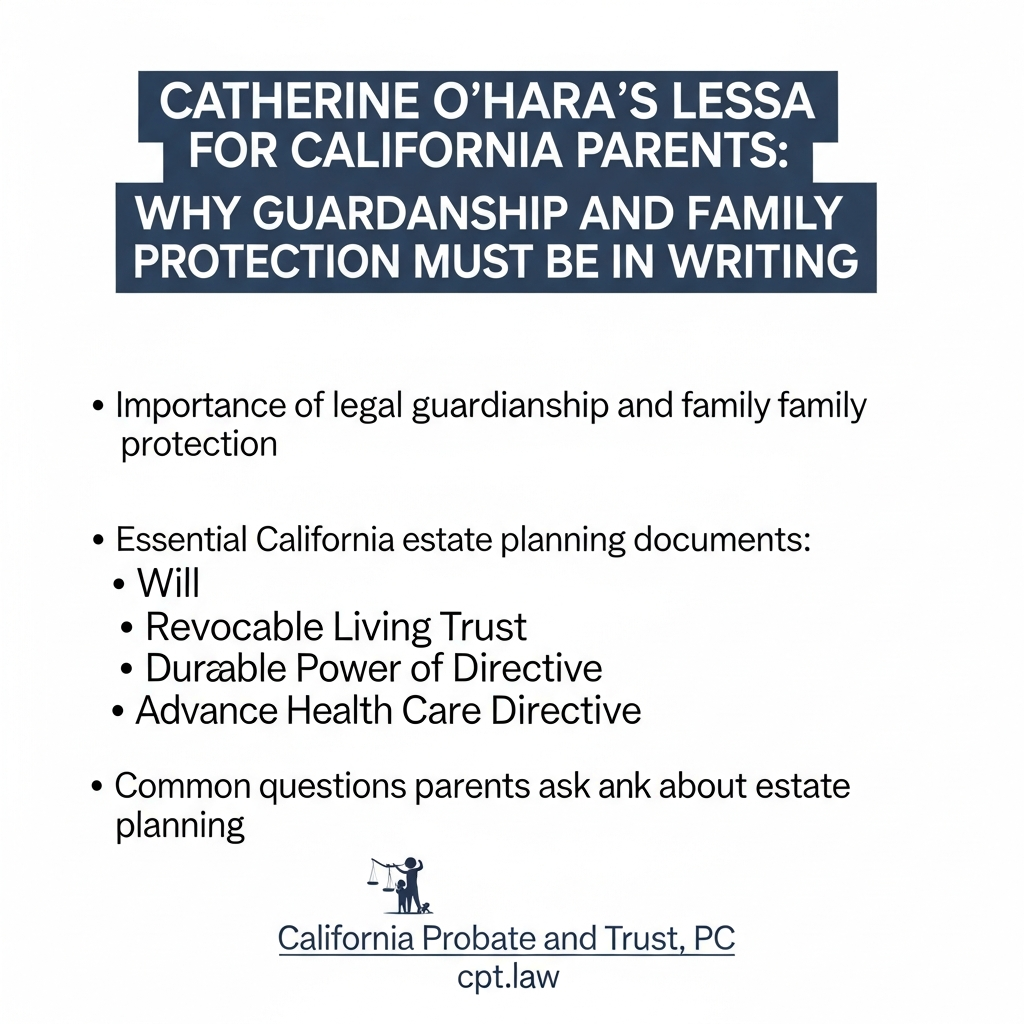
Essential California Estate Planning Documents
A comprehensive California estate plan typically includes:
1. Last Will and Testament
Your will is where you legally name guardians for minor children. Even if you have a trust, a will serves as a backup and provides clear instructions to the court about your wishes.
2. Revocable Living Trust
A trust allows you to:
3. Durable Power of Attorney
This document allows someone you trust to manage financial decisions if you become incapacitated.
4. Advance Health Care Directive
Also called a living will, this specifies your medical preferences and appoints someone to make healthcare decisions on your behalf.
5. Beneficiary Coordination
Review beneficiary designations on retirement accounts, life insurance, and other assets to ensure they align with your overall plan.
Common Questions California Parents Ask
Do I need a will if I have a trust in California?
Yes, in most cases. While a trust manages many assets, a will is essential for naming guardians for minor children and addressing any assets not held in the trust. It acts as a safety net.
Can I just tell my family who should raise my kids?
Verbal preferences are meaningful, but they have no legal weight. Without a properly executed will naming guardians, a California court will make the determination—which may not align with your wishes and can cause family conflict.
How can I protect money for my kids without giving them everything at 18?
A trust allows you to set conditions and timelines for distributions. For example, you might specify distributions at ages 25, 30, and 35, or tie distributions to milestones like college graduation. A trustee manages the funds until those conditions are met.
What if my family is blended or complicated?
Blended families, stepchildren, and prior marriages require especially clear planning. A trust can specify exactly how assets are divided, preventing misunderstandings and ensuring all children are provided for according to your wishes.
How do I keep my home out of probate?
Transfer your home into your revocable living trust. This allows the property to pass directly to your beneficiaries without court involvement.
Real-World Situations That Require Clear Planning
California families seek estate planning help when they face questions like:
How California Probate and Trust, PC Helps Families Protect What Matters Most
At California Probate and Trust, PC, we understand that estate planning isn’t just about documents—it’s about protecting the people you love. Our firm specializes in helping California families create plans focused on:
We’ve represented thousands of clients from our offices in Fair Oaks, Sacramento, and San Francisco. Our approach is compassionate, thorough, and designed to give you confidence and control over your family’s future.
What Makes Our Approach Different
Take the Next Step: Schedule Your Free Consultation
If you want guardianship clarity, probate avoidance strategies, and a plan that matches your real life, we’re here to help.
Call us at (866) 674-1130
Or visit cpt.law to schedule your free consultation.
Don’t leave your family’s future to chance. Let us help you put a plan in place that protects the people you love—just as Catherine O’Hara reminds us, being a parent is the role that matters most.
Legal Disclaimer
This article is provided for informational purposes only and does not constitute legal advice. Estate planning, guardianship, probate, and trust administration depend on individual circumstances and the law in effect at the time. For advice specific to your situation, consult a qualified California attorney.

About the Author: Dustin MacFarlane, Esq.
California Licensed Attorney | Estate Planning Specialist
Dustin MacFarlane is the founder of California Probate and Trust, PC, with over 15 years of experience in estate planning, probate administration, and trust law. Licensed by the California State Bar, Dustin has helped thousands of California families protect their assets and plan for the future.
CA Bar License: Active | Practice Areas: Estate Planning, Probate, Trust Administration | Location: Granite Bay, CA