
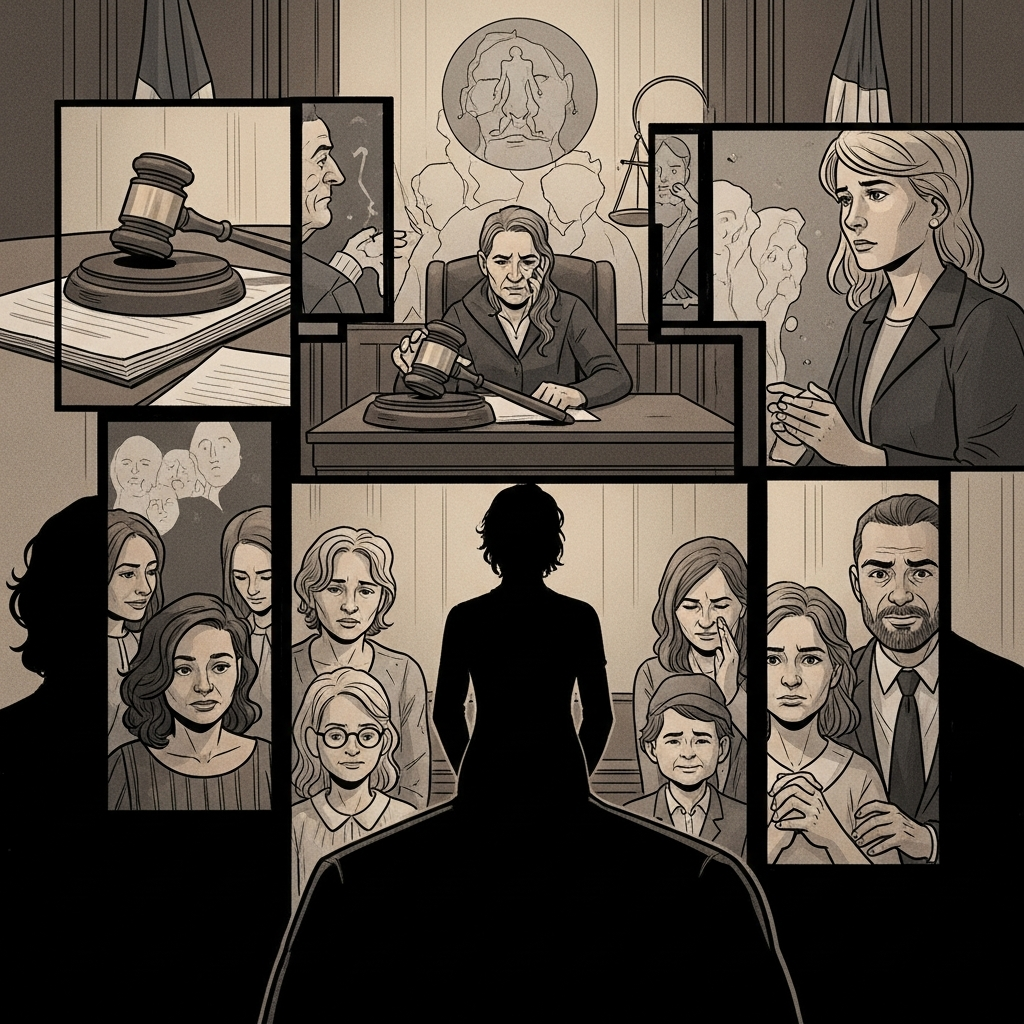
California Legal Implications: Understanding the Standards for Mental Health Conservatorships
A significant ruling in the California Court of Appeal, Second District, has clarified the burden of proof required to renew a mental health conservatorship, known specifically as a Lanterman-Petris-Short (LPS) Conservatorship. In the case of *Conservatorship of K.P.*, the court determined that when a Public Guardian seeks to reappoint a conservator, they do not need to prove as a separate element that the conservatee is unwilling or unable to voluntarily accept treatment. Instead, the focus remains on whether the individual is “gravely disabled.”. In the case of *Conservatorship of K.P.*, the court determined that when a Public Guardian seeks to reappoint a conservator, they do not need to prove as a separate element that the conservatee is unwilling or unable to voluntarily accept treatment. Instead, the focus remains on whether the individual is “gravely disabled.”
For the full text of the opinion, see Conservatorship of K.P., B291510..
For California families, this case highlights the complexities of the mental health legal system and underscores the importance of understanding the different types of protective proceedings available in the state.
LPS Conservatorships vs. Probate Conservatorships
In California, there is often confusion between Probate Conservatorships and LPS Conservatorships. While both involve a court appointing a responsible person to care for another adult, they serve different populations and operate under different legal standards.. While both involve a court appointing a responsible person to care for another adult, they serve different populations and operate under different legal standards.
* LPS Conservatorships: These are designed for individuals with serious mental illnesses (such as schizophrenia or bipolar disorder) who are deemed “gravely disabled.” These proceedings are typically initiated by the county or a medical facility, not by private family members directly, though family members can request an investigation.
* Probate Conservatorships: These are the most common type handled by private estate planning attorneys. They are generally used for elderly individuals suffering from dementia or Alzheimer’s, or adults with developmental disabilities who cannot manage their finances or personal care.: These are the most common type handled by private estate planning attorneys. They are generally used for elderly individuals suffering from dementia or Alzheimer’s, or adults with developmental disabilities who cannot manage their finances or personal care.
The “Grave Disability” Standard
The central issue in the *K.P.* case was the definition of Grave Disability. Under the California Welfare and Institutions Code, a person is gravely disabled if, as a result of a mental health disorder, they are unable to provide for their basic personal needs for food, clothing, or shelter.. Under the California Welfare and Institutions Code, a person is gravely disabled if, as a result of a mental health disorder, they are unable to provide for their basic personal needs for food, clothing, or shelter.
In this case, the jury was instructed that the Public Guardian only had to prove two elements beyond a reasonable doubt:
1. The individual had a mental disorder.
2. The individual was gravely disabled as a result of that disorder.
The court rejected the argument that the petitioner must *also* prove the individual is unwilling to accept treatment. This distinction is vital because it focuses the legal inquiry on the individual’s functional capacity and safety rather than their subjective willingness to cooperate at that specific moment.
The Importance of Proactive Estate Planning
While LPS Conservatorships are extreme measures usually taken when a person is in a crisis, many families can avoid the need for court intervention in other contexts through proactive planning. are extreme measures usually taken when a person is in a crisis, many families can avoid the need for court intervention in other contexts through proactive planning.
If an individual has the capacity to sign legal documents before a crisis occurs, they can execute:
* Advance Health Care Directives: These allow a person to appoint an agent to make medical decisions if they become incapacitated.
* Durable Power of Attorney: This designates an agent to manage finances.
* Revocable Living Trusts: These instruments allow for the seamless management of assets by a successor trustee without court interference.: These instruments allow for the seamless management of assets by a successor trustee without court interference.
Properly drafted estate planning documents can sometimes prevent the need for a Probate Conservatorship by privately designating who should take charge if an individual loses capacity due to age or illness. by privately designating who should take charge if an individual loses capacity due to age or illness.
About This Case
Source: Conservatorship of K.P.: What This LPS Case Means for California Families
California Probate and Trust, PC Can Help
– Free consultations: (866)-674-1130
– Experienced California estate planning
– Schedule consultation
– Learn more: cpt.law
Legal Disclaimer
This article is for informational purposes only. Consult with a qualified California estate planning attorney for advice specific to your situation.

About the Author: Dustin MacFarlane, Esq.
California Licensed Attorney | Estate Planning Specialist
Dustin MacFarlane is the founder of California Probate and Trust, PC, with over 15 years of experience in estate planning, probate administration, and trust law. Licensed by the California State Bar, Dustin has helped thousands of California families protect their assets and plan for the future.
CA Bar License: Active | Practice Areas: Estate Planning, Probate, Trust Administration | Location: Granite Bay, CA