
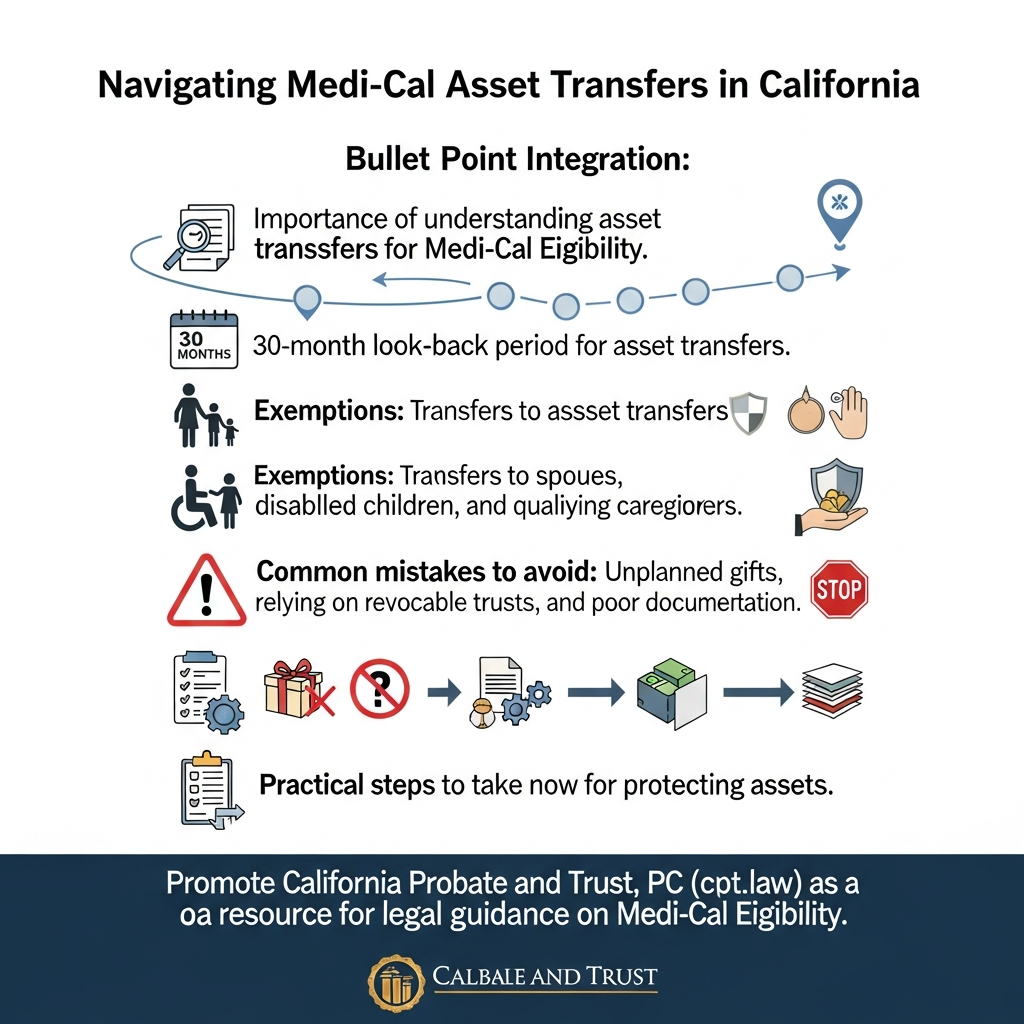
DHCS Asset Transfer Guidance for Medi-Cal Long-Term Care in California
If you or a loved one relies on Medi-Cal for long-term care coverage in California, it is important to understand how asset transfers can affect eligibility, especially with updated guidance from the California Department of Health Care Services (DHCS) expected in the near future.
This article explains what that DHCS guidance likely means in practice, how California’s Medi-Cal transfer rules work, and what steps families can take now to avoid costly mistakes.
Key takeaways
Who this is for
This is written for:
If there is an urgent need for nursing home care, or if transfers have already occurred, it is often best to get legal advice quickly. Mistakes in timing and documentation can trigger months of ineligibility.
What DHCS guidance means in real life
DHCS administers Medi-Cal and provides direction to counties that process applications. When DHCS updates guidance, the most common effects are practical rather than theoretical.
For example, updated guidance can:
Even if the underlying law does not change, guidance can influence how rules are applied day to day.
How Medi-Cal asset transfers work in California
The 30-month look-back period
For Medi-Cal long-term care benefits, California generally reviews asset transfers made within the 30 months before the application date. This review is intended to identify transfers for less than fair market value.
Common examples include:
How penalties are typically calculated
If Medi-Cal finds a non-exempt transfer for less than fair market value, it can impose a penalty period. During the penalty period, Medi-Cal may deny payment for long-term care services even if the applicant otherwise qualifies.
Penalty calculations depend on the value transferred and the state’s methodology for determining an average cost of care.
Common exempt transfers
Not every transfer triggers a penalty. Exemptions can apply in situations such as:
Because exemptions can be documentation-heavy, it is important to keep records that prove the exemption applies.
Realistic scenarios (what families often see)
Scenario 1: A well-intentioned cash gift
A San Diego resident gifts $100,000 to an adult child to help with a home purchase. Two years later, a health event leads to skilled nursing needs. The gift falls within the look-back window, and the family faces a penalty period. The family must cover care costs privately until the penalty period ends.
Scenario 2: A caregiver child exemption with strong documentation
An adult child lives with a parent and provides care that delays facility placement. When a transfer of the home is considered, the family documents residency, caregiving, and medical needs carefully. The exemption can be supported with records, reducing the risk of a transfer penalty.
Scenario 3: A revocable trust that does not protect eligibility
A family assumes that placing a home into a revocable living trust will protect it from Medi-Cal rules. In many situations, a revocable trust does not shelter assets for Medi-Cal eligibility purposes because the person retains control. The result can be surprise and last-minute scrambling.
Common mistakes to avoid
What to do now (practical steps)
Why work with California Probate and Trust, PC
California Probate and Trust, PC focuses on California probate, trust administration, and estate planning. For families facing Medi-Cal eligibility concerns, having counsel who understands both long-term planning and urgent, real-world application issues can reduce delays and avoid preventable denials.
Frequently asked questions
How far back does Medi-Cal look at asset transfers in California?
For Medi-Cal long-term care benefits, transfers are typically reviewed for the 30 months before the application date.
Can I give my house to my children to qualify for Medi-Cal?
A transfer during the look-back period can create a penalty unless an exemption applies. Speak with a California attorney before transferring real estate.
Are there safe ways to transfer assets before applying?
Some transfers can be exempt, and some planning techniques may be appropriate when done early enough. The right approach depends on timing, the type of asset, and the family’s goals.
Does a revocable living trust protect assets from Medi-Cal?
Often, a revocable trust does not protect assets for Medi-Cal eligibility because the person retains the power to revoke and control the trust.
Call to action
If you are trying to protect a home, reduce long-term care stress, or avoid Medi-Cal transfer penalties, California Probate and Trust, PC can help you understand options and next steps. Contact CPT through cpt.law, by phone, or through an online consultation form to schedule a consultation.
Disclaimer
This article is for general informational and educational purposes only and is not legal, tax, or financial advice. Laws can change, and how they apply to your situation may vary based on your specific facts. Reading this article does not create an attorney–client relationship with California Probate and Trust, PC or any of its attorneys. You should consult directly with a qualified attorney licensed in your jurisdiction before making decisions about your own case or estate plan.

About the Author: Dustin MacFarlane, Esq.
California Licensed Attorney | Estate Planning Specialist
Dustin MacFarlane is the founder of California Probate and Trust, PC, with over 15 years of experience in estate planning, probate administration, and trust law. Licensed by the California State Bar, Dustin has helped thousands of California families protect their assets and plan for the future.
CA Bar License: Active | Practice Areas: Estate Planning, Probate, Trust Administration | Location: Granite Bay, CA