
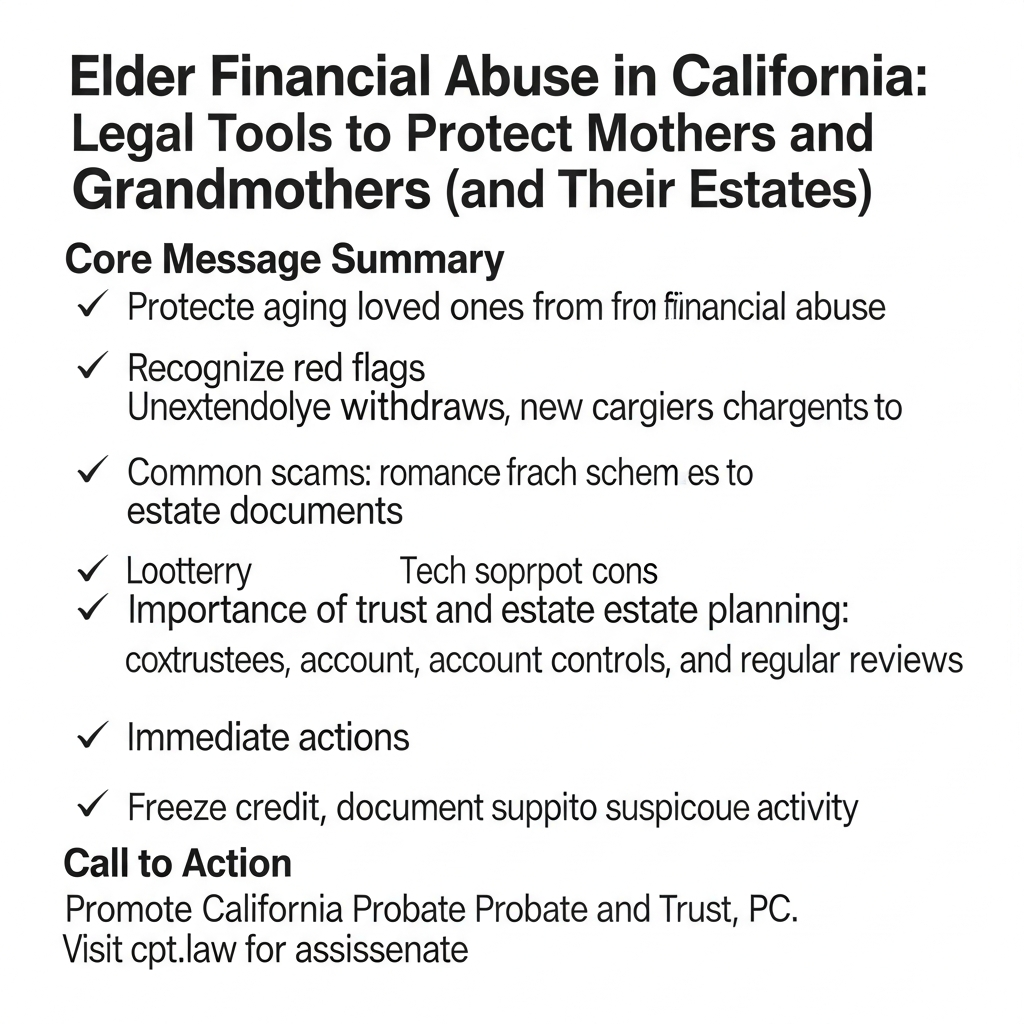
Elder Financial Abuse in California: Legal Tools to Protect Mothers and Grandmothers (and Their Estates)
If you’re helping an aging mother, grandmother, or other loved one manage their finances in California, you may be worried about elder financial abuse—and with good reason. Each year, thousands of older Californians fall victim to scams, undue influence, or outright theft by caregivers, relatives, or strangers. This International Women’s Day, we’re focusing on protecting women across generations, because elder financial abuse disproportionately targets older women who may be isolated, trusting, or unfamiliar with complex financial products.
This guide is written for California residents—adult children, trustees, attorneys-in-fact under a power of attorney, and anyone who wants to safeguard an elderly loved one’s nest egg and estate. We’ll walk you through the red flags of elder financial abuse, common scams and schemes, the risks of power-of-attorney (POA) abuse and undue influence, and the legal steps you can take right now to lock down finances, document suspicious activity, and use trust and estate planning tools to add layers of protection. If you’re feeling overwhelmed or suspect abuse has already occurred, know that California law provides remedies—and California Probate and Trust, PC is here to help you navigate them.
Disclaimer: This article is for general informational and educational purposes only and is not legal, tax, or financial advice. Laws can change, and how they apply to your situation may vary based on your specific facts. Reading this article does not create an attorney–client relationship with California Probate and Trust, PC or any of its attorneys. You should consult directly with a qualified attorney licensed in your jurisdiction before making decisions about your own case or estate plan.
Key Takeaways: Protecting Your Loved One from Elder Financial Abuse
What Is Elder Financial Abuse in California?
Elder financial abuse (sometimes called financial elder abuse) is the illegal or improper use of an older or dependent adult’s money, property, or assets. Under California Welfare and Institutions Code § 15610.30, it includes:
California law defines an “elder” as anyone 65 or older, and a “dependent adult” as someone between 18 and 64 who has physical or mental limitations that restrict their ability to carry out normal activities or protect their rights. Women, especially widows living alone, face heightened risk due to social isolation, longer life expectancy, and sometimes less familiarity with financial management if a spouse previously handled finances.
Red Flags of Elder Financial Abuse: What to Watch For
Early detection is your best defense. Be alert for these warning signs:
Financial Red Flags
Behavioral and Relationship Red Flags
If you notice multiple red flags, don’t wait—take action immediately to investigate and protect your loved one’s assets.
Common Scams Targeting Older Women in California
Scammers know that older adults—particularly older women living alone—can be trusting, polite, and less familiar with modern technology. Here are the most common scams to watch for:
Romance Scams
A scammer poses as a romantic interest on social media or a dating site, builds trust over weeks or months, then asks for money (for an emergency, travel to meet, a business deal). Widows and divorced women are frequent targets. Your loved one may be embarrassed to admit the relationship, making it harder to intervene.
Lottery and Sweepstakes Fraud
The victim receives a call, email, or letter claiming they’ve won a prize, but must pay taxes or fees upfront to claim it. They send money—sometimes repeatedly—and never see a prize.
Tech Support and Computer Scams
A pop-up or caller claims the victim’s computer is infected and offers to fix it for a fee, or asks for remote access. Once in, scammers can steal banking information or install malware.
Charity and Disaster Relief Scams
Fake charities solicit donations after natural disasters or through emotional appeals. Older adults who are generous and community-minded are prime targets.
Grandparent Scam
A caller pretends to be a grandchild in trouble (arrested, in an accident, stranded abroad) and begs for immediate money via wire transfer or gift cards. The urgency and emotion make victims act without verifying.
Investment and Financial Product Scams
High-pressure sales of annuities, reverse mortgages, or other complex products that are unsuitable for the elder’s situation, often involving high commissions and surrender fees.
Prevention tip: Educate your loved one about these schemes. Encourage them to hang up on unsolicited calls, never give out personal or financial information over the phone, and always check with you or another trusted family member before sending money or making a major financial decision.
Undue Influence: When Someone Manipulates Your Loved One
Undue influence occurs when someone uses their relationship, authority, or trust to overcome an elder’s free will and get them to do something they wouldn’t otherwise do—like change a will, sign over property, or make large gifts. It’s more subtle than outright fraud, but just as damaging.
Who Commits Undue Influence?
Often it’s a family member, caregiver, or close friend who has gained the elder’s trust and dependency. They may isolate the elder, control information, or use fear and guilt to secure financial benefits.
Legal Standard in California
California law presumes undue influence if:
If these elements are met, the burden shifts to the accused to prove the transaction was fair and the elder acted freely. (See California Probate Code § 21380 and Welfare and Institutions Code § 15610.70.)
Challenging a Document Based on Undue Influence
If you believe your mother or grandmother was unduly influenced into signing a new will, trust, or deed, you can contest it in probate court (for a will) or file a petition regarding the trust. You’ll need evidence such as:
An experienced probate attorney can help you gather evidence, take depositions, and present your case.
Power of Attorney Abuse: Risks and How to Prevent Them
A durable power of attorney for finances (POA) is one of the most powerful estate planning tools—it allows your chosen agent to manage your money and property if you become incapacitated. But that power can be abused.
How POA Abuse Happens
Preventing POA Abuse
What to Do If You Suspect POA Abuse
Steps to Lock Down Your Loved One’s Finances
If you suspect or have confirmed elder financial abuse, act quickly to stop the bleeding and secure assets:
1. Freeze Credit and Monitor Accounts
2. Change Passwords and PINs
3. Revoke or Limit Powers of Attorney
4. Alert Financial Institutions
5. Secure Physical Documents and Valuables

About the Author: Dustin MacFarlane, Esq.
California Licensed Attorney | Estate Planning Specialist
Dustin MacFarlane is the founder of California Probate and Trust, PC, with over 15 years of experience in estate planning, probate administration, and trust law. Licensed by the California State Bar, Dustin has helped thousands of California families protect their assets and plan for the future.
CA Bar License: Active | Practice Areas: Estate Planning, Probate, Trust Administration | Location: Granite Bay, CA