
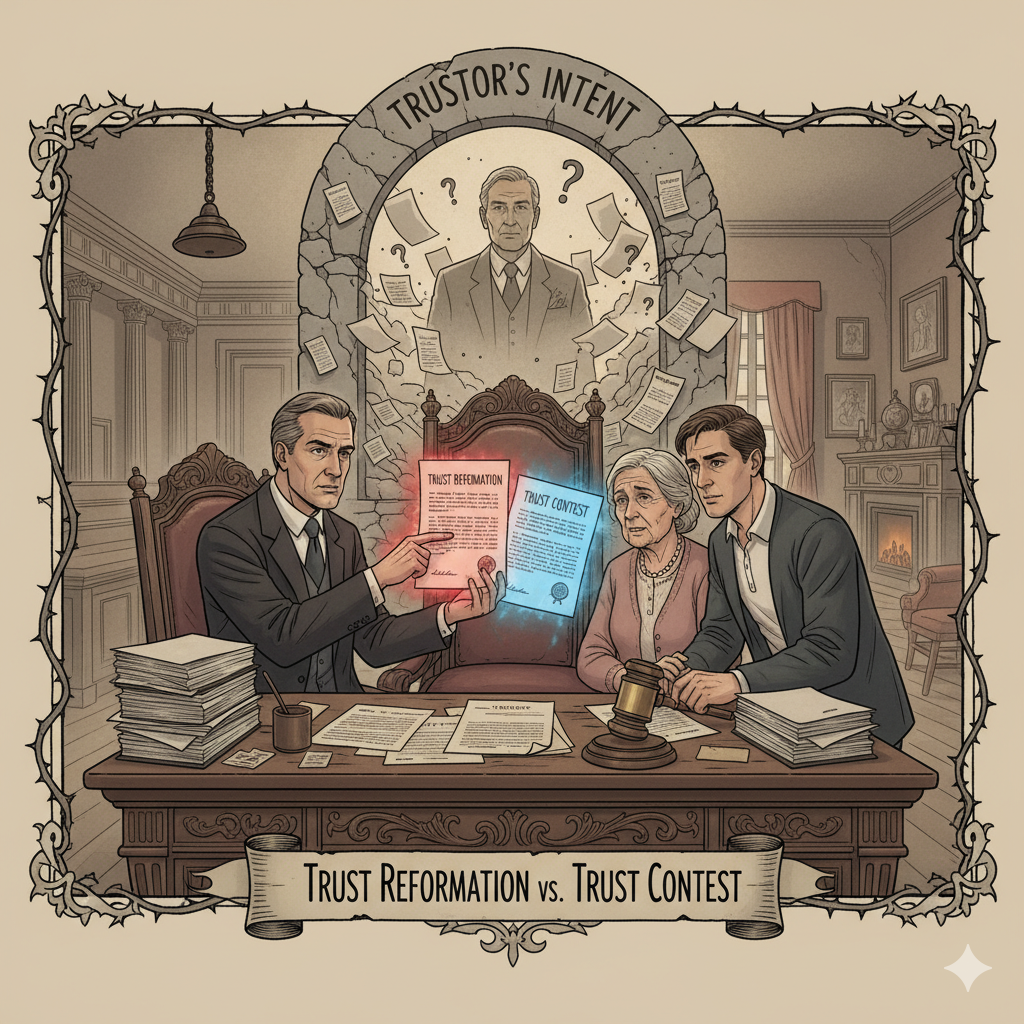
If you’re managing a California trust and discover what appears to be a drafting error or misunderstanding of the trustor’s true intentions, you may be wondering: “Can I fix this mistake without triggering a costly trust contest?” The recent Packard v. Packard case provides critical clarity for California residents navigating trust administration and reformation.
What Happened in Packard v. Packard?
In this case, beneficiaries filed a petition seeking construction and reformation of a trust amendment. They believed the trust document contained a mistake that didn’t accurately reflect what the trustor actually intended. The central legal question was whether this type of petition constituted a “trust contest”—a distinction that carries significant procedural and financial implications.
The court ruled that a petition for construction and reformation of a trust amendment is not a contest when it seeks to correct an alleged mistake regarding the trustor’s intent.
Why This Matters for Your California Trust
This ruling is important for California families because:
- Trust contests trigger different rules: Contest proceedings come with specific statutory requirements, shortened timelines, and potentially higher litigation costs
- Reformation protects family harmony: When you can seek reformation instead of filing a contest, you may be able to resolve disputes more collaboratively and cost-effectively
- Trustor intent is paramount: California courts prioritize what the trustor actually wanted over technical drafting errors
Real-World Application: When You Might Need Trust Reformation
Consider these common scenarios where Packard v. Packard could apply to your situation:
- Your parent’s trust amendment appears to contradict their clearly stated wishes expressed to family members
- A scrivener’s error in the trust document resulted in unintended beneficiary designations
- Tax planning language in the trust doesn’t align with the professional advice your trustor received
- Asset distribution percentages don’t match the trustor’s documented intentions in correspondence or other estate planning documents
In these situations, you may be able to petition for reformation without the procedural burdens of a formal trust contest.
How California Probate and Trust Can Help
At California Probate and Trust, PC, we understand that discovering potential errors in a trust document creates anxiety and uncertainty. Our Sacramento-based team has represented thousands of California families through complex trust administration and reformation matters.
We offer a free one-hour consultation where we’ll:
- Review your trust documents and the specific issue you’ve identified
- Explain whether reformation or another legal remedy is appropriate for your situation
- Outline the procedural steps and realistic timeline
- Provide transparent pricing so you can make informed decisions
Our approach prioritizes family protection and clarity throughout the legal process. We know that trust disputes often arise during already difficult times, and we’re committed to resolving issues efficiently while honoring your loved one’s true intentions.
Take Action Today
If you’re dealing with a trust that may not reflect the trustor’s actual intent, don’t wait. Early legal guidance can prevent costly litigation and protect family relationships.
Schedule your free consultation with our experienced Sacramento trust attorneys today, or call us at (866) 674-1130.