
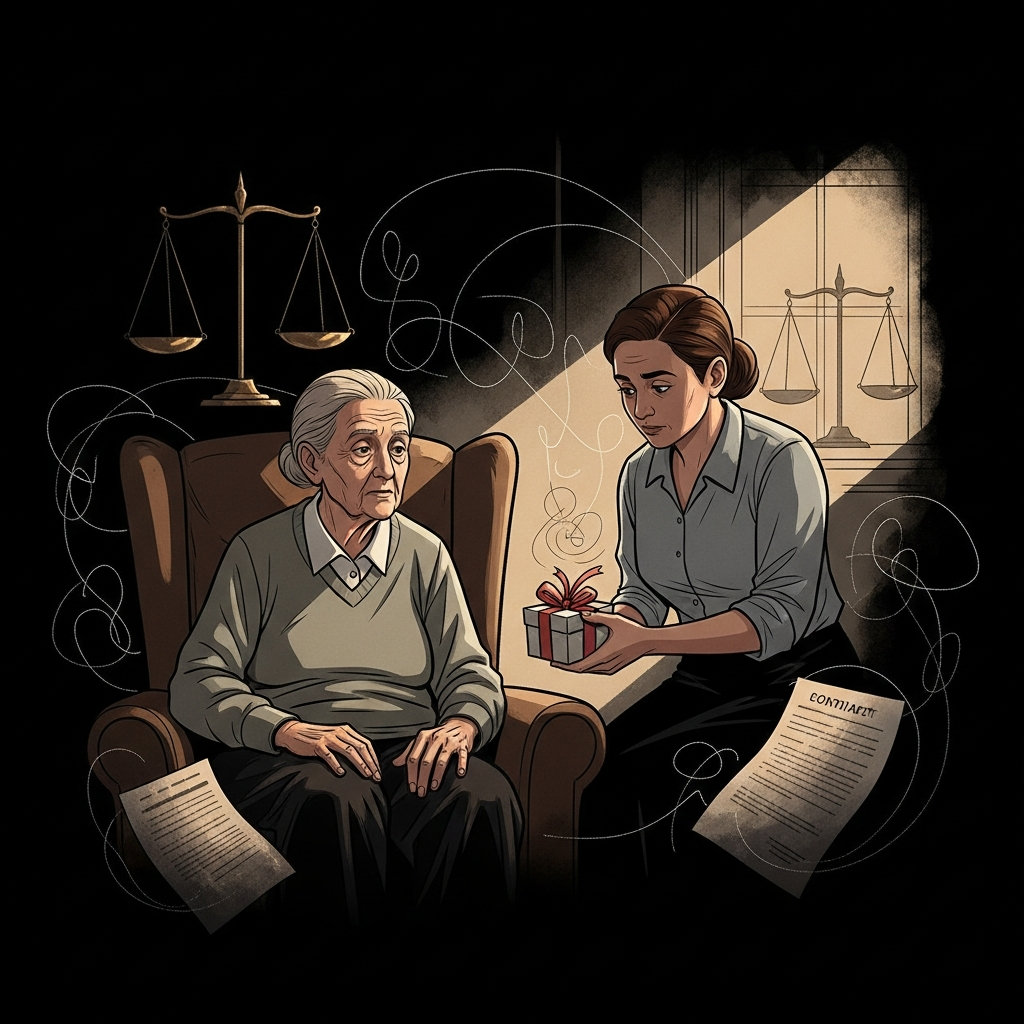
California Legal Implications: The Care Custodian Presumption
A recent California appellate court decision, Robinson v. Gutierrez, has clarified strict rules regarding gifts left to caregivers in estate plans. In this case, a caregiver moved in with an elder to provide services in exchange for free room and board. Shortly before the elder’s death, the elder executed an estate plan naming the caregiver as the sole beneficiary. While the trial court initially ruled that room and board did not count as “remuneration” (payment), the appellate court reversed this decision. The court established that receiving housing in exchange for care makes a person a care custodian, subjecting any gifts they receive to a presumption of fraud or undue influence., subjecting any gifts they receive to a presumption of fraud or undue influence.
For California families and estate planners, this ruling reinforces the importance of understanding the legal definition of a caregiver and the statutory safeguards designed to prevent financial elder abuse..
Understanding the Presumption of Undue Influence
Under California Probate Code Section 21380, certain transfers of property are legally presumed to be the product of fraud or undue influence. This presumption specifically applies to “care custodians” of dependent adults. If a caregiver is defined as a care custodian, they generally cannot be the beneficiary of a trust or will executed by the dependent adult during the period of service, unless they can prove by clear and convincing evidence that the gift was not the result of undue influence.
The purpose of this law is to protect vulnerable seniors from being manipulated by those they rely on for daily needs and health services.
Room and Board Counts as Remuneration
The *Robinson v. Gutierrez* case is significant because it expands the understanding of what constitutes a paid caregiver. Previously, there was ambiguity regarding informal arrangements where no money changed hands, but housing was provided.
The court determined that “remuneration” is not limited to taxable income or a paycheck. By accepting free room and board in exchange for care services, an individual is legally considered a remunerated care custodian. Consequently, if a family member or friend moves in with a senior to provide care in exchange for rent-free living, they may fall under this strict legal classification. This triggers the presumption of undue influence if the senior later attempts to leave them a gift in their estate plan.
Safeguarding Gifts to Caregivers
There are legitimate instances where a senior wishes to leave a bequest to a dedicated caregiver out of gratitude rather than coercion. To ensure such a gift stands up in probate court, the estate plan must be handled with specific procedural safeguards.
The most effective method to validate a gift to a care custodian is a Certificate of Independent Review. This involves the senior meeting with an independent attorney—separate from the attorney drafting the will or trust—who counsels the senior to ensure the gift is voluntary and not the result of pressure or manipulation. If the independent attorney signs the certificate, the presumption of undue influence is generally overcome.. This involves the senior meeting with an independent attorney—separate from the attorney drafting the will or trust—who counsels the senior to ensure the gift is voluntary and not the result of pressure or manipulation. If the independent attorney signs the certificate, the presumption of undue influence is generally overcome.
Without this certificate, gifts to caregivers who receive room, board, or salary are highly susceptible to being overturned by the probate court.
About This Case
California Probate and Trust, PC Can Help
– Free consultations: (866)-674-1130
– Experienced California estate planning
– Schedule consultation
– Learn more: cpt.law
Legal Disclaimer
This article is for informational purposes only. Consult with a qualified California estate planning attorney for advice specific to your situation.