
Who This Article Is For:
If you’ve been named as an executor or personal representative in California and are navigating the complex legal duties of administering an estate, understanding your rights—and the limits of others’ legal obligations to you—is critical. This case analysis helps executors, beneficiaries, and heirs understand when an estate planning attorney owes them a duty of care.
The Key Takeaway from Grossman v. Wakeman
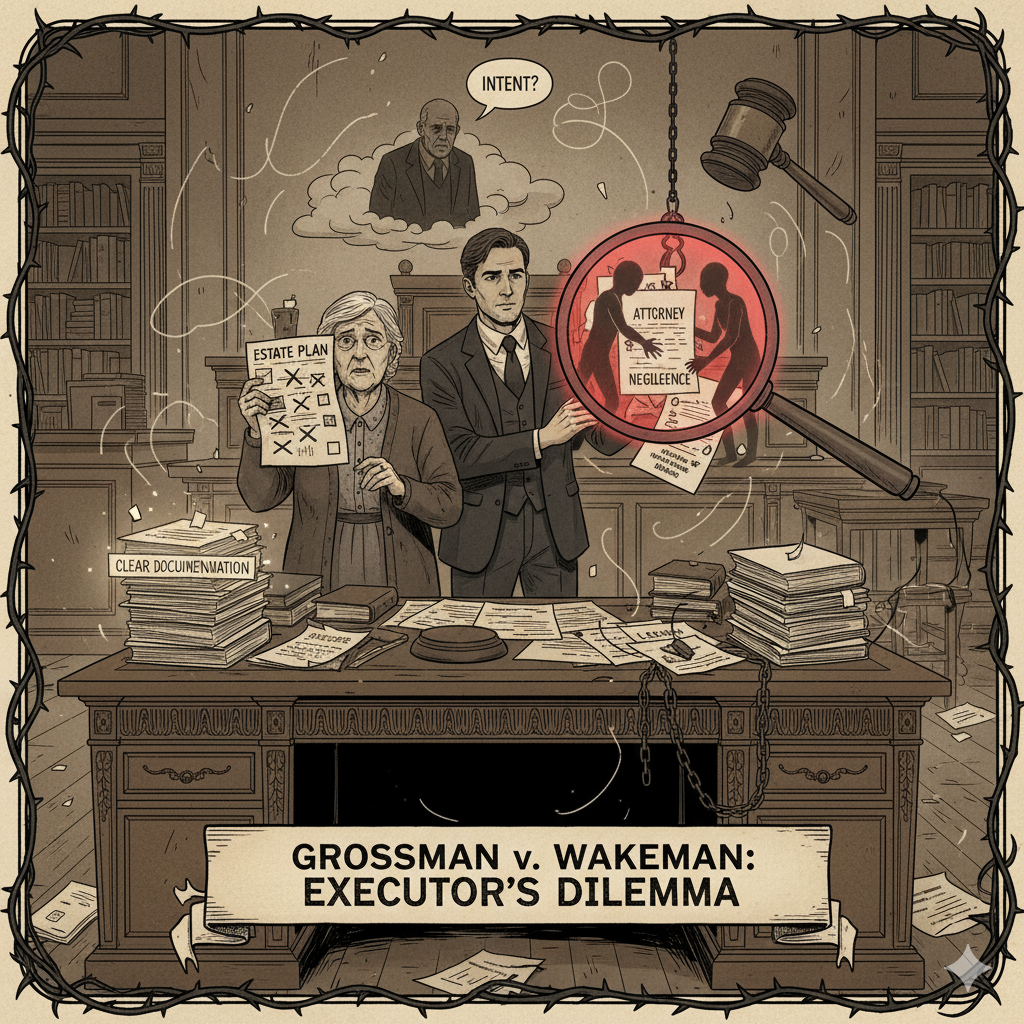
In the landmark case Grossman v. Wakeman, California courts clarified an important limitation: an estate planning attorney does not automatically owe a duty of care to a client’s heirs or beneficiaries. According to the California Lawyers Association, the duty only exists when the client’s intent to benefit specific heirs in the estate plan is “clear, certain, and undisputed.”
What Does This Mean for Executors and Personal Representatives?
As someone administering an estate, you may wonder: “Can I hold the attorney accountable if mistakes were made in the estate plan?” The answer depends on whether the deceased client’s intentions were unambiguous.
When an attorney may owe you a duty of care:
- The deceased explicitly and clearly intended to benefit you as a named heir
- The estate planning documents contain specific, undisputed language showing this intent
- There’s documented evidence (letters, communications, trust language) that leaves no room for interpretation
When an attorney likely does NOT owe you a duty of care:
- The client’s intent regarding beneficiaries was unclear or contradictory
- Multiple versions of estate documents exist with conflicting provisions
- The deceased made verbal promises that weren’t clearly documented in legal instruments
- Family disputes exist about what the deceased “really wanted”
Real-World Implications: How This Affects Your Role as Executor
Scenario 1: Disputing a Will or Trust
You’re named as executor, but you believe the attorney made errors that reduced your inheritance. Under Grossman v. Wakeman, you cannot sue the attorney for malpractice unless the deceased’s intent to benefit you was crystal clear in the documents.
Scenario 2: Protecting Yourself from Liability
As an executor, you’re responsible for properly distributing assets according to the estate plan. If beneficiaries later claim the attorney made mistakes, this case limits their ability to pursue the attorney directly—which may redirect their claims toward you as the executor. This underscores the importance of having your own legal counsel review complex estate administrations.
Scenario 3: Handling Family Disputes
When siblings or other family members disagree about “what Dad really wanted,” this case demonstrates why clear documentation matters. Without unambiguous estate planning documents, challenges against the attorney’s work become nearly impossible.
How Can Executors Protect Themselves?
If you’re serving as an executor or personal representative and face questions about the validity of estate planning documents or potential attorney errors, consider these steps:
- Review all estate planning documents thoroughly for clarity and consistency
- Document all communications with beneficiaries regarding asset distribution
- Seek independent legal counsel to review your fiduciary duties and potential liability
- Request a professional audit of the estate plan if significant assets or disputes are involved
- Maintain detailed records of every decision and distribution you make
Why Clear Estate Planning Matters: Lessons from This Case
The Grossman v. Wakeman decision reinforces a critical principle: ambiguous estate plans create legal vulnerabilities for everyone involved—beneficiaries, executors, and attorneys alike. Clear, professionally drafted estate planning documents that leave no room for interpretation are essential.
Questions to ask your estate planning attorney:
- “Are my intentions regarding each beneficiary clearly documented?”
- “What happens if my circumstances change—how do I update my plan?”
- “Will my executor face liability if disputes arise after my death?”
- “How can I minimize the risk of family litigation over my estate?”
Protect Your Estate and Your Beneficiaries with Professional Guidance
Whether you’re serving as an executor dealing with a complex estate administration or planning your own estate to protect your loved ones, the experienced attorneys at California Probate and Trust can help. With offices serving Sacramento, Fair Oaks, and San Francisco, our team has guided thousands of clients through probate administration and estate planning challenges.
Our probate and trust administration services include:
- Comprehensive estate plan review and clarification
- Executor guidance and liability protection
- Trust administration support
- Probate representation
- Estate litigation prevention and resolution
Schedule your free consultation today to discuss your specific situation. Our compassionate team will help you navigate the complexities of California probate law and ensure your interests—or those of the estate you’re administering—are fully protected.
Source: California Lawyers Association – Grossman v. Wakeman
Contact California Probate and Trust:
🌐 Schedule Your Free Consultation

About the Author: Dustin MacFarlane, Esq.
California Licensed Attorney | Estate Planning Specialist
Dustin MacFarlane is the founder of California Probate and Trust, PC, with over 15 years of experience in estate planning, probate administration, and trust law. Licensed by the California State Bar, Dustin has helped thousands of California families protect their assets and plan for the future.
CA Bar License: Active | Practice Areas: Estate Planning, Probate, Trust Administration | Location: Granite Bay, CA