
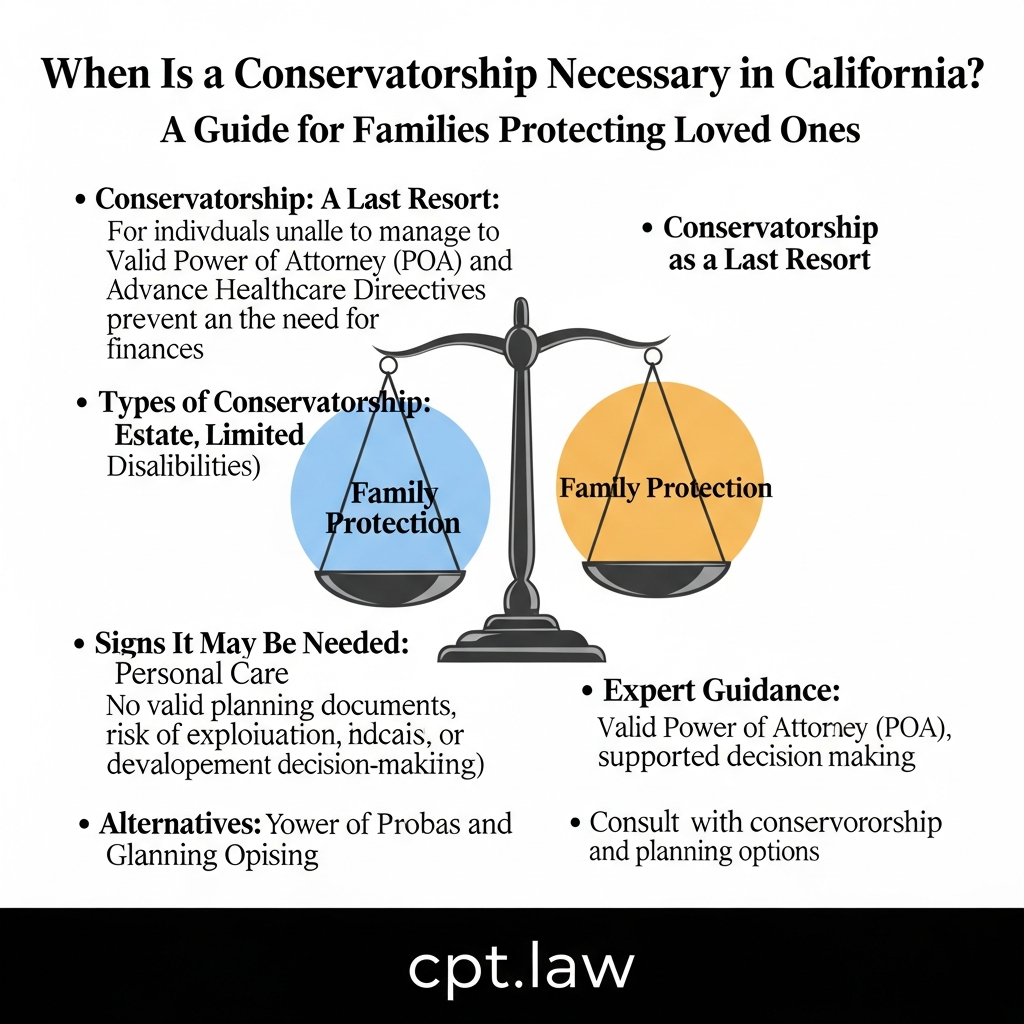
If you are a California adult child helping an aging parent, a spouse managing a sudden medical crisis, or a family trying to protect a loved one with declining capacity, the word “conservatorship” can feel overwhelming.
This article explains when a California conservatorship is truly necessary, when less restrictive alternatives are often better, and what the court process looks like in real life. Background source: California Conservatorship Practice (CEB).
Quick answer: key takeaways for California families
What is a conservatorship in California?
A conservatorship is a court-supervised arrangement where a judge appoints a conservator to make decisions for another adult (the conservatee) who cannot manage their personal care or finances.
In most family situations, the court is stepping in because there is not already a legally valid, trusted decision-maker in place.
Common types of California conservatorship
When is a conservatorship actually necessary?
A conservatorship may be necessary when the person cannot understand or make decisions in a way that keeps them safe, and no less restrictive option can realistically protect them.
Signs a conservatorship may be the right tool
When conservatorship is often avoidable
Conservatorship is often avoidable when the person previously completed:
If these documents exist and are being honored, court intervention may add cost and stress without adding meaningful protection.
Real-world mini-scenarios (California-focused)
Scenario 1: an aging parent with dementia and no POA
A Sacramento parent with progressing dementia starts wiring money to scammers and stops paying property taxes. There is no durable power of attorney, and the parent refuses help.
Scenario 2: a disabled adult child turning 18
A San Diego family has an adult child with developmental disabilities who needs help managing medical appointments and benefits.
Scenario 3: spouse after a stroke with a valid estate plan
A spouse in Los Angeles has a stroke. Years earlier, the couple signed a comprehensive POA and healthcare directive, and their home is in a funded living trust.
Alternatives to conservatorship (what to consider first)
Is a conservatorship needed in California? a practical decision guide for families
If a loved one cannot manage health, safety, or finances, many California families eventually hear one intimidating word: conservatorship. The decision is stressful because it usually comes during a crisis.
This page is based on the topic and source link provided.Source: California Conservatorship Practice – CEB
Quick answer: when conservatorship is most likely
A conservatorship is more likely when:
If valid planning documents exist and institutions accept them, families may be able to avoid court.
Who this is for
This is for:
Disclaimer
Disclaimer
This article is for general informational and educational purposes only and is not legal, tax, or financial advice. Laws can change, and how they apply to your situation may vary based on your specific facts. Reading this article does not create an attorney–client relationship with California Probate and Trust, PC or any of its attorneys. You should consult directly with a qualified attorney licensed in your jurisdiction before making decisions about your own case or estate plan.
Using a valid POA for finances.
Supported decision-making or less restrictive supports.
4) If court is necessary, expect supervision and ongoing duties
Common mistakes that increase cost and conflict
Waiting until capacity is already gone to sign documents.
Using generic forms that banks or providers reject.
FAQ
How long does a California conservatorship take?
It depends on urgency, county backlog, and whether the matter is contested.
Can a trust prevent conservatorship?
A trust can help with asset management if funded, but it does not automatically solve health care decision issues.
What if siblings disagree?
Disputes are common. Early legal guidance can reduce escalation.
Call to action: get a clear plan and reduce court involvement when possible
California Probate and Trust, PC helps California families understand conservatorship options and, when appropriate, set up planning that reduces the chance loved ones will need court supervision later.
Schedule a consultation at cpt.law.

About the Author: Dustin MacFarlane, Esq.
California Licensed Attorney | Estate Planning Specialist
Dustin MacFarlane is the founder of California Probate and Trust, PC, with over 15 years of experience in estate planning, probate administration, and trust law. Licensed by the California State Bar, Dustin has helped thousands of California families protect their assets and plan for the future.
CA Bar License: Active | Practice Areas: Estate Planning, Probate, Trust Administration | Location: Granite Bay, CA