Categories
California Probate

Homeowner loses $1.5million California property in identity theft scam

California Homeowner Loses $1.5 Million Property in Devastating Identity Theft Scam: What You Need to Know to Protect Your Assets

For California residents concerned about protecting their property and legacy from fraud

Source: Daily Mail – Homeowner Loses Million in Fraudulent Real Estate Scam

What Happened: A Burbank Homeowner’s Nightmare

A California homeowner lost their $1.5 million Burbank property after falling victim to an elaborate identity theft and real estate fraud scheme. Real estate agent Glenis Cardona, 63, along with accomplices Ivan Reyes, 50, Arshak ‘John’ Akopyan, 46, and Basil Tikriti, 54, allegedly orchestrated the sale of the home without the owner’s knowledge or consent.

How Can Someone Steal Your Property? Understanding the Fraud Scheme

The perpetrators used a sophisticated multi-step process that exploited vulnerabilities in the real estate transaction system:

  • Identity Theft: The group stole the identities of both the homeowner and a fake buyer to secure a $975,000 loan in January 2024
  • Document Fabrication: They created fraudulent identity cards, purchase agreements, grant deeds, deeds of trust, and loan applications with false notarizations
  • Professional Insider Access: Cardona used her company, Golden Escrow, to obtain property lien reports, giving the scheme legitimacy
  • Money Laundering: Once the loan was approved, Cardona allegedly laundered more than $961,000 through third-party accounts before distribution
  • The fraudsters specifically targeted this property because it had only one lien on it for child support, making it easier to manipulate.

    Who Are the Victims in Real Estate Identity Theft?

    This case created multiple victims:

  • The original homeowner lost ownership of their $1.5 million property
  • An innocent purchaser who believed they legitimately bought the home is now obligated to pay back a $975,000 mortgage for a property they don’t legally own
  • The homeowner only discovered the fraud after receiving a call from a jewelry store conducting due diligence when someone used his name as their caller ID.

    What Are the Criminal Consequences for Real Estate Fraud in California?

    The FBI launched an investigation in January 2024, resulting in the arrest of Cardona, Reyes, and Akopyan. Tikriti remains at large. Each defendant faces a maximum of 30 years in federal prison if convicted.

    Text messages recovered during the investigation revealed the conspirators’ intent, with one message stating: “Together we will make this profitable for us”.

    How Can California Property Owners Protect Themselves from Title Fraud?

    If you own real estate in California, consider these protective measures:

  • Monitor Your Property Records: Regularly check county recorder’s office records for any unauthorized filings or changes to your property title
  • Title Monitoring Services: Enroll in title monitoring services that alert you to any recorded documents affecting your property
  • Secure Personal Information: Protect documents containing your Social Security number, property information, and identity credentials
  • Verify Unexpected Communications: Be suspicious of any unexpected calls, letters, or documents related to your property
  • Estate Planning Protection: Work with experienced estate planning attorneys to establish trusts and other legal structures that add layers of protection to your real estate assets
  • Can You Recover Stolen Property? The Legal Battle

    After many months of litigation, the original homeowner was eventually able to regain ownership of the property. However, this process was:

  • Lengthy and complex, requiring extensive legal intervention
  • Costly, involving attorney fees and court costs
  • Emotionally draining for all parties involved
  • The case demonstrates that while recovery is possible, prevention is far preferable to fighting fraud after it occurs.

    Why Estate Planning Matters More Than Ever for California Homeowners

    For California residents concerned about protecting their homes and assets from fraud, proper estate planning creates critical safeguards:

  • Trust Protection: Holding property in a properly structured trust adds verification requirements that make fraudulent transfers more difficult
  • Documentation: Comprehensive estate plans create clear records of ownership and authorized parties
  • Professional Oversight: Working with experienced estate planning attorneys ensures your assets have proper legal protection
  • Family Communication: Estate planning discussions help family members understand your assets and spot unauthorized activity
  • Protect Your Legacy: Schedule a Free Consultation

    If you’re a California resident concerned about protecting your property and ensuring your assets transfer safely to your loved ones, California Probate and Trust, PC offers comprehensive estate planning services designed to safeguard your legacy.

    Our experienced attorneys provide:

  • Free one-hour consultations to assess your specific situation
  • Transparent estate planning packages tailored to your needs
  • Trust creation and administration to protect real estate assets
  • Probate guidance when you need to navigate complex legal processes
  • Compassionate, client-focused representation
  • Don’t wait until it’s too late. Contact California Probate and Trust, PC today to schedule your free consultation and learn how proper estate planning can protect your home, your assets, and your family’s future.

    Call (866)-674-1130 or visit cpt.law to get started.

    Legal Disclaimer

    This article is provided for informational purposes only and does not constitute legal advice. The information presented here is based on publicly available news reports and should not be relied upon as a comprehensive analysis of the law or your specific situation. Every estate planning and asset protection case is unique and depends on individual circumstances. For personalized legal guidance regarding your property, estate planning, or asset protection needs, please consult with a qualified California attorney. California Probate and Trust, PC is available for consultations but reading this article does not create an attorney-client relationship.

    Categories
    California Probate Estate Planning News

    Estate of Eimers: Why a California Court Cannot Rewrite a Will to Fix a Power of Appointment – California Legal Guide | CPT Law

    California Legal Implications: Why Technical Details Matter in Estate Planning

    A recent ruling by the California Court of Appeal highlights a critical lesson for anyone relying on handwritten wills or attempting to exercise rights granted by a family trust without professional guidance. In *Estate of Eimers*, a court ruled that it could not rewrite a will to validate a gift when the deceased failed to follow specific instructions regarding a Power of Appointment..

    As detailed in the court opinion from Estate of Eimers, the decedent attempted to leave his share of a family trust to specific individuals using a holographic will (a handwritten will). However, the original trust document required that any distribution of those shares must specifically reference the Power of Appointment. Because the decedent’s will failed to include this specific legal language, the court refused to “reform” (amend) the will to fix the mistake, causing the gift to fail.. Because the decedent’s will failed to include this specific legal language, the court refused to “reform” (amend) the will to fix the mistake, causing the gift to fail.

    Understanding the Power of Appointment

    In California estate planning, a Power of Appointment is a legal authority granted to a beneficiary within a trust. It allows that beneficiary to designate who will receive certain assets upon their death. However, the original creators of the trust often place strict requirements on how this power must be used to ensure it is done intentionally and not accidentally. is a legal authority granted to a beneficiary within a trust. It allows that beneficiary to designate who will receive certain assets upon their death. However, the original creators of the trust often place strict requirements on how this power must be used to ensure it is done intentionally and not accidentally.

    A common requirement is that the beneficiary must execute a will that specifically refers to the Power of Appointment. A general statement such as “I leave all my property to John Doe” is often insufficient to exercise this power if the trust demands specific reference. This safeguards the original grantors’ assets from being distributed via a standard residuary clause without the beneficiary’s explicit intent.. A general statement such as “I leave all my property to John Doe” is often insufficient to exercise this power if the trust demands specific reference. This safeguards the original grantors’ assets from being distributed via a standard residuary clause without the beneficiary’s explicit intent.

    Why Courts Cannot Always Fix Mistakes

    California courts generally have the power to reform a will—meaning they can correct mistakes to ensure the document reflects the testator’s true intent. However, *Estate of Eimers* establishes a significant boundary to this power.

    The court held that it could not reform the will to include the missing reference to the Power of Appointment. Doing so would essentially nullify the requirements set by the California Probate Code and the original trust instrument. The court determined that even though the decedent clearly intended to give the assets to his friends, his failure to follow the strict technical requirements of the trust meant the court could not intervene to save the gift.. Doing so would essentially nullify the requirements set by the California Probate Code and the original trust instrument. The court determined that even though the decedent clearly intended to give the assets to his friends, his failure to follow the strict technical requirements of the trust meant the court could not intervene to save the gift.

    The Risks of Holographic Wills

    This case serves as a stark warning against the use of holographic wills. While handwritten wills are legal in California if they meet specific criteria, they are frequently drafted by individuals without legal training who are unaware of complex interactions between different estate planning instruments.. While handwritten wills are legal in California if they meet specific criteria, they are frequently drafted by individuals without legal training who are unaware of complex interactions between different estate planning instruments.

    When a layperson writes their own will, they often miss:
    – Specific language required by pre-existing trusts.
    – Statutory requirements for exercising powers.
    – The distinction between probate assets and trust assets.

    To ensure your assets go to your intended beneficiaries, it is vital to coordinate your Last Will and Testament with any existing trusts under the guidance of a qualified attorney. with any existing trusts under the guidance of a qualified attorney.

    About This Case

    Source: Estate of Eimers: Why a California Court Cannot Rewrite a Will to Fix a Power of Appointment

    California Probate and Trust, PC Can Help

    – Free consultations: (866)-674-1130
    – Experienced California estate planning
    Schedule consultation
    – Learn more: cpt.law

    Legal Disclaimer

    This article is for informational purposes only. Consult with a qualified California estate planning attorney for advice specific to your situation.

    Categories
    California Probate Estate Planning News

    Conservatorship of J.Y.: Do LPS Conservatees Have a Right Not to Testify in California? – California Legal Guide | CPT Law

    California Legal Implications: Constitutional Rights in Mental Health Conservatorships

    A significant ruling in the California Court of Appeal has established that individuals subject to Lanterman-Petris-Short (LPS) conservatorships possess a constitutional equal protection right to refuse to testify against themselves. As detailed in the court opinion for Conservatorship of J.Y., this decision aligns the rights of LPS conservatees with those found Not Guilty by Reason of Insanity (NGI), ensuring higher procedural protections in California mental health proceedings., this decision aligns the rights of LPS conservatees with those found Not Guilty by Reason of Insanity (NGI), ensuring higher procedural protections in California mental health proceedings.

    Understanding LPS Conservatorships

    In California, conservatorships generally fall into two categories: Probate Conservatorships (typically for the elderly or those with cognitive impairments like dementia) and LPS Conservatorships. The latter, established under the Lanterman-Petris-Short Act, is specifically designed for individuals determined to be gravely disabled due to a mental health disorder. due to a mental health disorder.

    Because an LPS Conservatorship can lead to involuntary confinement in a locked psychiatric facility, the courts treat these proceedings with strict scrutiny to protect the civil liberties of the conservatee. This case highlights that while the state has an interest in caring for those who cannot care for themselves, it cannot bypass constitutional protections during legal proceedings. can lead to involuntary confinement in a locked psychiatric facility, the courts treat these proceedings with strict scrutiny to protect the civil liberties of the conservatee. This case highlights that while the state has an interest in caring for those who cannot care for themselves, it cannot bypass constitutional protections during legal proceedings.

    The Right Against Compelled Testimony

    The core legal issue in *Conservatorship of J.Y.* was whether a proposed conservatee could be forced to take the stand and testify during their own trial. In criminal cases, the Fifth Amendment protects defendants from self-incrimination. However, conservatorships are technically civil proceedings, not criminal ones.

    The court ruled that because LPS conservatees face the possibility of “unbroken and indefinite period of state-sanctioned confinement,” they are similarly situated to individuals in NGI cases. Since NGI defendants have a statutory right not to be compelled to testify, the principles of Equal Protection dictate that LPS conservatees must be afforded that same right. dictate that LPS conservatees must be afforded that same right.

    Impact on California Estate Planning and Families

    For families navigating the complex world of mental health law and estate planning, this ruling underscores several critical points:

    * Procedural Rigor: The courts are increasingly viewing conservatorships through the lens of civil rights. Petitioners must ensure all evidence is gathered properly without relying on the compelled testimony of the impaired individual.
    * Estate Planning Alternatives: While LPS Conservatorships are initiated by the county/state, families often look to Probate Conservatorships or proactive estate planning tools. Implementing a robust Advanced Healthcare Directive and Power of Attorney before a crisis occurs can sometimes mitigate the need for restrictive court intervention.
    * Legal Representation: Whether you are a family member concerned about a loved one or an individual facing a conservatorship petition, having experienced legal counsel is vital to navigate the distinct rules of the California Probate Code and the Welfare and Institutions Code. and the Welfare and Institutions Code.

    About This Case

    Source: Conservatorship of J.Y.: Do LPS Conservatees Have a Right Not to Testify in California?

    California Probate and Trust, PC Can Help

    * Free consultations: (866)-674-1130
    * Experienced California estate planning
    * Schedule consultation
    * Learn more: cpt.law

    Legal Disclaimer

    This article is for informational purposes only. Consult with a qualified California estate planning attorney for advice specific to your situation.

    Categories
    California Probate Estate Planning News

    Conservatorship of Jose B.: LPS Trial Deadlines and Due Process in California – California Legal Guide | CPT Law

    California Legal Implications: Understanding Conservatorship Timelines and Due Process

    In a significant ruling regarding mental health law, the California Court of Appeal clarified the strictness of statutory deadlines in Lanterman-Petris-Short (LPS) Conservatorships. As reported in a recent summary of Conservatorship of Jose B., the court determined that a trial deadline of 10 days is “directory,” rather than “mandatory,” meaning a delay does not automatically result in the dismissal of the case., the court determined that a trial deadline of 10 days is “directory,” rather than “mandatory,” meaning a delay does not automatically result in the dismissal of the case.

    For California families navigating the complex world of estate planning, mental health, and conservatorships, understanding the distinction between procedural rules and strict mandates is vital. While this specific case deals with acute mental health issues, it highlights the broader importance of understanding rights, timelines, and the definition of grave disability within the California legal system. within the California legal system.

    The Distinction Between LPS and Probate Conservatorships

    The case of Jose B. centers on an LPS Conservatorship, which is distinct from the Probate Conservatorships generally handled by estate planning attorneys. generally handled by estate planning attorneys.

    * LPS Conservatorship: Specifically designed for individuals who are gravely disabled due to a mental disorder listed in the Diagnostic and Statistical Manual of Mental Disorders (such as schizophrenia or bipolar disorder). These are temporary (lasting one year) and focus on psychiatric treatment.
    * Probate Conservatorship: Typically utilized for aging adults suffering from dementia or Alzheimer’s, or adults with developmental disabilities who cannot manage their finances or personal care. These are generally permanent unless terminated by the court.: Typically utilized for aging adults suffering from dementia or Alzheimer’s, or adults with developmental disabilities who cannot manage their finances or personal care. These are generally permanent unless terminated by the court.

    It is crucial for families to know which type of intervention is necessary. While LPS conservatorships must be initiated by the government (usually the Public Guardian), a Probate Conservatorship is often initiated by family members seeking to protect a vulnerable loved one. is often initiated by family members seeking to protect a vulnerable loved one.

    Directory vs. Mandatory Deadlines

    In the Jose B. case, the proposed conservatee demanded a jury trial, which statutory law suggests should occur within 10 days. However, the trial was delayed for 137 days. The court ruled that because the statute did not explicitly state a penalty (such as dismissal) for missing the deadline, the timeline was directory (a guideline for orderliness) rather than mandatory (essential for jurisdiction). (essential for jurisdiction).

    This distinction protects the integrity of the protective system. If every procedural delay resulted in the automatic release of a person who is gravely disabled and unable to care for themselves, the safety of that individual and the public could be compromised. and unable to care for themselves, the safety of that individual and the public could be compromised.

    Due Process and “Prejudice” in Legal Proceedings

    The court also addressed due process. A key takeaway for California residents is the legal concept of prejudice. In this context, prejudice does not mean bias; it refers to actual harm or a disadvantage caused to the defendant’s legal position.. In this context, prejudice does not mean bias; it refers to actual harm or a disadvantage caused to the defendant’s legal position.

    Because Jose B. did not contest the jury’s finding that he was indeed gravely disabled, the court found that the delay did not change the outcome of the case. He was not “prejudiced” by the delay because the end result—conservatorship for his own protection—was legally sound.

    Planning Ahead with Advanced Healthcare Directives

    While families cannot always predict the onset of severe mental illness, having a comprehensive estate plan in place can often mitigate the need for court intervention in other areas. in place can often mitigate the need for court intervention in other areas.

    * Advanced Healthcare Directive: Allows an individual to appoint an agent to make medical decisions if they become incapacitated.
    * Durable Power of Attorney: Grants authority to a trusted person to manage finances.
    * Revocable Living Trust: Helps manage assets without court supervision.: Helps manage assets without court supervision.

    In cases involving severe mental illness where an LPS conservatorship is required, these documents may be superseded, but for many Californians, proper planning can prevent the need for Probate Conservatorship entirely. entirely.

    About This Case

    Source: Conservatorship of Jose B.: LPS Trial Deadlines and Due Process in California

    California Probate and Trust, PC Can Help

    * Free consultations: (866)-674-1130
    * Experienced California estate planning
    * Schedule consultation
    * Learn more: cpt.law

    Legal Disclaimer

    This article is for informational purposes only. Consult with a qualified California estate planning attorney for advice specific to your situation.

    Categories
    Estate Planning News

    Nikola Topic’s Inspiring NBA Debut After Testicular Cancer: What California Families Can Learn About Resilience and Estate Planning

    For California residents and families managing health crises, legal protection, and legacy planning

    Source: ESPN – Nikola Topic makes Thunder debut after testicular cancer

    When a Health Crisis Changes Everything: Nikola Topic’s Journey Back to the Court

    On Thursday night, Serbian guard Nikola Topic made his long-awaited NBA debut with the Oklahoma City Thunder—a moment that transcends sports. The 12th pick in the 2024 NBA draft, Topic faced not one but multiple devastating setbacks:

  • A season-ending knee injury before the draft
  • A testicular cancer diagnosis during the preseason
  • Surgery in October followed by chemotherapy
  • Months of rehabilitation to regain game shape
  • Despite these challenges, Topic entered the game against the Milwaukee Bucks to a standing ovation, scored his first NBA points on a jumper near the free throw line, and finished with 2 points, 1 rebound, and 1 assist. Thunder coach Mark Daigneault captured the moment perfectly: “He’s obviously been through a ton of adversity in his life in the last couple years. He’s a young guy that all he wants to do is play basketball and that’s been taken from him a couple of different times.”

    How Does a Sudden Health Crisis Impact Your Family’s Financial Future?

    Topic’s story resonates with California families facing similar questions: What happens when a sudden illness strikes? Who makes medical decisions if you can’t? How do you protect your assets and your family during uncertain times?

    For California residents managing health crises—whether cancer, chronic illness, or unexpected accidents—the intersection of healthcare and estate planning becomes critical. Here’s what you need to know:

    1. Advance Healthcare Directives: Your Voice When You Can’t Speak

    An Advance Healthcare Directive allows you to:

  • Designate someone to make medical decisions on your behalf
  • Specify your preferences for end-of-life care
  • Ensure doctors can communicate with your chosen representatives
  • Prevent family conflicts during emotionally charged moments
  • For young adults like college athletes or recent graduates, this document is often overlooked—yet it’s essential. Topic was in his early 20s when cancer struck. Without proper legal directives, families can face agonizing delays in accessing medical information or making treatment decisions.

    2. Financial Power of Attorney: Protecting Your Assets During Treatment

    When you’re focused on recovery, who manages your:

  • Bank accounts and bill payments?
  • Investment portfolios and real estate holdings?
  • Business operations or professional contracts?
  • Insurance claims and medical billing disputes?
  • A Durable Financial Power of Attorney ensures a trusted person can step in immediately—without court intervention—to handle these matters while you focus on healing.

    3. Living Trusts: Avoiding Probate When Time Matters Most

    California’s probate process can take 12-18 months and cost 4-6% of your estate’s value. For families dealing with a loved one’s serious illness or unexpected passing, probate adds:

  • Lengthy court proceedings during grief
  • Public disclosure of private family matters
  • Significant legal fees that reduce inheritance
  • Delays in accessing funds needed for care or living expenses
  • A properly funded revocable living trust bypasses probate entirely, allowing your family to access resources immediately and maintain privacy during difficult times.

    What Professional Athletes and High-Income California Families Should Know

    For athletes, entertainers, business owners, and professionals with significant assets, estate planning becomes even more complex:

  • Disability Income Protection: If illness prevents you from working, how are your earnings protected? What insurance policies are in place?
  • Contract Management: Who has authority to negotiate or modify professional agreements during incapacity?
  • Asset Protection Trusts: Shielding wealth from potential creditors, lawsuits, or claims during vulnerability
  • Tax-Efficient Estate Transfers: Minimizing California and federal estate tax exposure for high-net-worth individuals
  • The Timeline That Matters: When Should You Act?

    Topic’s journey illustrates a critical truth: health crises don’t wait for convenient timing. Consider these scenarios:

  • Young adults (18-30): Basic power of attorney and healthcare directive—especially before college, travel, or career moves
  • New parents: Guardianship designations, life insurance beneficiaries, and trusts for minor children
  • Mid-career professionals (30-55): Comprehensive trust planning, business succession plans, disability coverage
  • Pre-retirees and retirees (55+): Medicare coordination, long-term care planning, charitable giving strategies
  • How California Probate and Trust, PC Helps Families Navigate Uncertainty

    At California Probate and Trust, PC, we understand that estate planning isn’t just about documents—it’s about protecting your family’s peace of mind during life’s most challenging moments. Our Sacramento-based team has helped thousands of California families create comprehensive protection plans that address:

  • Healthcare decision-making and medical advocacy
  • Financial management during illness or disability
  • Asset protection and probate avoidance strategies
  • Family communication and conflict prevention
  • Transparent pricing with clear, fixed-fee packages
  • We offer free one-hour consultations where we review your family dynamics, discuss your concerns, and recommend solutions tailored to your unique situation—whether you need a simple will, complex trust structure, or comprehensive estate plan.

    Take Action: Schedule Your Free Estate Planning Consultation

    Don’t wait for a crisis to force difficult decisions on your family. Topic’s resilience reminds us that preparation and planning make all the difference when adversity strikes.

    Contact California Probate and Trust, PC today:

  • Call: (866) 674-1130
  • Visit: cpt.law
  • Schedule your free consultation—no obligation, just answers
  • Our offices serve California residents from Fair Oaks, Sacramento, and San Francisco. Whether you’re planning ahead or facing an immediate need, our experienced attorneys provide compassionate guidance every step of the way.

    Legal Disclaimer

    This article is provided for informational purposes only and does not constitute legal advice. Estate planning requirements vary based on individual circumstances, family structure, asset composition, and California law. The information presented here should not be relied upon as a substitute for consultation with a qualified estate planning attorney. California Probate and Trust, PC does not create an attorney-client relationship through this article. For personalized legal guidance specific to your situation, please schedule a consultation with our office. Past results do not guarantee future outcomes.

    Categories
    News

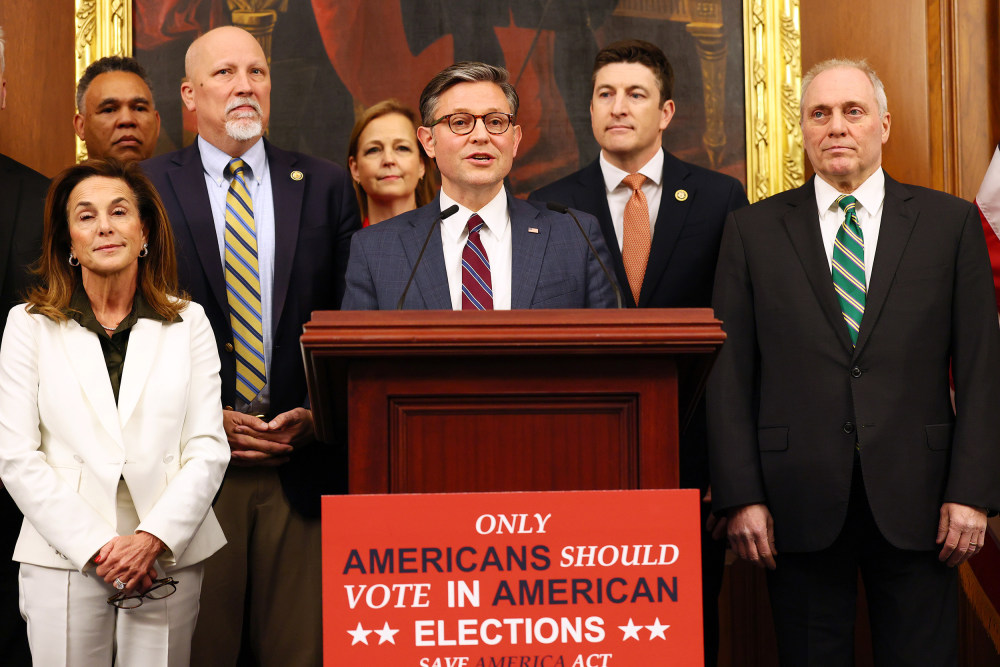
    House Passes SAVE America Act: What California Families Need to Know About Federal Voting Changes and Constitutional Rights

    If you’re a California resident concerned about how federal legislation affects your constitutional rights, family protection, and the legal framework governing elections, understanding the SAVE America Act is essential. This comprehensive guide explains what happened, why it matters, and how California families can protect their interests in an evolving legal landscape.

    What is the SAVE America Act and Why Does It Matter?

    On Wednesday, the Republican-controlled House of Representatives passed the SAVE America Act by a narrow 218-213 vote, marking a significant shift in how federal elections could be administered nationwide. Every Republican voted in favor, with only one Democrat—Rep. Henry Cuellar of Texas—crossing party lines.

    This 32-page legislation, backed by President Donald Trump and sponsored by Rep. Chip Roy (R-Texas) and Sen. Mike Lee (R-Utah), would fundamentally change voter registration and ballot-casting requirements across all 50 states.

    Key Requirements: What Would the SAVE America Act Do?

    The bill introduces three major requirements that would affect every American voter:

  • Documentary proof of citizenship required for voter registration: States would be mandated to obtain in-person documentation such as an American passport or birth certificate before registering someone to vote in federal elections.
  • Photo identification required for in-person voting: All voters would need to show government-issued photo ID when casting a ballot in person.
  • New mail-in ballot restrictions: Voters would be required to submit a copy of an eligible ID both when requesting and when casting an absentee ballot.
  • The Constitutional Question: Federal vs. State Authority

    For California families who value transparency and constitutional protections, a critical issue emerges: the question of federal versus state authority over elections.

    House Minority Leader Hakeem Jeffries raised concerns that align with longstanding constitutional principles, noting that President Trump has stated he wants to “nationalize” elections and “take over the voting in at least — many, 15 places”. This approach conflicts with the U.S. Constitution, which explicitly gives states authority over the “Times, Places and Manner of holding Elections” for federal office.

    Even Republican Senator Lisa Murkowski of Alaska opposed the bill, reminding her colleagues that Republicans unanimously opposed similar Democratic legislation in 2021 specifically because “it would have federalized elections, something we have long opposed”.

    What the Data Shows: Public Opinion on Voter ID Requirements

    While the bill faces constitutional concerns, polling data reveals broad public support for voter identification requirements:

  • 83% of U.S. adults favor requiring all voters to show government-issued photo ID
  • 71% of Democrats support voter ID requirements
  • 76% of Black voters support voter ID requirements
  • Speaker Mike Johnson framed the issue as common sense: “Americans need an ID to drive, to open a bank account, to buy cold medicine, to file government assistance. So why would voting be any different than that?”

    The Opposition: Why Democrats Call It Voter Suppression

    Democratic leaders argue the legislation addresses a problem that doesn’t exist. Current federal law already makes voting by noncitizens illegal and requires voters to attest to their citizenship under oath, with criminal penalties for violators.

    House Minority Leader Jeffries stated: “This is a desperate effort by Republicans to distract. The so-called SAVE Act is not about voter identification, it is about voter suppression”.

    Senate Minority Leader Chuck Schumer called the proposal “Jim Crow type laws” and declared it “dead on arrival in the Senate”.

    What Happens Next: The Senate Roadblock

    The bill now faces significant obstacles in the Senate, where Republicans hold 53 seats but need 60 votes to overcome a Democratic filibuster. Key Republican senators have already expressed skepticism or outright opposition:

  • Sen. Lisa Murkowski (R-Alaska): Opposes the bill due to concerns about federalizing elections
  • Sen. Susan Collins (R-Maine): Supported the original SAVE Act but finds the revised SAVE America Act “problematic” because it “went much broader than these original principles”
  • Sen. Mitch McConnell (R-Kentucky): Has long insisted elections should be run by states without federal interference or mandates
  • Senate Majority Leader John Thune acknowledged that Republicans are having a “robust” discussion about the measure, but made clear that “there aren’t anywhere close to the votes — not even close — to nuking the filibuster” despite President Trump’s demands.

    How This Affects California Families and Your Rights

    For California residents managing assets, planning estates, or concerned about protecting family interests, understanding these legislative developments matters for several reasons:

  • Constitutional protections: Federal mandates that override state authority set precedents that can affect other areas of law, including property rights, estate administration, and family law
  • Documentation requirements: Changes to identification and documentation requirements at the federal level can create ripple effects in probate, trust administration, and financial planning
  • Legal complexity: Navigating federal versus state law becomes more challenging when constitutional boundaries are tested
  • Protect Your Family’s Legal Interests with Experienced California Counsel

    At a time when federal and state laws are evolving rapidly, California families need experienced legal guidance to navigate complex regulations and protect what matters most. Whether you’re concerned about estate planning, probate administration, or ensuring your family’s assets are protected under changing legal frameworks, having knowledgeable counsel makes all the difference.

    California Probate and Trust, PC provides comprehensive estate planning and probate services for California residents who value transparency, family protection, and experienced guidance through complex legal matters. Our certified estate planning specialists offer free consultations to help you understand your options and create a customized plan that protects your family for generations to come.

    Schedule Your Free Consultation Today

    Don’t wait until legislative changes affect your family’s rights. Contact California Probate and Trust, PC for a complimentary one-hour consultation to discuss your estate planning needs, probate concerns, or trust administration questions. Call (866)-674-1130 or visit cpt.law to learn more.

    Source

    This article is based on reporting from NBC News: “House passes SAVE America Act, sending Trump-backed election bill to the Senate” by Sahil Kapur and Kyle Stewart.

    Legal Disclaimer

    This article is provided for informational purposes only and does not constitute legal advice. The information presented here is based on publicly available news reporting and should not be relied upon as a substitute for consultation with a qualified attorney. Laws and regulations are subject to change, and individual circumstances vary. For specific legal guidance regarding your situation, please consult with a licensed attorney in your jurisdiction. California Probate and Trust, PC provides estate planning and probate services in California and does not provide advice regarding federal election law or voting rights matters.


    Categories
    Estate Planning News

    Nick Baumgartner’s Near-Miss at the 2026 Winter Olympics: What You Can Learn About Perseverance, Legacy Planning, and Protecting Your Life’s Achievements

    For California residents concerned about protecting their legacy and ensuring their life’s work benefits their families, the story of 44-year-old Olympic snowboarder Nick Baumgartner offers powerful lessons about perseverance, planning for the future, and documenting your achievements for generations to come.

    What Happened: A Heartbreaking Photo Finish

    On February 12, 2026, Nick Baumgartner—the oldest American snowboarder competing at the Winter Olympics—came within 0.08 seconds of advancing to the finals in snowboard cross at Livigno. Competing in his fifth Olympics at age 44, Baumgartner finished just behind Austria’s Alessandro Haemmerle for third place in the semifinals.

    The margin was razor-thin. In snowboard cross, only two riders from each four-member race advance to the finals. Haemmerle went on to claim the gold medal, while Canada’s Eliot Grondin took silver and Austria’s Jakob Dusek earned bronze.

    Why This Story Matters for California Families

    If you’re a California resident managing assets, planning your estate, or thinking about your legacy, Baumgartner’s journey illustrates three critical lessons:

  • Document Your Achievements Now: Baumgartner already made history in 2022 by winning gold in mixed team snowboard cross at age 40, becoming the oldest snowboarder to earn an Olympic medal. His accomplishments are now part of Olympic history—preserved and recognized.
  • Plan for the Long Term: At 44, Baumgartner hasn’t ruled out competing at the 2034 Games in Salt Lake City, when he’ll be 52. This kind of long-term thinking mirrors the estate planning process—anticipating future needs and protecting what matters most.
  • Inspire the Next Generation: “The longer I do this, the more people that I can inspire,” Baumgartner said. “If I’m 52 years old in 2034 and I’m still doing this, you have no excuse to go chase your dreams”.
  • How Does This Relate to Estate Planning in California?

    Just as Olympic athletes must plan their careers, training regimens, and legacy, California families need to proactively protect their assets and ensure their life’s work benefits their loved ones. Here’s how:

  • Protecting Your Life’s Achievements: Whether you’ve built a business, accumulated real estate, or created intellectual property, proper estate planning ensures these achievements transfer smoothly to your heirs—not lost to probate delays or family disputes.
  • Planning for Longevity: Baumgartner’s career shows that people are living longer, more active lives. California estate plans should account for extended lifespans, potential incapacity, and healthcare decisions.
  • Creating a Lasting Legacy: Just as Baumgartner wants to inspire others through his athletic achievements, your estate plan can create a legacy that benefits your family for generations—through trusts, charitable giving, and structured inheritance plans.
  • Common Questions California Families Ask About Legacy Protection

    How can I protect my family if I become incapacitated?

    Advance Healthcare Directives and Powers of Attorney ensure someone you trust can make medical and financial decisions on your behalf if you’re unable to do so—critical for active professionals and retirees alike.

    What’s the best way to transfer my assets to my children?

    Revocable Living Trusts allow California residents to avoid probate, maintain privacy, and control how and when assets are distributed to beneficiaries. This is particularly important for families with real estate, business interests, or blended family situations.

    How do I ensure my achievements and values are passed down?

    Beyond financial assets, estate planning can include legacy letters, ethical wills, and structured giving that reflects your values—ensuring your life’s work continues to make an impact.

    Who Should Consider Estate Planning?

    If you’re a California resident who:

  • Owns property or has accumulated assets you want to protect
  • Has children or dependents who rely on you
  • Wants to avoid probate delays and court intervention
  • Values transparency and family protection
  • Is concerned about incapacity or healthcare decisions
  • Has worked hard to build something meaningful and wants to preserve it
  • Then proactive estate planning is essential—just as essential as an athlete’s training regimen.

    Real-World Impact: Why California Families Choose Professional Estate Planning

    California Probate and Trust, PC has helped thousands of California families across Sacramento, Fair Oaks, and San Francisco create comprehensive estate plans that protect their legacies. Our clients value:

  • Transparency: Clear, straightforward estate planning packages with no hidden fees
  • Family Protection: Comprehensive plans that safeguard assets and ensure smooth transitions
  • Compassionate Guidance: A safe space to discuss difficult topics with experienced attorneys
  • One-Stop Service: Both legal structure and financial management aspects handled seamlessly
  • Take Control of Your Legacy Today

    Just as Nick Baumgartner continues to defy expectations and inspire others through his athletic achievements, you can create a lasting legacy that protects your family and reflects your values.

    Schedule your FREE estate planning consultation with California Probate and Trust, PC today. Our experienced Sacramento-based attorneys will help you:

  • Assess your current situation and identify vulnerabilities
  • Develop a personalized estate plan tailored to your family dynamics
  • Implement healthcare directives, trusts, and asset protection strategies
  • Gain confidence and control over your future
  • Contact us at (866)-674-1130 or visit cpt.law to schedule your free consultation.

    Source: NY Post – Nick Baumgartner falls agonizingly short of Olympic medal chance in photo finish

    Legal Disclaimer

    This article is provided for informational purposes only and does not constitute legal advice. Estate planning needs vary based on individual circumstances, family dynamics, and asset portfolios. The information presented here should not be relied upon as a substitute for consultation with a qualified estate planning attorney licensed in California. California Probate and Trust, PC offers free consultations to assess your specific situation and provide personalized legal guidance. No attorney-client relationship is established by reading this article. Past results do not guarantee future outcomes. Always consult with a licensed attorney before making legal or financial decisions regarding your estate.

    Categories
    Estate Planning News

    BYU Football Player Parker Kingston Charged with Felony Rape: What California Families Need to Know About Legal Rights and Protections

    When high-profile criminal allegations emerge, they raise important questions about legal rights, evidence preservation, and family protection—concerns that resonate far beyond the courtroom.

    On February 12, 2026, BYU wide receiver Parker Kingston was charged with first-degree felony rape by the Washington County (Utah) Attorney’s Office, following a nearly yearlong investigation. The charge stems from an incident reported on February 23, 2025, when a 20-year-old woman told officers at St. George Regional Hospital that Kingston sexually assaulted her.

    What Happened in the Parker Kingston Case?

    According to the ESPN report, the investigation included:

  • Collection of digital and forensic evidence by St. George Police Department detectives
  • Interviews with the parties involved and other witnesses
  • Review by the Washington County Attorney’s Office before filing charges
  • Kingston is currently being held without bail and was scheduled to appear in Utah’s Fifth Judicial District Court on Friday, February 14, 2026. BYU’s athletic department released a statement acknowledging the arrest and stating they will cooperate with law enforcement while declining further comment due to federal and university privacy laws.

    This marks the second high-profile rape allegation against a BYU football player within a year. Former quarterback Jake Retzlaff faced similar accusations in a civil lawsuit filed in May 2025, which was dismissed in June 2025 with prejudice, meaning it could not be refiled. No criminal charges were filed against Retzlaff.

    Why This Matters for California Families: Understanding Legal Rights and Estate Protection

    High-profile criminal cases like this one highlight critical legal considerations that extend far beyond the immediate parties involved. For California residents managing family assets and planning for the future, these situations raise important questions:

  • How can families protect their assets when facing unexpected legal challenges? Criminal allegations, civil lawsuits, and their associated legal costs can threaten family wealth and future security.
  • What happens to your estate if you or a family member becomes involved in legal proceedings? Without proper planning, legal judgments can impact inheritance, trust distributions, and asset protection.
  • How do you ensure your family’s financial security during times of crisis? Comprehensive estate planning provides a safety net when unexpected legal situations arise.
  • Key Legal Protections California Families Should Consider

    1. Asset Protection Trusts

    Properly structured trusts can help shield family assets from potential legal judgments and creditors. California residents should consider:

  • Revocable living trusts for flexibility during your lifetime
  • Irrevocable trusts for enhanced asset protection
  • Special needs trusts for vulnerable family members
  • 2. Powers of Attorney and Healthcare Directives

    When legal troubles arise, having trusted representatives authorized to manage your affairs becomes crucial:

  • Financial Power of Attorney allows someone you trust to handle financial matters if you’re unable to
  • Healthcare Power of Attorney ensures medical decisions align with your wishes
  • Advance Healthcare Directives provide clear guidance during medical emergencies
  • 3. Comprehensive Estate Plans That Anticipate the Unexpected

    The reality is that no family is immune to unexpected legal challenges. Whether it’s criminal allegations, civil disputes, or other legal complications, having a well-structured estate plan provides:

  • Clear direction for asset distribution that can’t be easily challenged
  • Protection mechanisms that preserve family wealth across generations
  • Privacy through trust structures that avoid public probate proceedings
  • Continuity of financial management even during legal crises
  • What to Do If Your Family Faces Legal Challenges

    For California families concerned about protecting their legacy in the face of potential legal issues, consider these steps:

  • Schedule a comprehensive estate planning review to identify vulnerabilities
  • Discuss asset protection strategies with experienced estate planning attorneys
  • Update beneficiary designations and trust documents to reflect current circumstances
  • Establish clear communication protocols with family members about estate plans
  • Document your wishes regarding healthcare, finances, and legacy preservation
  • How California Probate and Trust Can Help

    At California Probate and Trust, PC, we understand that life’s uncertainties can threaten the security you’ve worked hard to build for your family. Our experienced estate planning attorneys help California residents create comprehensive plans that protect assets, preserve legacies, and provide peace of mind—even when unexpected legal challenges arise.

    We offer:

  • Free estate planning consultations to assess your unique situation and identify potential vulnerabilities
  • Transparent, fixed-fee packages so you know exactly what to expect
  • Personalized strategies tailored to your family dynamics and asset protection needs
  • Compassionate guidance through complex legal and emotional decisions
  • Our Sacramento-based team has helped thousands of California families establish trusts, create comprehensive estate plans, and navigate probate proceedings with confidence and clarity.

    Take Action to Protect Your Family’s Future

    Don’t wait until a crisis hits to protect what matters most. Schedule your free estate planning consultation with California Probate and Trust today.

    Contact us:

  • Phone: (866)-674-1130
  • Website: cpt.law
  • Offices in Fair Oaks, Sacramento, and San Francisco
  • During your consultation, we’ll discuss your family dynamics, review your current assets, and develop a customized plan that provides the protection and peace of mind you deserve.

    Legal Disclaimer

    This article is provided for informational purposes only and does not constitute legal advice. The information contained herein should not be relied upon as a substitute for consultation with qualified legal professionals. Every family’s situation is unique, and estate planning strategies must be tailored to individual circumstances, state laws, and changing regulations. California Probate and Trust, PC does not represent any parties mentioned in the news story referenced in this article. For specific legal guidance regarding your estate planning needs, please schedule a consultation with our experienced attorneys. Past results do not guarantee future outcomes.

    Source: ESPN – “BYU receiver Parker Kingston charged with felony rape”

    Categories
    Estate Planning News

    Kiké Hernández Returns to the Dodgers: What California Families Can Learn About Loyalty, Legacy, and Long-Term Planning

    For California residents managing assets, protecting family interests, or planning for the future, sports stories often mirror the kinds of decisions we face in estate planning and probate. The recent return of Enrique “Kiké” Hernández to the Los Angeles Dodgers offers valuable lessons about commitment, preparation for uncertainty, and building a legacy that lasts.

    Who This Article Is For

    This article is designed for California residents—especially Dodgers fans and families in the greater Los Angeles and Sacramento areas—who are thinking about how to protect their loved ones, preserve their assets, and plan for life’s uncertainties. Whether you’re navigating probate after a loved one’s passing or proactively building an estate plan to shield your family from future legal complications, the principles of loyalty, preparation, and smart decision-making apply both on and off the field.

    Kiké Hernández’s Homecoming: A Story of Resilience and Strategic Planning

    On the eve of spring training, Kiké Hernández announced his return to the Dodgers for his 10th season in Dodger blue. The 34-year-old fan favorite signed a one-year, $4.5 million contract, rejoining a team chasing an unprecedented third consecutive World Series title.

    Hernández’s journey back wasn’t without obstacles. After struggling with a left elbow injury throughout the 2025 season—hitting just .203 with a .621 OPS in 93 games—he underwent offseason surgery.Despite the setback, he’s expected to return to action within a month or two, reinforcing a Dodgers roster that has added star power like Kyle Tucker and Edwin Díaz.

    His postseason performance, however, tells a different story. Hernández holds the Dodgers’ franchise record for most postseason games played (92 and counting) and has earned the nickname “October Kiké” for his ability to rise to the occasion when it matters most—posting an .825 OPS in playoff games compared to .708 during the regular season.

    Why Does This Matter for Estate Planning?

    Just like Hernández prepared for his return by addressing his injury and positioning himself for long-term success, California families need to take proactive steps to protect their legacies. Here’s what we can learn:

  • Preparation Prevents Problems: Hernández didn’t wait until spring training to address his elbow issue—he had surgery in the offseason to ensure he’d be ready when his team needed him. Similarly, estate planning isn’t something to put off until a crisis hits. Creating a revocable trust, drafting a will, or establishing powers of attorney now can prevent costly probate proceedings and family disputes later.
  • Flexibility Is Key: Hernández’s ability to play multiple positions—left field, third base, center field—made him invaluable to the Dodgers.In estate planning, flexibility means choosing tools like revocable trusts that can be adjusted as your family dynamics, assets, or goals change over time.
  • Legacy Matters: Hernández isn’t just chasing another championship—he’s cementing his place in Dodgers history. For California families, legacy planning means more than just transferring wealth. It’s about protecting your loved ones from unnecessary legal battles, ensuring your healthcare wishes are honored, and passing down values alongside assets.
  • How California Probate and Trust Can Help You Build Your Legacy

    At California Probate and Trust, PC, we understand that California residents face unique challenges when it comes to estate planning and probate administration. Whether you’re managing California-based real estate, business interests, or family trusts, our compassionate team offers transparent, personalized solutions designed to protect what matters most.

    Our services include:

  • Comprehensive Estate Planning: From simple wills to complex revocable and irrevocable trusts, we create customized plans that reflect your family’s needs and goals.
  • Probate Administration: If you’re navigating the probate process after losing a loved one, we provide experienced guidance to help you through Sacramento County probate and beyond.
  • Healthcare Directives and Powers of Attorney: Ensure your medical and financial wishes are honored by establishing advance healthcare directives and durable powers of attorney.
  • Asset Protection and Tax Planning: Preserve your wealth for future generations while minimizing estate taxes and protecting assets from creditors.
  • Take the First Step: Schedule Your Free Consultation

    Just as Kiké Hernández returned to the Dodgers prepared and ready to contribute, you can take control of your family’s future by scheduling a free, no-obligation estate planning consultation with California Probate and Trust, PC.

    Our seasoned attorneys will:

  • Review your family dynamics and asset situation
  • Explain your options in plain language
  • Help you select the right plan—whether that’s a power of attorney package, simple will, or comprehensive trust
  • Give you confidence and control over your legacy
  • Contact us today at (866)-674-1130 or visit cpt.law to schedule your free consultation. With offices in Fair Oaks, Sacramento, and San Francisco, we’ve helped thousands of California families protect their legacies—and we’re ready to help yours.

    Read the Full Story

    For more details on Kiké Hernández’s return to the Dodgers, visit the original article at MLB.com.

    Legal Disclaimer

    This article is provided for informational purposes only and does not constitute legal advice. Every estate planning situation is unique, and the information presented here may not apply to your specific circumstances. For personalized legal guidance regarding estate planning, probate, trusts, or related matters, please consult with a qualified California estate planning attorney. California Probate and Trust, PC offers free consultations to discuss your individual needs. No attorney-client relationship is formed by reading this article or visiting our website.

    Categories
    California Probate Estate Planning News

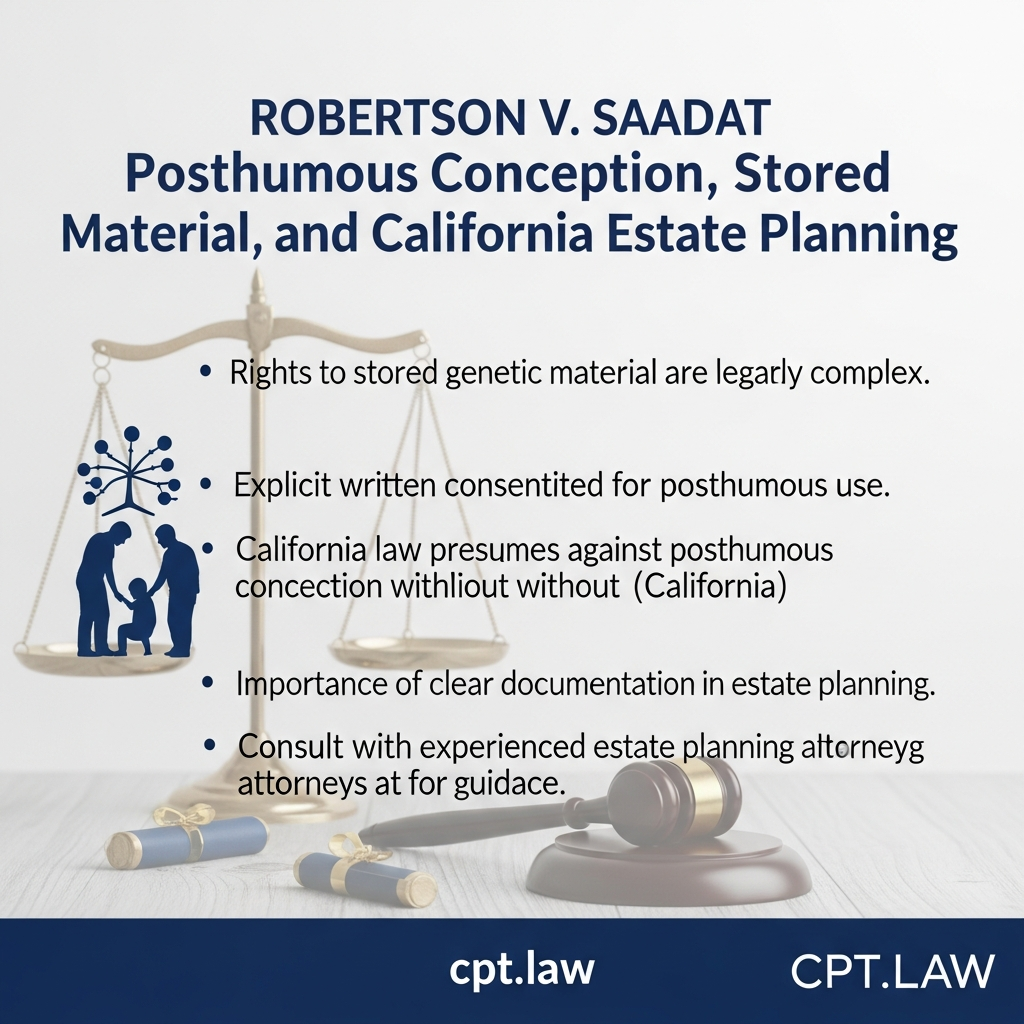
    Robertson v. Saadat: Posthumous Conception, Stored Genetic Material, and California Estate Planning – California Legal Guide | CPT Law

    California Legal Implications: Posthumous Conception and Genetic Material in Estate Planning

    In the case of *Robertson v. Saadat*, the California Court of Appeal highlighted a critical and often overlooked aspect of estate planning: the rights regarding stored genetic material. As detailed in the court opinion, Sarah Robertson sought damages after a storage facility lost the sperm of her deceased husband, Aaron. The sperm had been extracted while Aaron was in a coma shortly before his death. The court ruled against Sarah, establishing that she had no legal entitlement to use the sperm because there was no evidence that Aaron had expressly consented to the posthumous use of his genetic material., Sarah Robertson sought damages after a storage facility lost the sperm of her deceased husband, Aaron. The sperm had been extracted while Aaron was in a coma shortly before his death. The court ruled against Sarah, establishing that she had no legal entitlement to use the sperm because there was no evidence that Aaron had expressly consented to the posthumous use of his genetic material.

    This ruling serves as a vital lesson for California families. It demonstrates that general statements about wanting children are legally insufficient to authorize posthumous conception. For California residents, this connects directly to the necessity of comprehensive estate planning that goes beyond financial assets to include biological legacy and specific healthcare directives.

    The Presumption Against Posthumous Use

    Under California law, there is a legal presumption that a decedent does not intend for their genetic material to be used for conception after their death. This presumption exists to protect the autonomy of the deceased. To overcome this presumption, there must be an “affirmative indication” of intent.

    As the *Robertson* case illustrates, a spouse cannot simply authorize the extraction or use of genetic material based on the couple’s prior discussions or a general desire to have a family. Without clear, written consent from the donor, surviving spouses may find themselves legally barred from using stored genetic material, regardless of the emotional circumstances.

    Establishing Clear Intent in Estate Documents

    To ensure your wishes are honored regarding posthumous conception, “intent” must be documented formally. California estate planning attorneys can help individuals draft specific provisions within their estate plans. These documents should address:

    * Explicit Consent: A clear statement authorizing the use of sperm, eggs, or embryos after death.
    * Designated Beneficiaries: Identification of who is authorized to control the genetic material.
    * Inheritance Rights: Determining whether a child conceived posthumously will be considered a beneficiary of the decedent’s Trust or Will..

    Without these specific clauses, a child born posthumously may not only be difficult to conceive legally but may also be excluded from inheriting from the deceased parent’s estate under California Probate Code sections.

    The Role of Advanced Health Care Directives

    While a Will or Living Trust handles asset distribution, an Advanced Health Care Directive is the primary vehicle for making medical decisions when you are incapacitated. However, standard directives often do not cover the extraction or use of genetic material. is the primary vehicle for making medical decisions when you are incapacitated. However, standard directives often do not cover the extraction or use of genetic material.

    If preserving the option for posthumous conception is important to a family, this must be explicitly integrated into the estate planning strategy. Relying on the “next of kin” status is insufficient for these specific medical procedures, as the court in *Robertson* affirmed that spousal status alone does not grant the right to control the decedent’s gametic material for procreation.

    About This Case

    Source: Robertson v. Saadat: Posthumous Conception, Stored Genetic Material, and California Estate Planning

    California Probate and Trust, PC Can Help

    – Free consultations: (866)-674-1130
    – Experienced California estate planning
    Schedule consultation
    – Learn more: cpt.law

    Legal Disclaimer

    This article is for informational purposes only. Consult with a qualified California estate planning attorney for advice specific to your situation.