If you’re managing a California trust after a loved one’s passing, or if you’re owed money from a deceased person’s estate, you may be wondering: Do I need to open a formal probate case, or can I go directly after the trust? A recent California appellate court decision provides critical clarity on this question—and the answer could significantly impact how you protect your family’s assets or recover what you’re owed.
Who This Article Is For
This legal update is essential reading for:
California trustees managing a loved one’s trust who want to understand their exposure to creditor claims
Trust beneficiaries concerned about whether creditors can deplete trust assets
Creditors seeking to collect debts from someone who has passed away and left assets in a trust
Estate planning clients who want to understand how creditor protection works in California trusts
Understanding your rights—whether you’re defending a trust or pursuing a claim—can mean the difference between protecting your family’s inheritance and facing unexpected legal challenges.
The Key Legal Question: Can Creditors Sue a Trust Directly?
In California, when someone passes away, their debts don’t simply disappear. But the process for creditors to collect those debts depends on whether the estate goes through probate, and whether the trustee of any trust takes certain procedural steps.
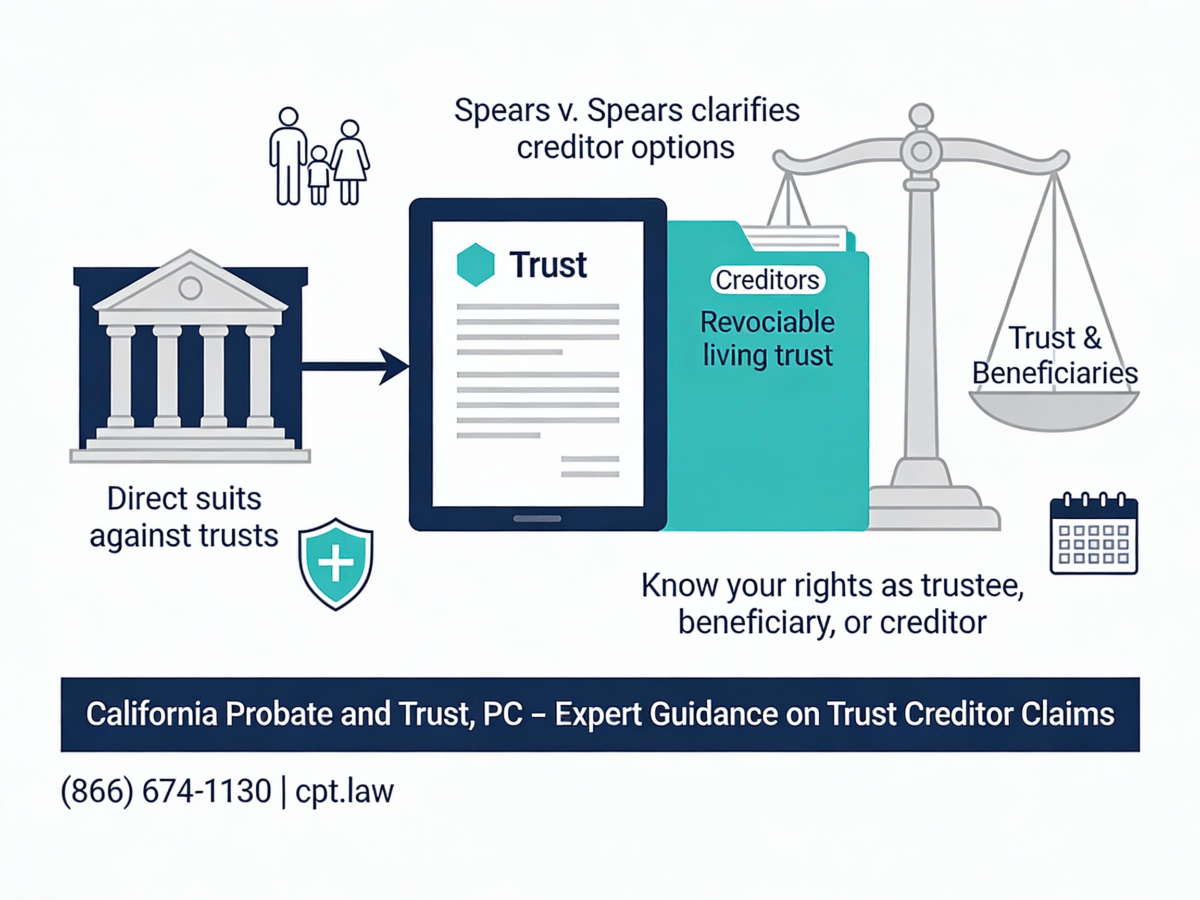
The Spears v. Spears case answered a critical question: When no probate estate is opened and the trustee doesn’t elect the optional trust claims procedure, can a creditor file suit directly against the trust to recover the deceased person’s debt?
The California Court of Appeal’s answer: Yes.
What Happened in Spears v. Spears?
Brian Spears claimed his father’s trust owed him $40,000 based on two alleged oral agreements with his step-mother, who served as trustee of his father’s trust. The claims included:
$30,000 allegedly owed from state payments for care of the trustee’s granddaughter
$10,000 from the purchase of a modular home
Brian filed claims to remove the trustee, obtain an accounting, and be recognized as a creditor of the trust. The trial court initially dismissed his case, and the trustee argued that Brian needed to file his claim against his father’s probate estate—not the trust.
The Appellate Court’s Ruling: Creditors Have Options
The First District Court of Appeal reversed the dismissal, establishing important precedent for California trust creditors:
No probate requirement: Brian was not required to bring an action against his father’s estate
Direct trust claims allowed: He could bring his claim directly against the trustee to recover from the trust estate
Two conditions: This pathway is available when (1) no probate estate is opened, and (2) the trustee doesn’t elect the optional trust claims procedure
The court did find that one of Brian’s claims—the $10,000 related to the modular home sale—was time-barred by the statute of limitations. However, the broader principle was established: creditors have a direct path to trust assets under specific circumstances.
What This Means for California Trustees
If you’re serving as trustee of a loved one’s trust, this decision highlights several important considerations:
Creditor exposure: Even without probate, the trust may face direct creditor claims
Optional claims procedure: You may want to consider electing the optional trust claims procedure under California Probate Code to create a defined timeline and process for creditors
Legal consultation: Given the complexity of creditor rights, trustee duties, and potential personal liability, working with experienced trust administration counsel is critical
California Probate and Trust, PC regularly guides trustees through these exact scenarios, helping protect both the trust assets and the trustee from personal liability while ensuring compliance with California law.
What This Means for Trust Beneficiaries
If you’re a beneficiary of a California trust, this case demonstrates why proper trust administration matters:
Creditors may pursue trust assets even years after the settlor’s death (subject to statutes of limitations)
Your inheritance could be reduced by valid creditor claims
A trustee’s failure to properly handle creditor claims could lead to disputes and litigation
Understanding these risks helps beneficiaries set realistic expectations and advocate for proper trust administration.
What This Means for Creditors
If you’re owed money by someone who has passed away and left assets in a trust, Spears v. Spears provides a valuable roadmap:
You may not need to wait for or initiate probate proceedings
You can file suit directly against the trust to recover debts
However, statutes of limitations still apply—timing is critical
This decision expands creditor options but requires careful legal analysis to determine the best strategy for your specific situation.
Practical Questions This Case Answers
Can I sue a trust for money owed by a deceased person in California?
Yes, if no probate estate is opened and the trustee doesn’t elect the optional claims procedure, you can file suit directly against the trust.
Do I have to open probate to collect a debt from someone who died?
Not necessarily. If the deceased person’s assets are held in a trust and the conditions above are met, you can pursue the trust directly.
How long do I have to file a creditor claim against a California trust?
Statutes of limitations still apply. In Spears, one claim was dismissed as time-barred, demonstrating the importance of acting promptly.
As a trustee, how can I limit my exposure to creditor claims?
Consider electing the optional trust claims procedure, which creates a structured process with defined deadlines for creditor claims. Consult with experienced trust counsel to understand your options.
Case Details
Case Citation: A164622
Filed: December 19, 2023
Court: California Court of Appeal, First District, Division Four
Legal Issue: Trust creditor rights and trust claims procedure
Original Source: California Lawyers Association – Spears v. Spears
Full Court Opinion: First District Opinion (PDF)
How California Probate and Trust Can Help
Whether you’re administering a trust, defending against creditor claims, or pursuing a debt owed to you, California Probate and Trust, PC provides the experienced legal guidance California residents need to navigate these complex situations.
Our firm offers:
Trust administration guidance: We help trustees understand and fulfill their legal duties while protecting trust assets and minimizing personal liability
Creditor claim defense: We represent trustees and beneficiaries facing creditor claims, including statute of limitations defenses and claim validity challenges
Creditor representation: We assist creditors in recovering debts from trusts and estates through the most efficient legal pathway
Proactive estate planning: We structure trusts to provide appropriate creditor protection while ensuring smooth administration
With offices serving Fair Oaks, Sacramento, and San Francisco, we’ve guided thousands of California families through trust and estate matters. Our transparent, compassionate approach means you’ll understand your options and feel confident in your legal strategy.
Schedule Your Free Consultation
If you’re facing questions about trust creditor claims—whether as a trustee, beneficiary, or creditor—we invite you to schedule a free one-hour consultation with our experienced estate planning and trust litigation attorneys.
Contact California Probate and Trust, PC today:
📞 (866) 674-1130
🌐 cpt.law
During your consultation, we’ll review your specific situation, explain your legal options, and help you develop a strategy that protects your interests and your family’s future.
Legal Disclaimer
This article is provided for informational purposes only and does not constitute legal advice. The information presented is based on the Spears v. Spears appellate decision and general California trust and estate law principles. Every legal situation is unique, and the application of law can vary significantly based on specific facts and circumstances.
Reading this article does not create an attorney-client relationship. For specific legal guidance regarding your trust administration, creditor claim, or estate planning matter, please consult with a qualified California estate planning attorney. The outcome of any legal matter depends on the specific facts and applicable law, and no attorney can guarantee a particular result.
California Probate and Trust, PC is available to provide personalized legal counsel for your trust and estate needs. Laws and court interpretations change over time, so information presented here should be verified with current legal counsel before taking action.