
Categories
Estate Planning California Probate News

Trump threatens to use the Insurrection Act to end protests in Minneapolis

If you’re a California resident concerned about federal overreach, civil liberties, or how political instability might affect your family’s safety and assets, understanding the Insurrection Act and its implications is crucial for informed estate planning and asset protection.

What Happened in Minneapolis?

On January 15, 2026, President Donald Trump threatened to invoke the Insurrection Act—a rarely used 1807 federal law—to deploy military troops against protesters in Minneapolis. The protests erupted following fatal and non-fatal shootings by Immigration and Customs Enforcement (ICE) agents during the administration’s immigration enforcement operations.

According to the Associated Press, the threat came after a man was shot and wounded by an immigration officer who had been attacked with a shovel and broom handle. This incident followed the fatal shooting of Renee Good by an ICE agent, which sparked widespread fear and anger across Minneapolis.

What Is the Insurrection Act?

The Insurrection Act allows the president to deploy U.S. military forces or federalize the National Guard for domestic law enforcement purposes. Key facts California residents should know:

  • The law dates back to 1807 and has been invoked more than two dozen times in U.S. history
  • Most recent use was in 1992 by President George H.W. Bush to end the Los Angeles riots—notably, at the request of local authorities
  • The current threat involves deployment over the objections of state governors
  • Trump has repeatedly threatened to use this power throughout his administration

Why This Matters for California Families

For California residents managing assets and protecting their families, periods of political uncertainty and potential civil unrest raise several important questions:

  • How can I protect my family’s assets during times of political instability? Estate planning tools like revocable trusts and powers of attorney ensure your wishes are honored regardless of external circumstances.
  • What happens to my estate if federal-state conflicts escalate? Proper legal documentation protects your family’s interests even when government authority is contested.
  • Should I update my estate plan during uncertain times? Major political shifts often warrant reviewing your healthcare directives, financial powers of attorney, and beneficiary designations.

Trump’s Statement on Social Media

In his social media post, Trump stated: “If the corrupt politicians of Minnesota don’t obey the law and stop the professional agitators and insurrectionists from attacking the Patriots of I.C.E., who are only trying to do their job, I will institute the INSURRECTION ACT, which many Presidents have done before me, and quickly put an end to the travesty that is taking place in that once great State.”

Historical Context: When Federal Power Meets State Authority

The tension between federal and state authority has significant implications for California residents. Unlike the 1992 Los Angeles case where local authorities requested federal assistance, the current Minneapolis situation involves potential federal intervention against state wishes—a scenario that raises constitutional questions about states’ rights and federal overreach.

Protect Your Family’s Future with Comprehensive Estate Planning

Political uncertainty underscores the importance of having a solid estate plan in place. California Probate and Trust, PC helps California residents navigate complex legal landscapes to protect what matters most.

Our estate planning services include:

  • Revocable and irrevocable trusts that shield your assets from uncertainty
  • Powers of attorney ensuring your wishes are honored in any circumstance
  • Healthcare directives protecting your medical decisions
  • Comprehensive probate services for families navigating loss
  • Asset protection strategies tailored to California law

Schedule Your FREE Estate Planning Consultation Today

Don’t wait for uncertainty to become crisis. Our experienced Sacramento-based attorneys offer free consultations to help you understand your options and develop a plan that protects your family for generations to come.

Call (866)-674-1130 or visit cpt.law to schedule your no-obligation consultation.

About California Probate and Trust, PC

With offices in Fair Oaks, Sacramento, and San Francisco, our certified estate planning specialists have represented thousands of California families. We offer transparent pricing, compassionate guidance, and comprehensive solutions for both immediate probate needs and long-term estate planning goals.

Legal Disclaimer

This article is provided for informational purposes only and does not constitute legal advice. The information presented is based on publicly available news reports and general legal principles. Every family’s situation is unique, and estate planning strategies should be tailored to individual circumstances. For specific legal guidance regarding your estate planning needs, please consult with a qualified attorney. California Probate and Trust, PC is not affiliated with any government agency or political organization. This article does not represent any political position or endorsement regarding the events described.

Source: Associated Press – “Trump threatens to use the Insurrection Act to end protests in Minneapolis” (January 15, 2026)

Categories
Estate Planning California Probate Trusts

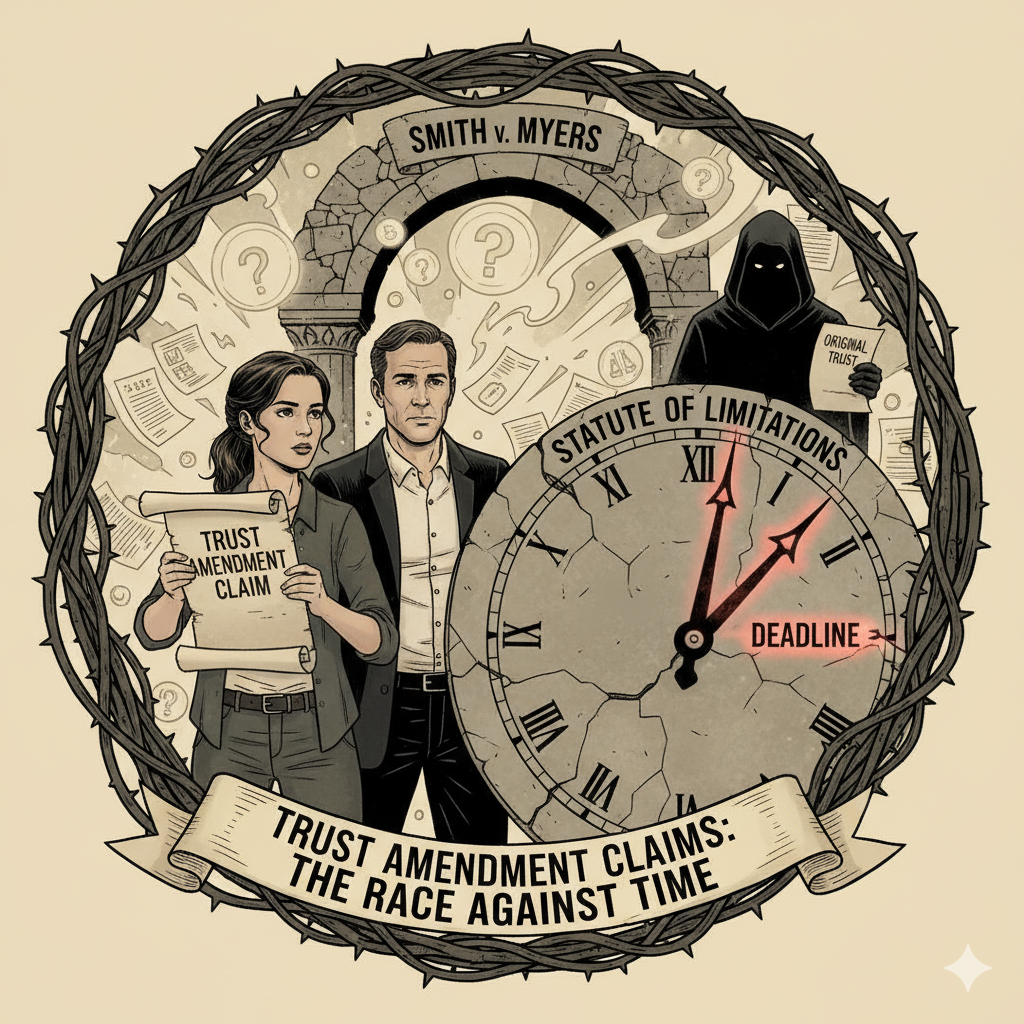
Smith v. Myers: Understanding the Statute of Limitations on Trust Amendment Claims in California

The one year statute of limitations on claims arising from a decedent’s promise to make a distribution does not apply to claims for distribution under a valid trust amendment.

Source: California Lawyers Association – Smith v. Myers

Smith v. Myers: Understanding the Statute of Limitations on Trust Amendment Claims in California

Who This Is For: California residents managing trusts, beneficiaries seeking distributions under trust amendments, and families navigating estate administration who need clarity on their legal rights and deadlines.

What You’ll Learn: How California law treats claims for distributions under valid trust amendments differently from general promises—and what this means for protecting your family’s inheritance rights.

The Key Ruling: Trust Amendments Are Not Subject to the One-Year Statute of Limitations

In Smith v. Myers, California courts clarified a critical distinction for trust beneficiaries: the one-year statute of limitations that applies to claims based on a decedent’s promise to make a distribution does not apply to claims for distribution under a valid trust amendment.

This ruling provides important protection for beneficiaries who may not discover their rights immediately after a loved one’s death.

Source: California Lawyers Association – Smith v. Myers

What Does This Mean for California Families?

If you’re a beneficiary named in a trust amendment, you have more time to assert your rights than you would for an informal promise. Here’s why this matters:

  • Trust amendments are formal legal documents that modify existing trust terms and are governed by different legal standards than oral or informal promises
  • The one-year deadline doesn’t start ticking the moment the person who created the trust passes away—giving you breathing room to understand your rights
  • Families dealing with complex estates often need time to gather documentation, and this ruling acknowledges that reality
  • Common Questions About Trust Amendment Claims

    How long do I actually have to make a claim under a trust amendment?

    While the one-year limitation doesn’t apply, other statutes of limitations may. California law provides different timeframes depending on the specific type of claim and when you discovered (or should have discovered) your right to distribution.

    What’s the difference between a “promise to distribute” and a “trust amendment”?

    A promise might be verbal or documented in informal correspondence. A trust amendment is a legally executed document that formally changes the terms of an existing trust according to California trust law requirements.

    What should I do if I think I’m entitled to a distribution under a trust amendment?

  • Locate the original trust document and all amendments
  • Gather documentation showing your relationship to the decedent and the timing of any amendments
  • Consult with a California trust attorney who can review the specific language and timeline
  • Don’t delay—even though the one-year limit doesn’t apply, other deadlines may
  • Why Trust Amendment Language Matters

    The Smith v. Myers case underscores how precise trust language protects your family’s intentions. When trust amendments are properly drafted and executed, they create enforceable legal rights that survive challenges based on timing technicalities.

    For California families creating or updating estate plans, this means:

  • Work with experienced estate planning attorneys who understand current California trust law
  • Ensure all trust amendments are formally executed according to legal requirements
  • Communicate clearly with beneficiaries about amendments to avoid confusion later
  • Review and update trust documents regularly to reflect your current intentions
  • How California Probate and Trust Helps Families Navigate Trust Disputes

    At California Probate and Trust, PC, we’ve helped thousands of California residents protect their families through comprehensive estate planning and trust administration. Whether you’re creating a trust amendment, questioning your rights as a beneficiary, or managing a complex estate, our team provides the clarity and guidance you need.

    Our approach combines legal expertise with genuine compassion—because we understand that behind every trust document is a family navigating difficult decisions about their legacy.

    Protect Your Family’s Rights: Schedule a Free Consultation

    If you have questions about trust amendments, beneficiary rights, or California estate law, our experienced attorneys are here to help. We offer free consultations where we’ll:

  • Review your specific situation and timeline
  • Explain your legal options in plain language
  • Develop a strategy to protect your interests
  • Answer all your questions about trust administration and estate planning
  • Contact California Probate and Trust today at (866) 674-1130 or schedule your free consultation online. Don’t let confusion about deadlines or legal procedures prevent you from claiming what’s rightfully yours.

    Serving California families from our offices in Fair Oaks, Sacramento, and San Francisco.

    Categories
    Estate Planning California Probate Trusts

    Asaro v. Maniscalco: How Executors Can Recover Double Damages for Wrongfully Taken Trust Property

    For Executors and Personal Representatives: Understanding Your Legal Remedies When Trust Property Is Stolen or Concealed

    If you’re serving as an executor or personal representative, you may face situations where trust property has been wrongfully taken, concealed, or transferred by a trustee or beneficiary. The California Court of Appeal’s decision in Asaro v. Maniscalco clarifies powerful legal remedies available to you—including the ability to recover both the stolen property and double damages as a penalty.

    This landmark ruling answers a critical question for executors dealing with trust property theft: Can you pursue multiple remedies simultaneously, or must you choose between getting the property back or seeking penalty damages?

    What Executors Need to Know: The Two Key Remedies

    Probate Code Section 856: Getting Trust Property Back

    California Probate Code Section 856 provides a direct mechanism for recovering trust property that has been wrongfully taken, concealed, or disposed of by a trustee or other person.This statute allows executors to file a petition to compel the return of the property to the trust.

    Probate Code Section 859: Double Damages Penalty

    Probate Code Section 859 goes further by establishing a penalty of double damages against anyone who wrongfully takes, conceals, or disposes of trust property with intent to defraud.This punitive measure serves as both compensation and deterrent.

    The Court’s Critical Ruling: You Can Pursue Both Remedies

    The Court of Appeal resolved a significant ambiguity by holding that these two remedies work together, not against each other:

    • Recovery of Property PLUS Penalty Damages: The double damages penalty under Section 859 is in addition to the remedy under Section 856 for return of trust property. Executors don’t have to choose—they can seek both.
    • Individual Recovery Rights: The court clarified that penalty damages under Section 859 may be awarded directly to the individual who brought the action, rather than flowing back into the trust itself.

    Real-World Application: When Can Executors Use These Remedies?

    As an executor, you can pursue these combined remedies when:

    • A trustee has transferred trust assets to themselves or family members without proper authority
    • Beneficiaries have concealed property that should have been disclosed during estate administration
    • Someone has disposed of trust property with fraudulent intent to prevent proper distribution
    • Trust assets have been hidden to avoid creditor claims or proper accounting

    How to Prove Intent to Defraud: What Executors Must Document

    To recover the double damages penalty under Section 859, executors must prove that the wrongdoer acted with intent to defraud.This requires careful evidence gathering:

    • Document all property transfers: Maintain detailed records of when and how trust property moved
    • Preserve communications: Save emails, text messages, and letters showing the accused party’s knowledge and intentions
    • Track concealment patterns: Document any attempts to hide assets, destroy records, or provide false information
    • Establish timeline discrepancies: Show when the person knew they were required to disclose or return property

    Why This Decision Matters for Executors Facing Personal Liability

    This ruling strengthens the position of executors who are working to fulfill their fiduciary duties while facing wrongful conduct by others:

    • Stronger deterrent effect: The possibility of double damages discourages fraudulent behavior involving trust property
    • Cumulative remedies: Executors are no longer forced to choose between property recovery and penalty damages
    • Direct compensation: Individual plaintiffs who successfully pursue claims may directly benefit from penalty awards
    • Protection from liability: By aggressively pursuing wrongdoers, executors demonstrate they’re meeting their fiduciary obligations

    California’s Strong Policy Protecting Trust Beneficiaries

    The Asaro v. Maniscalco decision reinforces California’s commitment to protecting trust beneficiaries and deterring fraudulent conduct involving trust assets.For executors concerned about personal liability, this ruling provides clear legal pathways to address misconduct while fulfilling your duties.

    Strategic Considerations for Executors

    When you discover that trust property has been wrongfully taken or concealed, pursuing both remedies simultaneously may be appropriate.However, the evidentiary requirements for proving intent to defraud under Section 859 are substantial and require strategic planning.

    Key strategic steps include:

    • Consulting with experienced probate litigation counsel early in the process
    • Conducting thorough asset searches and forensic accounting when necessary
    • Preserving all evidence of wrongful conduct before filing any claims
    • Understanding the statute of limitations for both remedies

    Get Expert Guidance on Trust Administration and Probate Litigation

    If you’re an executor or personal representative facing wrongfully taken trust property, understanding your legal remedies is critical to avoiding personal liability and fulfilling your fiduciary duties.

    At California Probate & Trust, our experienced probate and trust administration attorneys help executors navigate complex situations involving trust property disputes. We provide clear guidance on pursuing remedies under Probate Code Sections 856 and 859, and we’ve helped countless executors protect themselves while recovering assets for beneficiaries.

    Schedule your free consultation today to discuss your situation and learn how we can help you fulfill your duties as executor while protecting yourself from liability.

    Source: California Lawyers Association – Asaro v. Maniscalco

    Categories
    Estate Planning California Probate Trusts

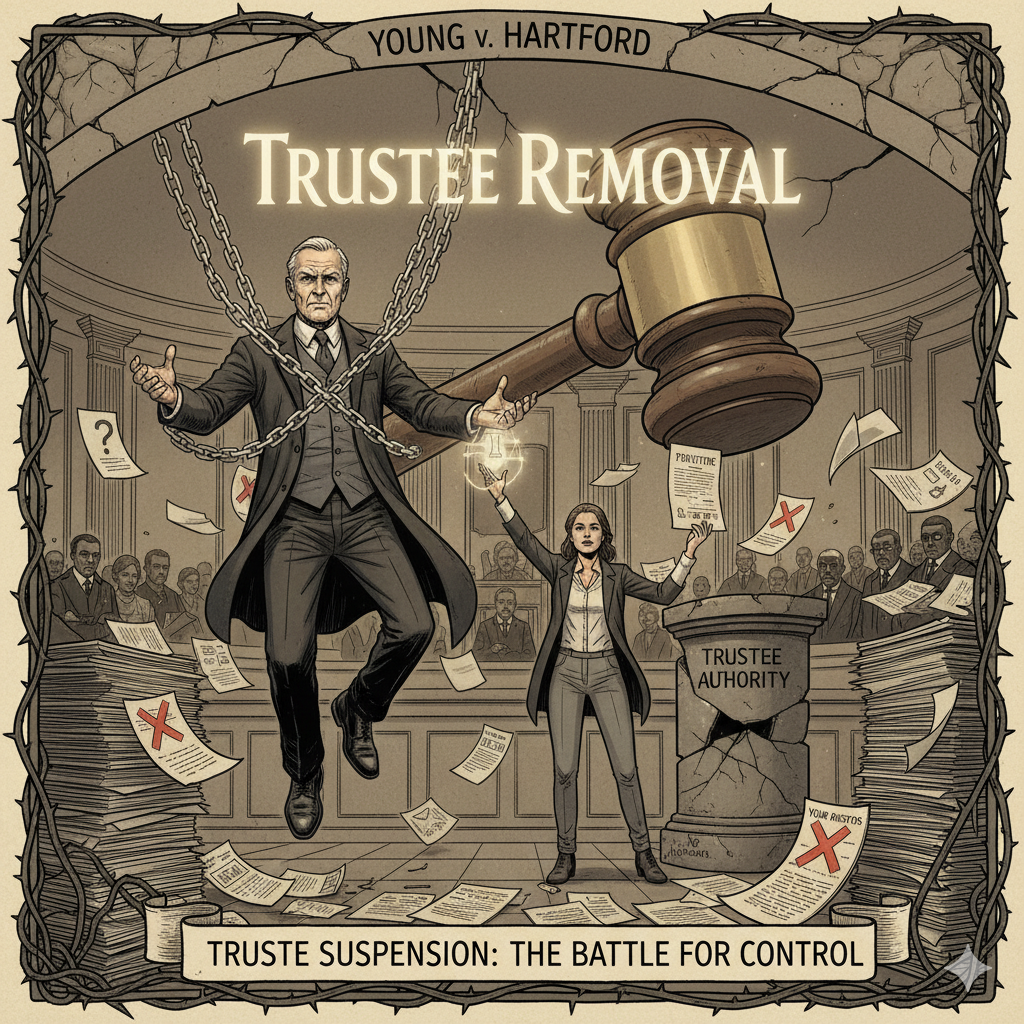
    Can a Trustee Be Removed? Understanding Young v. Hartford and Your Rights as an Executor

    If you’ve been named as an executor or personal representative in California, you’re likely facing complex legal responsibilities that can feel overwhelming. One question that frequently arises during trust administration is: “What happens if a trustee needs to be suspended?” The recent case Young v. Hartford provides critical guidance for executors, trustees, and beneficiaries navigating these challenging situations.

    What Executors and Personal Representatives Need to Know

    As an executor or personal representative, you’re tasked with:

    • Inventorying and managing estate assets
    • Paying outstanding debts and resolving creditor claims
    • Handling tax disputes and filing estate tax returns
    • Distributing assets to beneficiaries according to the will or trust
    • Avoiding personal liability for mistakes in administration

    When conflicts arise or a trustee’s actions come into question, understanding your legal options—and limitations—becomes essential to protecting yourself and the estate.

    The Young v. Hartford Decision: What It Means for You

    According to the California Lawyers Association, the court in Young v. Hartford established an important principle: an order suspending a trustee and appointing an interim trustee is not directly appealable.

    Why does this matter for executors and trustees?

    This ruling affects your ability to challenge certain court decisions during trust administration. Specifically:

    • Limited immediate appeal rights: If a court suspends a trustee and appoints an interim replacement, that decision cannot be immediately appealed as a standalone order
    • Timing considerations: The suspension order may only be appealable as part of a final judgment in the underlying case
    • Strategic implications: Executors and trustees must work with experienced legal counsel to determine the best course of action when facing suspension proceedings

    Real-World Scenarios: When Does Trustee Suspension Occur?

    Trustee suspension typically happens when:

    • There are allegations of breach of fiduciary duty
    • Beneficiaries raise concerns about mismanagement of trust assets
    • Conflicts of interest emerge between the trustee and beneficiaries
    • The trustee fails to provide required accountings or documentation
    • There’s evidence of self-dealing or improper distributions

    Understanding when suspension is possible—and what legal recourse you have—helps you navigate these situations while minimizing personal liability.

    How Can I Protect Myself as an Executor or Trustee?

    To avoid suspension and protect yourself from legal challenges:

    • Maintain detailed records: Document all transactions, decisions, and communications related to the estate or trust
    • Provide timely accountings: California law requires regular reporting to beneficiaries
    • Act in good faith: Always prioritize the beneficiaries’ interests over your own
    • Seek professional guidance: Work with qualified probate and trust administration attorneys who understand California estate law
    • Communicate transparently: Keep beneficiaries informed about estate administration progress and major decisions

    What Should I Do If I’m Facing a Trustee Suspension?

    If you’re an executor or trustee dealing with suspension proceedings or challenges to your administration:

    • Consult with an experienced probate attorney immediately
    • Gather all documentation related to your administration of the estate or trust
    • Understand that the Young v. Hartford decision may limit your immediate appeal options
    • Explore alternative dispute resolution methods before litigation escalates
    • Consider whether voluntary resignation with proper protections might be appropriate

    Get Expert Guidance from California Probate and Trust Attorneys

    Navigating trust administration, probate proceedings, and potential trustee disputes requires specialized legal knowledge. At California Probate and Trust, our experienced estate planning attorneys have helped thousands of clients throughout Sacramento, Fair Oaks, and San Francisco with:

    • Trust administration and probate guidance
    • Executor and trustee representation
    • Estate litigation prevention and resolution
    • Comprehensive estate planning to avoid future disputes

    Schedule your free consultation today to discuss your specific situation and learn how we can help you fulfill your duties while protecting yourself from personal liability. Our compassionate team understands the challenges executors face and provides clear, transparent guidance through every stage of the probate and trust administration process.

    Contact California Probate and Trust at (866) 674-1130 or visit cpt.law to schedule your no-obligation consultation.

    Source: California Lawyers Association – Young v. Hartford

    Categories
    Estate Planning California Probate Trusts

    Understanding Grossman v. Wakeman: What Executors and Personal Representatives Need to Know About Attorney Duties in Estate Planning

    Who This Article Is For:

    If you’ve been named as an executor or personal representative in California and are navigating the complex legal duties of administering an estate, understanding your rights—and the limits of others’ legal obligations to you—is critical. This case analysis helps executors, beneficiaries, and heirs understand when an estate planning attorney owes them a duty of care.

    The Key Takeaway from Grossman v. Wakeman

    In the landmark case Grossman v. Wakeman, California courts clarified an important limitation: an estate planning attorney does not automatically owe a duty of care to a client’s heirs or beneficiaries. According to the California Lawyers Association, the duty only exists when the client’s intent to benefit specific heirs in the estate plan is “clear, certain, and undisputed.”

    What Does This Mean for Executors and Personal Representatives?

    As someone administering an estate, you may wonder: “Can I hold the attorney accountable if mistakes were made in the estate plan?” The answer depends on whether the deceased client’s intentions were unambiguous.

    When an attorney may owe you a duty of care:

    • The deceased explicitly and clearly intended to benefit you as a named heir
    • The estate planning documents contain specific, undisputed language showing this intent
    • There’s documented evidence (letters, communications, trust language) that leaves no room for interpretation

    When an attorney likely does NOT owe you a duty of care:

    • The client’s intent regarding beneficiaries was unclear or contradictory
    • Multiple versions of estate documents exist with conflicting provisions
    • The deceased made verbal promises that weren’t clearly documented in legal instruments
    • Family disputes exist about what the deceased “really wanted”

    Real-World Implications: How This Affects Your Role as Executor

    Scenario 1: Disputing a Will or Trust

    You’re named as executor, but you believe the attorney made errors that reduced your inheritance. Under Grossman v. Wakeman, you cannot sue the attorney for malpractice unless the deceased’s intent to benefit you was crystal clear in the documents.

    Scenario 2: Protecting Yourself from Liability

    As an executor, you’re responsible for properly distributing assets according to the estate plan. If beneficiaries later claim the attorney made mistakes, this case limits their ability to pursue the attorney directly—which may redirect their claims toward you as the executor. This underscores the importance of having your own legal counsel review complex estate administrations.

    Scenario 3: Handling Family Disputes

    When siblings or other family members disagree about “what Dad really wanted,” this case demonstrates why clear documentation matters. Without unambiguous estate planning documents, challenges against the attorney’s work become nearly impossible.

    How Can Executors Protect Themselves?

    If you’re serving as an executor or personal representative and face questions about the validity of estate planning documents or potential attorney errors, consider these steps:

    • Review all estate planning documents thoroughly for clarity and consistency
    • Document all communications with beneficiaries regarding asset distribution
    • Seek independent legal counsel to review your fiduciary duties and potential liability
    • Request a professional audit of the estate plan if significant assets or disputes are involved
    • Maintain detailed records of every decision and distribution you make

    Why Clear Estate Planning Matters: Lessons from This Case

    The Grossman v. Wakeman decision reinforces a critical principle: ambiguous estate plans create legal vulnerabilities for everyone involved—beneficiaries, executors, and attorneys alike. Clear, professionally drafted estate planning documents that leave no room for interpretation are essential.

    Questions to ask your estate planning attorney:

    • “Are my intentions regarding each beneficiary clearly documented?”
    • “What happens if my circumstances change—how do I update my plan?”
    • “Will my executor face liability if disputes arise after my death?”
    • “How can I minimize the risk of family litigation over my estate?”

    Protect Your Estate and Your Beneficiaries with Professional Guidance

    Whether you’re serving as an executor dealing with a complex estate administration or planning your own estate to protect your loved ones, the experienced attorneys at California Probate and Trust can help. With offices serving Sacramento, Fair Oaks, and San Francisco, our team has guided thousands of clients through probate administration and estate planning challenges.

    Our probate and trust administration services include:

    • Comprehensive estate plan review and clarification
    • Executor guidance and liability protection
    • Trust administration support
    • Probate representation
    • Estate litigation prevention and resolution

    Schedule your free consultation today to discuss your specific situation. Our compassionate team will help you navigate the complexities of California probate law and ensure your interests—or those of the estate you’re administering—are fully protected.

    Source: California Lawyers Association – Grossman v. Wakeman

    Contact California Probate and Trust:

    📞 (866) 674-1130

    🌐 Schedule Your Free Consultation

    Categories
    Estate Planning California Probate Trusts

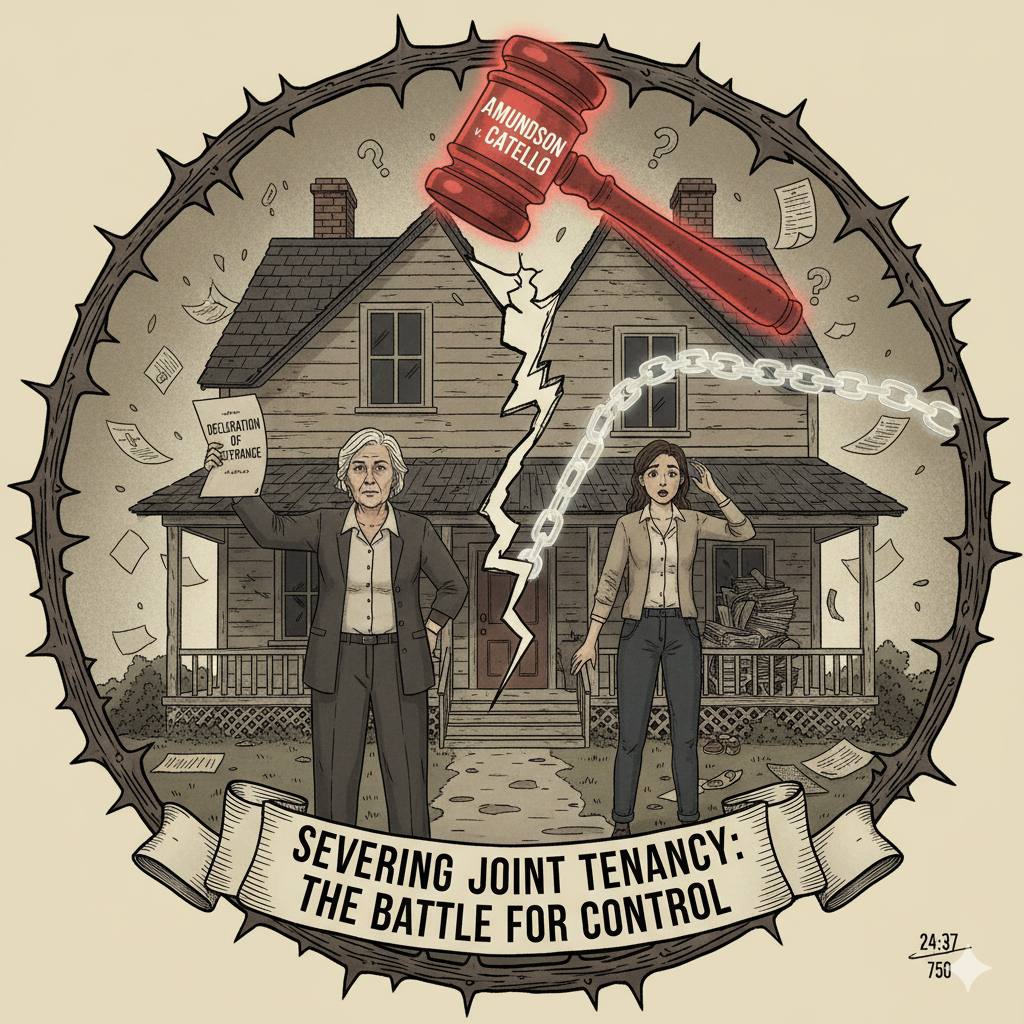
    Amundson v. Catello: What California Property Owners Need to Know About Severing Joint Tenancy

    If you co-own California real estate with someone as joint tenants with rights of survivorship, understanding how—and when—that arrangement can change is critical to protecting your family’s inheritance. A recent case highlights how a simple quitclaim deed can dramatically alter property ownership and survivor rights.

    What Happened in Amundson v. Catello?

    Leslie Knoles and Ruth Catello originally co-owned real property as joint tenants with rights of survivorship. This arrangement typically means that when one owner dies, the surviving owner automatically inherits the deceased owner’s share—without going through probate.

    However, just a few weeks before her death, Leslie Knoles recorded a quitclaim deed that she had granted to herself. If this deed is valid, it severed the joint tenancy and converted the ownership structure to a tenancy in common—eliminating the right of survivorship entirely.

    Why Does This Matter for California Property Owners?

    This case answers a question many California residents face: Can one co-owner unilaterally change joint tenancy ownership without the other owner’s consent?

    The answer is yes—through a properly executed and recorded quitclaim deed. This legal mechanism allows a co-owner to:

    • Sever joint tenancy and create a tenancy in common
    • Eliminate automatic survivorship rights
    • Ensure their share of the property passes according to their estate plan rather than automatically to the co-owner

    Real-World Implications: When Joint Tenancy Becomes a Problem

    Joint tenancy with rights of survivorship is often established with good intentions—usually between spouses, parents and children, or siblings. But family dynamics change. Here are common scenarios where severing joint tenancy becomes necessary:

    • Blended families: You remarry and want to ensure your children from a previous marriage inherit your property share
    • Strained relationships: Your relationship with the co-owner deteriorates, and you no longer want them to automatically inherit your portion
    • Estate planning goals: You want your property share to pass through your trust or will rather than bypassing your estate plan entirely
    • Tax and creditor protection: You need to restructure ownership for asset protection or tax planning purposes

    How Can You Protect Your Property Rights in California?

    If you’re a California resident concerned about how your real property is titled or how it will pass to your heirs, consider these steps:

    1. Review your current property deeds. Determine whether you hold property as joint tenants, tenants in common, or through another ownership structure.
    2. Understand your estate planning goals. Does your current ownership arrangement align with how you want your assets distributed?
    3. Consider recording a quitclaim deed. If you want to sever joint tenancy, work with an experienced California estate planning attorney to ensure the deed is properly prepared, executed, and recorded.
    4. Update your estate plan. Once ownership is converted to tenancy in common, make sure your will or trust clearly addresses how your property share should be distributed.

    What Makes a Quitclaim Deed Valid in California?

    For a quitclaim deed to effectively sever joint tenancy in California, it must be:

    • Properly executed according to California law
    • Recorded with the county recorder’s office where the property is located
    • Done during the grantor’s lifetime (deeds executed shortly before death, as in this case, may face additional scrutiny)

    Why Timing Matters: The Amundsen v. Catello Lesson

    The fact that Leslie Knoles recorded her quitclaim deed just weeks before her deathraises important questions about capacity, intent, and undue influence—issues that frequently arise in California probate litigation. If you’re considering severing joint tenancy, acting sooner rather than later can help avoid:

    • Challenges based on mental capacity
    • Claims of undue influence or fraud
    • Family disputes and costly probate litigation

    Get Expert Guidance on California Property Ownership and Estate Planning

    At California Probate and Trust, PC, we help California residents navigate complex property ownership issues and create comprehensive estate plans that protect their families. Whether you’re worried about how your real estate will pass to your heirs, need to restructure property ownership, or want to ensure your estate plan reflects your current wishes, our experienced attorneys provide transparent guidance tailored to your unique situation.

    Schedule your free consultation today and gain confidence that your property and legacy are protected according to your wishes—not left to outdated ownership structures or automatic legal rules.

    Source: California Lawyers Association – Amundson v. Catello

    Categories
    Estate Planning California Probate Trusts

    Can a Trustee of a Testamentary Trust File a Petition in an Estate Proceeding? Understanding Estate of Tarlow

    If you’re a California resident managing a testamentary trust and wondering whether you have the legal authority to participate in estate proceedings, the answer is clear: yes, you do. The California case Estate of Tarlow establishes that a trustee of a testamentary trust has standing to file a petition in an estate proceeding because the trustee is considered a devisee under the will.

    Who This Article Is For

    This guidance is essential for:

    • Trustees of testamentary trusts who need to protect trust assets during estate administration
    • California residents serving as executors or administrators who need to understand who can participate in probate proceedings
    • Family members managing California-based assets who are concerned about their legal rights in estate matters
    • Anyone navigating the complexity of California probate law and seeking clarity on trustee authority

    What Problem Does This Solve?

    Many trustees face uncertainty about their legal standing in estate proceedings. Can you challenge an executor’s actions? Can you petition the court for clarification on will provisions? Can you protect trust assets that depend on proper estate administration? Estate of Tarlow answers these questions by confirming that trustees have the same standing as other beneficiaries named in the will.

    Key Takeaway: Trustees Are Devisees

    The principle is straightforward: a trustee of a testamentary trust is a devisee under the will.This means:

    • You have legal standing to file petitions in the estate proceeding
    • You can participate in hearings and challenge estate administration decisions
    • You can protect the interests of the trust and its beneficiaries
    • Your authority comes directly from your designation in the will

    Real-World Application: When Trustees Need Standing

    Consider these common scenarios where trustee standing matters:

    Scenario 1: Protecting Trust Funding

    An executor delays transferring assets to your testamentary trust. As trustee, you can file a petition to compel the transfer because you have standing as a devisee.

    Scenario 2: Challenging Estate Administration

    You believe the executor is mismanaging estate assets that should fund your trust. Your standing allows you to petition for an accounting or removal of the executor.

    Scenario 3: Clarifying Will Provisions

    The will contains ambiguous language affecting your trust. You can petition the court for interpretation without needing to rely on other beneficiaries.

    Why California Residents Need to Understand This Rule

    California’s probate system is complex, and understanding your rights as a trustee protects both you and the beneficiaries you serve. This ruling ensures that:

    • Trust assets are properly protected during estate administration
    • Trustees can act independently to fulfill their fiduciary duties
    • Estate proceedings remain transparent and accountable
    • Family wealth is preserved according to the decedent’s wishes

    How California Probate and Trust Can Help

    If you’re serving as a trustee of a testamentary trust in California and facing questions about your legal authority or responsibilities, California Probate and Trust, PC provides the clarity and representation you need. Our experienced estate attorneys understand both trust administration and probate proceedings, offering a comprehensive approach to protecting your interests.

    We help trustees:

    • Understand their legal standing and rights in estate proceedings
    • File petitions and navigate court procedures
    • Protect trust assets during estate administration
    • Fulfill fiduciary duties while avoiding personal liability
    • Resolve disputes between estates and trusts

    Take Control of Your Trustee Responsibilities

    Don’t let uncertainty about your legal authority prevent you from protecting the trust you’ve been appointed to manage. Schedule a free consultation with California Probate and Trust, PC to discuss your specific situation and learn how we can help you navigate California estate proceedings with confidence.

    Schedule Your Free Consultation Today

    Source: California Lawyers Association – Estate of Tarlow

    Categories
    Estate Planning California Probate Trusts

    Understanding Godoy v. Linzner: What California Families Need to Know About Property Transfer Restrictions in Trust

    If you’re a California resident creating or managing a trust that includes real estate—especially a family home—you need to understand how state law protects your heirs’ property rights. A recent California case, Godoy v. Linzner, clarifies an important rule: you cannot place unreasonable restrictions on your beneficiaries’ ability to sell or transfer inherited property.

    Who This Affects

    This ruling matters if you are:

  • Creating a trust that includes California real estate
  • Inheriting property through a trust and facing restrictions on selling your share
  • Managing family property where multiple siblings or heirs have ownership interests
  • Concerned about protecting your heirs’ flexibility while still preserving family assets
  • What the Court Decided

    The California court applied Civil Code section 711, which prohibits unreasonable restraints on alienation, to property transferred through trusts and wills. In simpler terms: California law protects your right to sell or transfer property you inherit, even if the person who created the trust tried to limit that right.

    In this case, three children each inherited a one-third ownership interest in their family home after their parent died. The trust attempted to restrict what the children could do with their shares, but the court found these restrictions violated California law.

    What Does “Unreasonable Restraint on Alienation” Mean?

    Alienation simply means transferring or selling property. An unreasonable restraint is any rule that makes it too difficult for an owner to sell, gift, or otherwise transfer their property interest. While some temporary or limited restrictions may be acceptable, California strongly favors property owners’ freedom to control their own assets.

    Real-World Implications for Your Estate Plan

    If you’re creating a trust:

  • You cannot indefinitely prevent your beneficiaries from selling inherited real estate
  • Restrictions that seem protective may actually be unenforceable and create family conflict
  • Work with an experienced California estate planning attorney to structure provisions that balance your goals with legal requirements
  • If you’ve inherited property with restrictions:

  • You may have more rights than you realize to sell or transfer your share
  • Unreasonable restrictions in the trust document may not be legally binding
  • Consult with a probate attorney who understands California property law before accepting limitations on your ownership rights
  • How to Protect Family Property Without Violating California Law

    Many families want to keep a cherished home in the family for generations. Rather than imposing rigid restrictions that courts may strike down, consider these alternatives:

  • Right of first refusal: Give other family members the opportunity to purchase a share before it’s sold to outsiders
  • Limited liability companies (LLCs): Transfer property into an LLC with operating agreements that provide structure while respecting ownership rights
  • Life estate arrangements: Allow one person to live in the property during their lifetime while others hold future interests
  • Clear communication: Discuss your intentions with heirs so they understand your values without legal compulsion
  • Why California Residents Need Specialized Estate Planning Guidance

    California has specific laws governing trusts, probate, and property transfers that differ from other states. What works in another jurisdiction may create legal problems here. The Godoy v. Linzner case demonstrates why generic estate planning documents or online templates may not adequately protect your family’s interests.

    At California Probate and Trust, PC, we help California families navigate complex property and trust issues. Our experienced estate planning attorneys understand how to structure trusts that honor your wishes while complying with California law. We’ve assisted thousands of clients in Sacramento, Fair Oaks, and San Francisco with creating comprehensive estate plans that protect both current and future generations.

    Take Action to Protect Your Family’s Property Rights

    Whether you’re creating an estate plan or dealing with property you’ve inherited, professional guidance ensures your rights are protected and your intentions are legally sound.

    Schedule a free consultation with California Probate and Trust, PC today. Our compassionate attorneys will review your situation, explain your options in plain language, and develop a strategy tailored to your family’s needs. We offer transparent pricing and prioritize building lasting relationships with California residents who value clarity and family protection.

    Contact us now to discuss your estate planning or property inheritance questions.

    Source: California Lawyers Association – Godoy v. Linzner

    Categories
    Estate Planning California Probate Trusts

    Who Has Legal Standing to File a Conservatorship in California? Understanding the Conservatorship of Anne S. Ruling

    If you’re a California resident concerned about protecting a vulnerable loved one—or worried about who might have the authority to intervene in your own affairs—understanding who can legally file for conservatorship is critical. A recent California appellate court decision clarifies an important limitation: simply being someone’s neighbor does not give you the legal right to petition for conservatorship.

    What This Case Means for California Families

    In Conservatorship of Anne S., the court ruled that merely being a proposed conservatee’s neighbor is insufficient to qualify as an “interested person” or friend with standing to file a petition for conservatorship.

    This ruling matters because it protects California residents from unwarranted legal interventions while still allowing genuine family members, healthcare providers, and other qualified individuals to seek conservatorship when truly necessary.

    Who Can File for Conservatorship in California?

    California law limits who may petition for conservatorship to protect the rights and dignity of proposed conservatees. Generally, the following individuals have legal standing:

    • The proposed conservatee themselves
    • Spouse or domestic partner
    • Relatives (parents, siblings, children, and other family members)
    • Friends who have a meaningful, established relationship with the proposed conservatee
    • Creditors in specific circumstances
    • Any person or entity otherwise interested in the proposed conservatee’s welfare—but this requires demonstrating a genuine connection beyond mere proximity

    The Anne S. case reinforces that physical proximity alone—such as living next door—does not establish the kind of meaningful relationship required to be considered an “interested person” under California Probate Code.

    Real-World Implications: When Should You Be Concerned?

    This ruling is particularly relevant if:

    • You’re caring for an aging parent and want to understand who might legally challenge your authority or seek conservatorship
    • You’re concerned about a vulnerable family member and need to know whether you have standing to petition for protection
    • You want to establish clear legal protections now to prevent unwanted interventions later
    • You’re involved in estate planning and want to ensure the right people have authority to make decisions on your behalf if needed

    How to Protect Your Family’s Legal Rights

    The best way to avoid conservatorship disputes is proactive estate planning. California residents can:

    • Establish a durable power of attorney to designate who can make financial decisions if you become incapacitated
    • Create an advance healthcare directive to name trusted individuals for medical decisions
    • Set up a revocable living trust to manage assets and avoid probate while maintaining control during your lifetime
    • Document your wishes clearly to minimize family conflicts and legal challenges

    These tools give you control over who has authority in your life, rather than leaving those decisions to the courts.

    Why This Matters for California Estate Planning

    Cases like Conservatorship of Anne S. highlight the complexity of California conservatorship law and the importance of having experienced legal guidance. Understanding who has standing to petition for conservatorship—and who doesn’t—helps families make informed decisions about protecting their loved ones while respecting individual autonomy.

    Need Help with Conservatorship or Estate Planning in California?

    If you’re facing conservatorship questions or want to establish legal protections for yourself or your family, California Probate and Trust, PC provides compassionate, transparent guidance tailored to California residents managing complex family dynamics and estate planning needs.

    Our experienced team helps families navigate conservatorship proceedings, create comprehensive estate plans, and establish the legal safeguards needed to protect what matters most—your family and your legacy.

    Schedule your free consultation today to discuss your specific situation and learn how we can help you gain confidence and control over your future.

    Source: California Lawyers Association – Conservatorship of Anne S.

    Categories
    Estate Planning California Probate Trusts

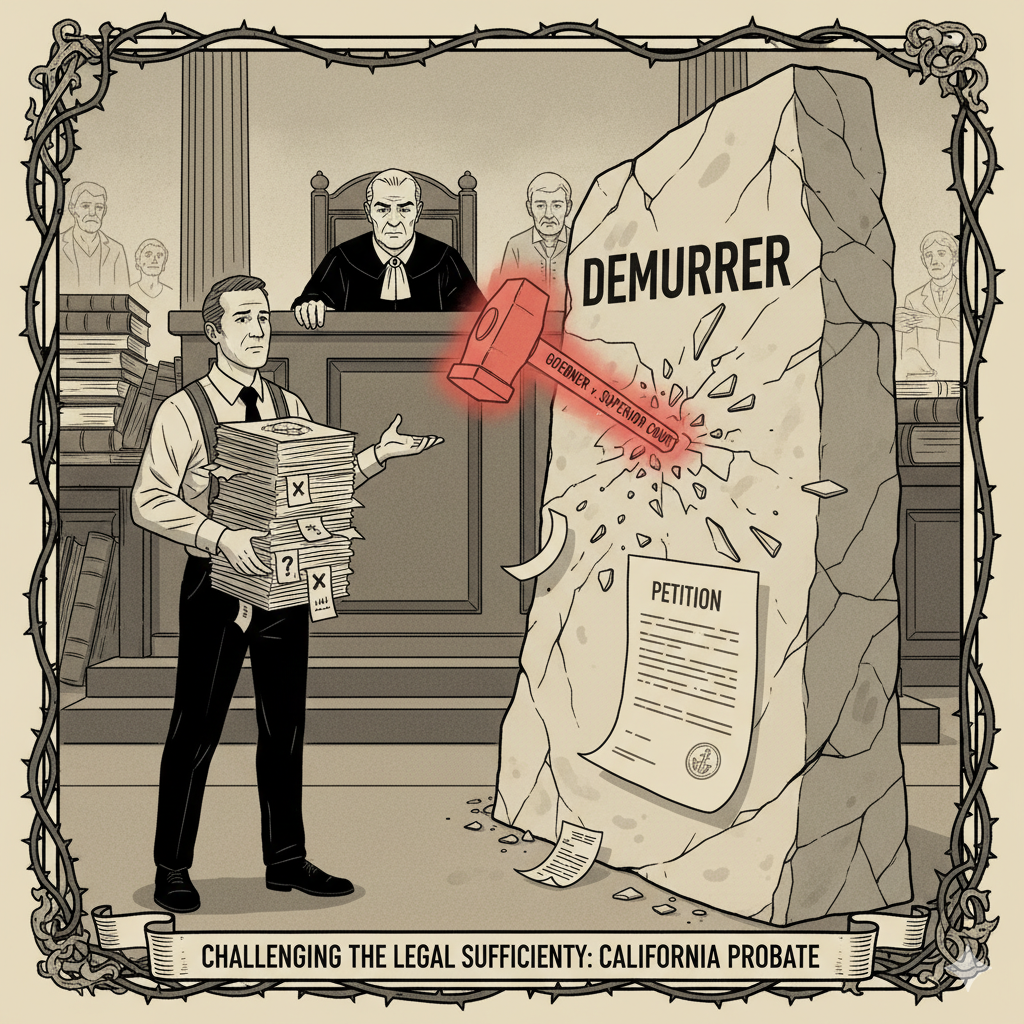
    When Can You File a Demurrer in a California Probate Case? Understanding Goebner v. Superior Court

    f you’re navigating probate litigation in California or managing a contested estate, understanding procedural timelines can protect your rights and prevent costly mistakes. A recent California case, Goebner v. Superior Court, clarifies an important rule: a demurrer may be filed at any time at or before the initial hearing in a probate case.

    This ruling matters for California residents dealing with probate disputes, estate challenges, or trust litigation—situations where timing and legal precision are everything.

    What Is a Demurrer in Probate?

    A demurrer is a legal tool used to challenge the sufficiency of a petition or complaint. In probate cases, this means you can object to a petition on the grounds that it fails to state a valid legal claim—even if all the facts alleged are true.

    Common scenarios where a demurrer might be filed include:

    • Challenging the validity of a will or trust
    • Contesting the appointment of a personal representative or trustee
    • Disputing claims against an estate
    • Objecting to petitions for distribution of assets

    Why the Goebner Ruling Matters for California Residents

    The decision in Goebner v. Superior Court provides clarity on procedural flexibility. Unlike some civil litigation deadlines that are strict and unforgiving, probate law allows parties to raise fundamental legal objections up until the initial hearing. This gives families and beneficiaries more breathing room to consult with legal counsel and assess their options.

    For those managing California-based estates or trusts, this means:

    • You have time to review probate petitions carefully before the first court appearance
    • You can raise substantive legal challenges without missing narrow filing windows
    • You’re protected from procedural pitfalls if you act before the initial hearing

    Real-World Application: Protecting Your Family’s Interests

    Imagine you’re a beneficiary who receives notice of a probate petition that appears legally deficient—perhaps it omits required allegations or violates probate code provisions. Under Goebner, you can file a demurrer at or before the initial hearing to challenge the petition’s legal sufficiency.

    This flexibility is especially valuable for families dealing with:

    • Complex estate disputes involving multiple heirs
    • Challenges to the validity of estate planning documents
    • Contested guardianship or conservatorship matters
    • Trust administration conflicts

    How California Probate and Trust, PC Can Help

    Navigating probate litigation requires both technical knowledge of California probate law and strategic timing. Whether you’re facing a contested probate matter now or want to create an estate plan that minimizes future disputes, working with experienced legal counsel makes all the difference.

    At California Probate and Trust, PC, we provide comprehensive guidance for California residents managing probate cases, estate planning, and trust administration. Our approach combines legal expertise with transparent communication—so you understand your options and feel confident in every decision.

    If you’re dealing with a probate challenge or need guidance on demurrers and court procedures, contact us today for a consultation. Protect your family’s interests with knowledgeable, responsive legal support.

    Source: California Lawyers Association – Goebner v. Superior Court