Categories
Estate Planning California Probate Trusts

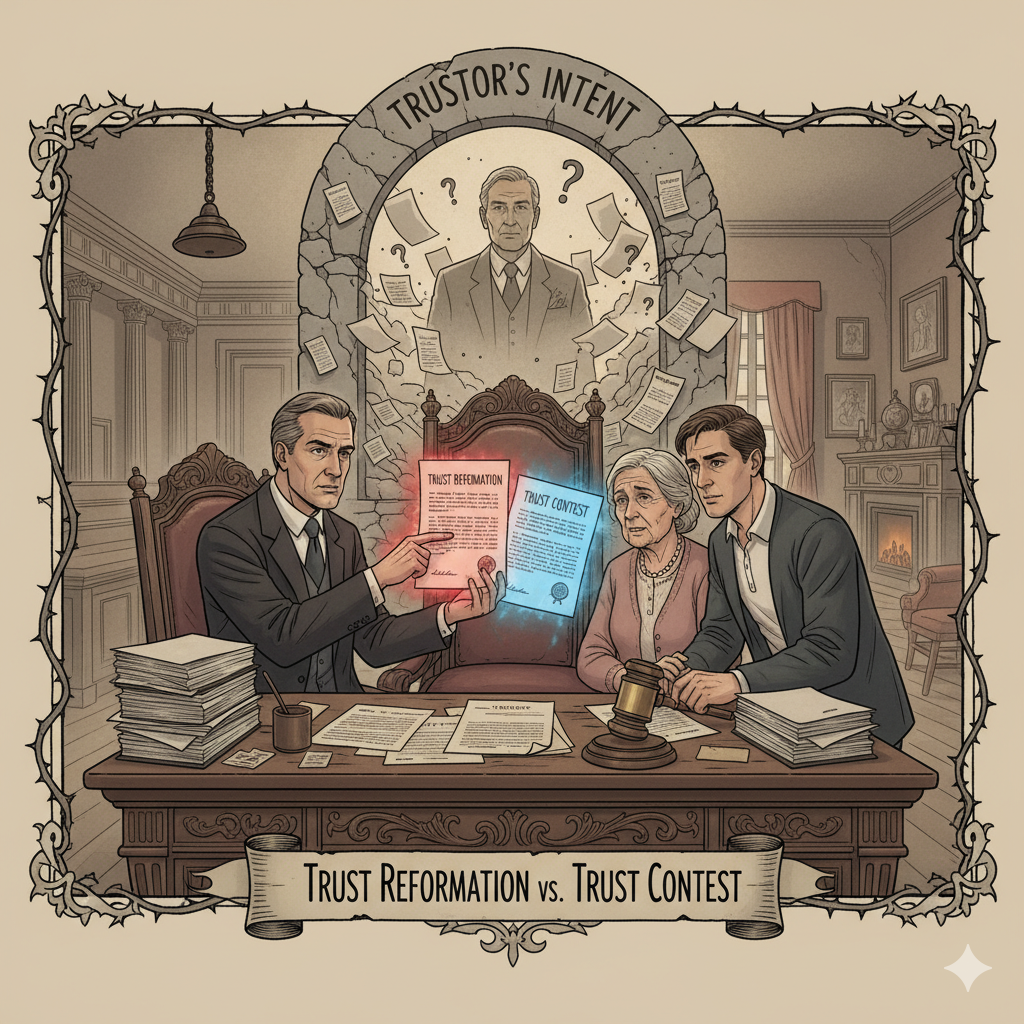
Packard v. Packard: What California Families Need to Know About Trust Reformation vs. Trust Contests

If you’re managing a California trust and discover what appears to be a drafting error or misunderstanding of the trustor’s true intentions, you may be wondering: “Can I fix this mistake without triggering a costly trust contest?” The recent Packard v. Packard case provides critical clarity for California residents navigating trust administration and reformation.

What Happened in Packard v. Packard?

In this case, beneficiaries filed a petition seeking construction and reformation of a trust amendment. They believed the trust document contained a mistake that didn’t accurately reflect what the trustor actually intended. The central legal question was whether this type of petition constituted a “trust contest”—a distinction that carries significant procedural and financial implications.

The court ruled that a petition for construction and reformation of a trust amendment is not a contest when it seeks to correct an alleged mistake regarding the trustor’s intent.

Why This Matters for Your California Trust

This ruling is important for California families because:

  • Trust contests trigger different rules: Contest proceedings come with specific statutory requirements, shortened timelines, and potentially higher litigation costs
  • Reformation protects family harmony: When you can seek reformation instead of filing a contest, you may be able to resolve disputes more collaboratively and cost-effectively
  • Trustor intent is paramount: California courts prioritize what the trustor actually wanted over technical drafting errors

Real-World Application: When You Might Need Trust Reformation

Consider these common scenarios where Packard v. Packard could apply to your situation:

  • Your parent’s trust amendment appears to contradict their clearly stated wishes expressed to family members
  • A scrivener’s error in the trust document resulted in unintended beneficiary designations
  • Tax planning language in the trust doesn’t align with the professional advice your trustor received
  • Asset distribution percentages don’t match the trustor’s documented intentions in correspondence or other estate planning documents

In these situations, you may be able to petition for reformation without the procedural burdens of a formal trust contest.

How California Probate and Trust Can Help

At California Probate and Trust, PC, we understand that discovering potential errors in a trust document creates anxiety and uncertainty. Our Sacramento-based team has represented thousands of California families through complex trust administration and reformation matters.

We offer a free one-hour consultation where we’ll:

  • Review your trust documents and the specific issue you’ve identified
  • Explain whether reformation or another legal remedy is appropriate for your situation
  • Outline the procedural steps and realistic timeline
  • Provide transparent pricing so you can make informed decisions

Our approach prioritizes family protection and clarity throughout the legal process. We know that trust disputes often arise during already difficult times, and we’re committed to resolving issues efficiently while honoring your loved one’s true intentions.

Take Action Today

If you’re dealing with a trust that may not reflect the trustor’s actual intent, don’t wait. Early legal guidance can prevent costly litigation and protect family relationships.

Schedule your free consultation with our experienced Sacramento trust attorneys today, or call us at (866) 674-1130.

Source: California Lawyers Association – Packard v. Packard

Categories
Estate Planning California Probate Trusts

Can a Child Inherit From a Parent’s Estate If They Were Unintentionally Omitted From the Will?

To inherit a share of a parent’s estate as an omitted child, the child must show that the sole reason for omission was that the testator was unaware of the child’s birth.

Source: California Lawyers Association – Estate of Williams

Can a Child Inherit From a Parent’s Estate If They Were Unintentionally Omitted From the Will?

If you’re managing a California estate or worried that a child may have been left out of a will unintentionally, understanding the legal rights of omitted children is critical. Under California probate law, a child who can prove they were excluded solely because the parent (testator) did not know about their birth may be entitled to inherit a share of the estate.

This article explains what the Estate of Williams case means for California families, how omitted child claims work, and what steps you should take to protect your loved ones.

Who Is This Article For?

This guide is for:

  • Adult children who believe they were unintentionally left out of a parent’s estate plan
  • Parents and blended families concerned about ensuring all children are accounted for in estate documents
  • Executors and trustees navigating probate when questions arise about omitted heirs
  • California residents seeking clarity on probate rights and estate planning protections

What Does “Omitted Child” Mean in California Probate Law?

An omitted child is a child who was not included in a parent’s will or trust, either intentionally or unintentionally. California Probate Code sections provide legal protections for children who were left out due to oversight—especially when the parent was unaware of the child’s existence at the time the estate plan was created.

According to the ruling in Estate of Williams, to successfully claim a share of the estate, the omitted child must demonstrate that the sole reason for their exclusion was that the testator did not know about their birth.

How Can an Omitted Child Prove Their Case?

To inherit under California law as an omitted child, you must show:

  • The testator (parent) created a will or trust
  • You were born before or after the will was executed
  • You were not mentioned or provided for in the will
  • The reason you were omitted was solely because the testator was unaware of your birth

This is a fact-intensive determination. Courts will review:

  • Timing of the will’s creation and the child’s birth
  • Communication records or acknowledgment of paternity/maternity
  • Whether the testator later learned of the child and chose not to update the estate plan

Real-World Example: When Does This Apply?

Imagine a father creates a will in 2010, naming his two known children as beneficiaries. In 2015, he learns he has a third child from a previous relationship but passes away in 2018 without updating his will. The third child may have a claim—but only if they can prove the father had no knowledge of their existence when the will was originally drafted in 2010.

If the father knew about the child in 2015 and still chose not to update his will, the child may not qualify as “omitted” under the statute.

What Happens If You Qualify as an Omitted Child?

If the court finds in favor of the omitted child, they will typically receive:

  • A share of the estate equivalent to what they would have inherited under California’s intestacy laws (if the parent had died without a will)
  • This share comes from the estate’s residual assets and may reduce distributions to other named beneficiaries

How to Prevent Omitted Child Issues in Your Estate Plan

If you’re creating or updating your estate plan in California, here’s how to avoid unintentional omissions:

  • Name all your children explicitly in your will or trust, even if you choose to leave them unequal shares or disinherit them intentionally (with clear language)
  • Include an “all-children” clause that accounts for any children born or adopted after the document is signed
  • Update your plan after major life events such as marriage, divorce, remarriage, or the birth of a child
  • Work with an experienced California estate planning attorney who understands omitted heir statutes and can help you draft language that protects your intentions

Why Work With California Probate and Trust, PC?

At California Probate and Trust, PC, we help California families navigate the complexities of estate planning and probate with transparency and care. Whether you’re concerned about protecting all your heirs or you’re facing a probate dispute as an omitted child, our experienced attorneys provide:

  • Free consultations to assess your situation and goals
  • Clear, compassionate guidance through probate and trust administration
  • Customized estate plans that prevent future family conflict
  • Representation in probate litigation when disputes arise

We’ve helped thousands of clients across Sacramento, Fair Oaks, and San Francisco protect their families and legacies. Our mission is to give you confidence and control over your future.

Take Action Today

If you’re dealing with an omitted child situation—either as a parent planning your estate or as a child seeking your rightful inheritance—don’t wait. California probate law has strict deadlines, and early action can make all the difference.

Schedule your free consultation with California Probate and Trust, PC today. Call (866) 674-1130 or visit cpt.law to get started.

Source: California Lawyers Association – Estate of Williams

Categories
Estate Planning California Probate Trusts

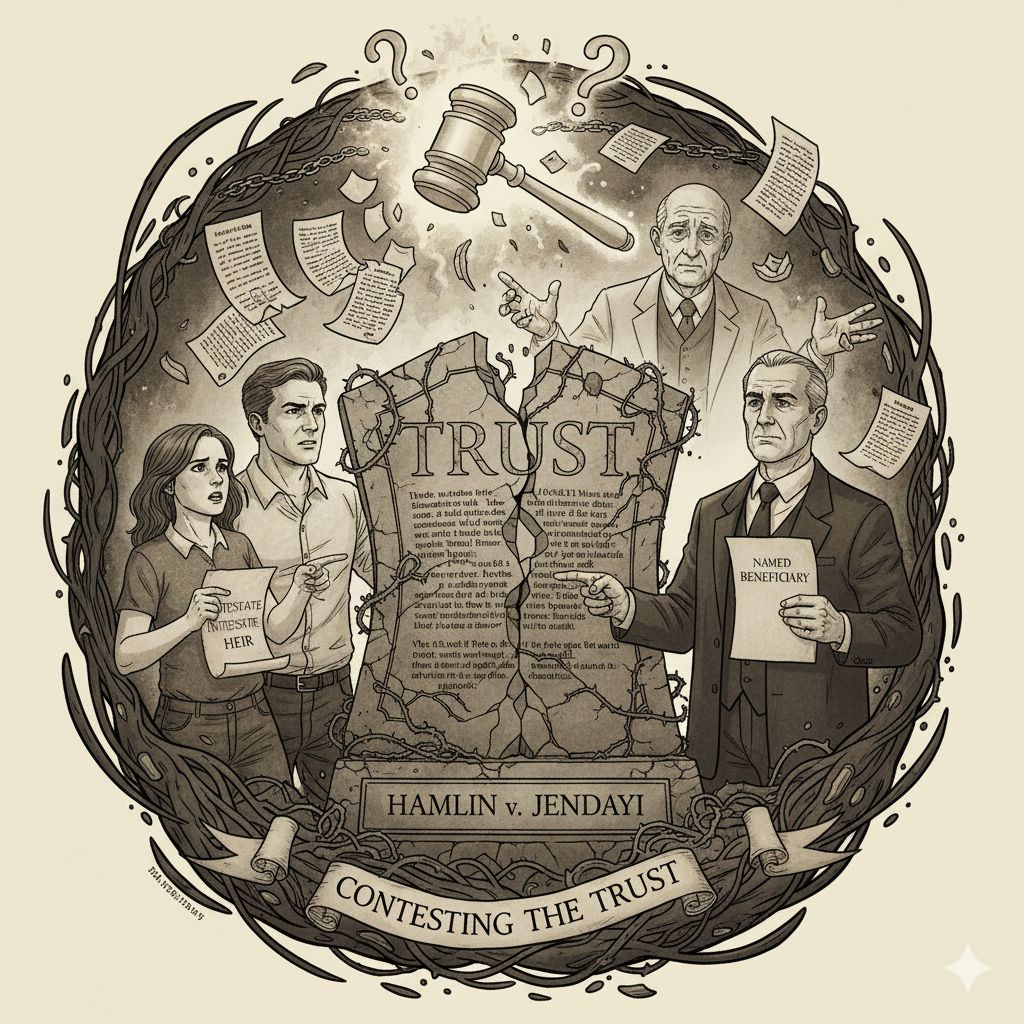
Can Heirs Who Aren’t Named in a Trust Still Challenge It? What California Families Need to Know About Hamlin v. Jendayi

If you’re a California resident managing an estate or worried about protecting your family’s inheritance rights, a recent legal development could significantly impact your ability to contest a trust—even if you were never named as a beneficiary.

The Legal Question: Who Has Standing to Contest a Trust in California?

In Hamlin v. Jendayi, California courts clarified an important principle: intestate heirs have standing to contest a trust even if they were never named as trust beneficiaries.

What does this mean for you?

  • Intestate heirs are individuals who would inherit from someone who died without a will under California’s intestate succession laws—typically children, spouses, parents, or siblings.
  • Standing means you have the legal right to bring a lawsuit or challenge the validity of a trust in court.
  • Even if a trust document doesn’t name you as a beneficiary, you may still have the right to contest it if you would have inherited assets had the trust not existed.

Why This Matters for California Families

This ruling protects family members who may have been excluded from a trust due to:

  • Undue influence or coercion by another party
  • Lack of mental capacity when the trust was created
  • Fraud or forgery
  • Failure to follow proper legal procedures

Without this legal standing, rightful heirs could be shut out of challenging suspicious or invalid trusts, leaving them with no recourse even when something appears wrong.

Real-World Scenario: When You Might Need to Contest a Trust

Imagine this situation: Your aging parent created a trust years ago naming you and your siblings as beneficiaries. Later, a new caregiver enters the picture, and suddenly a new trust is drafted that removes all family members and names only the caregiver. Under Hamlin v. Jendayi, you have standing to challenge that trust—even though you’re not named in the new version—because you’re an intestate heir who would inherit if the trust were invalid.

How California Probate and Trust, PC Can Help

Navigating trust contests and probate disputes requires deep knowledge of California estate law and a compassionate approach to family dynamics. At California Probate and Trust, PC, our certified estate planning specialists help California residents:

  • Understand their legal rights as heirs and beneficiaries
  • Evaluate whether grounds exist to challenge a trust
  • Navigate complex probate and trust litigation
  • Protect family legacies with transparent, comprehensive estate plans

We’ve represented thousands of clients across Sacramento, Fair Oaks, and San Francisco, providing the one-stop-shop legal and financial guidance that families need during uncertain times.

Take Action: Protect Your Inheritance Rights

If you’re concerned about your rights as an heir or need to contest a trust in California, don’t wait. The attorneys at California Probate and Trust, PC offer free consultations to assess your situation and outline your options.

Schedule your free consultation today: Call (866) 674-1130 or visit cpt.law to protect what matters most—your family and your legacy.

Source: California Lawyers Association – Hamlin v. Jendayi

Categories
Estate Planning California Probate Trusts

Connelly v. United States: What California Business Owners Need to Know About Share Redemption Agreements and Estate Tax Valuation

If you’re a California business owner with a buy-sell agreement in place, or if you’re managing the estate of someone who owned shares in a closely held corporation, a recent Supreme Court decision could significantly impact how the IRS values those shares for federal estate tax purposes.

What Is Connelly v. United States?

In Connelly v. United States, the Supreme Court clarified a critical issue: A corporation’s contractual obligation to redeem shares does not automatically reduce the corporation’s value for federal estate tax purposes.

This ruling is particularly important for families and business owners in California who use life insurance-funded buy-sell agreements to ensure smooth ownership transitions when a shareholder passes away.

Who Does This Affect?

This decision is relevant if you:

  • Own shares in a closely held or family-owned business
  • Have a buy-sell agreement that requires the corporation to purchase a deceased owner’s shares
  • Are an executor or trustee handling an estate that includes business ownership interests
  • Are planning your estate and want to minimize tax exposure for your heirs

Why Does This Matter for Estate Planning?

Many business owners assume that because the company is obligated to buy back shares upon an owner’s death, that obligation reduces the company’s net value—and therefore reduces the taxable estate. Connelly says otherwise.

The Court held that the redemption obligation is not treated as a liability that offsets the value of the corporation. As a result, the IRS may value the decedent’s shares higher than expected, leading to a larger estate tax bill.

Real-World Example

Imagine two siblings co-own a California-based manufacturing business. They have a buy-sell agreement funded by life insurance. When one sibling dies, the corporation uses the insurance proceeds to buy out the deceased sibling’s shares.

Before Connelly, some estate planners argued the buyout obligation reduced the company’s value. Now, the IRS can argue the full value of the shares—plus the insurance proceeds—should be included in the estate, potentially triggering unexpected estate taxes.

How Can You Protect Your Family and Your Business?

If you’re a California resident with business interests, here’s what you should consider:

  • Review your buy-sell agreements. Work with an experienced estate planning attorney to assess whether your current agreement exposes your estate to higher taxes.
  • Explore alternative structures. Cross-purchase agreements (where individual owners buy each other’s shares) may provide different tax outcomes than entity-redemption agreements.
  • Update your estate plan. Make sure your will, trust, and financial plans account for the true tax impact of your business ownership.
  • Consult with professionals who understand California law. Estate and business succession planning requires coordination between legal, tax, and financial advisors.

How California Probate and Trust, PC Can Help

At California Probate and Trust, PC, we specialize in helping California families navigate complex estate planning challenges—including business succession, trust administration, and probate. We understand that planning for the future of your business isn’t just about taxes; it’s about protecting the people and legacy you care about most.

Whether you’re a business owner concerned about estate taxes, an executor managing a complex estate, or a family member trying to understand your options, we offer transparent guidance tailored to your situation.

Take the Next Step

Don’t let a Supreme Court ruling catch you or your family off guard. Schedule a free consultation with our experienced estate planning attorneys to review your buy-sell agreements, update your estate plan, and ensure your business and family are protected.

📞 Call us today at (866) 674-1130 or schedule your free consultation online.

Source: California Lawyers Association – Connelly v. United States

Categories
California Probate Long Term Care Planning Trusts

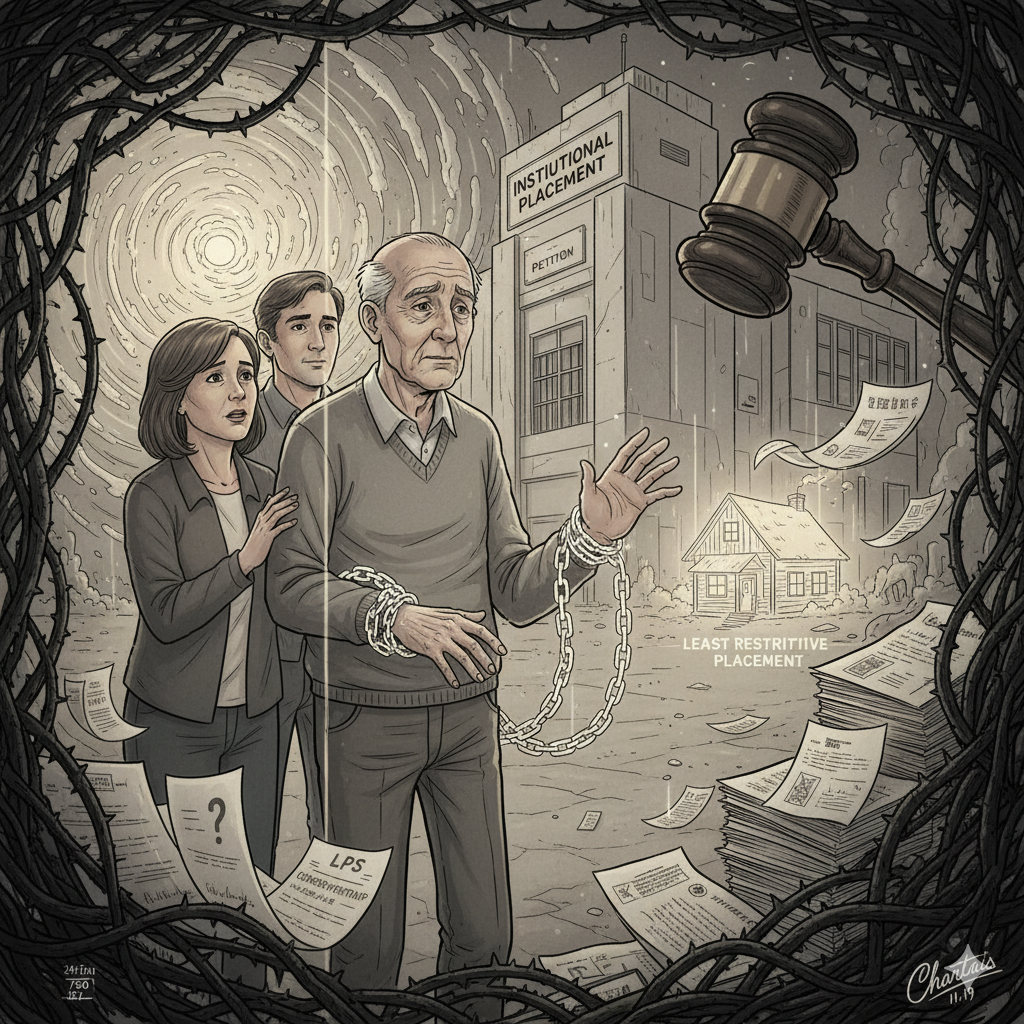
Conservatorship of A.J.: What California Families Need to Know About LPS Conservatorships and Least Restrictive Placement

If you’re a California resident managing the care of a loved one with severe mental health challenges, understanding the legal boundaries of LPS conservatorships is critical. A recent ruling in Conservatorship of A.J. highlights a significant issue: courts cannot delegate the responsibility to determine the least restrictive placement to the Public Guardian.

Who This Applies To

This case matters if you are:

  • A family member seeking conservatorship for someone with mental illness
  • An advocate questioning whether a conservatee is in the most appropriate facility
  • A California resident navigating LPS (Lanterman-Petris-Short Act) conservatorship proceedings
  • Anyone concerned about protecting the rights and dignity of vulnerable adults

What Happened in Conservatorship of A.J.?

In this case, the court issued an order appointing the Public Guardian as the LPS conservator and gave the Public Guardian authority to place the conservatee in a psychiatric facility, nursing home, or other state-licensed facility.

The problem? The court improperly delegated to the Public Guardian the duty to designate the least restrictive alternative placement. Under California law, it is the court’s responsibility—not the conservator’s—to make this determination.

Why the “Least Restrictive Alternative” Matters

California law requires that individuals under conservatorship be placed in the least restrictive environment that meets their needs. This principle protects personal freedom while ensuring safety and appropriate care.

When courts improperly hand off this duty, it can result in:

  • Conservatees being placed in overly restrictive settings
  • Lack of judicial oversight on critical placement decisions
  • Violations of the conservatee’s civil liberties

How Can Families Protect Their Loved Ones?

If you or a family member is involved in an LPS conservatorship case, consider these steps:

  • Request judicial review of placement decisions. Ensure the court is actively involved in determining the least restrictive setting.
  • Understand your rights under the LPS Act. California law provides strong protections for conservatees, including regular hearings and access to legal counsel.
  • Work with experienced legal counsel. Conservatorship cases involve complex mental health and legal standards. An attorney who understands both probate and mental health law can make a significant difference.

What This Means for Estate Planning and Long-Term Care

While Conservatorship of A.J. specifically addresses LPS conservatorships, it underscores a broader truth: California families need proactive legal planning to protect vulnerable loved ones. Whether you’re dealing with mental health crises, elder care, or incapacity planning, having the right legal framework in place is essential.

At California Probate and Trust, PC, we help families navigate conservatorships, probate, and estate planning with transparency and compassion. Our team understands the emotional and legal complexity of these situations and provides personalized guidance to protect both your loved ones and your peace of mind.

Get Legal Guidance You Can Trust

If you’re facing conservatorship issues or want to plan ahead to avoid court intervention in the future, we’re here to help. Schedule a free consultation with our experienced Sacramento-based attorneys to discuss your family’s unique needs and create a plan that protects everyone involved.

Source: California Lawyers Association – Conservatorship of A.J.

Ready to take the next step? Contact California Probate and Trust, PC today for your free estate planning consultation.

Categories
Estate Planning California Probate Trusts

Can a Named Executor Be Denied Appointment for Mismanagement? What California Residents Need to Know About Estate of Bodmann

If you’ve been named as an executor in a loved one’s will, you might assume the appointment is automatic. A recent California case—Estate of Bodmann (Krouse v. Holden-Bodmann)—proves otherwise. This ruling clarifies that mishandling estate assets before you’re officially appointed can disqualify you from serving as executor entirely.

Source: California Lawyers Association – Estate of Bodmann

What Does This Case Mean for California Executors?

Under California Probate Code sections 8402(a)(3) and 8502(a), the court can deny appointment to a named executor who has mismanaged estate assets—even if that mismanagement happened before formal appointment.

Key takeaway: “Mismanagement” includes any conduct that badly, improperly, or unskillfully handles estate property. This ruling protects beneficiaries from executors who demonstrate poor judgment or financial mishandling early in the process.

Who Should Care About This Ruling?

This case matters most to:

  • California residents who have been named as executors in a family member’s will
  • Beneficiaries concerned about an executor’s handling of estate assets
  • Estate planning clients who want to choose the right executor and protect their legacy
  • Families navigating probate who need clarity on executor accountability

Real-World Questions This Case Answers

Can an executor be removed before they’re officially appointed?

Yes. If a named executor mishanages estate property before appointment, the probate court can deny their appointment entirely under sections 8402(a)(3) and 8502(a).

What counts as “mismanagement” of estate assets?

Mismanagement includes handling estate property badly, improperly, or without skill—such as selling assets below market value, failing to secure property, or commingling estate funds with personal accounts.

How can beneficiaries protect themselves?

If you suspect pre-appointment mismanagement, you can petition the court to deny the executor’s appointment. Working with an experienced California probate attorney ensures your concerns are properly documented and presented.

Why Proper Estate Planning Prevents These Problems

The best way to avoid executor disputes is through thoughtful estate planning before a crisis occurs. When you work with a firm that understands both California probate law and family dynamics, you can:

  • Choose an executor who has the skills and temperament to manage your estate responsibly
  • Build in safeguards like co-executors or trust protectors
  • Create clear instructions that reduce the risk of mismanagement
  • Protect your beneficiaries from costly probate disputes

California Probate and Trust, PC helps families navigate these exact scenarios. With offices in Fair Oaks, Sacramento, and San Francisco, our certified estate planning specialists have guided thousands of California residents through probate challenges and proactive estate planning.

What Should You Do If You’re Facing an Executor Issue?

Whether you’re a beneficiary concerned about mismanagement or a named executor who wants to fulfill your duties properly, getting legal guidance early is critical. The Estate of Bodmann case shows that California courts take executor accountability seriously—and early action can prevent costly mistakes.

Protect Your Family’s Future with Expert Estate Planning

Don’t leave your legacy to chance. If you’re a California resident concerned about executor selection, probate disputes, or protecting your estate, California Probate and Trust, PC offers a free one-hour consultation to review your situation and explore your options.

Schedule your free consultation today:

Our compassionate team provides transparent guidance for California families who value protection, clarity, and peace of mind. Whether you’re planning ahead or navigating probate now, we’re here to help you every step of the way.

Categories
Estate Planning California Probate Trusts

Newell v. Superior Court: What California Trustees and Property Owners Need to Know About Trust Disputes and Real Property Claims

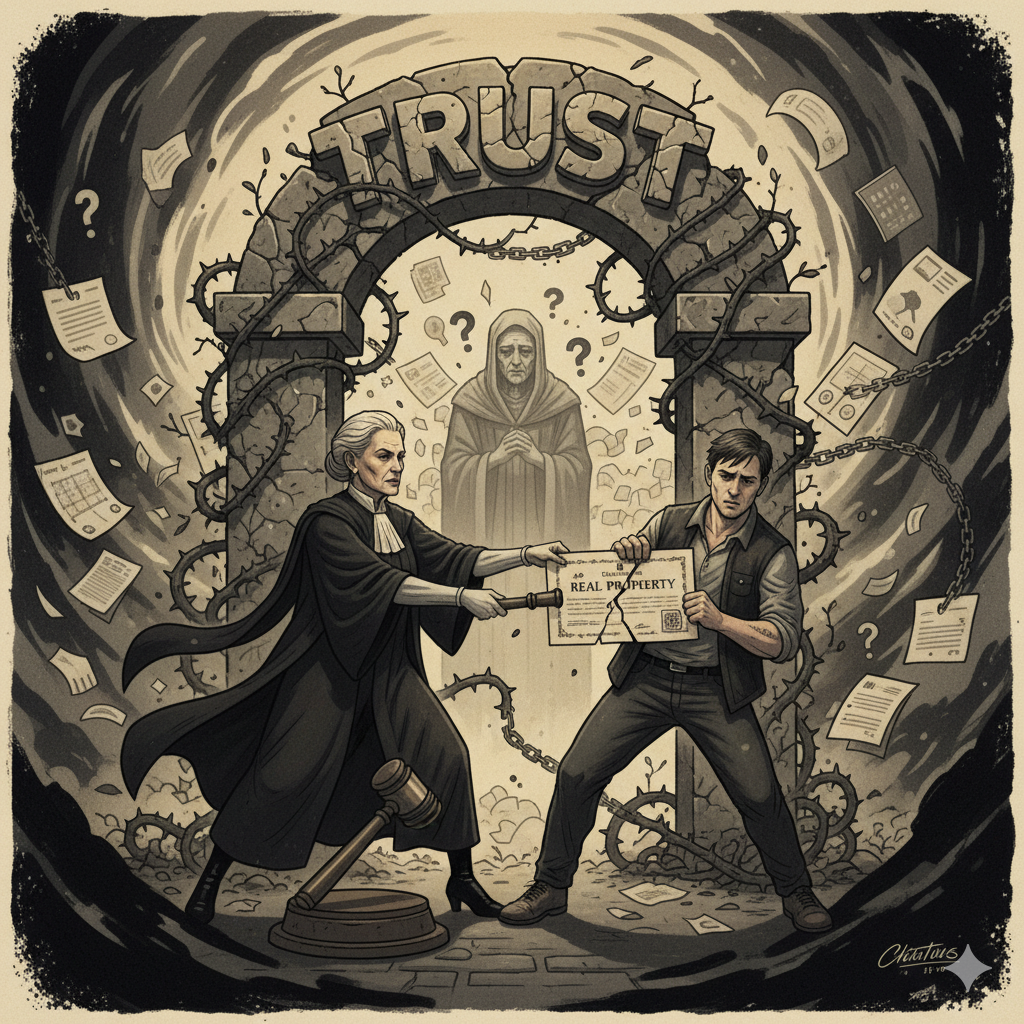
Petition seeking a change in trustee of a trust that holds real property constitutes a real property claim within the meaning of Code of Civil Procedure section 405.4.

Source: California Lawyers Association – Newell v. Superior Court

Newell v. Superior Court: What California Trustees and Property Owners Need to Know About Trust Disputes and Real Property Claims

If you’re managing a trust that holds California real estate—or if you’re involved in a dispute over trust administration—a recent California case clarifies an important procedural issue: when does a petition to change a trustee qualify as a “real property claim”?

The California Court of Appeal addressed this question in Newell v. Superior Court, holding that a petition seeking to remove and replace a trustee of a trust holding real property constitutes a real property claim under California Code of Civil Procedure section 405.4.

Why This Matters for California Residents and Trustees

This ruling has significant implications for anyone involved in trust administration or estate disputes in California, particularly when real estate is part of the trust assets. Understanding how courts classify these claims can affect:

  • The legal procedures required to bring or defend against trustee removal actions
  • The strategic options available to beneficiaries and trustees in disputes
  • The potential for clouding title to real property held in trust
  • The urgency and complexity of resolving trust disputes involving California real estate

What Is a Real Property Claim Under California Law?

Code of Civil Procedure section 405.4 allows parties to record a notice of pending action (lis pendens) when litigation involves a real property claim. A lis pendens serves as public notice that the property’s title or right to possession is in dispute, which can prevent the property from being sold or transferred during litigation.

Before Newell v. Superior Court, it wasn’t always clear whether disputes focused on trustee conduct—rather than direct challenges to property ownership—would qualify as real property claims. This case clarifies that when a trust holds real estate and a petition seeks to change the trustee, the claim impacts the real property interest and may be treated accordingly under section 405.4.

Real-World Impact: When Might This Apply to You?

Consider these common scenarios where the Newell decision could matter:

  • Family trust disputes: Siblings disagree over how a parent’s trust is being managed, and the trust holds the family home or investment properties in California.
  • Suspected trustee misconduct: Beneficiaries believe the trustee is mismanaging trust assets, including real estate, and seek court intervention to replace the trustee.
  • Real estate transactions on hold: A pending petition to remove a trustee may cloud title, delaying or preventing the sale of trust-owned property.
  • Probate and trust administration: Executors and trustees navigating California probate need to understand procedural requirements that protect beneficiaries and property interests.

How California Probate and Trust, PC Can Help

At California Probate and Trust, PC, we understand that trust disputes and probate matters can feel overwhelming—especially when your family’s real estate is involved. Whether you’re a trustee facing a removal petition, a beneficiary concerned about trust administration, or an estate planning client looking to prevent future conflicts, our experienced Sacramento-based attorneys provide transparent, compassionate guidance tailored to California residents.

We’ve helped thousands of clients across California navigate complex trust and probate issues, including:

  • Trust administration and trustee representation
  • Beneficiary rights and trust dispute resolution
  • Estate planning strategies to protect real property
  • Probate litigation and real property claims
  • Revocable and irrevocable trusts designed to avoid future disputes

Take Control of Your Trust and Estate Planning Today

Don’t wait until a dispute arises to protect your family’s assets and legacy. If you’re managing a trust with California real estate, involved in a trustee dispute, or simply want to ensure your estate plan is legally sound, we’re here to help.

Schedule your FREE consultation with California Probate and Trust, PC today. Our team will walk you through your options, explain your rights, and develop a personalized plan that protects what matters most.

Contact us now to get started.

Source: California Lawyers Association – Newell v. Superior Court

Categories
Estate Planning California Probate News Trusts

Can Disabled Veterans Sue to Enforce a Charitable Trust? Key Insights from Powers v. McDonough

Can Disabled Veterans Sue to Enforce a Charitable Trust? Key Insights from Powers v. McDonough

Who This Is For

If you’re a California resident managing a charitable trust, estate plan, or family legacy—or if you’re concerned about protecting vulnerable beneficiaries like veterans, seniors, or disabled individuals—understanding when beneficiaries can enforce trust terms is essential. This landmark Ninth Circuit case clarifies who has the legal right to hold trustees accountable when charitable assets are misused.

What Happened in Powers v. McDonough?

In 2022, a group of unhoused veterans with severe disabilities and mental illnesses sued the U.S. Department of Veterans Affairs (VA) and the Department of Housing and Urban Development (HUD). The veterans sought to restore the West Los Angeles VA Grounds to its original purpose: housing disabled veterans.

The plaintiffs argued that an 1888 deed created a charitable trust and that the VA violated its fiduciary duties by entering commercial leases that failed to primarily benefit veterans. The district court sided with the veterans, but the VA and HUD appealed.

The Ninth Circuit’s Ruling: Special Interest Standing Affirmed

On December 23, 2025, the Ninth Circuit Court of Appeals issued a split decision. While it reversed the lower court’s finding of a breach of charitable trust, it affirmed that the veterans had “special interest standing” to bring the lawsuit.

What Is Special Interest Standing?

Under California law, a charitable trust can be enforced by a person who has a “special interest in the enforcement of the trust.” This legal doctrine balances two competing concerns:

  • Protecting trustees from frivolous lawsuits by a large, uncertain class of potential beneficiaries
  • Ensuring charitable trusts are properly managed when the Attorney General lacks the resources or information to intervene

Why Did the Court Grant Standing?

The Ninth Circuit found that the disabled, unhoused veterans had a sufficient special interest because:

  • The trust’s benefits—supportive housing and healthcare—could mean the difference between life and death for them
  • The VA had consistently failed to restore the West Los Angeles VA Grounds to its intended use
  • Despite public awareness of these failures, the Attorney General had not taken steps to enforce the trust

This ruling empowers intended beneficiaries to act when government oversight falls short—a principle that extends beyond veterans to other vulnerable groups protected by charitable trusts.

What This Means for California Families and Trustees

For Estate Planning Clients

If you’re creating a charitable trust as part of your estate plan, this case highlights the importance of:

  • Clearly defining beneficiaries and trust purposes in your trust documents
  • Selecting trustees who understand their fiduciary duties
  • Building in accountability mechanisms to prevent misuse of trust assets

For Trustees and Executors

Trustees of charitable trusts in California should know that:

  • Intended beneficiaries may have the right to sue if trust assets are mismanaged
  • Courts will examine whether trust property is being used for its stated charitable purpose
  • Lack of Attorney General enforcement does not shield trustees from accountability

For Beneficiaries of Trusts

If you believe a charitable trust meant to benefit you or your loved ones is being misused, this case provides a legal pathway to enforce your rights—even without government intervention.

How Can I Protect My Family’s Legacy?

Whether you’re setting up a charitable trust, managing an existing estate, or navigating probate in California, the experienced attorneys at California Probate and Trust, PC can help. We offer:

  • Free one-hour estate planning consultations to assess your needs
  • Clear, straightforward guidance on trusts, wills, and fiduciary responsibilities
  • Compassionate support for California residents protecting their families and legacies

Our team has represented thousands of clients across Sacramento, Fair Oaks, and San Francisco. We understand the complexities of California trust law and can help ensure your charitable intentions are legally protected and properly enforced.

Case Summary: Powers v. McDonough

  • Case Number: 24-6576
  • Court: Ninth Circuit Court of Appeals
  • Filed: December 23, 2025
  • Key Holding: Intended beneficiaries of a charitable trust with a special interest have standing to sue to enforce the trust
  • Source: California Lawyers Association – Powers v. McDonough
  • Full Opinion: Ninth Circuit Opinion PDF

Schedule Your Free Estate Planning Consultation

Don’t wait until it’s too late to protect your family and ensure your legacy is honored. Contact California Probate and Trust, PC today to schedule your no-obligation consultation with one of our experienced estate planning attorneys.

Call us at (866) 674-1130 or visit cpt.law/contact-us to get started.

Categories
Trusts News

Can Prevailing Defendants Recover Attorney Fees in Elder Abuse Cases? Understanding Gamo v. Merrell

If you’re an executor or personal representative defending an estate against financial elder abuse claims, understanding your rights to recover legal costs is critical. A recent California appellate decision provides crucial clarity on when prevailing defendants can—and cannot—recover attorney fees in these cases.

Who This Matters For

This case is essential reading for:

  • Executors and personal representatives defending estates against elder abuse allegations
  • Trustees and fiduciaries facing litigation over financial transactions with elderly parties
  • Business owners who serve older clients and want to understand their legal exposure
  • Estate planning attorneys advising clients on risk management strategies

The Key Legal Question: Can Defendants Recover Fees After Winning?

California’s financial elder abuse statute (Welfare and Institutions Code section 15657.5(a)) includes a “unilateral fee provision”—meaning it awards attorney fees to prevailing plaintiffs but not to prevailing defendants. This creates an intentional imbalance designed to encourage victims to file legitimate claims without fear of paying a defendant’s legal bills if they lose.

But what happens when a defendant wins and wants to recover costs associated with discovery disputes? That’s exactly what the California Court of Appeal addressed in Gamo v. Merrell (2025) 113 Cal. App. 5th 656.

The Case: What Happened in Gamo v. Merrell

An 81-year-old man purchased a Maserati and later claimed the dealership promised him a $6,500 trade-in credit but only provided $2,000. He sued for financial elder abuse, fraud, and violations of the Consumers Legal Remedies Act (CLRA).

During discovery, the sellers asked him to admit basic facts—such as that he initialed each page of the contract. He denied or withdrew these admissions. At trial, a jury found in favor of the sellers on all claims.

The sellers then sought approximately $490,000 in attorney fees under two theories:

  • Cost-of-proof fees under Code of Civil Procedure section 2033.420 for proving facts the plaintiff unreasonably refused to admit
  • CLRA fees under Civil Code section 1780(e) for defending against a bad faith claim

The trial court denied both requests, ruling that the elder abuse statute’s unilateral fee provision barred all fee recovery.

The Appellate Court’s Groundbreaking Ruling

The Court of Appeal reversed in part, creating an important distinction between different types of attorney fees:

Cost-of-Proof Fees: Allowed

The court held that cost-of-proof fees under CCP section 2033.420 serve a completely different purpose than prevailing party fees:

  • They don’t reward a party for winning the case
  • They sanction unreasonable discovery conduct—specifically, refusing to admit facts without any reasonable basis
  • They encourage efficient litigation by penalizing parties who force opponents to prove undisputed facts
  • A party can even lose at trial and still recover cost-of-proof fees

The court reasoned that these two statutes can work together without conflict: “Because cost-of-proof fees neither reward the prevailing party nor punish a losing party in a lawsuit, they do not interfere with unilateral fee provisions”.

CLRA Fees: Denied

The court affirmed the denial of CLRA fees, but not on the merits. The sellers failed to provide a separate legal argument explaining why CLRA fees should be treated differently from prevailing party fees. Since they simply referred back to their cost-of-proof argument without addressing the materially different nature of CLRA fees, the court deemed the argument waived.

What This Means for Executors and Personal Representatives

You Can Recover Some Fees—But Strategy Matters

If you’re defending an estate or trust against elder abuse claims, this decision provides a pathway to recover substantial legal costs—but only if you handle discovery correctly:

  • Serve comprehensive requests for admission early in the case
  • Focus on undisputed facts that the opposing party should reasonably admit (contract signatures, receipt of documents, basic timeline facts)
  • Document unreasonable refusals to admit facts that are clearly proven
  • Track costs separately for proving each disputed fact at trial
  • File a properly supported motion under CCP section 2033.420 after prevailing

The Limits: What You Cannot Recover

Even after this decision, prevailing defendants still cannot recover:

  • General attorney fees for successfully defending the elder abuse claim itself
  • Fees for defending “intertwined” claims that arise from the same transaction
  • Fees under other statutes unless you provide separate, distinct legal arguments

How Can Executors Protect Themselves from Personal Liability?

The best defense is proactive estate planning and administration that minimizes litigation risk:

  • Maintain impeccable records of all transactions involving elderly beneficiaries or parties
  • Obtain written acknowledgments and contemporaneous documentation
  • Consider trust provisions that address potential disputes before they arise
  • Work with experienced probate counsel who understand discovery strategy and fee recovery options

Precedents That Shaped This Decision

The court analyzed several key California cases to reach its conclusion:

  • Carver I & II: Established that unilateral fee provisions override bilateral contractual fee agreements for overlapping claims
  • Wood v. Santa Monica Escrow Co.: Applied this reasoning to financial elder abuse cases, barring contractual fees for intertwined tort claims
  • Richmond: Held that different statutes with different purposes can coexist—the Cartwright Act’s unilateral provision doesn’t bar anti-SLAPP fees because they serve non-conflicting goals

The Gamo court extended the Richmond reasoning to cost-of-proof fees, emphasizing that harmonizing statutes with distinct purposes serves the public interest.

What Happens Next in This Case?

The case has been remanded to the trial court to determine whether the sellers are actually entitled to cost-of-proof fees under the factual circumstances. The trial court must now evaluate:

  • Whether the plaintiff’s refusal to admit specific facts was unreasonable
  • Whether the sellers ultimately proved those facts at trial
  • What expenses were reasonably incurred in proving each disputed fact
  • Whether the requested fee amount is reasonable

Practical Takeaways for Estate Administration

For executors and personal representatives managing estates and facing potential litigation:

  • Discovery is now a cost-recovery opportunity. Well-crafted requests for admission can shift the financial burden back to plaintiffs who refuse to admit basic facts.
  • Document everything. The ability to prove what you spent proving each fact is essential to recovering cost-of-proof fees.
  • Understand what’s protected and what’s not. You still can’t recover general defense fees, but you can recover discovery sanction fees.
  • Don’t assume all fee requests are the same. Each statutory basis for fees requires its own legal analysis and argument.

How California Probate and Trust Can Help

At California Probate and Trust, our experienced probate and trust administration attorneys help executors and personal representatives navigate complex litigation while protecting estates from unnecessary losses. We understand how to:

  • Defend estates against financial elder abuse allegations
  • Implement strategic discovery practices that position you for cost recovery
  • Minimize your personal liability as an executor or trustee
  • Recover appropriate fees and costs when you prevail

If you’re an executor facing litigation or concerned about potential claims, don’t wait until you’re in the middle of a lawsuit to develop your strategy.

Schedule Your Free Consultation Today

Our estate planning and probate attorneys offer free consultations to help you understand your legal obligations and protect yourself from personal liability. Whether you’re dealing with an active dispute or want to implement preventive measures, we’re here to provide the experienced guidance you need.

Contact California Probate and Trust today to discuss your situation with a qualified probate attorney who understands the complexities of elder abuse litigation and cost recovery.

Source: Gamo v. Merrell (2025) 113 Cal. App. 5th 656, Filed August 14, 2025, Fourth District, Division Three. Full case details available at California Lawyers Association.

Categories
Estate Planning California Probate News

Rob and Michele Reiner Tragedy: What Families Need to Know About Estate Planning After Unexpected Loss

The tragic deaths of acclaimed film director Rob Reiner and his wife Michele Singer Reiner have shocked the entertainment community and brought attention to critical estate planning issues that every California family should understand. According to The Guardian, the Los Angeles County Medical Examiner confirmed that both Rob and Michele Reiner died from multiple sharp force injuries, with the manner of death ruled as homicide on December 14, 2025.

The Devastating Details: What Happened to Rob and Michele Reiner

The Reiners’ bodies were discovered at their Brentwood, Los Angeles home after their daughter Romy went to check on them. Their son Nick Reiner was arrested the same day and has been charged with two counts of first-degree murder and use of a dangerous weapon.

During his court appearance on December 17, Nick Reiner appeared shackled and wearing a suicide prevention vest, speaking only once to acknowledge his understanding of his right to a speedy trial. He is scheduled to return to court for arraignment on January 7, 2026.

The couple’s children, Romy and Jake, released a heartbreaking statement: “Words cannot even begin to describe the unimaginable pain we are experiencing every moment of the day. The horrific and devastating loss of our parents, Rob and Michele Reiner, is something that no one should ever experience. They weren’t just our parents; they were our best friends”.

What Happens to an Estate When Death Occurs Unexpectedly?

The sudden loss of the Reiners raises urgent questions that many California families face when tragedy strikes without warning:

  • What happens if someone dies without a will in California? When a person dies intestate (without a valid will), California’s intestacy laws determine how assets are distributed—often not according to what the deceased would have wanted.
  • Who manages the estate when there’s no executor named? Family members must petition the court to become the estate administrator, a process that can be complex and time-consuming during an already difficult period.
  • How do you protect minor children’s inheritance? Without proper estate planning, guardianship proceedings may be necessary to ensure children’s financial interests are protected.
  • What if family members disagree about estate administration? Disputes among heirs can delay probate and create lasting family rifts when there’s no clear estate plan in place.

California Intestacy Laws: How the State Distributes Assets Without a Will

When a California resident dies without a will, the state’s intestacy statutes dictate asset distribution based on family relationships:

  • If married with children, the spouse typically receives one-half to all community property, depending on circumstances
  • Separate property is divided between the spouse and children according to specific formulas
  • Without a spouse, children inherit equally
  • If no spouse or children exist, assets pass to parents, then siblings, then more distant relatives

This automatic distribution may not reflect the deceased’s actual wishes and can create unexpected complications for families.

The Critical Role of Probate Administration in Tragic Circumstances

Following an unexpected death—particularly one involving criminal circumstances—families face additional legal complexities:

  • Estate administration during ongoing criminal proceedings can be complicated by evidence holds, asset freezes, or delays in death certificate issuance
  • Slayer statutes prevent individuals convicted of murdering a decedent from inheriting from that person’s estate, requiring careful legal navigation
  • Asset protection for surviving family members may require immediate court intervention to prevent estate depletion
  • Creditor claims and estate debts must be properly handled even when families are grieving

Protecting Minor Heirs: Guardianship and Trust Administration

When parents die unexpectedly, minor children face both emotional trauma and financial vulnerability. Without proper estate planning:

  • Courts must appoint guardians for minor children, which may not align with parents’ preferences
  • Inheritance may be held in court-supervised custodial accounts until children reach age 18
  • No provisions exist for educational expenses, healthcare needs, or other support beyond basic maintenance
  • Children may receive substantial assets at 18 without preparation or guidance

Proper estate planning with trusts can ensure children receive financial support according to parents’ wishes while protecting assets until children are mature enough to manage them responsibly.

How California Families Can Prevent Estate Administration Chaos

The Reiner tragedy underscores why comprehensive estate planning is essential for every California family, regardless of age or wealth:

  • Create a comprehensive will or trust that clearly expresses your wishes for asset distribution and names trusted individuals to carry them out
  • Designate guardians for minor children to ensure they’re cared for by people you trust if tragedy strikes
  • Establish trusts for asset protection that provide for heirs while protecting inheritances from creditors, divorce, or mismanagement
  • Name successor trustees and executors who can step in if your first choices are unable to serve
  • Review and update estate plans regularly, especially after major life events like births, deaths, marriages, or divorces

When You Need Experienced California Probate and Estate Planning Counsel

Families facing unexpected loss need compassionate, experienced legal guidance to navigate probate administration, estate disputes, and guardianship proceedings. Whether you’re:

  • Dealing with the sudden death of a loved one who died without a will
  • Facing complex probate administration in criminal circumstances
  • Seeking guardianship for minor children who’ve lost their parents
  • Need to protect your own family with comprehensive estate planning

California Probate and Trust has represented thousands of clients across Sacramento, Fair Oaks, and San Francisco with estate planning and probate matters. Our certified estate planning specialists understand the emotional and legal complexities families face during life’s most difficult moments.

Protect Your Family’s Future Today

Don’t leave your family’s future to chance or state intestacy laws. California Probate and Trust offers free estate planning consultations to help you understand your options and create a plan that protects those you love.

Schedule your free consultation today:

  • Call (866) 674-1130
  • Visit cpt.law/contact-us

Our compassionate team will walk you through every step of the estate planning process, from simple wills to complex trusts, ensuring your family is protected no matter what the future holds.

Source: The Guardian – Rob and Michele Reiner’s Cause of Death Released by Medical Examiner