
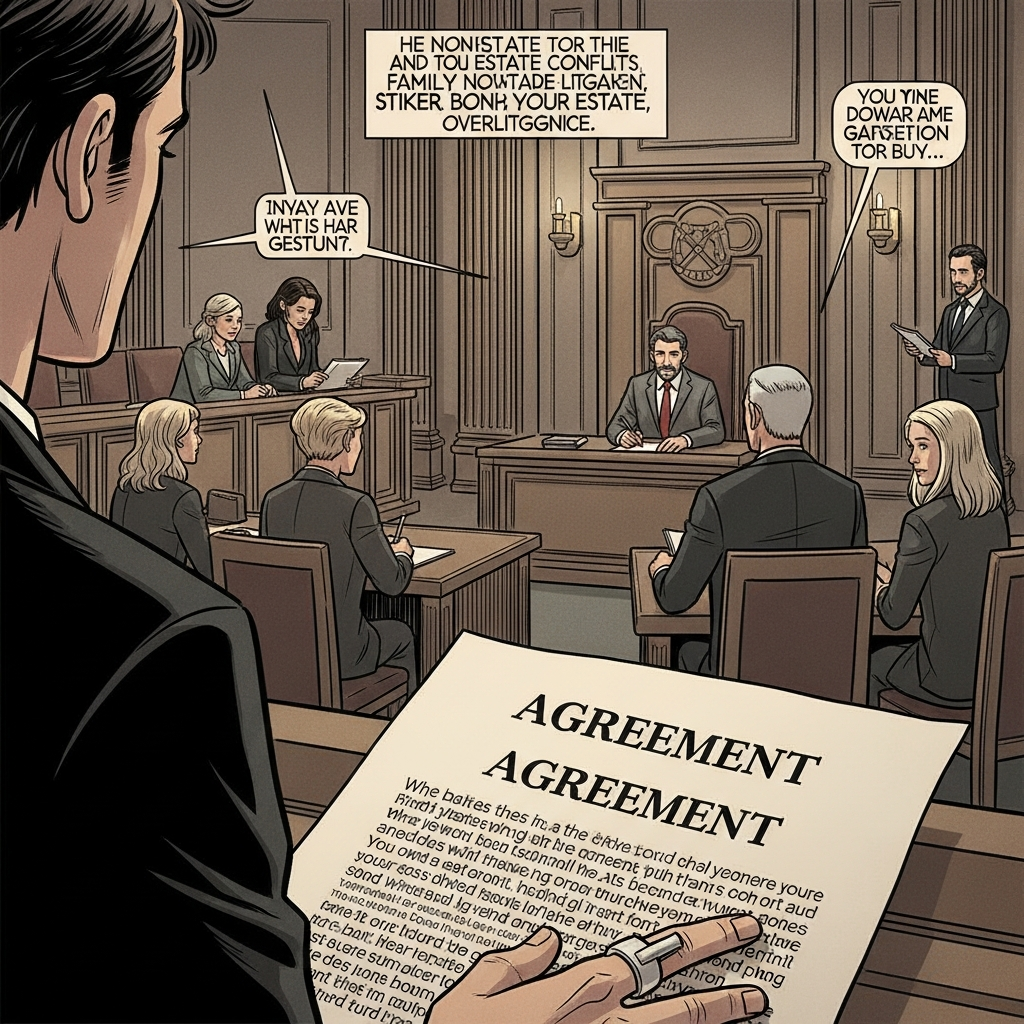
Family Estate Disputes and the High Cost of Over-Litigation
California Legal Implications: The Risks of Informal Agreements
In a recent California appellate decision, *In re Marriage of Nakamoto & Hsu*, the court addressed a complex dispute involving a handwritten family agreement, inheritance claims, and divorce proceedings. As detailed in the court opinion, a husband sought to enforce a handwritten agreement regarding his parents’ estate against his siblings, claiming he was owed $4 million. However, a subsequent formal compromise agreement omitted this payment. When the husband aggressively litigated the validity of these documents during his divorce—dragging his siblings into the lawsuit—the court denied his request for attorney fees because he had “over-litigated” the case without reasonable grounds., a husband sought to enforce a handwritten agreement regarding his parents’ estate against his siblings, claiming he was owed $4 million. However, a subsequent formal compromise agreement omitted this payment. When the husband aggressively litigated the validity of these documents during his divorce—dragging his siblings into the lawsuit—the court denied his request for attorney fees because he had “over-litigated” the case without reasonable grounds.
This case serves as a stark warning for California families regarding the dangers of informal estate arrangements and the financial penalties associated with unreasonable litigation tactics. Below, we explore the critical estate planning lessons derived from this ruling.
The Enforceability of Handwritten Agreements
One of the central issues in this case was the conflict between a “handwritten agreement” and a later, formal compromise agreement. In California, while holographic wills (handwritten wills) can be valid under specific circumstances, informal handwritten contracts regarding the distribution of an estate often lead to ambiguity and conflict. (handwritten wills) can be valid under specific circumstances, informal handwritten contracts regarding the distribution of an estate often lead to ambiguity and conflict.
When families attempt to resolve estate disputes with informal notes rather than utilizing proper Trust Administration or formal settlement agreements drafted by counsel, they invite litigation. In this case, the court found that the formal agreement superseded the handwritten one. To ensure your final wishes are honored and to protect your beneficiaries from years of court battles, it is essential to have a comprehensive Revocable Living Trust and formal amendments rather than relying on side agreements. and formal amendments rather than relying on side agreements.
Inheritance and Community Property Issues
The case also highlighted the intersection of divorce and estate planning. Generally, inheritance is considered separate property in California. However, the husband in this case claimed the $4 million inheritance was community property based on a transmutation agreement (a legal document changing the character of property from separate to community or vice versa). (a legal document changing the character of property from separate to community or vice versa).
When creating an estate plan, it is vital to understand how assets will be treated if a beneficiary divorces. A properly drafted Trust can provide asset protection for beneficiaries, ensuring that an inheritance remains separate property and is not inadvertently commingled with marital assets, potentially shielding the family estate from a beneficiary’s divorce proceedings. can provide asset protection for beneficiaries, ensuring that an inheritance remains separate property and is not inadvertently commingled with marital assets, potentially shielding the family estate from a beneficiary’s divorce proceedings.
The Consequences of “Over-Litigation”
Perhaps the most immediate lesson from *Nakamoto & Hsu* involves the denial of attorney’s fees. California courts generally prefer parties to settle disputes reasonably. When a party engages in “over-litigation”—such as challenging the authenticity of documents they know are real, or making false claims—the court has the discretion to deny requests for fee shifting based on need.. California courts generally prefer parties to settle disputes reasonably. When a party engages in “over-litigation”—such as challenging the authenticity of documents they know are real, or making false claims—the court has the discretion to deny requests for fee shifting based on need.
In the context of Probate Litigation or trust disputes, a beneficiary or trustee who acts in bad faith or drives up costs unnecessarily may find themselves personally liable for their own legal costs, or worse, the legal costs of others. Fiduciaries and beneficiaries alike must approach litigation with reasonable grounds and a focus on resolution rather than conflict. or trust disputes, a beneficiary or trustee who acts in bad faith or drives up costs unnecessarily may find themselves personally liable for their own legal costs, or worse, the legal costs of others. Fiduciaries and beneficiaries alike must approach litigation with reasonable grounds and a focus on resolution rather than conflict.
About This Case
Source: In re Marriage of Nakamoto & Hsu (Fees Denied for Over-Litigation)
California Probate and Trust, PC Can Help
– Free consultations: (866)-674-1130
– Experienced California estate planning
– Schedule consultation
– Learn more: cpt.law
Legal Disclaimer
This article is for informational purposes only. Consult with a qualified California estate planning attorney for advice specific to your situation.

About the Author: Dustin MacFarlane, Esq.
California Licensed Attorney | Estate Planning Specialist
Dustin MacFarlane is the founder of California Probate and Trust, PC, with over 15 years of experience in estate planning, probate administration, and trust law. Licensed by the California State Bar, Dustin has helped thousands of California families protect their assets and plan for the future.
CA Bar License: Active | Practice Areas: Estate Planning, Probate, Trust Administration | Location: Granite Bay, CA