
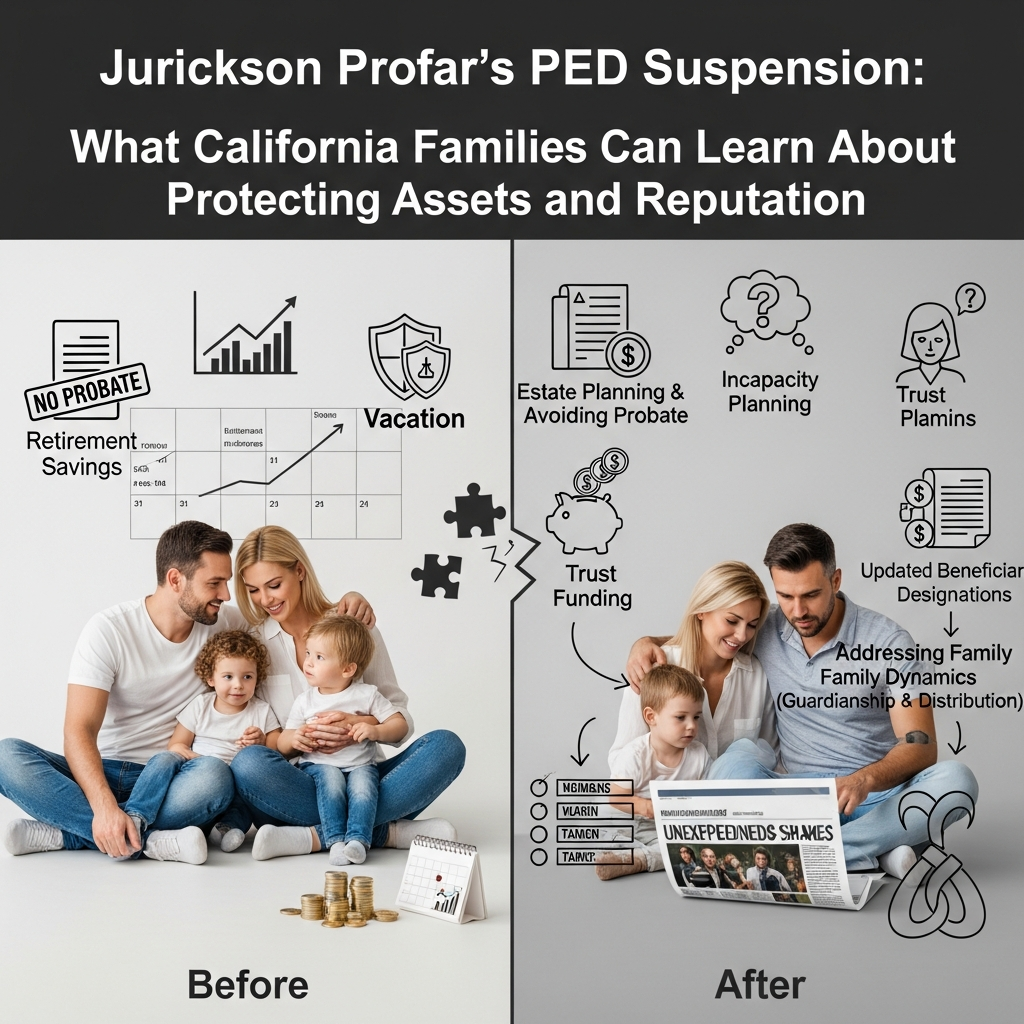
Jurickson Profar’s PED Suspension: What California Families Can Learn About Protecting Assets and Reputation
If you are a California resident managing a family’s finances, supporting aging parents, or building long-term wealth, public news about a professional athlete can feel far removed from your life. But stories like Jurickson Profar reportedly facing a 162-game MLB suspension for a second performance-enhancing drug (PED) violation can be a useful reminder of something many families learn the hard way: one major event can quickly change income, contracts, and long-term plans — and if your legal and financial documents are not in order, the fallout can land on the people you care about most.
This article uses the news report as a hook and explains the estate planning and probate takeaways for Californians. Source: Yahoo Sports report on the reported 162-game suspension and related consequences.
Quick answer: Key takeaways for Californians
What happened in the Profar news story, and why it matters as a “life planning” example
According to the reporting, Jurickson Profar is facing a 162-game suspension after a second positive PED test, with related consequences that include lost eligibility and significant financial impact, including forfeiture of salary under league rules and contract structure.
Most Californians are not professional athletes. But many people do experience “sudden change” events that can feel just as disruptive:
From a probate and estate planning perspective, the important lesson is not the sports details. The lesson is that your plan should assume life can change quickly, and it should build in safeguards so your family does not have to scramble.
Who this is for
This is for:
If you are dealing with a serious conflict, a threatened lawsuit, a contested trust, or a high-value estate, it is usually better to speak with a California probate or trust attorney sooner rather than later.
Why sudden income changes can create estate planning problems
When income drops quickly, families often discover that their “paperwork plan” was really just a set of assumptions.
Common planning gaps we see include:
California probate basics: why the family home is often the biggest risk
For many families, the largest asset is a California residence. If a home is titled in an individual name at death (and there is no other probate-avoidance path), the estate may require a California probate case.
Probate can be time-consuming and stressful. It is also public. Even when everyone agrees, a court process can create delays that families are not prepared for.
Practical checklist for California homeowners
Incapacity planning: not just an “elder law” topic
Many people assume incapacity planning is only for older adults. In reality, incapacity planning is about this question:
If you could not communicate clearly for a period of time, who could pay bills, manage accounts, and make decisions?
Key documents that often matter in California include:
Mini-scenario (anonymized)
A Bay Area parent in their 40s runs a small business. After an unexpected medical event, there is a short period where decision-making is limited. Without a durable power of attorney, business payments stall, payroll becomes stressful, and the family cannot easily access accounts. A properly drafted plan can reduce that disruption.
Trust planning: what a living trust can and cannot do
A California living trust is often used to:
But a trust is not a magic document. It must be designed and maintained for your actual assets and goals.
Funding matters
If your trust exists, but key assets are still titled outside the trust, probate may still be required.
Distribution and conflict prevention
Trusts can also reduce family conflict by:
When to talk to a California probate and trust lawyer
Consider getting legal advice if:
California Probate and Trust, PC focuses on probate, trust administration, and estate planning for California residents. The goal is to help families reduce uncertainty, avoid unnecessary court involvement when possible, and build a plan that holds up when life changes.
FAQ (California-focused)
How can I avoid probate in California?
Many families use a properly drafted and properly funded living trust to avoid probate for major assets. Beneficiary designations and certain types of joint ownership may also avoid probate, but each comes with tradeoffs.
If I have a will, do I still need probate?
Often, yes. A will can control who inherits, but it typically does not avoid the probate court process for assets titled in the person’s individual name at death.
What is the best way to plan for sudden incapacity?
A durable power of attorney, advance health care directive, and HIPAA authorization are common tools. The best approach depends on assets, family dynamics, and risk factors.
Do I need to update my trust after a major life change?
Usually, yes. Divorce, marriage, a new child, moving, buying a home, or changes in wealth are common triggers to review and update documents.
What should trustees and executors do first after a death in California?
Identify the assets, locate estate planning documents, secure real property, and get guidance on whether probate is required. Early decisions can affect timelines and costs.
Call to Action (California Probate and Trust, PC)
If you are feeling overwhelmed by planning, probate, or trust administration in California, you do not have to figure it out alone. California Probate and Trust, PC can help you understand your options, reduce stress, and put a clear plan in place to protect your family and assets.
You can contact CPT through the consultation options on https://cpt.law, by phone, or through an online intake form.
Disclaimer
Disclaimer: This article is for general informational and educational purposes only and is not legal, tax, or financial advice. Laws can change, and how they apply to your situation may vary based on your specific facts. Reading this article does not create an attorney–client relationship with California Probate and Trust, PC or any of its attorneys. You should consult directly with a qualified attorney licensed in your jurisdiction before making decisions about your own case or estate plan.

About the Author: Dustin MacFarlane, Esq.
California Licensed Attorney | Estate Planning Specialist
Dustin MacFarlane is the founder of California Probate and Trust, PC, with over 15 years of experience in estate planning, probate administration, and trust law. Licensed by the California State Bar, Dustin has helped thousands of California families protect their assets and plan for the future.
CA Bar License: Active | Practice Areas: Estate Planning, Probate, Trust Administration | Location: Granite Bay, CA