
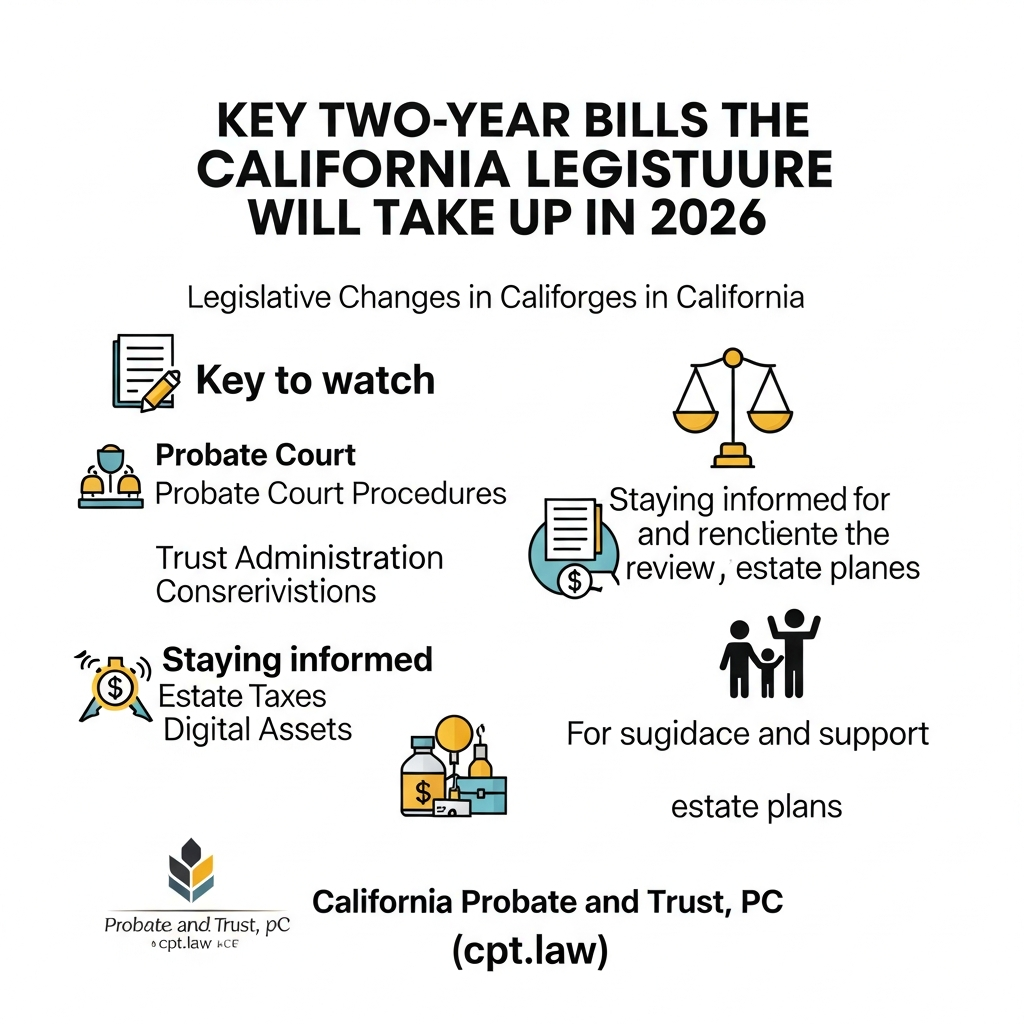
If you’re a California resident, business owner, or estate planning professional, the 2026 legislative session will bring significant changes that may affect how you plan your estate, administer trusts, handle probate matters, and protect your family’s assets. The California Legislature is set to take up several key two-year bills that touch on probate, trusts, elder law, and related legal areas. Understanding these developments now can help you make informed decisions and avoid costly mistakes down the road.
This article provides an in-depth look at the legislative landscape for 2026, based on reporting from CEB Research, and explains what these bills mean for you, your family, and your estate plan. Whether you’re updating a living trust, navigating probate, or planning for long-term care, these legislative changes could have a direct impact on your legal and financial future.
Key Takeaways
Overview: What Are Two-Year Bills and Why Do They Matter?
In California, the legislative session operates on a two-year cycle. Bills introduced in the first year of a session can carry over into the second year, giving lawmakers more time to refine, amend, and build consensus around complex policy changes. This process is especially important for bills that affect legal, financial, and family matters—like probate, trusts, and estate planning—because these areas require careful drafting and input from stakeholders.
For California residents, two-year bills can signal upcoming changes to:
Understanding which bills are moving forward in 2026 allows you to plan proactively, rather than scrambling to comply with new rules after they take effect.
Key Legislative Areas to Watch in 2026
While the full list of bills under consideration is extensive, several key areas are particularly relevant to estate planning, probate, and trust administration in California:
Probate Court Procedures and Access
Some bills aim to modernize probate court processes, including electronic filing, remote hearings, and streamlined procedures for small estates. These changes could reduce delays and costs for executors and administrators handling estates in California probate court.
What this means for you: If you’re serving as an executor or administrator, or if you expect to be named in that role, these reforms could make the probate process faster and less burdensome. However, you’ll still need to understand the substantive legal requirements—like creditor notice, inventory filings, and distribution timelines—which remain complex.
Trust Administration and Fiduciary Duties
Proposed legislation may clarify or expand the duties of trustees, including requirements for regular accounting, beneficiary communication, and investment standards. Some bills also address disputes between beneficiaries and trustees, providing clearer remedies and timelines for court intervention.
What this means for you: If you’re serving as a trustee—or you’re a beneficiary of a trust—these changes could affect your rights and responsibilities. Trustees may face stricter reporting requirements, and beneficiaries may have more tools to hold trustees accountable. It’s critical to understand your obligations and document your actions carefully.
Conservatorships and Elder Law Protections
California has seen increased scrutiny of conservatorship proceedings, especially after high-profile cases highlighted potential abuses. New bills may impose additional safeguards, such as mandatory legal representation for proposed conservatees, stricter oversight of conservators’ financial decisions, and clearer criteria for terminating conservatorships.
What this means for you: If you’re caring for an aging parent or family member who may need a conservatorship, these reforms could make the process more transparent and protective—but also more complex. It’s important to explore less restrictive alternatives first, such as powers of attorney and advance health care directives, and to work with an experienced elder law attorney if court intervention becomes necessary.
Estate and Gift Tax Implications
While California does not currently impose a state estate tax, legislative proposals occasionally surface that could change this. Additionally, federal tax law changes—which often influence state-level discussions—may affect how estates are planned and administered in California.
What this means for you: Even without a state estate tax, California residents with significant assets need to plan for federal estate and gift taxes, as well as California’s income tax rules for trusts and estates. Stay alert to any bills that could introduce new state-level taxes or change existing income tax treatment.
Digital Assets and Privacy
As more of our lives move online, legislators are grappling with how to handle digital assets—like social media accounts, cryptocurrency, and cloud-stored files—after someone dies or becomes incapacitated. New bills may update the California Revised Uniform Fiduciary Access to Digital Assets Act or create new requirements for executors and trustees managing digital property.
What this means for you: If you have significant digital assets, make sure your estate plan specifically addresses them. Provide clear instructions and access information to your executor or trustee, and consider using a password manager or digital estate planning tool to simplify the process.
Why These Bills Matter for California Families
Legislative changes in probate, trusts, and estate planning don’t just affect lawyers and courts—they have real, practical consequences for California families. Here’s how:
Reducing Delays and Costs
Modernizing court procedures and clarifying legal standards can help families avoid unnecessary legal fees, reduce time spent in court, and get assets distributed to beneficiaries more quickly. This is especially important for families dealing with grief and financial stress after a loved one’s death.
Protecting Vulnerable Family Members
Stronger conservatorship protections and clearer fiduciary duties help safeguard elderly and disabled individuals from exploitation and abuse. These reforms give families more confidence that their loved ones will be treated with dignity and that their assets will be managed responsibly.
Adapting to Modern Life
As technology evolves and family structures become more diverse, California law needs to keep pace. Bills addressing digital assets, blended families, and non-traditional relationships ensure that estate plans remain relevant and effective in today’s world.
What You Should Do Now
Even if you’re not directly involved in a probate or trust matter today, these legislative developments are a good reminder to review and update your estate plan. Here are some practical steps to take:
Review Your Estate Planning Documents
Make sure your will, living trust, powers of attorney, and health care directives are up to date and reflect your current wishes. If it’s been more than a few years since you created or updated these documents, it’s time for a review—especially if you’ve experienced major life changes like marriage, divorce, the birth of a child, or the acquisition of significant assets.
Understand Your Role as Executor or Trustee
If you’ve been named as an executor or trustee, take time to understand your legal duties and potential liabilities. Consider consulting with a California probate and trust attorney to walk through the process and identify any areas of concern before issues arise.
Plan for Incapacity
Don’t wait until a crisis to think about what happens if you become unable to manage your own affairs. A comprehensive estate plan includes not just a will and trust, but also durable powers of attorney and advance health care directives that appoint trusted individuals to act on your behalf if needed.
Stay Informed About Legal Changes
Keep an eye on news and updates about California probate and estate planning law. While you don’t need to become a legal expert, understanding the general direction of legislative reforms can help you ask the right questions and make informed decisions.
Work With a Qualified California Attorney
Estate planning, probate, and trust administration are complex areas of law, and the stakes are high. A knowledgeable attorney can help you navigate new legislation, avoid common pitfalls, and create a plan that truly protects your family and assets.
Common Scenarios: How Legislative Changes Could Affect You
Let’s look at a few realistic examples of how these bills might impact California residents:
Example 1: A San Diego Executor Facing New Filing Requirements
Maria is the executor of her late father’s estate, which includes a home in San Diego, some investment accounts, and personal property. Under new legislation, the probate court may require electronic filing and more frequent status updates. While this could streamline the process, Maria will need to ensure she has access to the necessary technology and understands the new deadlines. Working with a probate attorney helps her stay compliant and avoid unnecessary delays.
Example 2: A Trustee in Los Angeles Managing a Family Trust
David is the trustee of a family trust created by his parents, which benefits his three siblings. A new bill may require David to provide annual accountings and more detailed beneficiary notices. David wants to be transparent, but he’s also concerned about potential disputes. His attorney helps him understand his fiduciary duties, set up a clear accounting system, and communicate effectively with his siblings to prevent conflicts.
Example 3: A Daughter in Sacramento Seeking a Conservatorship
Linda’s mother has advanced dementia and can no longer manage her finances or make health care decisions. Linda is considering filing for a conservatorship, but new legislation may require her to provide additional evidence, attend more hearings, and appoint independent legal counsel for her mother. While these reforms add complexity, they also ensure that Linda’s mother’s rights are protected. Linda works with an elder law attorney to explore all options and navigate the conservatorship process carefully.
Frequently Asked Questions
What is a two-year bill in the California Legislature?
A two-year bill is a piece of legislation introduced in the first year of California’s two-year legislative session that can be carried over and considered in the second year. This allows more time for debate, amendments, and stakeholder input before the bill becomes law.
How do these bills affect my existing estate plan?
New laws may change probate procedures, trust administration requirements, or fiduciary duties, which could affect how your estate plan is executed. It’s a good idea to review your plan with a California attorney to ensure it complies with current and upcoming legal standards.
Do I need to update my trust if the law changes?
It depends on the specific changes and how your trust is drafted. Some legislative reforms may require amendments or restatements, while others may not affect your trust at all. Consult with an estate planning attorney to determine whether updates are needed.
What should I do if I’m named as an executor or trustee?
First, make sure you understand your legal duties and the scope of your authority. Then, gather all relevant documents, notify beneficiaries, and consult with a probate or trust attorney to ensure you’re complying with California law and protecting yourself from personal liability.
How can I stay informed about changes to California probate and estate planning law?
Follow updates from trusted legal sources, subscribe to newsletters from California estate planning organizations, and maintain a relationship with a qualified attorney who can alert you to changes that affect your situation.
When should I hire a California probate and trust attorney?
You should consult an attorney whenever you’re creating or updating an estate plan, serving as an executor or trustee, navigating probate court, or facing a dispute over a trust or estate. Early guidance can save you time, money, and stress.
How California Probate and Trust, PC Can Help
At California Probate and Trust, PC (cpt.law), we specialize in helping California residents navigate the complexities of probate, trust administration, and estate planning. Our team has extensive experience handling matters in California probate courts, working with trustees and executors, and creating comprehensive estate plans tailored to your unique needs.
Whether you’re updating your estate plan in light of new legislation, serving as a fiduciary and need guidance, or facing a dispute over a trust or estate, we’re here to help. We take a transparent, client-focused approach, acting as a “one-stop shop” for legal structure, court processes, and financial management aspects of your case.
We understand that dealing with probate, trusts, and estate planning can be overwhelming, especially during times of grief or stress. Our goal is to provide clear, compassionate guidance that helps you make informed decisions, protect your loved ones, and achieve peace of mind.
Schedule a Consultation Today
If you have questions about how the 2026 legislative session may affect your estate plan, your role as an executor or trustee, or any other California probate or trust matter, we invite you to schedule a consultation with California Probate and Trust, PC.
You can reach us through our website at cpt.law, by phone, or by completing our online consultation form. We’ll take the time to understand your situation, explain your options, and help you move forward with confidence.
Disclaimer
Disclaimer: This article is for general informational and educational purposes only and is not legal, tax, or financial advice. Laws can change, and how they apply to your situation may vary based on your specific facts. Reading this article does not create an attorney–client relationship with California Probate and Trust, PC or any of its attorneys. You should consult directly with a qualified attorney licensed in your jurisdiction before making decisions about your own case or estate plan.

About the Author: Dustin MacFarlane, Esq.
California Licensed Attorney | Estate Planning Specialist
Dustin MacFarlane is the founder of California Probate and Trust, PC, with over 15 years of experience in estate planning, probate administration, and trust law. Licensed by the California State Bar, Dustin has helped thousands of California families protect their assets and plan for the future.
CA Bar License: Active | Practice Areas: Estate Planning, Probate, Trust Administration | Location: Granite Bay, CA