
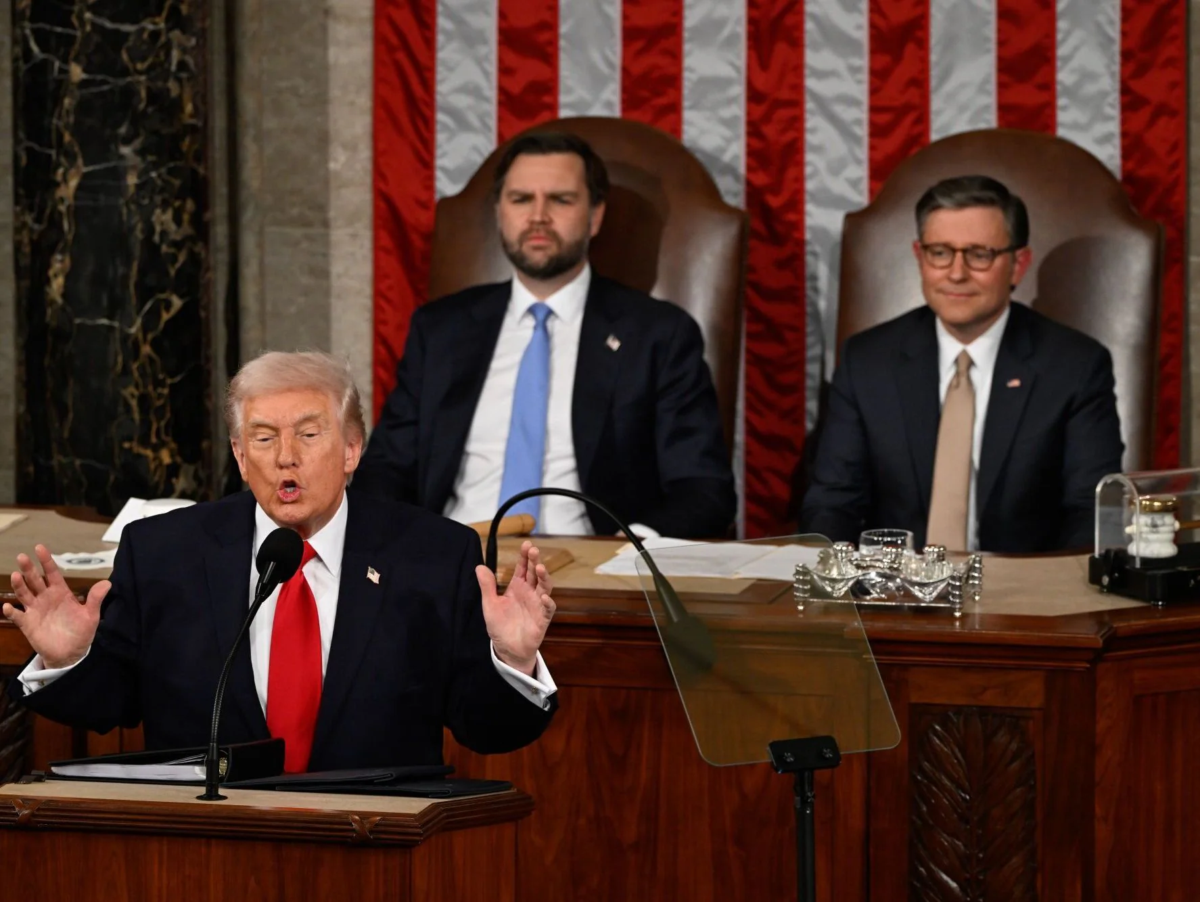
On February 24, 2026, President Donald Trump delivered the longest State of the Union address in American history—clocking in at one hour and 48 minutes. Beneath the patriotic rhetoric and sweeping economic claims lies a series of policies that directly affect California families who are planning their estates, creating trusts, drafting wills, or navigating probate. At California Probate and Trust, PC (cpt.law), these developments matter because they reshape how families can protect and transfer their wealth.
This article breaks down the key takeaways from the 2026 State of the Union and explains what they mean for California estate planning, probate, trusts, and your family’s financial future.
The “One Big Beautiful Bill” Made Estate Tax Relief Permanent
Perhaps the most significant development for estate planning came before the speech itself. President Trump signed the One Big Beautiful Bill Act into law on July 4, 2025, and he proudly referenced its impact during the SOTU. The legislation permanently extended the higher federal estate and gift tax exemptions that were originally set to expire at the end of 2025 under the Tax Cuts and Jobs Act (TCJA).
What Changed
Before this legislation, the exemption was scheduled to revert to approximately $7 million per individual—half of its current level. The permanence of the $15 million threshold provides long-term stability and planning certainty for families, and it opens renewed opportunities for individuals who had already maximized their previous exclusions.
Why This Matters for California Families
While California does not impose its own state-level estate tax, the federal changes still profoundly affect how Californians should structure their trusts and estate plans. For families with combined estates between $7 million and $15 million—a range that includes many California homeowners given the state’s high property values—the expanded exemption may mean their estate now falls entirely below the federal threshold, potentially eliminating estate tax liability altogether.
What CPT Law can do: Our estate planning attorneys can review existing trusts and wills to ensure they take full advantage of the new $15 million exemption. For married couples, proper trust structuring—such as using A-B trust or bypass trust strategies—can maximize the $30 million combined exemption.
SALT Deduction Increase: Relief for California Taxpayers
The One Big Beautiful Bill Act also raised the State and Local Tax (SALT) deduction cap from $10,000 to $40,000, retroactive to tax year 2025. For 2026, the cap increases slightly to $40,400. This is critical for Californians, who face some of the highest combined state income taxes (up to 13.3%) and property taxes in the nation.
SALT Impact on Estate Planning
The expanded SALT deduction reduces the effective tax burden for California families with moderate to high incomes, which in turn affects how much wealth is available to transfer into trusts or to fund gift-giving strategies. However, for households earning above $505,000 in 2026, the deduction phases down at a rate of $0.30 per dollar over the threshold and can revert to the original $10,000 cap.
What CPT Law can do: Coordinating estate planning with tax strategy is essential. Our attorneys work with clients to structure trusts and wealth transfers in a way that accounts for the SALT deduction, income phaseouts, and overall tax exposure.
Tariffs Could Replace Income Tax: What Would That Mean for Estates?
One of the most attention-grabbing moments of the SOTU came when Trump reiterated his belief that tariff revenue could “substantially replace the modern day system of income tax”. This followed the Supreme Court’s recent 6-3 ruling striking down his sweeping “Liberation Day” tariffs.
While economic experts remain highly skeptical that tariffs can replace income taxes, if such a fundamental shift ever occurred, it would radically transform estate planning. Without an income tax, the entire framework of deductions, capital gains treatment at death (the “step-up in basis”), and gifting strategies would need to be reconsidered.
What CPT Law can do: While major tax system overhauls remain speculative, the mere discussion of eliminating income tax underscores the importance of building flexible estate plans that can adapt to changing tax environments. Living trusts and revocable trusts are particularly well-suited for this because they can be modified as laws evolve.
No Tax on Tips, Overtime, and Social Security: Impact on Seniors and Workers
President Trump claimed during the SOTU that his legislation delivered “no tax on tips, no tax on overtime, and no tax on Social Security for our great seniors”. The reality is more nuanced:
Estate Planning Implications
For seniors relying on Social Security income, the new deductions could mean slightly more disposable income available for funding trusts, making annual gifts, or paying for long-term care insurance—all key components of a comprehensive estate plan. However, the temporary nature of these provisions (expiring after 2028) means careful planning is needed.
What CPT Law can do: Our attorneys help seniors integrate retirement income strategies into their estate plans. Whether it involves funding a revocable living trust, establishing a Power of Attorney for financial management, or creating an Advance Healthcare Directive, the goal is to protect assets and ensure wishes are carried out.
Housing Affordability and the Ban on Institutional Investors
Trump’s Executive Order banning large institutional investors from purchasing single-family homes was a centerpiece of the SOTU. The order directs federal agencies to prevent programs from facilitating sales of single-family homes to institutional investors and instructs the Treasury to review existing rules. The administration has urged Congress to bar investors who own more than 100 homes from acquiring more.
Why This Matters for Estate Planning
Housing is often the single largest asset in a California estate. When property values stabilize or become more accessible to families, it affects:
What CPT Law can do: Real estate transactions are a core practice area at California Probate and Trust. Our attorneys ensure that properties are properly titled within trusts, help families navigate Proposition 19 implications, and structure estate plans to minimize property tax reassessment.
401(k) for All: Retirement Planning Meets Estate Planning
President Trump announced a new proposal to give American workers without employer-sponsored retirement plans access to a federal-style retirement account, with the government matching up to $1,000 per year. He also promoted expanding private equity investment options within 401(k) plans.
Estate Planning Connections
Retirement accounts are among the most commonly mishandled assets in estate planning. Key considerations include:
What CPT Law can do: Our estate planning team ensures that retirement account beneficiary designations are aligned with your trust and overall estate plan, preventing conflicts between what your will says and where your retirement assets actually go.
Immigration Policy and Its Indirect Impact on California Estates
Trump dedicated significant portions of the SOTU to immigration enforcement, and California is feeling the impact directly. Governor Newsom recently allocated $35 million in state funding to assist immigrant families, and the Trump administration has moved to end federal housing assistance for mixed-immigration-status households.
Estate Planning for Mixed-Status Families
For California families that include members with varying immigration statuses, estate planning carries unique considerations:
What CPT Law can do: California Probate and Trust provides comprehensive estate planning for families of all backgrounds, including drafting QDOTs for non-citizen spouses, establishing durable Powers of Attorney, and creating Healthcare Directives and HIPAA Authorization Forms that ensure families can make critical decisions even in uncertain times.
California’s Proposition 19: The State-Level Factor That Can’t Be Ignored
While the SOTU focused on federal policy, California families must also contend with Proposition 19, which significantly changed inherited property tax rules. Before Prop 19, children could inherit a parent’s home and retain its low property tax base. Now, the inherited property must become the heir’s primary residence within one year, or it will be reassessed at current market value.
Given that the median home price in many California markets exceeds $1 million, a reassessment can mean property tax increases of $10,000 or more per year—a financial burden that can force families to sell inherited homes.
How Trusts Help with Prop 19
Establishing a living trust remains one of the most effective ways to manage property transfers in California. A properly structured trust:
What CPT Law can do: Our firm specializes in creating and administering trusts that account for California-specific laws like Proposition 19 and community property rules. Whether it involves restructuring an existing trust or creating a new one from scratch, our attorneys ensure that your real estate—often your most valuable asset—is protected.
The CPT Law Four-Part Estate Planning Program
At California Probate and Trust, PC, the approach to estate planning goes beyond a simple will. The firm offers a comprehensive four-part estate planning program designed to cover every critical aspect of asset protection and legacy planning:
In addition to these core documents, CPT Law handles probate administration, trust administration, taxation, real estate transactions, wealth transfers, and estate litigation. The firm serves clients from offices in Fair Oaks, Sacramento, and San Francisco.
Protect Your Family’s Legacy—Contact California Probate and Trust Today
The 2026 State of the Union underscored a reality that estate planning professionals have long emphasized: tax laws and government policies are constantly evolving. The combination of the permanently higher estate tax exemption, expanded SALT deductions, new retirement account proposals, shifting housing policies, and California’s own Proposition 19 creates both opportunities and risks for families who fail to plan proactively.
Key action items for California families in 2026:
Don’t wait until it’s too late. The decisions you make today will determine how your wealth is transferred, how your assets are protected, and whether your family faces unnecessary tax burdens or lengthy probate proceedings.
California Probate and Trust, PC has helped thousands of California families navigate complex estate planning challenges. Our experienced attorneys are ready to craft a customized estate plan that adapts to changing laws while protecting what matters most to you.
Contact us today at cpt.law or call our offices in Fair Oaks, Sacramento, or San Francisco. Take control of your family’s financial future and ensure your legacy is preserved for generations to come.
Legal Disclaimer
This article is provided for informational purposes only and does not constitute legal advice. The information contained herein is based on federal and California laws as of February 2026 and is subject to change. Estate planning, probate, trust administration, and tax law are complex areas that require individualized analysis.
Every family’s situation is unique, and the strategies discussed in this article may not be appropriate for your specific circumstances. Tax laws, exemption amounts, and estate planning regulations can change at any time through legislation, court decisions, or regulatory action.
Reading this article does not create an attorney-client relationship between you and California Probate and Trust, PC. For specific legal advice tailored to your situation, you must consult with a qualified estate planning attorney licensed to practice in California.
California Probate and Trust, PC makes no warranties or guarantees about the accuracy, completeness, or adequacy of the information contained in this article. We expressly disclaim any liability for errors, omissions, or changes in the law that may affect the information presented.
If you need legal assistance with estate planning, trust creation, probate administration, or related matters, please contact California Probate and Trust, PC directly to discuss your specific needs with one of our attorneys.

About the Author: Dustin MacFarlane, Esq.
California Licensed Attorney | Estate Planning Specialist
Dustin MacFarlane is the founder of California Probate and Trust, PC, with over 15 years of experience in estate planning, probate administration, and trust law. Licensed by the California State Bar, Dustin has helped thousands of California families protect their assets and plan for the future.
CA Bar License: Active | Practice Areas: Estate Planning, Probate, Trust Administration | Location: Granite Bay, CA