Categories
California Probate Estate Planning Trusts

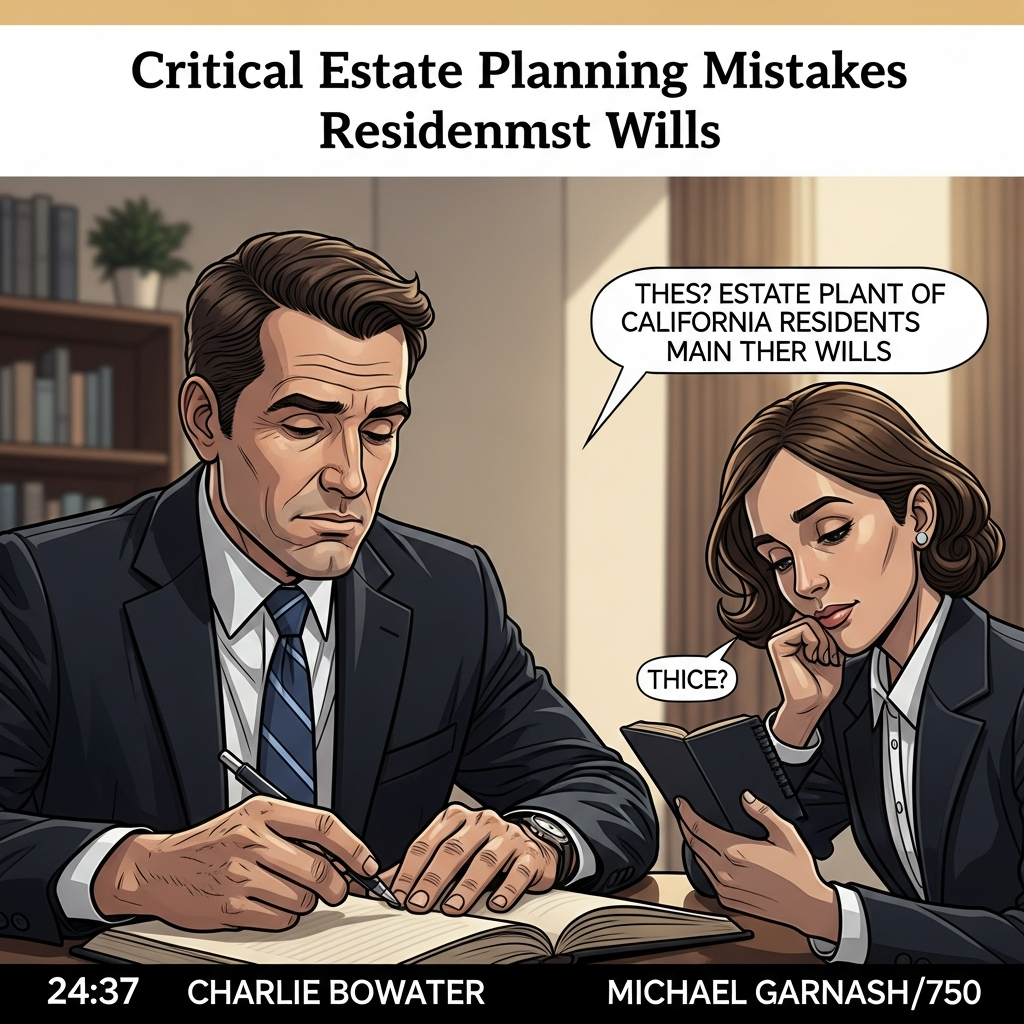
7 Critical Estate Planning Mistakes California Residents Make in Their Wills—And How to Avoid Them

Source: HuffPost – Biggest Mistakes in Wills According to Estate Lawyers

Who This Guide Is For

If you’re a California resident concerned about protecting your family from expensive probate battles, legal disputes, and preventable costs after you pass away, understanding the most common—and costliest—mistakes in will creation is essential. This comprehensive guide draws on expert insights from California estate planning attorneys to help you avoid the pitfalls that lead to family conflict and financial loss.

Why California Residents Need to Take Estate Planning More Seriously

Your last will and testament is one of the most important legal documents you’ll ever create. It allows you to direct where your property goes, who becomes guardian of your children, how your debts are handled, and who will execute your wishes after you die.

Yet two out of three Americans don’t have a will, according to a 2020 Caring.com survey of 2,500 Americans. The top reasons? Procrastination and the mistaken belief that they don’t have enough assets to warrant one.

Estate planning attorney Eido Walny, founder of Walny Legal Group, emphasizes that “almost everyone over the age of 18 needs some estate planning documents. It may not be anything fancy, but having documents can spare your family a lot of financial and emotional suffering at a time that may already be trying.”

The 7 Most Expensive Mistakes California Residents Make in Their Wills

Mistake #1: Naming Multiple Co-Executors

Many California residents believe that naming all their children as co-executors demonstrates fairness. In reality, this creates a recipe for family conflict and expensive legal fees.

Here’s why multiple executors create problems:

  • Unanimous decisions are required: When selling estate assets like the family home, all co-executors must agree on timing, pricing, and whether to make repairs first
  • Legal costs multiply: In cases with seven co-executors, each person may need their own attorney due to conflicts of interest, multiplying legal fees seven times
  • Disputes escalate quickly: When one executor does all the work but everyone receives equal compensation, resentment builds
  • Best practice for California residents: Name one primary executor with alternate executors as backups. If you must name multiple executors, choose an odd number so majority-rule can break deadlocks.

    Mistake #2: Believing a Will Alone Avoids Probate

    This is perhaps the most financially costly misconception California residents have about estate planning.

    The reality: A will does not automatically avoid probate. Probate is the legal process required whether you die with or without a will, as long as you have assets titled solely in your name without beneficiary designations.

    Real California case example: A client’s father had a will directing his estate be divided equally among three children. However, his residence was titled solely in his name—not in a trust and without a Transfer On Death designation. Result? The family had to go through probate at a cost of $4,000, when a TOD designation would have cost just $30.

    How California residents can truly avoid probate:

  • Place assets in a revocable living trust
  • Add beneficiary designations to bank and investment accounts
  • Use Transfer On Death (TOD) deeds for California real estate
  • Ensure joint ownership with right of survivorship where appropriate
  • Mistake #3: Being Too Vague About Sentimental Items

    California estate planning attorney Carmen Rosas warns that while families often think they’ll fight about money, the most intense conflicts actually arise over items with sentimental value.

    When you write “to all my kids, an equal share,” you leave no clear direction for who gets grandmother’s jewelry, dad’s vintage car collection, or the family photo albums.

    Why this matters for California families: Relationships change after death. Your children who got along perfectly while you were alive may struggle with grief differently, and items become vessels for processing emotions and regrets.

    Solution: Create a specific list of items and who should receive them. If you know someone wants something particular, write it down explicitly—it will make administration significantly easier.

    Mistake #4: Failing to Update Your Will After Major Life Changes

    Life events that require immediate will updates include:

  • Marriage or divorce
  • Birth or adoption of children
  • Death of a named beneficiary or executor
  • Significant changes in asset values
  • Moving to or from California (state laws vary significantly)
  • Estate planning attorney Dionna Reynolds recommends reviewing your estate plan every five to seven years, minimum.

    Costly example for California families: A parent names their children as beneficiaries but doesn’t account for what happens if a child predeceases them. Result? Grandchildren may be unintentionally excluded from inheritance.

    Mistake #5: Not Considering Whether Your Gift Will Actually Help the Recipient

    Leaving money to loved ones seems like a gift, but timing and circumstances matter tremendously.

    Considerations for California residents:

  • Young adults (18-25): An 18-year-old may be a legal adult, but receiving a large inheritance could derail their education or early career development. It might also disqualify them from financial aid.
  • Mid-life beneficiaries: Consider risks like divorce (where inheritance could become marital property), creditors, or substance abuse issues that could redirect your intended gift to unintended recipients
  • Elderly beneficiaries: Large inheritances could disqualify someone from Medicaid benefits they need for long-term care
  • Solution: Consider using trusts with age-based distributions, spendthrift provisions, or special needs trusts to protect beneficiaries while still providing for them.

    Mistake #6: Not Documenting Where Your Will Is Located

    California estate planning attorney Carmen Rosas shares a common scenario: Family members find draft documents but can’t locate the signed, executed will. Without proof of a valid will, the estate must be administered as if no will existed—potentially going against the deceased’s wishes entirely.

    What California residents should do:

  • Store original documents in a fireproof safe at home
  • Tell at least one trusted person exactly where documents are located
  • Provide your executor with your estate planning attorney’s contact information
  • Consider registering your will with California’s system or keeping it with your attorney
  • Attorney Rosas notes she’s seen cases where attorneys post in forums asking, “Did anyone create an estate plan for this person?” because families can’t find the documents.

    Mistake #7: Working With an Attorney Who Isn’t an Estate Planning Specialist

    California residents may be tempted to save money by having a family friend who “does some legal work” or their divorce attorney draft estate planning documents. This is a costly mistake.

    Estate planning attorney Eido Walny warns: “Estate planning is complicated and there are a lot of traps for the unwary, even unwary attorneys. Find someone who is a specialist, who knows how to navigate issues, and who you feel comfortable with.”

    Why specialization matters for California residents:

  • California has unique community property laws
  • California’s probate process differs significantly from other states
  • Tax implications vary based on California-specific regulations
  • Property transfer rules in California require specialized knowledge
  • The difference between well-drafted documents and poorly drafted ones means “a lot of extra time, money and heartache” when the documents are finally executed.

    How California Probate and Trust, PC Helps California Residents Avoid These Mistakes

    At California Probate and Trust, PC, we’ve helped thousands of California families create estate plans that protect their loved ones and avoid these common pitfalls. As California estate planning specialists, we understand the unique challenges California residents face.

    Our approach includes:

  • Free consultations: We take time to understand your family dynamics, assets, and concerns before recommending solutions
  • California-specific expertise: We navigate California’s probate laws, community property rules, and tax implications
  • Transparent pricing: Clear estate planning packages so you know exactly what you’re getting
  • Comprehensive planning: We address not just wills, but trusts, powers of attorney, healthcare directives, and asset titling to truly avoid probate
  • Regular updates: We remind clients when it’s time to review documents after major life events
  • Take the First Step to Protect Your California Family

    Don’t let your family become another statistic—one of the two-thirds of Americans without proper estate planning documents, or worse, one with documents that create more problems than they solve.

    California Probate and Trust, PC offers free estate planning consultations to California residents. We’ll review your situation, explain your options, and help you create a plan that truly protects your family.

    Schedule your free consultation today:

  • Call (866) 674-1130
  • Visit cpt.law
  • Offices in Fair Oaks, Sacramento, and San Francisco
  • Legal Disclaimer

    This article is provided for informational purposes only and does not constitute legal advice. Estate planning laws vary by jurisdiction and individual circumstances. The information presented here is based on general principles and may not apply to your specific situation. This content does not create an attorney-client relationship. For personalized legal guidance regarding your estate planning needs, please consult with a qualified California estate planning attorney. California Probate and Trust, PC is available to discuss your unique circumstances during a free consultation. Laws and regulations are subject to change, and this article reflects information available as of the publication date.

    7 Critical Estate Planning Mistakes California Res 20260121 142038 1

    Categories
    California Probate Estate Planning Trusts

    8 Financial Realities Upper-Middle-Class Baby Boomers Take for Granted That Working-Class Millennials in California Will Never Experience

    Your paragraph text 2027 1

    For California Families Navigating Generational Wealth Gaps and Estate Planning Challenges

    If you’re a California resident watching your adult children struggle financially despite working harder than you ever did, or if you’re a Millennial wondering why the traditional path to wealth seems impossible, you’re witnessing a fundamental shift in economic reality that has profound implications for estate planning and wealth transfer.

    The generational divide between upper-middle-class Baby Boomers and working-class Millennials isn’t just about lifestyle choices—it represents a complete transformation of the American economic landscape that California families must understand when planning their financial futures and protecting their loved ones.

    Source: VegOut Magazine – 8 Things Upper-Middle-Class Boomers Take for Granted

    Why This Matters for California Estate Planning

    Understanding these generational differences is essential for California residents creating estate plans, because the traditional wealth-building assumptions that worked for one generation no longer apply to the next. This affects:

  • How you structure trusts and inheritance distributions
  • Whether your beneficiaries can afford to maintain inherited property
  • The tax implications of wealth transfers in today’s economy
  • How to protect assets from creditors when beneficiaries carry significant debt
  • Realistic expectations for financial independence timelines
  • 1. How Can Millennials Build Wealth When They Start Adult Life in Debt?

    Upper-middle-class Boomers typically graduated college with minimal or no student loan debt, often having parents who could afford tuition or working summer jobs that actually covered educational expenses.

    Today’s working-class Millennials face student loans that function like “a mortgage without the house”. Many spend 15 years of their adult lives carrying this debt burden, with every career decision filtered through monthly payment obligations.

    Estate Planning Impact: When your beneficiaries start adulthood tens of thousands in debt, they’re not building wealth—they’re digging out. While Boomers invested in their thirties, many Millennials are just breaking even. This means inherited assets may immediately go toward debt repayment rather than wealth building, affecting how you should structure distributions.

    2. What Happened to Job Security and Retirement Pensions in California?

    Most upper-middle-class Boomers worked for companies offering genuine job security and defined benefit pensions, with the ability to envision 30 years at one company and retire with guaranteed income.

    Working-class Millennials navigate a gig economy with contract work, constant automation threats, and minimal employer benefits. Traditional pension plans have been replaced by 401(k)s where employees shoulder all investment risk with limited employer matching. The average job tenure for younger workers is around three years.

    Estate Planning Impact: Without employer pensions, inherited assets become even more critical for retirement security. California families need estate plans that account for beneficiaries who will rely heavily on inherited wealth for retirement, making trust structures and asset protection strategies essential.

    3. Why Are California Millennials Delaying or Avoiding Having Children?

    For upper-middle-class Boomers, having children was a natural next step, with childcare costs manageable relative to incomes and often one parent able to stay home.

    Today’s working-class Millennials face childcare costs that exceed rent in many California cities. Both parents must work just to cover basic expenses, forcing many to delay having children or choose not to have them at all—not from lack of desire, but because they literally cannot afford them.

    Estate Planning Impact: This affects generational wealth transfer planning. If your children are having fewer grandchildren or delaying parenthood into their late thirties or forties, your estate plan timeline and distribution strategies need adjustment. California families should consider whether inherited assets could enable family formation that would otherwise be impossible.

    4. How Did Homeownership in California Become Unattainable for an Entire Generation?

    Upper-middle-class Boomers bought homes in their twenties or early thirties, with stable jobs, manageable debt, and home prices aligned with incomes—often achievable on a single salary.

    Working-class Millennials face California homes costing 10 times the median income in many markets. Down payments alone require a decade to save, assuming no financial emergencies. Many have accepted they’ll rent forever, fundamentally altering traditional wealth-building paths.

    Estate Planning Impact: Without home equity, beneficiaries have no asset to borrow against for emergencies, no wealth to pass down, and no stable housing costs in retirement. For California families, this means inherited property may be the only path to homeownership for your children—making it critical to structure your estate to preserve rather than liquidate real estate.

    5. What Does Constant Geographic Mobility Mean for California Families?

    Upper-middle-class Boomers built entire lives in one area, putting down roots, building community connections, and maintaining family stability across generations.

    Working-class Millennials chase opportunities wherever they appear—moving for jobs, being priced out of neighborhoods, or relocating because their industry no longer exists in their hometown. This constant mobility makes it harder to build support networks, maintain friendships, or feel truly settled.

    Estate Planning Impact: California residents should consider whether inherited property provides geographic stability for mobile beneficiaries. Trust structures might need flexibility for beneficiaries living out of state while managing California assets, and estate plans should address remote management scenarios.

    6. Why Don’t Traditional Financial Milestones Work Anymore for California Millennials?

    Boomers followed a clear roadmap: graduate, get a job, buy a car, buy a house, save for college, retire at 65. Each milestone felt achievable with steady progress.

    Working-class Millennials are improvising without a roadmap. Traditional milestones feel impossible, forcing them to create new definitions of success—perhaps three months of emergency savings instead of six, or finally obtaining health insurance. Every financial decision feels precarious with no clear path forward.

    Estate Planning Impact: When beneficiaries lack financial stability, inherited assets become safety nets rather than wealth multipliers. California families should structure estate plans with protective trusts that prevent inherited wealth from being immediately depleted by emergencies or creditors.

    7. How Can Working-Class Millennials Pursue Self-Actualization While Just Surviving?

    When basic needs are met, upper-middle-class Boomers had bandwidth to pursue hobbies, volunteer, or switch careers for fulfillment rather than necessity.

    Working-class Millennials working multiple jobs or 60-hour weeks just to stay afloat have little energy for thriving. Self-care becomes a luxury, and pursuing passions is for “people who can afford to fail”. Career changes become impossible regardless of fulfillment.

    Estate Planning Impact: Inherited assets might provide the first opportunity for beneficiaries to pursue meaningful work rather than just survival. California estate plans can be structured to provide income bridges that enable career transitions or entrepreneurship that would otherwise be impossible.

    8. What Does Losing Generational Optimism Mean for California Families?

    Perhaps the most significant difference: upper-middle-class Boomers assumed things would generally improve, living through expanding opportunity, rising wages, and increasing prosperity.

    Working-class Millennials have witnessed the opposite—multiple economic crashes, climate catastrophes, and global pandemics. They’re the first generation expected to be worse off than their parents, fundamentally changing how they approach risk and dreams.

    Estate Planning Impact: This pessimism affects how beneficiaries will receive and manage inherited wealth. California families need estate plans that acknowledge beneficiaries may be more risk-averse and need stronger asset protection than previous generations.

    How California Probate and Trust, PC Helps Families Bridge the Generational Divide

    These economic realities aren’t about blame—they’re about adapting estate planning strategies to match current economic conditions. Recognizing these disparities is crucial for understanding why younger generations make different financial choices.

    California Probate and Trust, PC specializes in helping California families create estate plans that account for these generational differences. Our experienced attorneys understand that the “traditional” estate plan may not serve families where beneficiaries face fundamentally different economic realities.

    We help California residents:

  • Structure trusts that protect inherited assets from creditors and student loan garnishment
  • Create distribution strategies that provide stability for beneficiaries in the gig economy
  • Plan for scenarios where inherited property may be beneficiaries’ only path to homeownership
  • Design flexible estate plans for geographically mobile families
  • Implement asset protection strategies for beneficiaries facing economic uncertainty
  • Develop financial management systems that account for beneficiaries’ debt burdens
  • Ready to Create an Estate Plan That Protects Your Family’s Future?

    If you’re a California resident concerned about how generational economic changes affect your estate planning strategy, California Probate and Trust, PC offers free consultations to help you understand your options.

    Our compassionate, transparent approach ensures your estate plan reflects current economic realities while protecting what matters most—your family’s financial security across generations.

    Contact California Probate and Trust, PC today:

  • Call (866)-674-1130 for a free consultation
  • Visit cpt.law to schedule your appointment
  • Offices in Fair Oaks, Sacramento, and San Francisco serving California families
  • Don’t let generational economic shifts derail your family’s financial future. Let our experienced California estate planning attorneys help you create a plan that works for today’s reality.

    Legal Disclaimer

    This article is provided for informational purposes only and does not constitute legal advice. Estate planning laws and tax regulations vary by individual circumstance and are subject to change. The information presented here is based on general principles and may not apply to your specific situation. Reading this article does not create an attorney-client relationship with California Probate and Trust, PC. For personalized legal advice regarding your estate planning needs, please consult with a qualified California estate planning attorney. Past results do not guarantee future outcomes. All estate planning decisions should be made in consultation with licensed legal and financial professionals who understand your unique circumstances and goals.

    More Articles by Avery

    Categories
    California Probate Estate Planning Trusts

    What California Taxpayers Need to Know About IRS Changes and Estate Planning

    Source: Seattle Times – IRS Shake-Up Announcement

    Who This Article Is For

    If you’re a California taxpayer filing returns in 2026 or managing an estate or trust, the IRS reorganization and new tax laws create both opportunities and potential pitfalls. This guide helps California residents understand how IRS changes affect personal tax filing, estate administration, and trust taxation.

    The IRS Shake-Up: What’s Changing for 2026

    Major organizational changes at a critical time:

    Just days before the 2026 tax filing season begins, IRS Chief Executive Officer Frank Bisignano announced significant personnel and operational changes:

    Leadership changes:

  • Gary Shapley appointed deputy chief of Criminal Investigation division
  • Jarod Koopman becomes chief of Criminal Investigation and chief tax compliance officer
  • Joseph Ziegler named chief of internal consulting
  • Guy Ficco retiring from Criminal Investigation leadership
  • Operational priorities:

  • Enhanced customer service
  • Improved tax collections
  • Safeguarding taxpayer privacy
  • Implementation of major tax law changes from summer 2025 legislation
  • Challenges ahead:

  • 26% reduction in IRS workforce from prior year layoffs
  • 164 million individual tax returns expected
  • New tax relief provisions requiring system updates
  • Concerns about rocky filing season from National Taxpayer Advocate
  • Why IRS Changes Matter for California Estate Planning

    The intersection of IRS operations and California estate administration:

    1. Estate Tax Return Filing (Form 706)

    Federal estate tax requirements:

  • Required if estate exceeds $13.61 million (2024, indexed for inflation)
  • Due 9 months after death (can request 6-month extension)
  • Complex valuation and reporting requirements
  • Penalties for errors or late filing
  • How IRS shake-up affects estates:

    Slower processing times:

  • Reduced staff = longer review periods
  • Estate tax returns take 6-12 months minimum
  • Closing letters delayed
  • Final distributions to heirs postponed
  • Increased scrutiny:

  • Criminal Investigation division reorganization
  • Focus on tax compliance
  • Valuation disputes more common
  • Potential audits of large estates
  • Customer service challenges:

  • Harder to reach IRS representatives
  • Questions about estate returns unanswered
  • Delays in resolving issues
  • Extended estate administration periods
  • California example:

    Executor filing estate tax return for $15 million Silicon Valley estate:

  • Filed April 2026
  • IRS backlogged due to staff reductions
  • No response for 14 months
  • Estate remains open, beneficiaries waiting
  • Executor liability concerns mounting
  • Additional legal fees accumulating
  • With reduced IRS staffing, this becomes even more common in 2026.

    2. Trust Income Tax Reporting

    Trusts must file annual tax returns:

    Form 1041 (Fiduciary Income Tax Return) required for:

  • Revocable trusts after grantor’s death
  • All irrevocable trusts with income
  • Complex trust reporting requirements
  • Coordination with beneficiary K-1 forms
  • 2026 filing challenges:

  • IRS implementing new tax law changes
  • System updates may cause processing delays
  • Increased error rates possible
  • Trustee penalties for mistakes
  • California trust taxation:

  • California also taxes trust income (up to 13.3%)
  • Separate California trust return required (Form 541)
  • Residency rules for California trusts
  • Source income from California
  • Proper estate planning prevents issues:

  • Trust provisions that minimize taxable income
  • Distribution strategies to beneficiaries in lower brackets
  • Timing of distributions to optimize taxes
  • Coordination of federal and California returns
  • 3. Gift Tax Reporting (Form 709)

    Annual gift tax returns required when:

  • Gifts exceed $18,000 per person per year (2024 amount)
  • Gifts of future interests (trusts, etc.)
  • Gifts splitting between spouses
  • Gifts to certain trusts
  • IRS changes impact gift reporting:

  • Processing delays for gift tax returns
  • Longer wait for return acceptance
  • Difficulty confirming proper filing
  • Potential for lost returns in shuffle
  • Estate planning strategy:

    Use 2026 to maximize gifts before federal exemption potentially drops in 2026 from $13.61 million to ~$7 million. But with IRS in flux, ensure meticulous documentation and tracking.

    4. Executor/Trustee Tax Compliance Obligations

    Fiduciaries have strict IRS obligations:

    Estate executors must:

  • Obtain employer identification number (EIN) for estate
  • File final income tax return for deceased (Form 1040)
  • Categories
    California Probate Estate Planning Trusts

    Supreme Court Second Amendment Framework: What California Gun Owners Need to Know About Estate Planning for Firearms

    Source: Vox – Supreme Court Second Amendment Framework

    Who This Article Is For

    If you’re a California gun owner with firearms as part of your estate, you need to understand how changing Second Amendment laws affect your estate planning. This guide helps California residents navigate the complex intersection of gun rights, inheritance laws, and estate planning to ensure firearms transfer legally to heirs.

    How the Supreme Court’s Evolving Second Amendment Framework Affects California Gun Owners

    The Supreme Court’s Second Amendment framework is undergoing significant changes, creating uncertainty for California gun owners planning their estates. Recent cases including Bruen, Wolford, and Lopez have reshaped how courts evaluate gun regulations, with direct implications for firearm inheritance and estate planning.

    What’s Changing in Second Amendment Law

    1. The Historical Test Standard from Bruen

  • Courts must now apply historical analysis to gun regulations
  • Modern restrictions must have analogous historical precedents
  • Creates unpredictability in how regulations will be evaluated
  • 2. State vs. Federal Conflicts

  • California maintains some of the nation’s strictest gun laws
  • Federal court decisions may conflict with California regulations
  • Estate planning must navigate both jurisdictions
  • 3. Implications for Firearms as Assets

  • Guns are valuable property that must pass through estates
  • California’s strict transfer requirements remain in effect
  • Failure to properly plan can result in illegal transfers or forfeiture
  • Why California Gun Owners Need Specialized Estate Planning

    California has unique firearm transfer laws that make estate planning critical for gun owners. Without proper planning, your firearms could:

  • Be seized by law enforcement
  • Force heirs to surrender legally-owned weapons
  • Create criminal liability for family members
  • Result in valuable collections being sold below market value
  • Real-World Case Study: The $50,000 Gun Collection Problem

    John, a Sacramento collector, passed away with 30 firearms valued at $50,000. Without estate planning:

  • His son inherited the firearms through probate
  • Several were California-banned “assault weapons” grandfathered under old law
  • The son couldn’t legally register them under current California law
  • Local police required surrender or removal from California within 30 days
  • The collection’s value was lost due to forced quick-sale conditions
  • With proper estate planning:

  • Firearms trust established during John’s lifetime
  • Designated successor trustees authorized to possess firearms
  • Clear transfer instructions meeting California legal requirements
  • Time to properly document, register, and transfer or sell firearms
  • Preserved $50,000 in asset value for heirs
  • Essential Estate Planning Strategies for California Gun Owners

    How to ensure your firearms transfer legally to your heirs:

    1. Gun Trust (NFA Trust)

    What it is: A specialized trust designed to hold firearms

    Benefits for California residents:

  • Multiple authorized users during your lifetime
  • Smooth transfer avoiding probate delays
  • Clear succession plan for trustees
  • Compliance with both state and federal regulations
  • Best for:

  • Collections with NFA items (suppressors, short-barreled rifles)
  • Multiple family members who use firearms
  • Valuable collections requiring professional management
  • 2. Enhanced Estate Plan with Firearm Provisions

    Critical components California gun owners need:

    Will with Specific Firearm Bequests

  • Identify each firearm by make, model, serial number
  • Designate specific heirs for specific weapons
  • Include instructions for California-compliant transfers
  • Nominate executor familiar with firearm laws
  • California Firearm Transfer Requirements

  • All transfers must go through licensed California dealer (with limited family exceptions)
  • 10-day waiting period applies to inherited firearms
  • Background checks required for heirs
  • Registration with California DOJ within specified timeframe
  • Executor Guidelines

  • Detailed instructions for securing firearms during probate
  • List of California-compliant dealers for transfers
  • Guidance on banned weapons that cannot transfer
  • Documentation proving lawful ownership and grandfathered status
  • 3. Digital Inventory and Documentation

    Create a comprehensive firearm inventory including:

  • Photographs of each firearm
  • Serial numbers and purchase documentation
  • Proof of California registration (if applicable)
  • Purchase receipts establishing grandfathered status
  • Appraisals for valuable or collectible items
  • Storage location and access instructions
  • California-Specific Firearms Transfer Rules

    What California gun owners must know about firearm inheritance:

    Immediate Family Exemptions (Limited)

    Exempt from dealer transfer requirement:

  • Parent to child transfers (in some circumstances)
  • Grandparent to grandchild transfers (in some circumstances)
  • Still requires registration with California DOJ
  • Important limitations:

  • Does not exempt banned “assault weapons”
  • Does not exempt heirs from background check eligibility
  • Failure to register is a criminal offense
  • Probate Complications for Firearms

    California probate creates unique challenges:

  • Extended timeline (12-18 months) for transferring firearms
  • Executor may need special authorization to possess firearms
  • Risk of theft or improper handling during probate
  • Public record disclosure of firearm ownership
  • Categories
    California Probate Estate Planning Long Term Care Planning

    Teenager stabbed during huge brawl in Roseville parking garage

    image 2

    What California Families Can Learn from This Tragedy: Estate Planning for Young Adults and Families

    Source: Gold Country Media – Roseville Stabbing

    Who This Article Is For

    If you’re a California parent with teenage or young adult children, this tragic incident in Roseville highlights critical estate planning issues you cannot afford to ignore. This guide helps California families protect young adults from violence, criminal charges, and legal consequences while ensuring proper estate planning protects your family if tragedy strikes.

    The Roseville Incident: What Happened and Legal Implications

    The event that should concern every California parent:

    On January 19, 2026, at approximately 1:00 AM, a massive brawl involving 10-15 people erupted in the Oak Street parking garage in Roseville, California. The violent confrontation resulted in:

  • A 17-year-old victim with multiple stab wounds (currently in stable condition)
  • 24-year-old Levi Cole arrested and charged with attempted murder
  • Multiple injuries among participants
  • Active criminal investigation ongoing
  • Potential charges for other participants
  • Legal consequences both parties now face:

    For the 17-year-old victim:

  • Potential medical bills of $50,000-200,000+
  • Long-term physical and psychological trauma
  • Possible lost educational opportunities
  • Criminal investigation determining his role
  • Civil liability depending on circumstances
  • For 24-year-old Levi Cole (alleged assailant):

  • Attempted murder charges (15 years to life if convicted)
  • Civil lawsuit from victim and family
  • Asset seizure to pay damages
  • Criminal restitution ordered by court
  • Lifetime felony record
  • Why This Matters for California Estate Planning

    This incident illustrates multiple estate planning issues California families must address:

    1. Young Adults Need Healthcare Directives (Even at 18)

    The 17-year-old victim’s parents likely had authority to make medical decisions. But once your child turns 18 in California, you have NO legal authority over their medical care unless they’ve signed a healthcare power of attorney.

    Critical scenario:

    Imagine your 18-year-old child is seriously injured:

  • Emergency room doctors need permission for surgery
  • You’re not legally allowed to make decisions
  • Hospital requires court order to proceed
  • Every minute counts in trauma situations
  • Solution: Healthcare Power of Attorney for College-Bound/Young Adults

    Every California 18-year-old should have:

    Advance Healthcare Directive

  • Names parents (or trusted person) as healthcare agent
  • Authorizes emergency medical treatment
  • Specifies wishes about life-sustaining measures
  • Includes HIPAA authorization for medical records
  • When to establish:

  • Before 18th birthday (takes effect at 18)
  • Before leaving for college
  • Before moving out of family home
  • Before military service
  • Any young adult living independently
  • California-specific requirements:

  • Must be signed by two adult witnesses OR notarized
  • Cannot be witnessed by healthcare provider or facility operator
  • Should be reviewed every few years
  • Keep original with important documents
  • 2. Financial Power of Attorney Protects Young Adults

    If your 18+ child is incapacitated, you cannot access their accounts or manage their finances without legal authority.

    Real-world scenarios:

  • College student injured, needs someone to pay rent/bills
  • Young adult in coma, student loans continue accruing
  • Medical bills mounting, family can’t access victim compensation funds
  • Bank accounts frozen without proper authorization
  • Solution: Durable Financial Power of Attorney

    Young adults should authorize parents to:

  • Access bank accounts if incapacitated
  • Pay bills and manage finances during recovery
  • Apply for victim compensation
  • Handle insurance claims
  • Manage student loans and financial obligations
  • Example: The 17-year-old Roseville victim will turn 18 during recovery. Without a power of attorney, his parents will lose authority to manage his affairs, file insurance claims, or pursue victim compensation on his behalf.

    3. Criminal Defense and Asset Protection

    For families of accused perpetrators like Levi Cole, estate planning becomes critical:

    Asset protection strategies:

    Separate family assets from adult child’s liability

  • Do NOT co-sign loans or credit cards
  • Do NOT add adult children to your bank accounts
  • Do NOT put adult children on property titles
  • Maintain clear separation of finances
  • Why this matters:

    If your adult child causes harm (intentionally or accidentally):

  • Victims can sue for damages
  • Joint assets can be seized
  • Co-signed obligations become your debt
  • Your retirement and home at risk
  • Proper structure:

  • Adult children should have separate accounts
  • Parents can gift money, but keep accounts separate
  • Use revocable trust to protect family assets
  • Maintain umbrella liability insurance ($1-2 million)
  • Example: If Levi Cole’s parents co-owned property with him or had joint bank accounts, the victim could pursue those assets in a civil lawsuit. Proper separation protects the family’s wealth.

    4. Victim Compensation and Estate Planning

    California’s Victim Compensation Program provides:

  • Medical expenses up to $70,000
  • Mental health treatment
  • Lost wages
  • Funeral/burial costs (if fatal)
  • Categories
    California Probate Estate Planning Trusts

    Here’s the Minimum Net Worth Considered To Be Upper Middle Class at 50

    In this article:

    While many people assess their finances based on their income, your net worth can arguably provide a more complete snapshot.

    Net worth can vary due to a number of factors, like age and location. Here’s a look at the net worth that could be considered upper middle class at 50.

    Also see the income needed to be upper middle class in the 50 largest U.S. cities.

    Net Worth vs. Income

    Around 40% of U.S. workers earning over $500,000 consider themselves as living paycheck to paycheck, according to a Goldman Sachs survey, showing that a strong income doesn’t necessarily mean you’re saving and investing money for the future and can afford situations like a job loss.

    Net worth, however, reflects your assets, such as your bank accounts, investment accounts and real estate, minus any debts such as a mortgage and credit card balances. A high net worth generally means that if you fall on hard times, you have assets you can draw from, and you also might be in a more comfortable position to retire.

    Upper Middle Class Net Worth at 50

    If you want to get a sense of where your net worth is compared with others your age, you can use resources like the Federal Reserve’s Survey of Consumer Finances (SCF). It’s conducted every three years, so the most recent data is from 2022, with the 2025 survey expected to be published in late 2026. Still, this can give you a general guideline.

    The most recent data shows that for those 45 to 54 years old, the median net worth is around $247,000.

    While the data doesn’t break down net worth percentiles based on age, aside from showing the median and mean, a proprietary analysis of the data by Harness Wealth found a net worth of $1,031,020 for those ages 45 to 54 at the 80th percentile.

    So to be considered upper middle class at age 50, around the midpoint of this age range, your net worth likely needs to fall somewhere between the ballpark of $250,000 and $1 million, depending on your definition of upper middle class.

    If you’re just basing it on being slightly above average, then about $250,000 would get you there. If you think being around the top 20% in your age group gets you there, that would put you at around $1 million. And if we take the midpoint of those numbers to roughly define the minimum net worth to be upper middle class at age 50, that would be $625,000.

    Consider Your Goals

    While these types of comparisons can give you a rough idea of how you’re doing financially or what to aim for when you reach age 50, what really matters is how your net worth aligns with your goals.

    Story Continues

    Why Net Worth Matters More Than Income for California Estate Planning

    Your net worth determines your estate planning needs far more than your income. California residents at age 50 need to understand this distinction to protect their families and minimize tax consequences.

    California’s Unique Net Worth Challenges

    California residents accumulate wealth differently than other Americans:

  • Real estate appreciation (California home values 2-3x national average)
  • Stock options and equity compensation (Silicon Valley, tech industry)
  • Community property laws affecting married couples
  • State estate tax considerations (California has none, but federal applies)
  • High cost of living requiring larger retirement nest eggs
  • Example: Maria, 50, earns $85,000 annually in Sacramento—not “high income.” But her paid-off home ($600,000), retirement accounts ($350,000), and small rental property ($250,000) give her a net worth of $1.2 million. She’s solidly upper middle class by net worth, even with moderate income.

    Estate Planning Strategies by Net Worth Level at Age 50

    Your net worth at 50 determines which estate planning tools you need:

    Net Worth: $250,000 – $400,000 (Slightly Above Average)

    Essential California estate planning:

    1. Revocable Living Trust

  • Avoid California probate (4-6% of estate value = $10,000-24,000 in fees)
  • Simple trust structure sufficient
  • Focus on avoiding probate, not tax planning
  • Costs $2,000-4,000 to establish
  • 2. Healthcare Directive and Power of Attorney

  • Critical at age 50 when health issues can emerge
  • Prevent family from needing conservatorship
  • Specify medical treatment preferences
  • Name agents you trust completely
  • 3. Basic Beneficiary Planning

  • Update retirement account beneficiaries
  • Coordinate with trust provisions
  • Simple distribution plan (equal shares to children typical)
  • Why this matters: Even “modest” California estates face $10,000-15,000 in probate costs without proper planning. A $3,000 trust investment saves your heirs $7,000-12,000.

    Net Worth: $400,000 – $700,000 (Middle Upper Middle Class)

    Enhanced California estate planning needs:

    1. Funded Revocable Living Trust

  • All major assets titled to trust
  • California real estate properly transferred
  • Investment and bank accounts re-titled
  • Vehicles and personal property addressed
  • 2. Life Insurance Policy Review

  • Ensure adequate coverage for surviving spouse
  • Consider term life until retirement fully funded
  • Name trust as beneficiary (not individuals)
  • Review annually as net worth grows
  • 3. Retirement Account Tax Planning

  • Coordinate IRA/401(k) beneficiaries with trust
  • Consider Roth conversions in lower-income years
  • Plan for required minimum distributions (RMDs) at 73
  • Stretch IRA planning for children (limited to 10 years post-SECURE Act)
  • 4. Asset Protection Considerations

  • California is a litigious state
  • Consider umbrella liability insurance ($1-2 million)
  • Protect home equity through proper trust structure
  • Review business entity structures if self-employed
  • Example: Robert and Linda, both 50, have $600,000 net worth. They established a living trust, updated beneficiaries, and purchased $2 million umbrella insurance. When Robert faced a lawsuit from a car accident, their trust assets and home remained protected.

    Net Worth: $700,000 – $1,000,000 (Approaching Top 20%)

    Sophisticated California estate planning required:

    1. Comprehensive Trust Planning

  • A/B trust structure for married couples (if beneficial)
  • Credit shelter trust provisions
  • Disclaimer trust flexibility
  • Generation-skipping transfer tax planning
  • 2. Charitable Giving Strategies

  • Donor-advised funds for tax deductions
  • Charitable remainder trusts (income + charity)
  • Qualified charitable distributions from IRAs
  • Legacy planning for causes you support
  • 3. Business Succession Planning

  • Buy-sell agreements if you own a business
  • Key person insurance
  • Valuation of business interests
  • Transition planning for retirement
  • 4. Long-Term Care Planning

  • Average California nursing home: $120,000+ annually
  • Long-term care insurance evaluation
  • Self-funding strategies
  • Medi-Cal asset protection (irrevocable trusts)
  • 5. California Property Tax Planning (Prop 13)

  • Parent-child transfer exclusions
  • Preserve low property tax basis for heirs
  • Plan transfers to maintain Prop 13 protection
  • Avoid reassessment triggers
  • Why this level needs specialized planning: At $700,000-1,000,000 net worth, you’re approaching federal estate tax thresholds (with future growth), face complex California property tax issues, and need sophisticated strategies to minimize taxes and protect assets.

    Net Worth: $1,000,000+ (Top 20% – True Upper Middle Class)

    Advanced California estate planning essential:

    Categories
    California Probate Estate Planning Long Term Care Planning

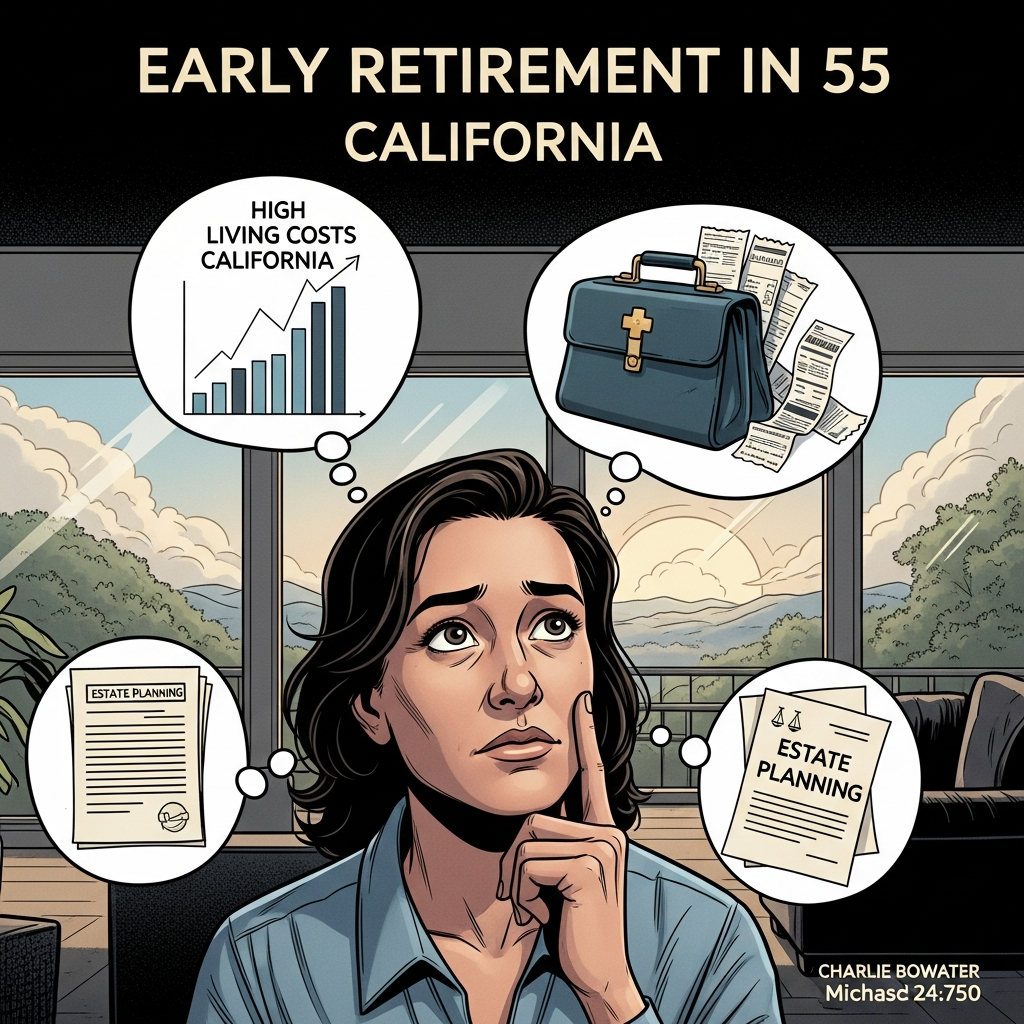
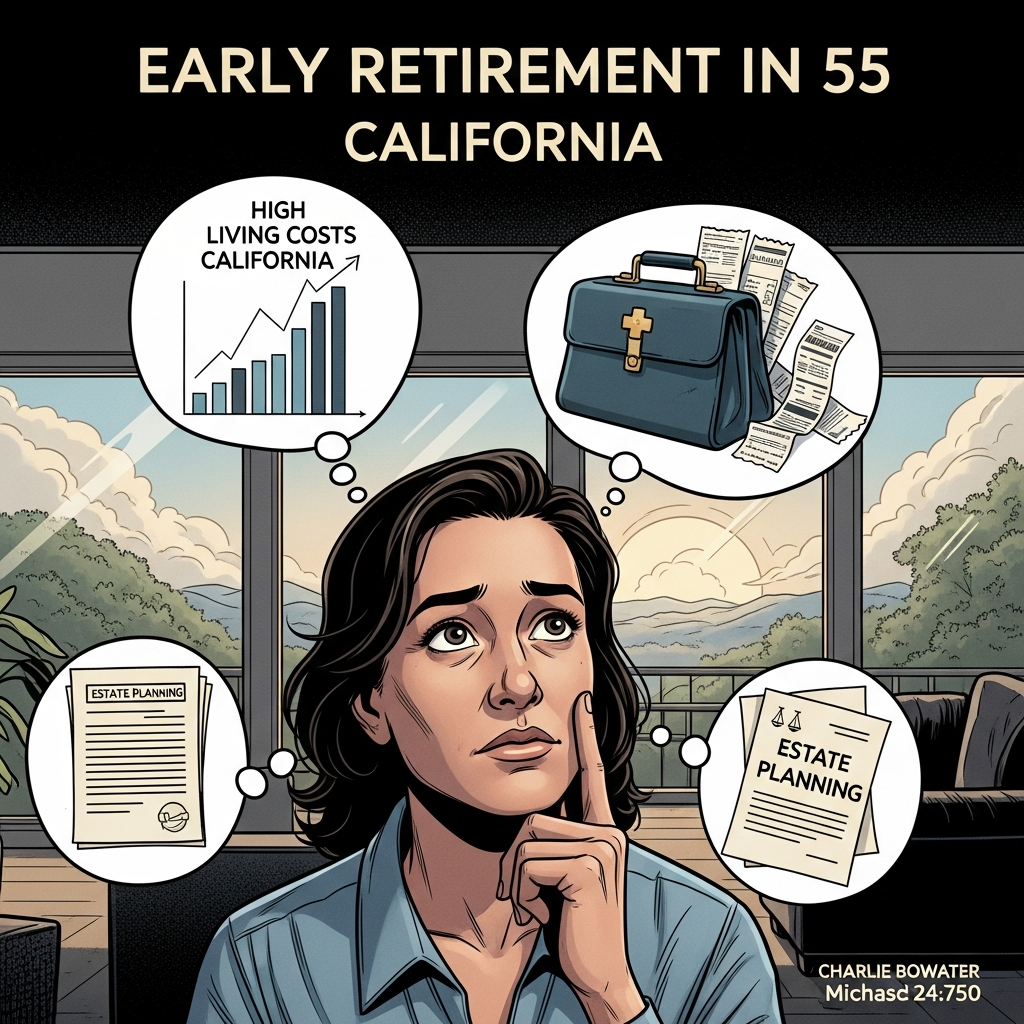
    Can I Retire at 55 with $1.3 Million? What California Residents Need to Know About Early Retirement Planning

    Can I Retire at 55 with $1.3 Million? What California Residents Need to Know About Early Retirement Planning

    Source: MarketWatch

    Who This Article Is For

    If you’re a California resident approaching retirement age with substantial savings, you’re likely asking: “Do I have enough to retire comfortably?” This guide helps Californians with significant retirement assets understand whether early retirement at 55 is financially feasible and what estate planning steps you need to take to protect your wealth.

    Understanding Your Retirement Readiness at 55

    Can $1.3 million support early retirement in California? The answer depends on several critical factors that are especially important for California residents facing higher living costs and complex tax situations.

    Key Factors California Residents Must Consider

    1. California’s High Cost of Living

  • Housing costs in California average 50% higher than the national median
  • Healthcare expenses for early retirees before Medicare eligibility at 65
  • State income taxes that can significantly impact retirement withdrawals
  • 2. Withdrawal Rate Strategy

  • The traditional 4% rule suggests $52,000 annual income from $1.3 million
  • California residents often need 20-30% more due to higher living costs
  • Consider a 3-3.5% withdrawal rate for early retirement before Social Security
  • 3. Healthcare Bridge Gap

  • Ten years until Medicare eligibility at 65
  • California Covered health insurance costs: $800-$1,500+ monthly for individuals
  • Health Savings Account (HSA) strategies for California residents
  • Real-World Scenario: Early Retirement in California

    Meet Sarah, a 55-year-old Sacramento resident with $1.3 million saved. Her situation mirrors many exhausted California professionals:

  • Current annual expenses: $75,000
  • Paid-off home (reducing housing costs)
  • Plans to delay Social Security until 67
  • Needs 12 years of retirement funding before Social Security
  • Her financial reality:

  • Required funds until Social Security: $900,000 ($75,000 × 12 years)
  • Remaining buffer: $400,000 for healthcare, emergencies, and market downturns
  • With proper planning, early retirement is feasible but requires careful estate planning
  • Why Estate Planning Is Critical Before Early Retirement

    California residents retiring early need comprehensive estate planning to protect their assets and ensure their retirement funds last. Here’s what you should prioritize:

    Essential Estate Planning Steps for Early Retirees

    1. Revocable Living Trust

  • Avoid California probate (which can cost 4-6% of estate value)
  • Maintain control of assets during your lifetime
  • Ensure smooth transition if incapacitated during retirement years
  • 2. Healthcare Power of Attorney

  • Critical during the 10-year gap before Medicare
  • Designate someone to make medical decisions if you’re unable
  • Particularly important for early retirees with health concerns
  • 3. Durable Financial Power of Attorney

  • Protect your retirement assets if you become incapacitated
  • Allow trusted person to manage investments and pay bills
  • Essential for early retirees managing their own portfolios
  • 4. Updated Beneficiary Designations

  • Review all retirement accounts (401(k), IRA, Roth IRA)
  • Ensure beneficiaries align with your trust and estate plan
  • Avoid potential conflicts that could drain retirement funds in probate
  • How to Maximize Your Retirement Funds in California

    Five strategies California early retirees should implement immediately:

  • Tax-efficient withdrawal sequencing
  • Healthcare cost management
  • Diversified income streams
  • Asset protection through proper titling
  • Annual estate plan reviews
  • When Early Retirement Works for California Residents

    You may be ready to retire at 55 with $1.3 million if you:

  • Have paid off your California home (eliminating $3,000-5,000 monthly mortgage)
  • Maintain flexible spending that can adjust 10-20% for market downturns
  • Have comprehensive estate planning protecting your assets
  • Secured healthcare coverage through age 65
  • Built an emergency fund (12 months expenses outside retirement accounts)
  • Created multiple income streams beyond investment withdrawals
  • Common Mistakes California Early Retirees Make

    Avoid these critical errors that can derail your retirement:

    Failing to account for California’s high property taxes and special assessments

    Underestimating healthcare costs before Medicare

    Not updating estate documents after retirement status changes

    Withdrawing too much too soon (exceeding safe withdrawal rates)

    Neglecting long-term care planning (average California nursing home: $120,000+ annually)

    Forgetting about required minimum distributions (RMDs) starting at age 73

    Protect Your Early Retirement with Proper Estate Planning

    California residents considering early retirement need specialized legal guidance. The financial and legal complexities of managing substantial retirement assets in California require expert support.

    California Probate and Trust, PC specializes in helping California residents:

  • Structure estates to avoid costly California probate
  • Create tax-efficient withdrawal strategies
  • Protect retirement assets from creditors and lawsuits
  • Ensure smooth asset transfer to heirs
  • Navigate California’s unique estate planning requirements
  • Schedule Your Free Estate Planning Consultation

    Take the first step toward protecting your early retirement. Our experienced California estate planning attorneys offer complimentary consultations to review your situation and recommend strategies to safeguard your $1.3 million retirement fund.

    Call us today at (866) 674-1130 or schedule your free consultation online.

    Our Sacramento-based team has helped thousands of California residents secure their financial futures through comprehensive estate planning. Let us help you retire with confidence.


    Legal Disclaimer: This article provides general information about retirement and estate planning for California residents and should not be construed as legal or financial advice. Every individual’s situation is unique, and retirement readiness depends on numerous personal factors including expenses, health status, risk tolerance, and family obligations. Early retirement decisions involve complex financial and legal considerations that require personalized professional guidance. California Probate and Trust, PC recommends consulting with qualified estate planning attorneys and financial advisors before making retirement decisions. The information presented is current as of the publication date but is subject to change as laws and regulations evolve. Results and outcomes vary based on individual circumstances. Past performance does not guarantee future results.

    Can I Retire at 55 with 13 Million What California 20260121 141940 1

    Categories
    California Probate Estate Planning Long Term Care Planning

    Are You a California Homeowner? Here’s How to Maximize Your Tax Deductions This Season

    gettyimages 2184489576

    If you own property in California, understanding your tax deductions can significantly impact your financial planning—and potentially your estate planning strategy. With recent legislative changes affecting homeowners, now is the time to evaluate whether itemizing or taking the standard deduction makes sense for your situation.

    Source: CBS News – Homeowner Tax Deductions for 2026

    Who Should Read This Guide?

    This article is specifically for:

  • California homeowners preparing their 2025 tax returns
  • Property owners managing assets in California who need to understand how tax changes affect their estate planning
  • Families concerned about maximizing deductions while protecting their legacy for the next generation
  • Anyone wondering “Should I itemize my taxes as a homeowner?” or “What homeowner tax breaks am I missing?”
  • What Tax Deductions Can California Homeowners Claim in 2026?

    The IRS begins accepting tax returns on January 26, 2026, and California homeowners have several key deductions available:

    1. Mortgage Interest Deduction

    The mortgage interest deduction remains one of the most valuable tax breaks for homeowners. However, fewer people claim this deduction since the 2017 Tax Cuts and Jobs Act nearly doubled the standard deduction.

    Key numbers to know:

  • Standard deduction for 2025: $15,750 (single filers) and $31,500 (married filing jointly)
  • Maximum deductible mortgage debt: $750,000 ($375,000 if married filing separately)
  • How to decide: You benefit from itemizing only if your combined eligible expenses (mortgage interest, property taxes, charitable donations) exceed your standard deduction.

    2. State and Local Tax (SALT) Deduction – Major 2026 Change

    The most significant change for California homeowners this tax season is the expansion of the SALT deduction cap from $10,000 to $40,000. This change stems from last year’s “big, beautiful bill” legislation.

    What you can deduct:

  • Up to $40,000 in combined property taxes and state/local income taxes (or sales taxes)
  • Single filers: $40,000 maximum
  • Married filing separately: $20,000 each
  • Phase-out begins for adjusted gross incomes over $500,000
  • Who benefits most from this change? California homeowners in high-tax areas with significant property tax bills. If you have a large mortgage with high interest rates and live in an area with elevated property taxes, itemizing could provide substantial savings.

    3. Energy Home Improvement Tax Credits – Important Deadline

    Energy-focused home improvement tax credits were eliminated at the end of 2025 under the “big, beautiful bill”. However, if you completed qualifying energy upgrades in 2025, you can still claim these credits on your current tax return.

    Critical requirement: The work must have been completed (not just purchased) by December 31, 2025. Qualifying improvements include solar panels, improved insulation, and other clean-energy upgrades.

    Should California Homeowners Itemize or Take the Standard Deduction?

    According to lending expert Kate Wood from NerdWallet, “Everyone’s situation is different. So much will depend on your income and then also where you live”.

    Consider itemizing if you:

  • Have a large, high-interest-rate mortgage
  • Live in a high property tax area in California
  • Can now exceed the standard deduction due to the increased $40,000 SALT cap
  • Made significant charitable contributions in 2025
  • The standard deduction may be sufficient if you:

  • Have a modest mortgage with low interest
  • Live in a lower property tax location
  • Have limited itemizable expenses
  • How These Tax Changes Affect Your California Estate Planning

    For California residents focused on protecting family wealth and ensuring smooth asset transfers, tax planning and estate planning go hand-in-hand. The increased SALT deduction cap can impact:

  • Cash flow for estate planning: Additional tax savings can be redirected into trust funding or life insurance policies
  • Property transfer strategies: Understanding your current tax position helps determine optimal timing for real estate transfers
  • Trust administration: Trustees managing California properties need to understand these deductions when filing trust tax returns
  • Legacy planning: Maximizing current tax benefits ensures more wealth is preserved for the next generation
  • Real-World Example: A Sacramento Homeowner’s Situation

    Consider a married couple in Sacramento with:

  • $600,000 mortgage balance at 6.5% interest (approximately $39,000 annual interest)
  • $15,000 in annual property taxes
  • $8,000 in California state income taxes
  • Their calculation:

  • Mortgage interest: $39,000
  • SALT deduction (property + income taxes): $23,000 (capped at $40,000, so they use full amount)
  • Total itemized deductions: $62,000
  • This exceeds the $31,500 standard deduction by $30,500, making itemizing clearly beneficial. Without the increased SALT cap, they could only deduct $49,000 ($39,000 + $10,000), making itemizing less advantageous.

    Take Action: Protect Your Home, Your Family, and Your Legacy

    Understanding homeowner tax deductions is just one piece of comprehensive financial and estate planning. As California residents prepare their taxes and face the complexity of protecting family assets, working with experienced professionals who understand both tax implications and estate planning strategies becomes essential.

    California Probate and Trust, PC specializes in helping California homeowners and families:

  • Create comprehensive estate plans that consider tax implications
  • Establish revocable and irrevocable trusts to protect real estate assets
  • Navigate probate proceedings when property transfers become necessary
  • Develop healthcare and financial management plans that safeguard your family
  • With offices serving Fair Oaks, Sacramento, and San Francisco, California Probate and Trust, PC has helped thousands of California residents protect their homes and secure their legacies.

    Schedule Your Free Estate Planning Consultation

    Don’t navigate complex tax and estate planning decisions alone. California Probate and Trust, PC offers free one-hour consultations to California residents who want to understand how current tax changes affect their long-term family protection strategies.

    Contact us today:

  • Visit: cpt.law
  • Call: (866) 674-1130
  • Free consultation – no obligation
  • Whether you’re preparing this year’s tax return or planning for generations to come, having the right guidance makes all the difference.

    Legal Disclaimer

    This article is provided for informational purposes only and does not constitute legal, tax, or financial advice. Tax laws are complex and subject to change, and individual circumstances vary significantly. The information presented is based on current federal tax law as of January 2026 and may not reflect the most recent legislative changes or IRS guidance. California Probate and Trust, PC is a law firm specializing in estate planning, probate, and trust administration, not tax preparation services. For specific tax advice regarding your individual situation, please consult with a qualified tax professional or certified public accountant. For estate planning guidance related to your California assets and family protection strategies, contact California Probate and Trust, PC for a personalized consultation. Nothing in this article creates an attorney-client relationship, and you should not act upon this information without seeking professional counsel suited to your particular circumstances.

    Categories
    California Probate Estate Planning Trusts

    How to Protect Your Trust When Family Members Pressure You to Sign Away Your Inheritance: Legal Guidance for California Residents

    # How to Protect Your Trust When Family Members Pressure You to Sign Away Your Inheritance: Legal Guidance for California Residents

    Source: Yahoo Finance – Arkansas man says his dad wants him to trade a $300K trust for $5,000

    ## What This Article Is For

    If you’re a California resident dealing with family pressure to give up your trust inheritance, transfer assets, or make financial decisions you’re uncomfortable with, this guide will help you understand your legal rights and options. This article addresses the real-world challenge of setting financial boundaries with family members who may be financially irresponsible or manipulative—a situation that affects thousands of families managing trusts and estates in California.

    ## The Real Story: When a Parent Asks You to Trade $300,000 for $5,000

    Jack from Little Rock, Arkansas recently found himself in an impossible situation. His grandfather had passed away five years earlier and left a trust structured to protect Jack’s inheritance from his father’s poor financial decisions.

    The grandfather wisely designed the trust so that:

  • Jack’s father would receive modest annual payments during his lifetime
  • The remaining balance (approximately $300,000) would go directly to Jack after his father’s death
  • This structure protected the family wealth from his father’s history of financial mismanagement
  • Now, Jack’s father is pressuring him to sign over his rights to the entire trust in exchange for just $5,000—claiming he needs the money to renovate his home and buy a new car.

    ## Why This Matters for California Families

    While Jack’s story took place in Arkansas, California residents face identical challenges when managing inherited trusts, especially when:

  • A parent or family member has a documented history of poor financial decisions
  • Trust documents were specifically structured to protect assets from irresponsible beneficiaries
  • Family members use emotional manipulation, guilt, or pressure tactics to access protected funds
  • Beneficiaries feel torn between honoring a deceased loved one’s wishes and maintaining family peace
  • Research shows that setting emotional boundaries with family members promotes well-being and prevents burnout, anxiety, and emotional exhaustion—and these boundaries become even more critical when finances are involved.

    ## What Financial Experts Say About Family Trust Manipulation

    When Jack called The Ramsey Show seeking advice, hosts Dave Ramsey and Ken Coleman provided clear guidance that applies to anyone facing similar pressure:

    Key Expert Insights:

  • Unreasonable people will have unreasonable reactions: “This unreasonable man is going to have an unreasonable reaction to your reasonable no,” Ramsey told Jack when he asked how to navigate the conversation without conflict.
  • You cannot control others’ behavior: “You cannot control your dad or the situation he’s put you in,” Ken Coleman emphasized.
  • Preserve your integrity, not the relationship at any cost: “What I can do is just give you the realistic expectation, which is that you preserve your dignity, your courage, your kindness, your integrity. That’s the only thing you have control over,” Ramsey advised.
  • Ramsey used a vivid metaphor to describe the futility of trying to please an irresponsible family member: “You know, it’s like petting a crocodile and going, ‘Nice crocodile. Nice crocodile,’ and hoping you don’t get your arm bit off. Of course, you’re going to get your arm bit off.”

    ## How to Set Financial Boundaries with Family Members: A Step-by-Step Guide

    Step 1: Understand Why the Trust Was Structured This Way

    Your deceased loved one likely worked with an estate planning attorney to create specific trust provisions for a reason. In Jack’s case, his grandfather knew his son’s financial history and deliberately structured the trust to protect the family’s wealth across generations.

    Step 2: Recognize That Emotional and Financial Boundaries Overlap

    It’s critical to set financial boundaries with family members, particularly those who are financially irresponsible. When a family member routinely crosses both emotional and financial boundaries, protecting yourself becomes essential.

    Step 3: Accept That Conflict May Be Unavoidable

    The hosts of The Ramsey Show made it clear to Jack that there was no way to turn down his father’s unreasonable request without sparking conflict. Hoping for a peaceful resolution when dealing with someone who is being manipulative or unreasonable sets you up for disappointment.

    Step 4: Consult with a California Estate Planning Attorney

    Before making any decisions about trust modifications or surrendering your beneficial interest, speak with a qualified California estate planning attorney who can:

  • Review the specific trust language and your legal rights as a beneficiary
  • Explain whether you even have the legal authority to transfer your interest
  • Advise you on the tax consequences of any proposed transfer
  • Help you understand your fiduciary duties if you’re serving as a trustee
  • Document any undue influence or coercion attempts
  • ## Common Questions California Residents Ask About Trust Inheritance and Family Pressure

    Can my parent force me to give up my trust inheritance?

    No. If you are named as a beneficiary in a properly executed trust document, you have legal rights to that inheritance. However, you may have the option to voluntarily disclaim or transfer your interest—but this should only be done after consulting with an attorney who can explain the full implications.

    What if signing over the trust is technically legal but feels wrong?

    Just because something is technically permissible doesn’t mean it’s wise. The trust creator structured the document the way they did for specific reasons. Trading a $300,000 inheritance for $5,000 represents a 98.3% loss of value—a decision you would almost certainly regret.

    How do I say no without destroying my family relationship?

    Experts acknowledge that when dealing with unreasonable people, you cannot control their reaction. Your responsibility is to make sound decisions while maintaining your integrity, dignity, and kindness—regardless of how others respond.

    What are the warning signs of financial manipulation by family members?

  • Pressure to make immediate decisions without time to consult professionals
  • Guilt trips or emotional blackmail (“If you really loved me…”)
  • Minimizing the value of what they’re asking you to give up
  • Isolation tactics that prevent you from discussing the situation with others
  • Threats to cut off the relationship if you don’t comply
  • ## Why California Trust Law Matters in These Situations

    California has specific laws governing trusts, including:

  • California Probate Code Section 15000-19403: Governs trust administration and beneficiary rights
  • Undue Influence Protections: California courts can set aside trust modifications obtained through coercion or manipulation
  • Fiduciary Duty Standards: Trustees have legal obligations to protect trust assets and act in beneficiaries’ best interests
  • Beneficiary Rights to Information: California beneficiaries have statutory rights to receive trust information and accountings
  • ## How California Probate and Trust, PC Can Help

    If you’re facing pressure from family members regarding your trust inheritance or estate planning decisions, California Probate and Trust, PC provides experienced legal guidance tailored to California residents who value transparency and family protection.

    Our Sacramento-based estate planning attorneys offer:

  • Free one-hour consultations to assess your specific situation
  • Clear explanations of your legal rights as a trust beneficiary
  • Guidance on setting appropriate financial boundaries with family members
  • Legal strategies to protect inherited assets from manipulation
  • Trust administration services when family dynamics become complicated
  • Representation in trust disputes or undue influence cases
  • With offices in Fair Oaks, Sacramento, and San Francisco, we’ve represented thousands of clients navigating complex family dynamics in estate planning and trust administration matters.

    ## Take Action to Protect Your Inheritance

    Don’t make irreversible decisions about your trust inheritance under family pressure. Schedule a free consultation with California Probate and Trust, PC to understand your legal rights and options.

    Contact us today:

  • Phone: (866)-674-1130
  • Visit: cpt.law
  • Schedule your FREE consultation online
  • Our compassionate attorneys will help you navigate difficult family conversations while protecting the inheritance your loved one intended for you.

    Legal Disclaimer: This article is provided for informational purposes only and does not constitute legal advice. The information presented is based on general legal principles and may not apply to your specific situation. Every trust and family situation is unique, and California trust law is complex. Do not make decisions about trust inheritance, asset transfers, or family financial matters without consulting a qualified California estate planning attorney who can review your specific circumstances. Attorney-client relationships are only established through formal engagement agreements. Past results do not guarantee future outcomes. For specific legal advice regarding your trust, inheritance, or estate planning needs, please contact California Probate and Trust, PC directly to schedule a confidential consultation.

    How to Protect Your Trust When Family Members Pres 20260121 141917 1

    Categories
    California Probate Estate Planning Trusts

    Warren Buffett’s Son Didn’t Know His Father Was a Billionaire Until His 20s: What California Families Can Learn About Wealth Transfer and Estate Planning

    image 1

    If you’re a California resident managing significant assets or planning how to pass your wealth to the next generation, Warren Buffett’s approach to family wealth offers powerful lessons about discretion, values, and the importance of proper estate planning.

    The Shocking Discovery: When Family Wealth Stays Hidden

    Peter Buffett, now 67, didn’t realize his father Warren Buffett was one of the world’s wealthiest individuals until he stumbled upon his dad’s name on the Forbes list of richest Americans in his 20s. According to a 2013 Forbes interview, the discovery came as a complete surprise to both Peter and his friends.

    “I’m not kidding. It was when I was in my 20s that my mom and I talked at some point, because there he was, on this list,” Peter recalled. “And we laughed about it, because we said, ‘Well, isn’t it funny? You know, we know who we are, but everybody’s treating us differently now.'”

    Why Didn’t Warren Buffett’s Children Know About Their Family Wealth?

    The answer reveals important insights about intentional wealth management and family values:

  • Modest lifestyle choices: Despite accumulating billions, Warren Buffett continued living in the same Nebraska home he purchased for $31,500 in 1958, eating McDonald’s, and driving older vehicles
  • Intentional privacy: The family didn’t live in wealthy social circles or display material wealth, keeping their financial status private
  • Character development first: Warren confirmed that by the time his children discovered the family’s wealth, “The kids were formed by that time, and they knew who their friends were”
  • What This Means for California Families Managing Wealth

    For California residents concerned about protecting family assets and passing wealth to future generations, the Buffett story raises critical estate planning questions:

    1. How can I structure my estate to protect my children’s values?

    Many California families worry that inherited wealth might negatively impact their children’s work ethic or life choices. Properly structured trusts can:

  • Control distribution timing to ensure heirs are mature enough to handle wealth responsibly
  • Include incentive provisions that reward education, career development, or charitable giving
  • Provide professional management to preserve assets across generations
  • 2. Should I tell my children about their inheritance?

    This personal decision depends on your family dynamics, but estate planning professionals generally recommend:

  • Age-appropriate discussions about family wealth and responsibilities
  • Clear communication about your values and intentions for the wealth
  • Involving adult children in philanthropic decisions when appropriate
  • 3. How do I ensure my wealth helps rather than harms future generations?

    Warren Buffett’s approach offers a blueprint: he plans to pass his fortune to his children specifically for their philanthropic organizations, not personal enrichment. California families can:

  • Establish family foundations or donor-advised funds
  • Create educational trusts that fund learning and skill development
  • Structure distributions that complement (not replace) earned income
  • Warren Buffett’s Philosophy on True Wealth

    In his final Berkshire Hathaway shareholder letter, the 95-year-old investor wrote: “Greatness does not come about through accumulating great amounts of money, great amounts of publicity or great power in government”. Instead, he emphasized: “When you help someone in any of thousands of ways, you help the world. Kindness is costless but also priceless”.

    This philosophy—prioritizing impact over accumulation—resonates deeply with California families who want their legacy to reflect their values.

    The Estate Planning Implications for High-Net-Worth California Residents

    Warren Buffett’s current net worth stands at approximately $145 billion, making him the 10th wealthiest person globally. Yet his approach to wealth transfer demonstrates that proper planning isn’t just about tax efficiency—it’s about:

  • Preserving family harmony: Clear estate plans prevent conflicts and confusion among heirs
  • Protecting against creditors: Properly structured trusts shield assets from lawsuits and financial predators
  • Minimizing tax burden: Strategic planning reduces estate and inheritance taxes for California residents
  • Ensuring professional management: Corporate trustees can provide expertise your heirs may lack
  • How California Probate and Trust Can Help Protect Your Family Legacy

    Whether you’re managing substantial assets or simply want to ensure your family is protected, California Probate and Trust, PC offers comprehensive estate planning services tailored to California residents who value transparency and family protection.

    Our experienced Sacramento-based attorneys understand the anxiety that comes with navigating complex legal systems. We provide:

  • Free estate planning consultations to assess your unique situation without obligation
  • Customized trust solutions that protect your assets and reflect your values
  • Clear, transparent pricing with packages designed for every budget
  • Both estate planning and probate services—your one-stop-shop for comprehensive legal and financial management
  • Like Warren Buffett, you can create a legacy that prioritizes character, kindness, and positive impact over mere accumulation. The difference lies in having the right legal structure in place.

    Take the Next Step: Schedule Your Free Consultation

    Don’t leave your family’s future to chance. Contact California Probate and Trust, PC today to discuss how proper estate planning can protect your loved ones and preserve your values for generations to come.

    Call (866)-674-1130 or visit cpt.law to schedule your free one-hour estate planning consultation.

    Original story source: Fortune.com


    Legal Disclaimer

    This article is provided for informational purposes only and does not constitute legal advice. Estate planning needs vary significantly based on individual circumstances, asset types, family dynamics, and applicable California and federal laws. The information presented here should not be relied upon as a substitute for consultation with a qualified estate planning attorney. California Probate and Trust, PC recommends that all individuals seeking estate planning services schedule a personalized consultation to discuss their specific situation. Past results do not guarantee future outcomes. Attorney advertising.